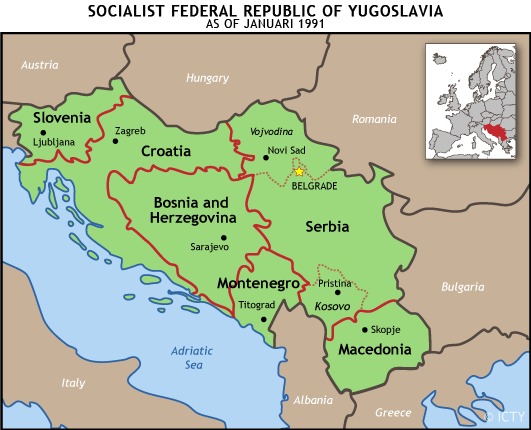
The Srebrenica Genocide of the Bosniak Muslims was a tragic event that took place during the Bosnian War in July 1995. It is considered one of the darkest chapters in European history since World War II, more so a tragic tale for the Muslims worldwide.
- Background: The Bosnian War (1992-1995) was a complex conflict that arose after the breakup of Yugoslavia. The main parties involved were Bosnian Muslims (Bosniaks), Bosnian Croats (Catholics), and Bosnian Serbs (Orthodox Christians).
- Srebrenica: Srebrenica was a town located in eastern Bosnia and Herzegovina, near the border with Serbia. Before the war, it had a predominantly Muslim population (around 44%).
- UN Safe Area: In April 1993, Srebrenica was declared a “safe area” by the United Nations Security Council. This designation was meant to protect the civilian population from attacks and ensure their safety.
- Bosnian Serb Forces: The Bosnian Serb Army, led by General Ratko Mladić, launched an offensive against Srebrenica in July 1995. Their objective was to capture the town and expel or kill its Muslim population.
- Massacre: On July 11th, 1995, Bosnian Serb forces overran Srebrenica, despite its status as a UN safe area. Thousands of Bosniak men and boys who had sought refuge in the town were separated from their families and systematically executed.
- Ethnic Cleansing: The Srebrenica Genocide was part of a larger campaign of ethnic cleansing carried out by Bosnian Serb forces during the war. The goal was to create ethnically homogeneous territories by forcibly removing or killing non-Serb populations.
- Number of Victims: The exact number of victims is still a subject of debate, but it is estimated that between 7,000 and 8,000 Bosniak men and boys were killed in and around Srebrenica. Many women, children, and elderly people were forcibly deported.
- [Quoted from https://srebrenica.org.uk/what-happened/sexual-violence-bosnia%5D: ‘It is estimated that somewhere between 20-50,000 (Bosniak Muslim) women were raped during the war in Bosnia. Women were imprisoned in gyms, hotels, abandoned houses, and concentration camps. They were raped with objects, such as guns and truncheons, but also with broken glass bottles to maximise physical damage. The rapes were carried out in fulfilment of official orders as part of the Bosnian Serb strategy of ethnic cleansing of the region. Several victims recalled how Serb soldiers remarked that, “It is better to give birth to Chetniks than to Muslim filth”.’
- International Response: The international community was widely criticized for its failure to prevent the Srebrenica Genocide. The United Nations peacekeeping forces stationed in the area were unable to protect the population, leading to calls for accountability and reform.
- Response from Muslim nations: During the Bosnian War in the 1990s, Pakistan played a major role in supporting Bosnian Muslims. Pakistani forces provided military aid as part of the UNPROFOR peacekeeping mission and sent medical teams to offer healthcare services. They also supplied relief items like food and clothing to help alleviate the suffering of displaced and affected populations. Their involvement contributed to stabilizing the region and supporting Bosnia’s struggle for independence and protection from ethnic cleansing. The Pakistani Forces, did not leave Bosnia, even after the UN asked them to leave, leading to wide appreciation of their efforts, in the Muslim world. General Javed Nasir’s role was heroic during the events that transpired here.
- Michael Dobbs writes: ‘Dismayed by Western inaction in Bosnia, Saudi Arabia (under King Fahad bin Abdul Aziz ) funded a $300 million covert operation to channel weapons to the Muslim-led government over the past three years with the knowledge and tacit cooperation of the United States, according to an official with firsthand knowledge of the operation. The arms shipments, which were in addition to around $500 million in Saudi humanitarian aid, were in direct violation of a United Nations arms embargo on the former Yugoslavia that Washington had pledged to enforce.’ (https://www.washingtonpost.com/archive/politics/1996/02/02/saudis-funded-weapons-for-bosnia-official-says/1a163310-2064-49f6-bd11-84bc67092ce2/)
- War Crimes Trials: In the aftermath of the war, the International Criminal Tribunal for the former Yugoslavia (ICTY) was established to prosecute those responsible for war crimes, including the Srebrenica Genocide. Several high-ranking Bosnian Serb officials, including Ratko Mladić and Radovan Karadžić, were eventually convicted for their roles in the massacre.
- Commemoration: The Srebrenica Genocide is commemorated annually on July 11th as a day of remembrance for the victims. It serves as a reminder of the atrocities committed during the Bosnian War and the importance of preventing such crimes in the future.
-Notes by Mohammed bin Thajammul Hussain Manna.
 Saheehus-Seerah