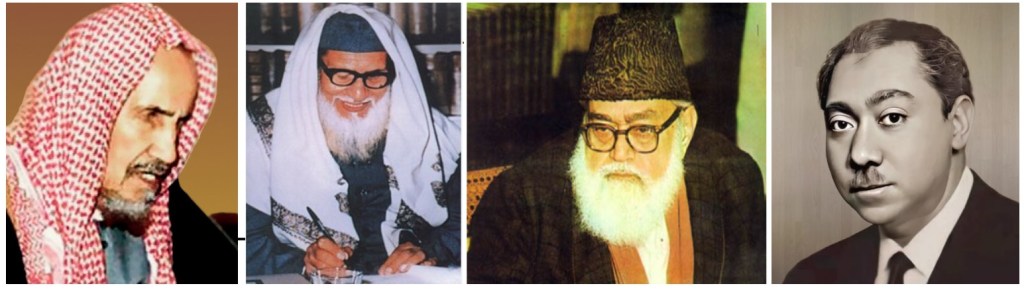
Assessment of the books of Abul-Ala Al-Mawdudi, Abul-Hasan An-Nadawi, and Sayyid Qutb.
The question:
A message arrived at the program from the listener (A.A. Az-Zaawi) from Tripoli, Libya. Our sister has a number of questions, including one in which she says: I ask Your eminence to kindly express your opinion about the writings of Abul-Ala Al-Maududi, Abul-Hasan An-Nadawi, and Sayyid Qutb. [Shaikh Abul-Hassaan Ali An-Nadwi was alive at the time this answer was given but Abul-Ala Al-Maududi and Sayyid Qutub had passed away).]
The answer (by Shaikh Abdul Azeez bin Abdullah bin Baaz [Rahimahullah]):
All of their books are beneficial. The writings of these three – may Allah have mercy on them all – are all beneficial, containing much goodness. However, they are not immune from some mistakes. Each person takes what is useful and leaves what is not. They are not infallible. A student of knowledge, when he contemplates their works, recognizes both the errors and the truths within. They – may Allah have mercy on them – exerted effort for the good. They called to goodness and endured hardship in doing so.
Abul-Hasan is present (i.e. he was alive at the time this answer was given)- by the grace of Allah – and there is much good in him. However, he is not infallible, and neither are other scholars. Infallibility is for the messengers – peace and blessings be upon them – in conveying what they receive from Allah. Allah preserves the messengers in everything they convey from Him, and likewise, the prophets. As for the scholars, every scholar makes mistakes and attains correctness, but, by the grace of Allah, their correctness outweighs their mistakes. They have benefited, excelled, and provided assistance to people.
Malik ibn Anas – may Allah have mercy on him – the Imam Dar-ul-Hijrah (i.e. leader of the land of Hijrah [Madinah]) in his time, said: ‘There is none among us except that his opinion may be accepted or rejected, except the occupant of this grave,’ meaning the Prophet, peace and blessings be upon him.
So, the believer seeks knowledge, and likewise, the believing woman seeks knowledge. Each person strives to understand the religion, gains insight, asks about what he is confused about. They read the Quran, read the Sunnah, and take care to know the truth with its evidence. They also learn to recognize errors if a scholar makes a mistake.
It is not permissible to say, ‘The opinion of such-and-such a distinguished scholar is taken wholly without scrutiny!’ No, rather, it is necessary to scrutinize and be careful, presenting the opinions to the evidence of Shariah. What aligns with it (The Shariah, Quran and Sunnah) is accepted, and what contradicts the evidence of Sharia is abandoned, even if the person is great, even if he has great rewards (in his account of good deeds), is diligent (and striving) in doing good, and is famous (well-known). Yes. [End of the answer.]
-by Shaikh Abdul Azeez bin Abdullah bin Baaz from the programme ‘Noor Ala-Ad-Darb’.
[-Translated by Mohammed bin Thajammul Hussain Manna 29th November 2023.]
Translator’s Note: Shaikh Abdul Azeez bin Abdullah bin Baaz passed away on 13 May 1999 (aged 86), Sayyid Abul-Ala Al-Mawdudi on 22 September 1979 (aged 75), Sayyid Qutb on 29 August 1966 (aged 59) , and Abul Hasan Ali An-Nadwi on 31 December 1999 (aged 85), may Allah have mercy upon them all and forgive their mistakes and accept their good deeds.

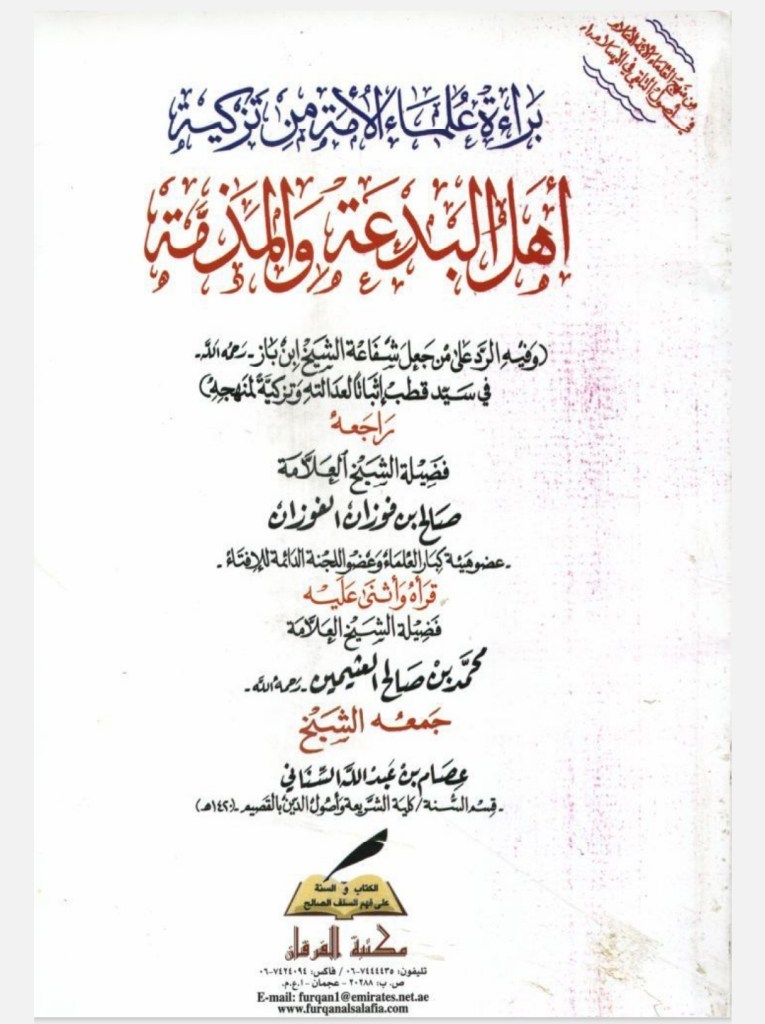
Note: This post is not a defence of Syed Qutub. In order to see the refutation of some of the serious errors of Syed Qutb, refer to the following book where the statements of many Ulama have been compiled: Baraa’ah Ulamaa-il-Ummah Min Tazkiyah Ahl il-Bid’ah wal-Mudhammah.
 Saheehus-Seerah