Alhamdulillah was Salaatu was Salaamu Ala Rasoolillah wa Ala Aalihi wa Ashaabihi Ajmaeen. I will be sharing two Fatwas from Shaikh Abdul Azeez bin Abdullah bin Baaz Rahimahullah on the issue, and pen down a conclusion. In-Sha-Allah.
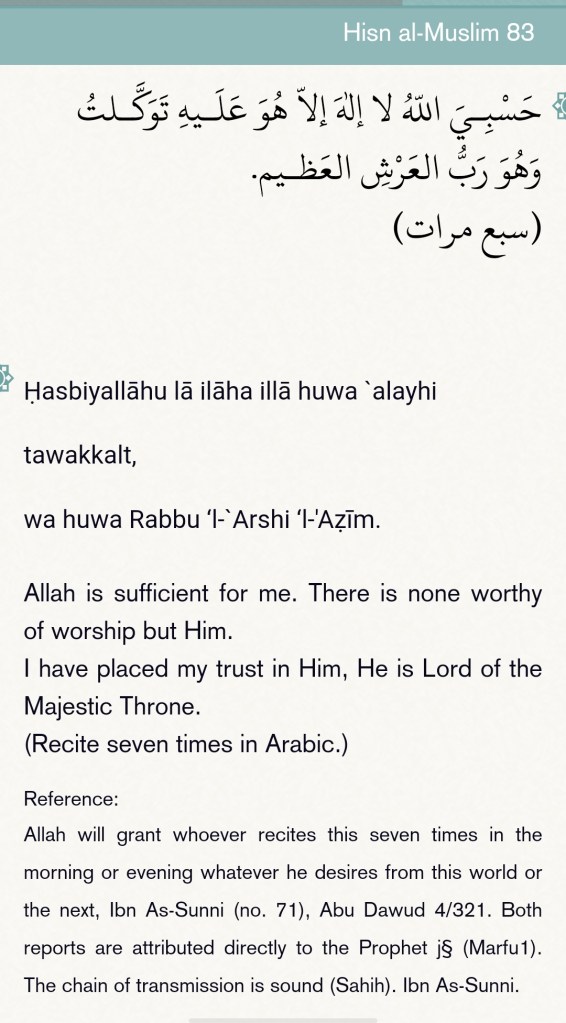
The Narration As In Sunan Abu Dawud and the famous Dua book Hisnul Muslim.

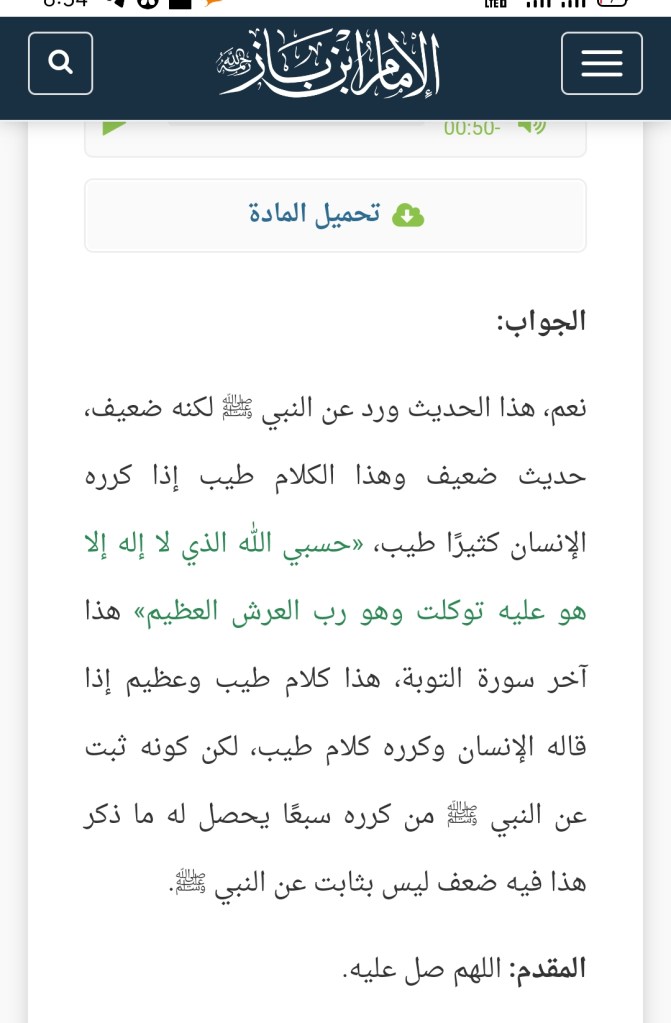
(Fatwa 1)
Question: What is the authenticity of the Dua, “Whoever says in the morning or evening -Hasbi Allahu Alladhi La Ilaha Illa Huwa Alaihi Tawakkaltu Wahuwa Rabbul Arshil-Adheem…”?
Answer by Shaikh Ibn Baaz Rahimahullah:
Alhamdulillah.
Yes, this Hadith has been narrated from the Prophet (Peace be upon him) but it is Daeef (weak), the Hadith is Daeef (weak) and these wordings are Tayyib (good), and if a person repeats it often it is Tayyib (good).
“Hasbi Allahu Alladhi La Ilaha Illa Huwa Alaihi Tawakkaltu Wahuwa Rabbul Arshil-Adheem”, and this is also the ending (Last Ayah) of Surah At-Tawbah (9:129), this statement is good and Adheem (great) if a person recites this and repeats it, it is a good statement (a good Dua).
However, its attribution to the Prophet Muhammad (peace be upon him) about (the rewards of) the one who repeats it seven times, and the resulting benefits mentioned, is weak and not established authentically from the Prophet (peace be upon him). End of the Fatwa.
Source: Audio Fatwa from the Noor Ala Ad-Darb programme.
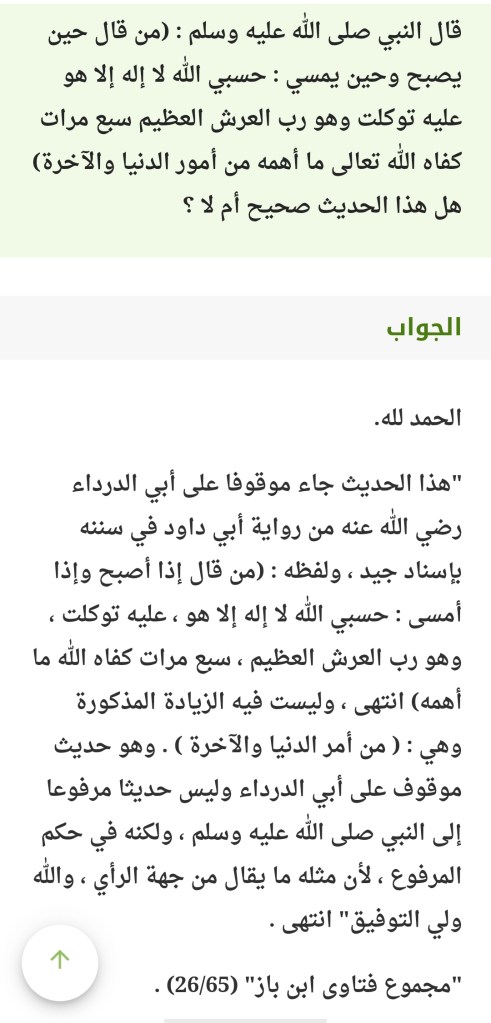
(Fatwa 2)
Question: Is this Hadith Saheeh (authentic) or not- “Whoever says during the morning and evening, Hasbi Allahu La Ilaha Illa Huwa Alaihi Tawakkaltu Wahuwa Rabbul Arshil-Adheem, seven times, Allah will suffice him for what concerns him of the affairs of this world and the Hereafter.”?
Answer by Shaikh Ibn Baaz Rahimahullah:
Alhamdulillah.
This Hadith has been narrated Mawqoof (reaches upto a companion) till Abud-Darda (Radiallahu Anhu), from the narrations of Sunan Abi Dawud with a Jayyid (good) chain.
And the words are, ‘Whoever says in the morning and evening, Hasbi Allahu La Ilaha Illa Huwa Alaihi Tawakkaltu Wahuwa Rabbul Arshil-Adheem, Allah will be sufficient for him against anything which grieves him… (till the end)’, there are no extra additional wordings to it as mentioned (in the question) that, ‘from the affairs of the world and the hereafter’.
And it is a Hadith Mawqoof from Abud-Darda, and it is not a Hadith Marfoo till the Prophet (i.e. the chain doesn’t reach till the Prophet (peace be upon him)). However it is ruled to be (similar to) Marfoo, because things similar to this are not narrated based on opinion. And Allah is the source of strength.
(Majmua Fatawa Ibn Baaz 26/65.)
Conclusions And Benefits:
1. The narration has been authentically reported from the Sahabi, Abud-Darda (Radiallahu Anhu).
2. It has not been authentically reported that the Prophet (peace be upon him) narrated it.
3. However it is not something that a Sahabi would have spoken from his own opinion, hence it is good to act upon this narration.
4. An important principle to be noted from the first Fatwa of Shaikh Ibn Baaz is that, even if a Dua is proven from a weak Hadith, but it’s wordings are good in meaning, it can be used as a general Dhikr, without specifying the time, number and virtues.
5. However, since this narration is authentic from a Sahabi, it can be recited seven times in the morning and the evening, and it will ease our difficulties, In-Sha-Allah.
6. Sometimes a narration related to a Dua or any Hadith may be proven from a Daeef (weak) route from the Prophet (peace be upon him), but may be found to be authentically proven from a Sahabi. Such narrations are acceptable and similar to a Hadith narrated from the Prophet in ruling, because the Sahaba don’t speak about such matters from their desires.
Jazakallahu khairan for reading.
[Both the Fatawa were translated by me (Mohammed Manna). I wasn’t aware that the Arabic Fatwa (#2) was already available in English on Islamqa.info . Also, I haven’t used the Arabic text to write Salallahu Alaihi Wa Sallam as it would misalign the text when this post is published.]
-by Mohammed Manna (14th December 2023)
 Saheehus-Seerah