A Brief Background
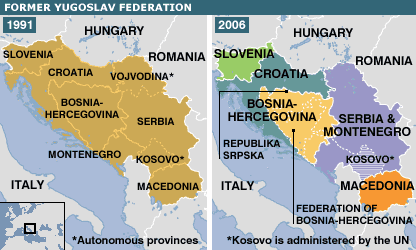
The Bosnian genocide, occurring between 1992 and 1995, was a horrific campaign of ethnic cleansing primarily targeting Bosnian Muslims (Bosniaks) by Bosnian Serb forces. This tragedy was rooted in the disintegration of Yugoslavia, a multi-ethnic federation. After the death of President Tito in 1980, nationalist tensions resurfaced. Yugoslavia began to fracture along ethnic and religious lines, with Slovenia and Croatia declaring independence in 1991, followed by Bosnia and Herzegovina in 1992.
Bosnia’s population was a mix of Bosniaks (Muslims), Serbs (Orthodox Christians), and Croats (Catholics). This diversity led to violent conflicts as Bosnian Serbs (Orthodox Christians), supported by the Yugoslav People’s Army, aimed to create a Greater Serbia, free of non-Serbs. The conflict saw widespread atrocities, including mass killings, forced displacement, and systematic rape of the Bosniak Muslims. The most infamous massacre occurred in Srebrenica in July 1995, where over 8,000 Bosniak Muslim men and boys were killed. The conflict also saw some ‘Heroes of Islam’ rise to help their oppressed Bosniak brothers. In-sha-Allah in the coming paragraphs you will read a gut wrenching tale of the heroes from Indonesia. [Except for this introduction the entire compilation was taken from Sam [@dynaresam] on X.Com [Twitter].]
UNVEILING THE SILENT HEROES – Indonesia’s Invisible Bravery in the Heart of Bosnia’s Struggle.

How did Indonesians carry out an under-the-radar mission to help Bosnia during the most difficult period of the war amidst an internationally imposed embargo?
During the breakup of Yugoslavia in the early 1990s, Bosnia, upon declaring independence, confronted brutal aggression from all directions, making its defense nearly unimaginable. Bosniaks faced an existential threat as a result of widespread ethnic cleansing across the country.
The United Nations Security Council considered the conflict as a civil war and imposed an arms embargo on the entire territory of ex-Yugoslavia. However, the Bosnian side, which possessed the fewest weapons at that moment, suffered the most from the embargo.
While significantly better-equipped enemies from the Serb and later the Croat side began to destroy our villages & cities, the newly formed Bosnian Army strove to arm itself as best it could—through secret channels & routes, by smuggling or by seizing weapons from enemy barracks.
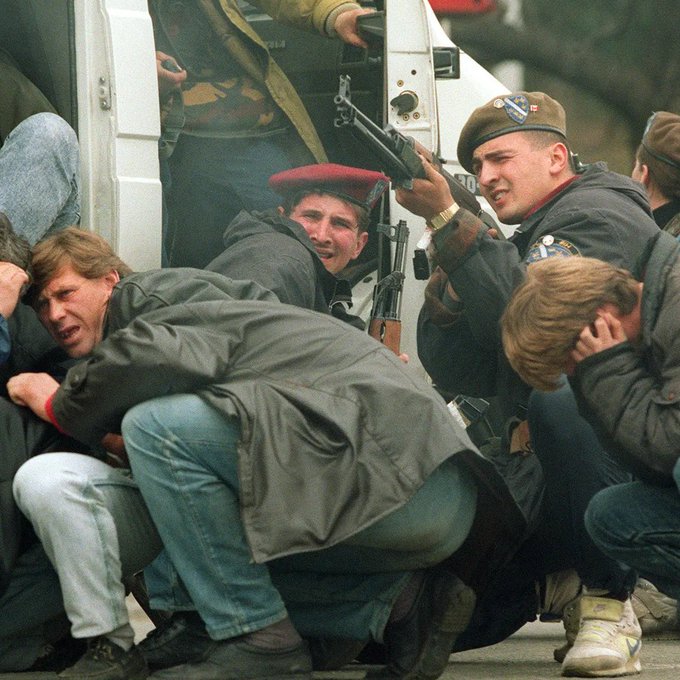
As enemy forces quickly besieged the capital Sarajevo and Bosnia faced threats of falling from the beginning, our brothers from Muslim countries worldwide stepped forward, offering various forms of assistance.

Among the first were the Indonesian brothers, who initiated a secret mission, masterminded by the famous Soeripto and Ustadz Hilmi Aminuddin, may Allah reward them on behalf of the Ummah of Muhammad (Salallahu Alaihi Wa Sallam).
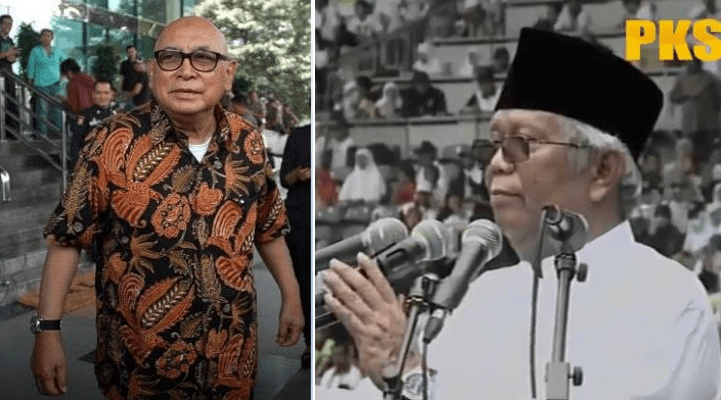
“We would receive help in the form of food, but when we were full, the Serbs would continue massacring us.” was the sentence that intrigued Soeripto and motivated him to consider fulfilling the special mission.
Soeripto’s journey to supply Bosnian forces with weapons began with his introduction to the late Probosutedjo, the younger brother of the late President Soeharto.
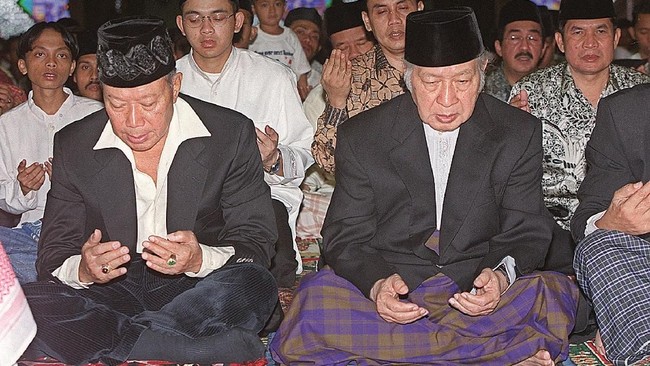
After a long discussion about the misery that hit the Muslims there, including the crucial need for weapons, Probosutejo, as per Soeripto, immediately looked him in the eye and asked, “Are you capable?”, not having any excuse to refuse, “I can only say, ‘I am!'” replied Soeripto. President
Soeharto was informed about this by Prabowo and Sri Edi Swasono, he navigated the mission, but he avoided a direct involvement for obvious reasons.
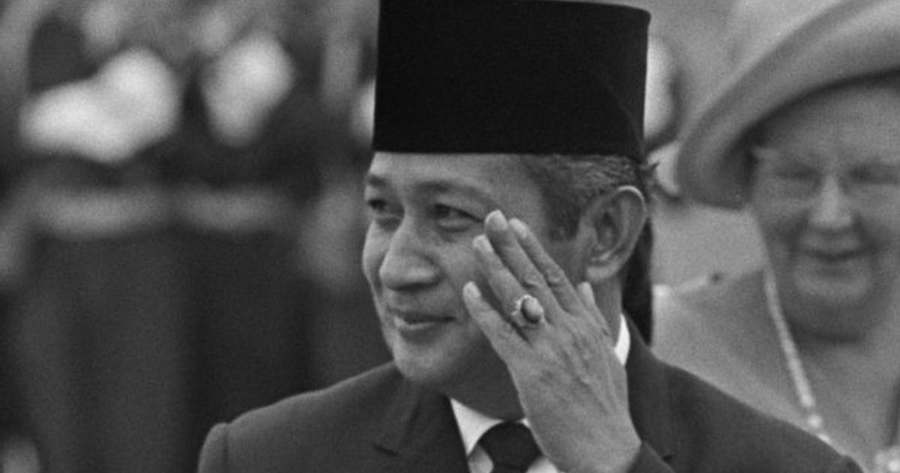
Together with Hilmi, Soeripto took a flight to Zagreb, the capital of Croatia. At the Intercontinental Hotel, they met Adi Sasono, who had also come there to carry out a diplomatic mission between 2 countries. On December 14, 1992, Adi’s team met with Bosnian government envoys.
Bosnian representees were Dr. Ismet Grbo and Senahid Bristrić. At the meeting, Adi Sasono handed over food, medicine, clothing, checks worth $200,000 and $100,000 in cash to the Bosnian government envoys.

However, Ripto now had to contemplate how to provide weapons for Bosnian forces. Before proceeding he needed to develop a detailed plan, considering where the funding would come from, the location for purchasing the weapons and deciding who would be responsible for the operation.
Purchasing weapons on behalf of the state was too risky at that time, as it would violate international law and the decision of the UN Security Council. Hence, he opted to take personal responsibility for the mission, with the trust of Hilmi and Prabowo, who secured the funding.
Another question was, where would the weapons come from? Luckily, Hilmi was able to connect Soeripto with the mujahideen network, remnants of the Afghan war with whom he was familiar. Through this network, Soeripto managed to establish the contact with an arms broker in Zagreb.
He secured weapons from Croat deserters who had formerly been part of the disintegrating Yugoslav army. After viewing a substantial amount of weapons at a former Yugoslav Army military airport to which the dealer had access, Soeripto negotiated a deal.
The agreement stipulated that he would take weapons and ammo worth 2,5 million German marks, with the condition that they should be delivered first to the Bosnian army on Mount Igman, then paid afterwards. He would then bring cash secretly from the Indonesian embassy in Budapest.
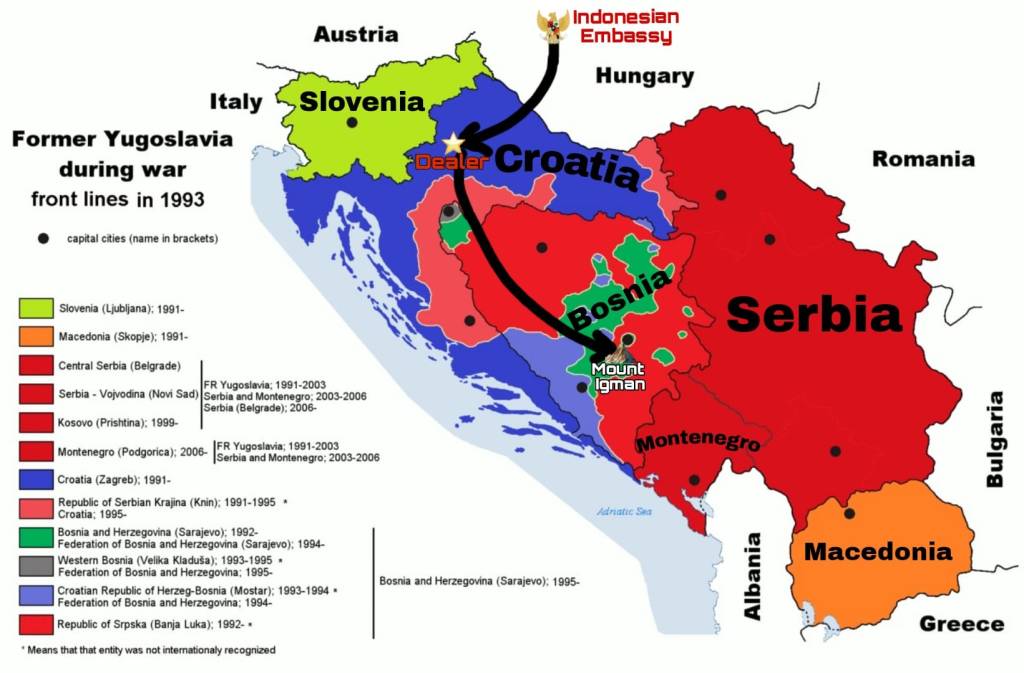
Now, the crucial question for Soeripto was: ‘How can I deliver it?’ As we know, at that time, the Bosnian free territory was entirely besieged by the Serb and Croat armies in several circles, making it unimaginable for someone to supply Bosnia.
Once again, it was mastermind Ust. Hilmi who had a plan. The weapons were transported under the guise of a cover mission – an aid distribution operation carried out by the humanitarian agency, the Egyptian Red Crescent. The shipment included various types of humanitarian aid.
However, in a concealed layer, there was a significant load of weapons that they successfully disguised taking a great risk. What followed was the most stressful 9-hour journey in Soeripto’s life. Passing through 12-13 checkpoints, uncertain about which army would be in control.

Soeripto was once asked how he avoided suspicion despite having an Asian appearance. He explained that the driver was familiar with the area and took backroads to avoid attention. The most thrilling moment occurred when the truck was halted by a squad of guards at a checkpoint.
Out of the three possibilities – the post could belong to Bosnian army, a Serb separatist militia, or a UN Force post. Soeripto would only be safe if it was a Bosnian post, even if exposed. If it was a Serb checkpoint, his fate would be clear, and yet he risked his life.
If it was a UN Troops post, he could be arrested as a war criminal for supplying weapons during an arms embargo. Fortunately, they managed to pass safely and miraculously deliver the weapons to Mount Igman near the besieged Sarajevo, all while enduring freezing cold weather.
While the cargo was being unloaded, Soeripto found himself surrounded by Muslim mujahideen from various countries who had come to Bosnia to support the Bosnian cause. They mostly volunteered from Pakistan, Saudi Arabia, and various parts of the Middle East.
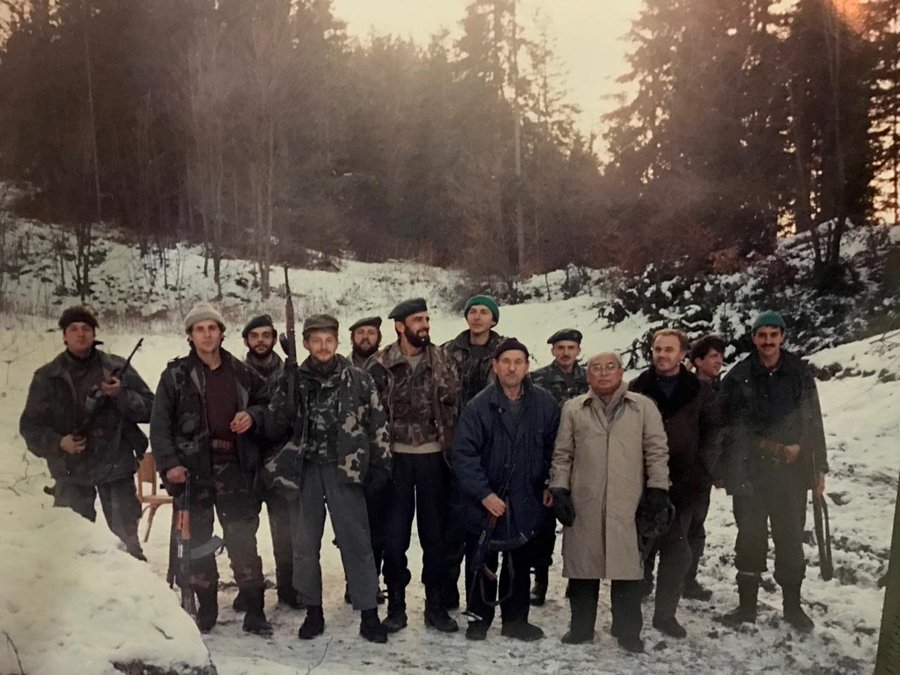
The next morning, after the Fajr prayer, the weapons were tested and they functioned perfectly. After this success, Soeripto was invited to participate in an ambush operation by Bosnians, which he was not fit for, so they laughed and had fun with him on the mountain that day.
Indonesian Pak Soeripto’s Return From Mount Igman
What transpired in the aftermath of the heroic Indonesian Intelligence mission to deliver weapons to the Bosnian army during the most difficult period of the war?
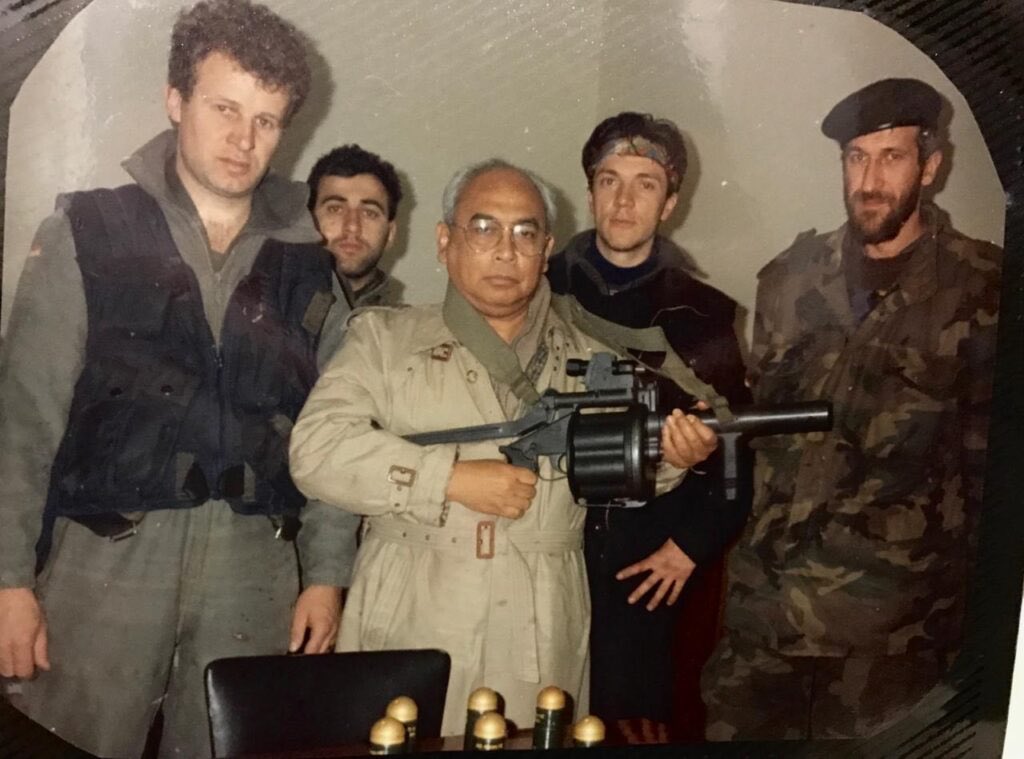
After successfully completing the mission and delivering weapons to the Bosnian Army on Mount Igman, Soeripto’s next challenge was to go to Budapest and take the money to pay the dealer for the weapons. He had to take 2,5 million Deutschemarks from the then-Indonesian Ambassador.
It was a very dangerous task because it had to be kept secret, even from the Indonesian Embassy itself, which was accredited to Bosnia. Despite the risk, they managed to complete the transaction in secret, and Ambassador Soelaeman Pringgodigdo dropped him off at the Hilton hotel.
Carrying a bag full of money, he took a taxi from Budapest to Zagreb. Right before entering Croatia, the taxi driver, fearing potential snipers there, became very nervous. After some negotiating, as per Soeripto, the driver only agreed to take him to a safe hotel instead.
However, within 5 minutes of Soeripto’s entering his room, some woman kept persistently knocking on his door. Annoyed, he asked the hotel manager to remove her, but the manager stated that “after nightfall the Russian mafia was in control there” (the location was never revealed).
Despite feeling anxious, Ripto saw it as a test, yet nothing happened. In the morning he took a bus to Zagreb where he delivered the money to the dealer, thus successfully completing his mission – which had been a secret for many years and for which the Indonesians must be proud.
Interestingly, as we know is that Soeharto himself also visited Bosnia when the country was still in conflict. Pak. Harto planned his visit to Bosnia even though it was on March 11, 1995, two days before the plane carrying UN Special Envoy Yasushi Akashi was shot at while flying.
Before the plane took off, the Indonesian group of officials, including the President Soeharto, was asked to fill out a risk statement form. The form stated that the UN would not be responsible for any incidents that would happen to Suharto and his entourage during the visit.

Soeharto’s bodyguards at that time were only two people, namely Colonel Inf. Sjafrie Sjamsoeddin and the Commander of the Presidential Personal Guard Detachment, Major CPM Unggul K. Yudoyono. About half an hour before landing, there were instructions saying:
“We will enter an area that requires security, passengers are asked to wear helmets and vests”, all the plane passengers took vests and helmets except Soeharto himself who refused. Without a bulletproof vest and helmet, The President, along with the delegation, arrived in Bosnia.
In fact, when the group arrived in Sarajevo, at one point Colonel Inf. Sjafrie Sjamsoeddin, who was a commander of the Presidential Security Forces (Paspampres Group A) saw a 12.7 mm weapon which was usually used to bring down airplanes.
It was rotating continuously following the direction of the plane of Soeharto. To protect the president, Sjafrie ultimately decided to borrow a journalist’s helmet and hide his vest under the overcoat he was wearing. This was done to make him look like Suharto to trick snipers.
Colonel Inf. Sjafrie Sjamsoeddin was an experienced military officer who had great relations with Prabowo, who had a great influence in Indonesia, both then & now, and who according to Soeripto helped secure finances for the mission. Sjafrie was the main bodyguard of Soeharto.

After passing through the Sniper Alley – which during the Siege of Sarajevo was exposed to Serb sniper fire, and as such became infamous as a dangerous place for the movement – Soeharto eventually arrived to the Bosnian Presidential Palace, where President Alija welcomed him.
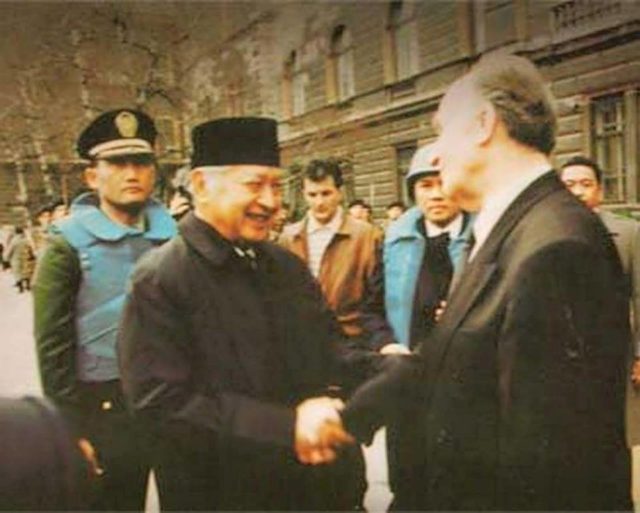
Sjafrie described the situation there as very worrying. They didn’t even have a clean water supply in the palace. He also asked Soeharto why he could dare to risk his life by visiting a country that was at war directly on which he answered that if they can’t help much with money, at least they can boost the moral of the people who are fighting for their freedom. “Seeing Pak. Harto so calm, our morals and self-confidence as his bodyguards also became strong, calm and steady. The president is brave, why should we be nervous”, regardless of nearby shelling.
“The sentences he uttered contained a valuable example for anyone who wants to lead” wrote Sjafrie in his book ‘Pak Harto The Untold Stories’ published by PT Gramedia Pustaka Utama in 2011. Another story is that upon their arrival President Izetbegović thanked Soeharto by saying:
“That kind of assistance is what we need, Your Majesty”, “Weapons, not just clothes, food and medicine.” Immediately, State Secretary Moerdiono got shocked and asked President Soeharto, ‘Mr. President, when did we send weapons to Bosnia?’
Soeharto replied to Moerdiono in Javanese, saying, “Wis. Wis, meneng bae!” (Quiet, quiet, just calm down!). This mission had been a top-secret operation, and even many of Soeharto’s ministers were unaware of it, but Pak Soeripto said that he is sure that Soeharto was aware of it.
Soeharto’s visit to Bosnia may not have succeeded in bringing a solution to end the war as planned. However, the visit inspired the President to give a notable gift (beautiful Istiklal Mosque in Sarajevo) to the Muslims of Bosnia right after the war.
However, regarding Soeripto, during the interview he was asked about any missions that had a lasting impact on him after Bosnia and his today’s intelligence activism.
To this, Soeripto replied, “I can’t answer that. It’s confidential—top secret. Currently, I’m engaged in organizing aid for Palestine (as per interview from March 2023), this mission continues. It goes beyond mere charity; it’s a special task for me even at the age of 87.”

When the interviewer pressed him about the source of these special tasks, Soeripto replied, “I receive them from the Indonesian and Palestinian fighters”. However, he chose not to disclose their specific identities.
All in all, at the end of this wonderful story, let’s make dua for Ust. Hilmi Aminuddin rahimahullah, the teacher of Soeripto, and ask Allah swt to have mercy upon his soul and reward him, as Hilmi was the improviser of this idea which could not have been possible without him.

THE END: I would especially like to thank and give credits to my brothers and sisters from Indonesia who directly or indirectly helped me in researching this story, may Allah reward them all. Ameen.
@AnIndonesianGuy
@nuggetpedaz
@discernia
@breadunderscore
@afathngantuk
-Compiled by Sam [@dynaresam] on X.Com [Twitter], images have been taken from the same Twitter post.
[Put together by Mohammed bin Thajammul Hussain Manna, someone who needs your sincere supplications. 29/June/2024]
Read more about ‘The Srebrenica Genocide Of The Bosniak Muslims’: https://authenticseerah.wordpress.com/2023/07/11/the-srebrenica-genocide-of-the-bosniak-muslims/
Read here about ‘Virtuous Stories Of The Two Sons Of Kuwait … : https://authenticseerah.wordpress.com/2023/10/16/virtues-stories-of-the-two-sons-of-kuwait/
 Saheehus-Seerah