As I watch disturbing footage from the recent crises—Palestinian civilians caught in an unending cycle of violence and chaos in Sudan’s civil war—I am deeply reminded of another horrific period in history, the 1971 Bangladesh Liberation War. While today we witness scenes of suffering where the world’s silence remains deafening, there was a time when one nation rose to the occasion, taking a stand against oppression and stopping a genocide. It was in 1971 when the Indian Army, under the legendary General Sam Manekshaw, intervened in East Pakistan to halt the atrocities being committed against the Bengali people. It remains, to date, the only time in history when an army intervened with the purpose of stopping a genocide.
The Genocide in East Pakistan: How It All Began
The roots of the Bangladeshi liberation struggle can be traced back to the political and cultural disparities between East and West Pakistan, separated not only by distance but by a stark difference in language, culture, and socioeconomic concerns. When Sheikh Mujibur Rahman’s Awami League, representing East Pakistan, won a majority in the 1970 general elections, it signified the desire of the Bengali people for political autonomy. This overwhelming electoral victory, however, infuriated the Pakistani establishment. The ruling junta in West Pakistan, fearing loss of control, canceled the transfer of power to Mujibur Rahman and imposed martial law, leading to an explosive reaction.
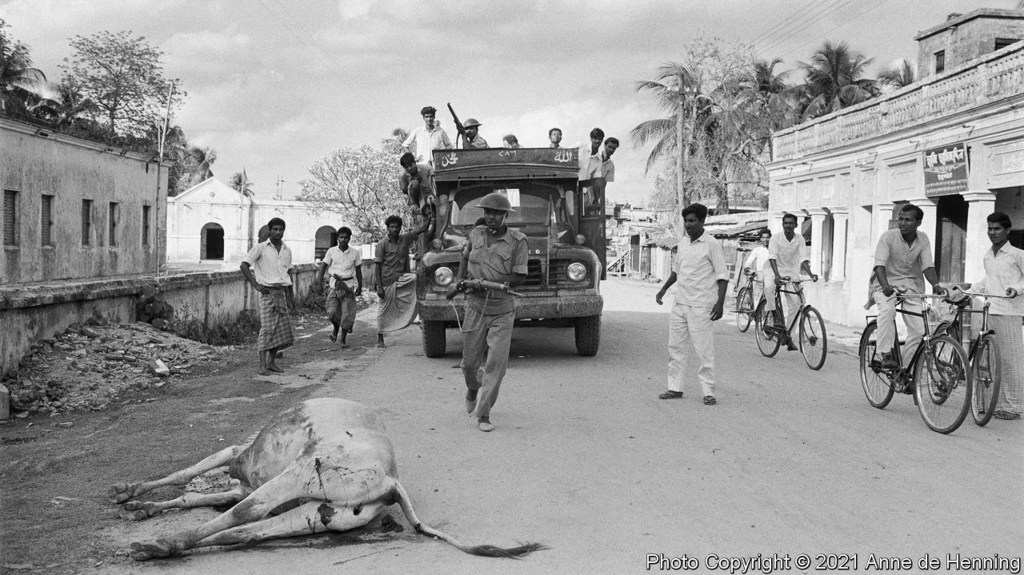
On March 25, 1971, the Pakistani Army launched Operation Searchlight, a brutal campaign to crush the Bengali independence movement. The operation quickly devolved into a horrifying massacre; universities, hospitals, and neighborhoods were targeted, and soldiers ruthlessly killed men, women, and children alike. Estimates suggest that hundreds of thousands of Bengalis were killed, with some reports putting the number as high as three million. Over two hundred thousand Bengali women became victims of systematic sexual violence, used as a weapon to break the spirit of an entire populace. Villages were burned, communities decimated, and the very air of East Pakistan became thick with fear and grief.
Silence of the International Community
The world, however, watched in silence. The Cold War had divided global alliances, and Pakistan’s strategic ties with both the United States and China led to a quiet but powerful indifference from the superpowers. Despite reports from international media and eye-witness accounts that highlighted the brutality of the situation, no significant global intervention occurred. The United Nations remained a bystander, with veto powers and geopolitical interests ultimately muting any concerted action.
The Refugee Crisis: A Challenge for India
As the violence escalated, a massive wave of refugees began pouring across the border into India, particularly into the eastern state of West Bengal. Over ten million Bengalis sought refuge, creating one of the largest forced migrations in recent history and a massive humanitarian crisis for India. The influx stretched India’s resources and infrastructure to the breaking point, testing the resilience of the nation. Recognizing the severity of the situation and the threat to regional stability, then-Prime Minister Indira Gandhi made the critical decision to act. It was a bold move to defend human rights, even if it meant going to war.

The Rise of Sam Manekshaw
Field Marshal Sam Hormusji Framji Jamshedji Manekshaw, known fondly as “Sam Bahadur” (Sam the Brave), was appointed as the Chief of the Indian Army in 1969. Known for his exemplary bravery, strategic genius, and deep compassion, Manekshaw was a soldier of rare integrity and charisma. His experience spanned multiple conflicts, from World War II to the Indo-Pakistan wars, and he was respected by soldiers and politicians alike. An officer of unmatched candor, Manekshaw’s leadership was crucial in shaping India’s military response to the crisis in East Pakistan.
In a famous incident, when Prime Minister Indira Gandhi urged Manekshaw to immediately engage in the conflict, he candidly advised against hasty action. With a combination of strategic foresight and unshakable resolve, Manekshaw emphasized the need for preparation, convincing Gandhi to delay until the army was fully prepared. This decision, made with remarkable clarity, proved vital to the success of India’s military campaign.
The Resistance Builds: Mukti Bahini
Meanwhile, the people of East Pakistan, driven by a burning desire for freedom, had begun to organize their own resistance. The Mukti Bahini, or “Liberation Army,” was formed with Bengali soldiers and civilians, leading guerrilla operations against the Pakistani military. India played a supportive role, training and equipping the Mukti Bahini, which became a formidable force alongside the Indian Army. The strength and resilience of the Mukti Bahini reflected the Bengali people’s indomitable spirit and their willingness to fight for justice and independence.
The Role of Sam Bahadur Manekshaw: Strategic Genius in Action
With preparations complete and the nation behind him, Manekshaw launched Operation Vijay (Victory) in December 1971. The Indian Army, Navy, and Air Force launched a coordinated attack, crossing into East Pakistan. The battles that ensued were fierce, with Indian forces facing well-entrenched Pakistani troops. But with Manekshaw’s strategic brilliance and the support of the Mukti Bahini, the Indian Army advanced rapidly. Manekshaw’s command style was exemplary; he ensured that discipline was maintained, even in the heat of war.
One of the fascinating anecdotes about Manekshaw’s leadership during the war was his insistence on humane treatment of Pakistani soldiers. He instructed his troops to abide by the highest ethical standards, stressing that they were liberating, not conquering. Stories emerged of Indian soldiers sharing food and medical care with captured Pakistani troops, actions that won respect worldwide and demonstrated the moral high ground India held in the conflict.
The Fall of Dhaka: Pakistan’s Surrender
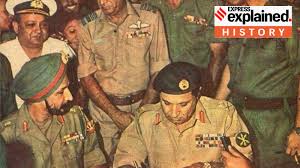
After just 13 days of intense fighting, on December 16, 1971, Pakistan’s Lieutenant General A. A. K. Niazi signed the Instrument of Surrender in Dhaka. This decisive moment, achieved with minimal loss of civilian life, marked the end of the Pakistani occupation and the birth of Bangladesh as an independent nation. Over 90,000 Pakistani soldiers were taken as prisoners of war, the largest surrender since World War II, and they were treated with dignity by Indian forces. The Indian Army’s respect for their defeated foes, even amid victory, remains a powerful testament to their discipline and humanity.
The Shimla Agreement
In 1972, the Shimla Agreement was signed between India and Pakistan, establishing a framework for peaceful relations moving forward. One key clause involved the respectful repatriation of Pakistani POWs, in line with India’s commitment to peace and humanity. Through this agreement, India demonstrated restraint, avoiding any punitive action against Pakistan despite the atrocities that had provoked the conflict.
A Nation’s Army Stops a Genocide
The 1971 Bangladesh Liberation War stands out as a unique chapter in world history. It marked the only time when a nation’s army intervened to ‘actually stop’ a genocide, instead of just intervening for a short while and backing out. India’s role in liberating East Pakistan from the grip of terror and oppression was a heroic stand for justice, a powerful statement that humanity must prevail over politics and tyranny. It is a reminder of the moral responsibility nations have to prevent suffering and injustice, a responsibility often neglected today.
Honoring The Tiger
The legendary Field Marshal Sam Manekshaw, who led India to this monumental victory, will forever be remembered as an exceptional leader and human being. His courage, intellect, and compassion set him apart. He was a “Tiger” in every sense—a warrior who combined the ferocity of battle with a deep respect for human dignity. It is for this reason I chose to call him “Tiger Manekshaw.” A tiger does not kill out of malice but out of necessity and honor. Sam Manekshaw embodied these qualities in his conduct, leading India to victory not for glory, but to stop the bloodshed and to give the people of Bangladesh their rightful freedom.
Sam Manekshaw remains an enduring symbol of integrity and humanity, a man who demonstrated that even in war, principles must be upheld. His legacy serves as an example for all nations and leaders, reminding us that sometimes, the right path is not the easiest, but it is always the one worth taking. In the annals of history, his name will forever shine as a beacon of courage, honor, and compassion—qualities that every soldier, and every human, should aspire to embody.
Sam Manekshaw- A National Hero In Bangladesh
In the annals of Bangladesh’s liberation, Field Marshal Sam Manekshaw’s name shines brightly. The Bangladeshi people reverently honor his legacy, recognizing his selfless support for the Mukti Bahini freedom fighters. His name is invoked alongside national heroes, and monuments, roads, and institutions bear his name. Transcending borders, Manekshaw symbolizes the unbreakable bond between Indian and Bangladeshi history.
Field Marshal Sam Manekshaw died on June 27, 2008, aged 94. He received several awards during his career, including the Padma Bhushan, Padma Vibhushan, and Military Cross.
“Whether an atom bomb is necessary or not, in this world if you want to be recognized, if you don’t want to be kicked about, you have to be powerful both militarily and economically.” – Sam Manekshaw.
-Written by Mohammed Thajammul Hussain Manna (31st October 2024)
 Saheehus-Seerah