📌 Who is Shaikh Abdul Aziz Az-Zahrani who passed away tonight—Friday night (25th April 2025)?
The distinguished scholar and hadith narrator: Shaikh Abdul Aziz bin Abdullah Al-Zahrani.
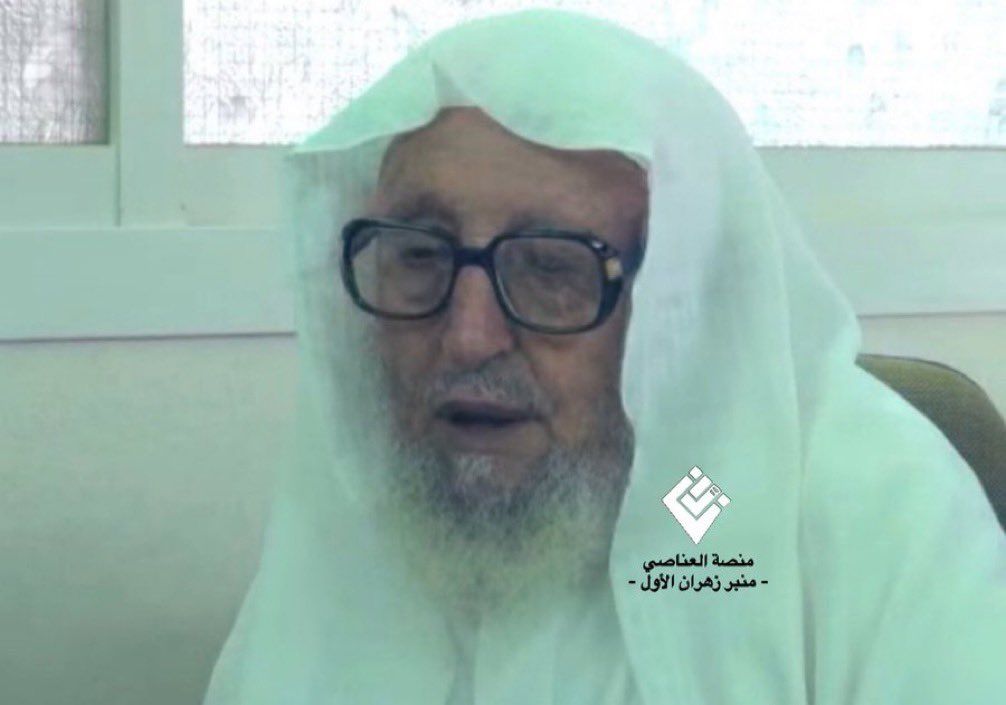
– One of the narrators of hadith with an unbroken chain of transmission to the Messenger of Allah (Salallahu Alaihi Wa Sallam).
– The first to advocate for an official site for sacrificial slaughter during Hajj, the first to prohibit slaughtering within the pilgrims’ camps, the first to ban livestock from entering Mina during the days of Tashreeq, and the first to establish water faucets along pedestrian pathways.
Though relatively unknown among the general public, he is widely recognized among hadith scholars, jurists, and academic researchers.
Birth and Early Education:
Shaikh Abdul Aziz was born in 1353 AH in the province of Al-Mandaq, north of the Al-Baha region. He joined the Kuttab (traditional school) at the age of five, being the youngest among his peers due to his intelligence and sharpness. He studied under Shaikh Abdullah bin Saadi Al-Ghamdi, learning the fundamentals of Tawheed and reading from Surah Al-Ankabut to Surah An-Nas. When he turned ten, his father passed away in approximately 1362 AH, followed by the death of his mother two years and six months later. From that point onward, he dedicated himself to the responsibilities of life.
Life in Makkah and Career:
As the orphaned youth grew older, he married a woman older than himself, intending that she would help raise his younger brother and sister. He later decided to move to Makkah Al-Mukarramah seeking sustenance and briefly worked in the military before transferring to the Municipal Secretariat of Makkah, where he served for 25 years.
Due to his diligence and integrity, Shaikh Abdul Aziz was appointed by Abdullah Areef, the then Secretary of Makkah, as President of the Municipality of Mina, a position he held for about 11 years. He introduced numerous developmental regulations, including measures to curb unauthorized expansion, established water taps for pilgrims along footpaths, designated an official slaughter site for Hajj, prohibited slaughter within tents, and prevented animals from entering Mina during Tashreeq except in designated areas near slaughter zones before Eid day. He pioneered a system to monitor compliance with these regulations and created seasonal posts stationed at roads and valleys leading to Mina to enforce these measures, laying the groundwork for the organizational structure of Mina that exists today.
Scholarly Pursuits and Hadith Transmission:
While working in Makkah, Shaikh Abdul Aziz actively attended scholarly circles in Al-Masjid Al-Haram, which functioned as a modern-day academic institution. He participated in lessons after Fajr, Asr, Maghrib, and Isha, particularly under Shaikh Abdul Haq Al-Hashemi and Shaikh Suleiman Al-Hamdan, while also benefiting from scholars such as Shaikh Abdullah Al-Bassam, Shaikh Hasan Mashat, Shaikh Muhammad As-Somali, and Shaikh Yahya Abadi.
Upon deepening his scholarly expertise, Shaikh Abdul Aziz resigned from his municipal duties to dedicate himself entirely to Islamic sciences. He became a beacon for hadith scholars and obtained an Ijazah to narrate hadith with an unbroken chain of transmission to the Prophet ﷺ. Prominent scholars from across the Arab world visited his home in Al-Mandaq to seek hadith transmission authorization (Ijazah), with over 130 scholars receiving ijazah from him, including:
– Dr. Saleh bin Hamid (former President of the Supreme Judicial Council)
– Dr. Saad bin Nasser Al-Shathri (Royal Court Advisor)
– Dr. Aid Al-Qarni (Islamic preacher)
– Dr. Abdul Rahman Al-Ashmawi (renowned poet)
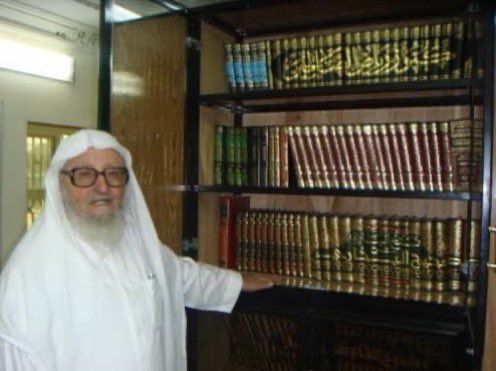
Notable Works and Contributions:
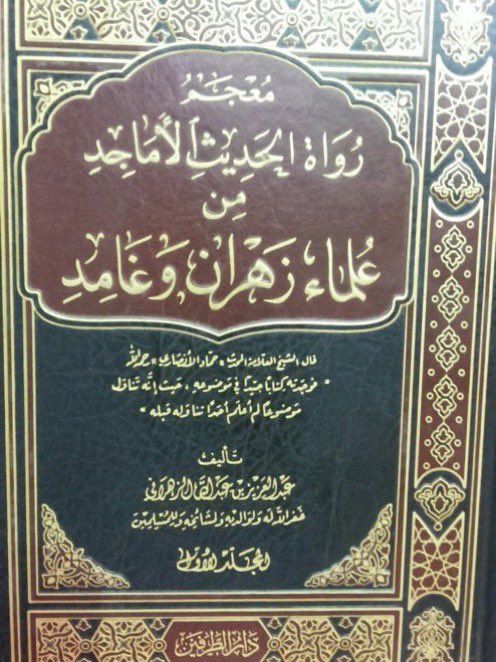
Shaikh Abdul Aziz authored the comprehensive “Dictionary of Distinguished Hadith Narrators from the Scholars of Zahran and Ghamid,” [Ruwaath-ul-Hadith Al-Amajid Min Ulama Zahran Wa Ghamid] published in 15 volumes spanning 7500 pages. This monumental work includes rare biographies of hadith transmitters, assessing their reliability and weakness, with 12,500 hadiths cited within. The Senior Scholar Abdullah Al-Mani’ initially objected to the book’s title but later approved it after reviewing its contents.
Additionally, Shaikh Abdul Aziz authored several other works, including:
– “Islamic Reflections”
– “Portraits from the Lives of Early Muslim Youth”
– “Defense of the Noble Companion Abu Huraira (Radi Allahu Anhu)”
His Scholarly Training and Hadith Ijazah:
Shaikh Abdul Aziz spent more than ten years studying under Shaikh Abu Muhammad Abdul Haq bin Abdul Wahid bin Muhammad bin Hashem, a teacher at Al-Masjid Al-Haram, covering major works such as:
– Sahih Al-Bukhari & Sahih Muslim
– Kitab Al-Tawheed by Ibn Khuzaymah
– Kitab Al-Asma’ wal-Sifat by Al-Bayhaqi
– Tafsir Ibn Kathir
He received formal Ijazah in several core Islamic texts, including:
– The Holy Quran
– Muwatta Malik
– The Six Canonical Hadith Collections (Sahih Bukhari, Sahih Muslim, Sunan Abu Dawood, Sunan At-Tirmidhi, Sunan An-Nasa’i, Sunan Ibn Majah)
– Sunan Ad-Darimi, Sunan Ad-Daraqutni, Sunan Al-Bayhaqi
– Musnad Ahmad, Sahih Ibn Khuzaymah, Sahih Ibn Hibban, Sahih Al-Hakim
– Tafsir Jalalain, Tafsir Ibn Kathir, Tafsir Al-Tabari
Additionally, Shaikh Abdul Aziz studied Kitab At-Tawheed more than eight times under Shaikh Suleiman bin Abdul Rahman Al-Hamdan, receiving high sanad authorization in the books of Shaikh Muhammad bin Abdul Wahhab and other classical texts. He was also granted Ijazah by Shaikh Hamad bin Muhammad Al-Ansari and Shaikh Abdullah bin Abdul Rahman As-Sa’d, recognizing his scholarly transmission.
Legacy and Recognition:
According to records in the Modern Shamela Library, Shaikh Hamad bin Muhammad Al-Ansari Al-Khazraji Al-Sa’di (born in 1344 AH in Tadmekka, Mali) was renowned for memorizing numerous classical Arabic texts. When a student from Al-Baha once visited Shaikh Hamad, he asked, “Do you know Shaikh Abdul Aziz Al-Zahrani?” The student replied, “No.” Shaikh Hamad then responded, “Then whom do you know? He is the only serious student of knowledge in Al-Baha.”
(Translated by Mohammed bin Thajammul Hussain Manna from the Arabic Twitter thread of @zahran_news. Adapted slightly for reading.)
[May Allah reward the Shaikh on behalf of Islam and the Muslims and grant him Jannat-ul-Firdaws.]
 Saheehus-Seerah