Karnataka’s Chance to Become India’s Second Lion State: Why We Must Create a Lion National Park Now
[By Mohammed Thajammul Hussain Manna
B.E. (Aeronautical Engineering), B.A. (Islamic Studies), currently pursuing M.S.W.; passionate advocate for animal conservation.]
Introduction: A Roaring Opportunity
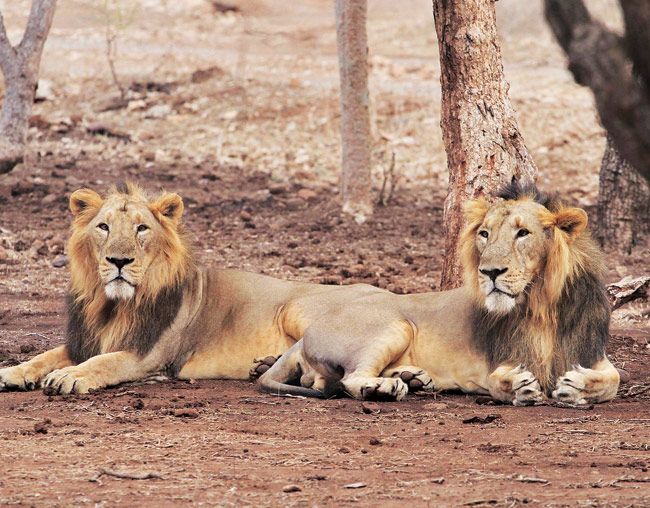
India stands as a beacon of wildlife diversity—especially revered as the land of tigers. But it is incomplete without lions. Today, Asiatic lions survive only in Gujarat’s Gir forests, making Gujarat the solitary “Lion State.” Karnataka, in contrast, has the potential to shine anew: with strategic vision, it could become India’s Second Lion State, hosting both wild tigers and wild lions in a natural setting.
This is not mere speculation. Karnataka already manages a significant population of captive lions, and boasts thriving habitats and an active conservation culture. We must seize this rare chance—for the sake of lions, the ecosystem, and the people of Karnataka.
1. The Gir Paradox and Why a Second Habitat Matters
Gujarat’s success in increasing Gir’s lion population—from 674 to 891 in five years—is commendable[1]. But this boom has created a crisis of space, leading to human-wildlife conflict and environmental strain.[2]
Having a single wild population in one state is a biological and geopolitical risk. A disease outbreak or natural disaster could wreak havoc. Though plans existed for a Madhya Pradesh release at Kuno, Gujarat has steadfastly refused translocation. Karnataka can fill this critical gap and safeguard the species by establishing a second, sustainable, and geographically distinct home for Asiatic lions.
2. Karnataka’s Captive Lions: A Foundation for Rewilding[3]
Karnataka already maintains a significant number of lions in captivity. While the total count is approximately 33-41 individuals (based on what reports online are relied upon), it comprises a mix of Asiatic, African, and hybrid individuals, each with distinct potential roles. This stock, managed by experienced personnel, provides a unique foundation for various lion-related initiatives.
List of Reported Lions in Karnataka Zoos and Safaris (with types where specified):
- Bannerghatta Biological Park (Bengaluru): As of February 16, 2024, the park records 19 lions, most of which are identified as hybrids (a combination of Asiatic and African lions).
- Mysuru Zoo (Sri Chamarajendra Zoological Gardens): As of July 16, 2023, the zoo houses 8 lions (5 adults and 3 cubs). The adult population includes 2 African lions, 2 pure Asiatic lions, and 1 Afro-Asiatic hybrid. The 3 cubs, born from an Afro-Asiatic lioness and an Asiatic lion, are considered Afro-Asiatic hybrids.
- Shivamogga (Tyavarekoppa) Lion and Tiger Safari: Reports indicate this safari has 4 lions, with a male-female ratio of 3:1, all Asiatic.
- Ballari (Atal Bihari Vajpayee Zoological Park): This safari park houses 4 lions (two males and two females).
- Gadag (Binkadkatti) Zoo: As of December 2022, the zoo has 4 lions. This includes two newly introduced pure Asiatic lions (male Shiva and female Ganga) and two older male lions, Dharma and Arjuna, which were transferred from Bannerghatta Biological Park.
- Belagavi (Kittur Rani Chennamma Mini Zoo): As of October 2024, the mini zoo houses 2 lions. Three Asiatic lions were initially brought in February 2021, but one female lion, Nirupama, died in February 2025.
This diverse captive stock, particularly the pure Asiatic lions at Mysuru and Gadag, alongside Karnataka’s established expertise in big cat management, provides a foundational platform for a dedicated Asiatic lion rewilding program. It also offers potential for innovative approaches to tourism engagement.
3. A Local Feasibility Case: Barda Wildlife Sanctuary
The Barda Wildlife Sanctuary in Gujarat offers a compelling, real-world precedent for lion dispersal and management:
- Area: Approximately 192 square kilometers—a compact natural habitat within Gujarat.
- Lion Population: Currently hosts around 17 Asiatic lions, primarily a result of natural dispersal from Gir over time. This includes recent sightings of a male lion and subsequent cub births, demonstrating natural range expansion. Gujarat’s ‘Project Lion’ further aims to strengthen this population by translocating 40 lions to Barda, highlighting the state’s internal strategy to create satellite populations.
This demonstrates that even geographically proximate, well-managed reserves can facilitate range expansion for lions. However, for true genetic and disease isolation—critical for the long-term survival of the species—a separate, distant habitat like those available in Karnataka is crucial. This goes beyond mere range expansion to establish a distinct, self-sustaining second population, mitigating risks inherent in a single population.
4. Scientific Pathways: Prioritizing Pure Asiatic Lions with Flexible Tourism Options
Rewilding requires smart tools, primarily focused on establishing a genetically robust, pure Asiatic lion population:
- Prioritize Pure Asiatic Breeding: The immediate and paramount goal must be the selective breeding of pure Asiatic lions in semi-wild enclosures. This would involve potentially acquiring additional pure genetic stock from other established conservation breeding programs (e.g., Gujarat’s Sakkarbaug Zoo) to ensure genetic diversity and suitability for a wild release. In case we do not acquire new lions from Gujrat, the available lions from Zoos and Safaris in Karnataka must be selected for the project.
- IVF and embryo transfer techniques (used in African lion conservation): While pioneering and costly, these advanced reproductive techniques offer accelerated population growth possibilities for pure Asiatic lions and could be explored for rapid augmentation.
- Tourism & Engagement with Non-Pure Lions (An Open Option): As a distinct, parallel initiative, Karnataka could consider the ethical rewilding of suitable hybrid or African lions within designated, securely fenced tourist safari zones. While such initiatives would not contribute to the genetic conservation of the pure Asiatic lion species, they could generate significant revenue and public engagement, fostering a ‘lion culture’ and contributing to the economic viability of the broader conservation effort. This approach would require clear public education to distinguish such tourism-focused initiatives from the core pure Asiatic lion rewilding program.
Thus, a dual-track model—conservation breeding of pure Asiatic lions for a wild population alongside a carefully managed, distinct tourism program using non-pure lions—is both economically realistic and ecologically sound for different objectives.
5. Ecosystem Readiness: Prey Base and Biodiversity Synergy
Karnataka’s forests—Bandipur, Nagarahole, Bhadra, Dandeli, among others—boast abundant prey: sambar, chital, nilgai, wild boar, and gaur. Some of these herbivores could be translocated from zoos or surplus forest areas to the pilot site to ensure a healthy ecosystem.
A Lion National Park would also protect other endangered species: four-horned antelope (Vulnerable), slender loris (Near Threatened/Endangered), Indian pangolin (Endangered), dhole (Endangered), leopard (Near Threatened), and smooth-coated otter (Vulnerable) etc. The conservation dividends would extend far beyond lions.
6. Economic Promise and Employment Gains
Wildlife tourism doesn’t just charm visitors—it builds livelihoods.
- Direct jobs: forest guards, vets, biologists, naturalists, and tourism professionals.
- Local livelihoods: homestays, handicrafts, eco-lodges, food services, and transport.
- Research & education: new wildlife training centers could create jobs for trainers, educators, and researchers.
- Infrastructure and supply chains: construction, maintenance, supply of goods and services.
In Gir, lion tourism sustains thousands of families. Given Karnataka’s superior tourism networks (Mysuru, Coorg, Hampi), this new park could generate comparable—if not greater—economic activity.[4]
7. Lions in Indian Zoos: Karnataka’s Significant Position
Karnataka boasts a substantial captive lion population, as mention earlier, with approximately 33-41 individuals across its facilities. This demonstrates strong expertise and infrastructure in big cat management. This significant presence positions Karnataka uniquely among states outside Gujarat for a potential rewilding initiative, as it already possesses the foundational knowledge and logistical capacity.
8. Direct Action Plan for the Government
To ensure success, I propose the following phased action plan:
- Policy declaration and site selection (Bandipur/Bhadra/Dandeli region, chosen for its robust prey base and extensive forest cover, acknowledging that while the Asiatic lion’s historical range was wider, these sites offer optimal conditions for a new wild population today).
- Habitat enhancement (prey augmentation, water access, buffer zones).
- Community integration (transparent relocation or livelihood programs, livestock compensation).
- Capacity building (training forest staff, local guides, and naturalists).
- Tourism infrastructure (safaris, visitor centres, eco-lodges, partnerships, carefully demarcating zones for pure Asiatic lions and any separate hybrid/African lion safaris).
- Pilot pure Asiatic lion introduction (starting with a semi-wild enclosure and expanding based on adaptation, potentially with animals acquired from established pure breeding programs).
- Awareness campaigns (Kannada media, schools, NGOs to build public support, clearly distinguishing conservation goals for pure Asiatic lions).
- Establish a Lion Conservation Authority for oversight and scientific monitoring.
Conclusion: A Legacy Waiting to Roar
Karnataka stands on the edge of a historic opportunity—to become the only Indian state with wild pure Asiatic lions and tigers. We have the skilled personnel, suitable land, and the foundational captive stock and infrastructure. All we need now is the political will to act.
If Karnataka moves swiftly, we can transform this vision into valleys where pure Asiatic lion cubs roam again—symbols of conservation success and seeds of rural prosperity. Concurrently, by exploring innovative, ethical tourism models with other lion lineages, we can further galvanize public support and economic benefits.
The world is watching. Let Karnataka be the state that reintroduced the roar!
[1] See ‘Asiatic lions face danger in ‘overcrowded’ Gir, some of them need relocation’.https://www.indiatoday.in/mail-today/story/asiatic-lions-gir-forests-gujarat-saurashtra-conservation-252426-2015-05-11
[2] Limited space in natural reserves poses severe threats to lions and tigers. It forces them into smaller territories, intensifying competition for scarce prey and suitable mates. This habitat fragmentation increases human-wildlife conflict as big cats venture into human settlements seeking food or new territories, often resulting in retaliatory killings. Crucially, limited space also restricts dispersal, leading to genetic isolation and inbreeding, which weakens populations and makes them more vulnerable to diseases and environmental changes.
[3] Rewilding an animal, in simple terms, means returning a species to a wild or semi-wild state within its natural or historically appropriate habitat. This process involves more than just releasing animals; it encompasses a comprehensive strategy to equip them for self-sufficiency and to thrive without human intervention. A prime example of successful rewilding is the 1995 reintroduction of gray wolves to Yellowstone National Park. Their absence had led to an overpopulation of elk, causing overgrazing of riparian vegetation like willow and aspen. The wolves’ return initiated a “trophic cascade,” altering elk behavior and numbers, allowing plants to recover. This revitalized riverbanks, boosted beaver populations, and benefited diverse wildlife, showcasing the critical role of apex predators in ecosystem health.
[4] An example of what Safari tourism generates is well explained by ‘The Tyavarekoppa Lion and Tiger Safari in Shivamogga, Karnataka’, which reported an income of 5 crore rupees (INR 50 million) for “this year,” referring to the period around the publication date of March 25, 2025. This revenue was generated from approximately 3 lakh (300,000) visitors. [etvbharat.com, cza.nic.in] So by this average the Zoo will probably earn 19-20 crore rupees by the end of December.
 Saheehus-Seerah