Preface
This note presents a series of AI-assisted historical map reconstructions of the Arabian Peninsula, tracing the transition from the fragmented Najdi political landscape before the Dirʿiyyah alliance to the First, Second, and Third Saudi States.
The aim is explanatory rather than polemical: to visualize changing centers of power, campaigns, rival dynasties, and external pressures across Arabia in a chronological way. These maps are not archival maps from the periods themselves, but modern visual reconstructions generated with AI from historically grounded prompts and then checked against published historical reference works.
The written notes and map specifications were based chiefly on the Library of Congress country study on Saudi Arabia, the University of Leeds / White Rose thesis on the First Saudi State, and reference material from Britannica and Cambridge for chronology and regional context. To keep terminology and dynastic framing closer to indigenous Saudi usage, I also consulted Saudipedia, especially its entries on the First Saudi State, Second Saudi State, and the unification of Saudi Arabia. In that sense, the project combines AI image generation with a source-guided historical framework rather than presenting the visuals as unmediated historical originals. [See: Library of Congress Cambridge, Saudipedia: First Saudi State, Saudipedia: Second Saudi State, Saudipedia: Unification of Saudi Arabia]
Map 1
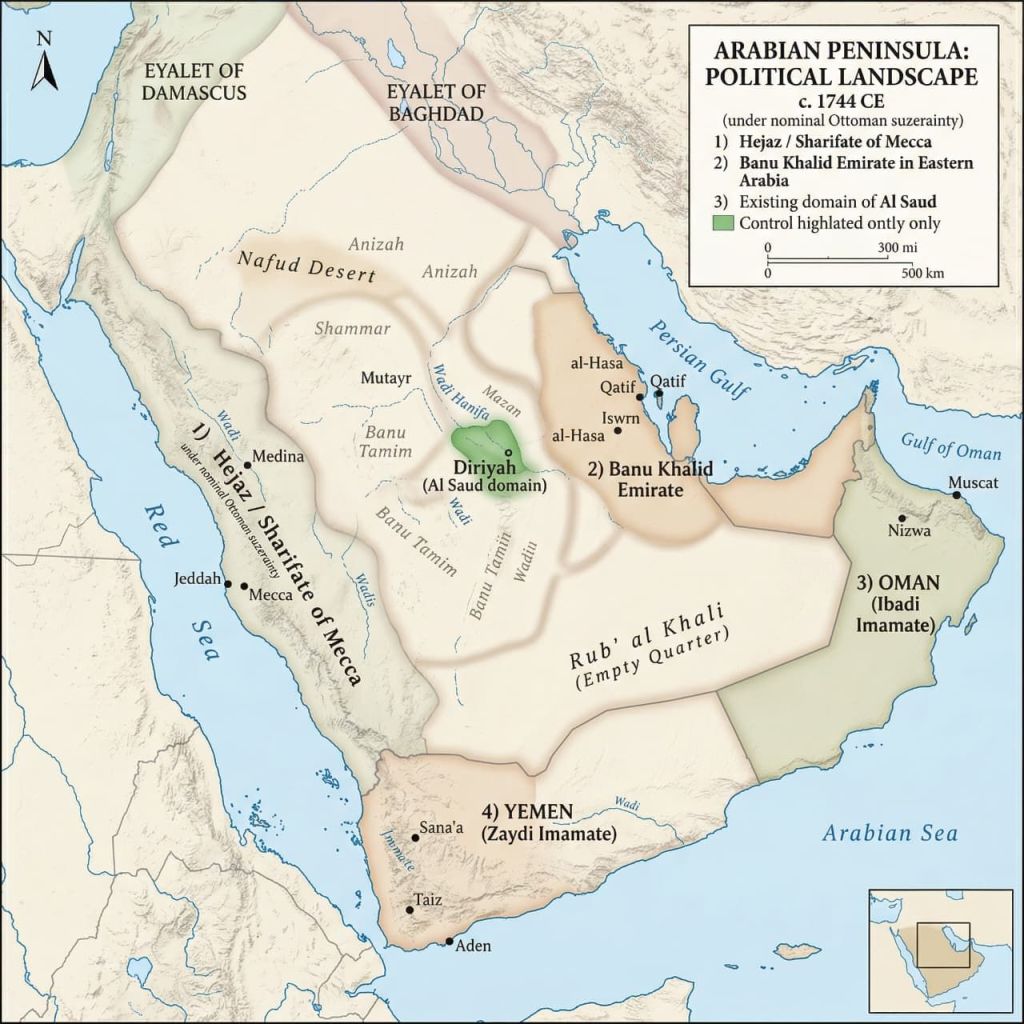
The State of Ad-Diriyyah, the small citydom of Aal-Saud in 1744 CE, when Muhammad bin Abdul Wahhab (Rahimahullah, born 1703 CE) began his Dawah.
Who was Muhammad bin Abdul Wahhab bin Sulaiman At-Tameemi?
Muhammad bin Abdul Wahhab (1703–1792) was an eighteenth-century Najdi Hanbali scholar and reformer, originally from al-ʿUyaynah who became the religious architect of the movement that later allied with the House of Saud (Aal-Saud). After early study in Najd, he traveled to the Hejaz, Madinah, Basra, Iraq, and eastern Arabia, then returned to Najd preaching against saint-veneration, shrine practices, and what he saw as later religious innovations. His message presented itself as a return and revival to orthodoxy and pure Islam: a call to restore the beliefs, worship, and moral order of the early Muslim community. Among the main scholars who shaped his learning were Shaykh ʿAbdullah ibn Ibrahim ibn Saif, Shaykh Muhammad Hayat as-Sindi al-Madani, and Shaykh Muhammad al-Majmuʿi. He was very much influenced by the works of Imam Ibn Taymiyah and Imam Ibn al-Qayyim (May Allah’s mercy be upon them all). In 1744, his alliance with Muhammad bin Saud in Dirʿiyyah gave this reform project political protection and state-building force.
Map 2
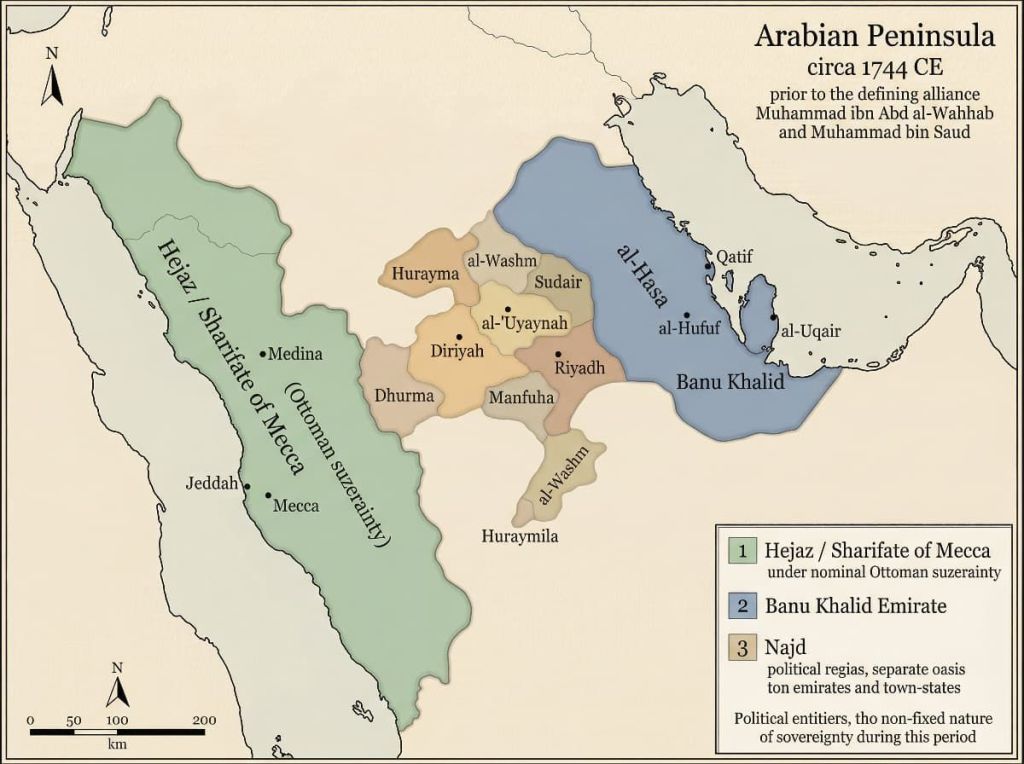
Muhammad bin Abdul Wahhab (Rahimahullah) was born in the city state of Al-Uyaynah. You can see the different kingdoms in the Arabian Peninsula.
Map 3
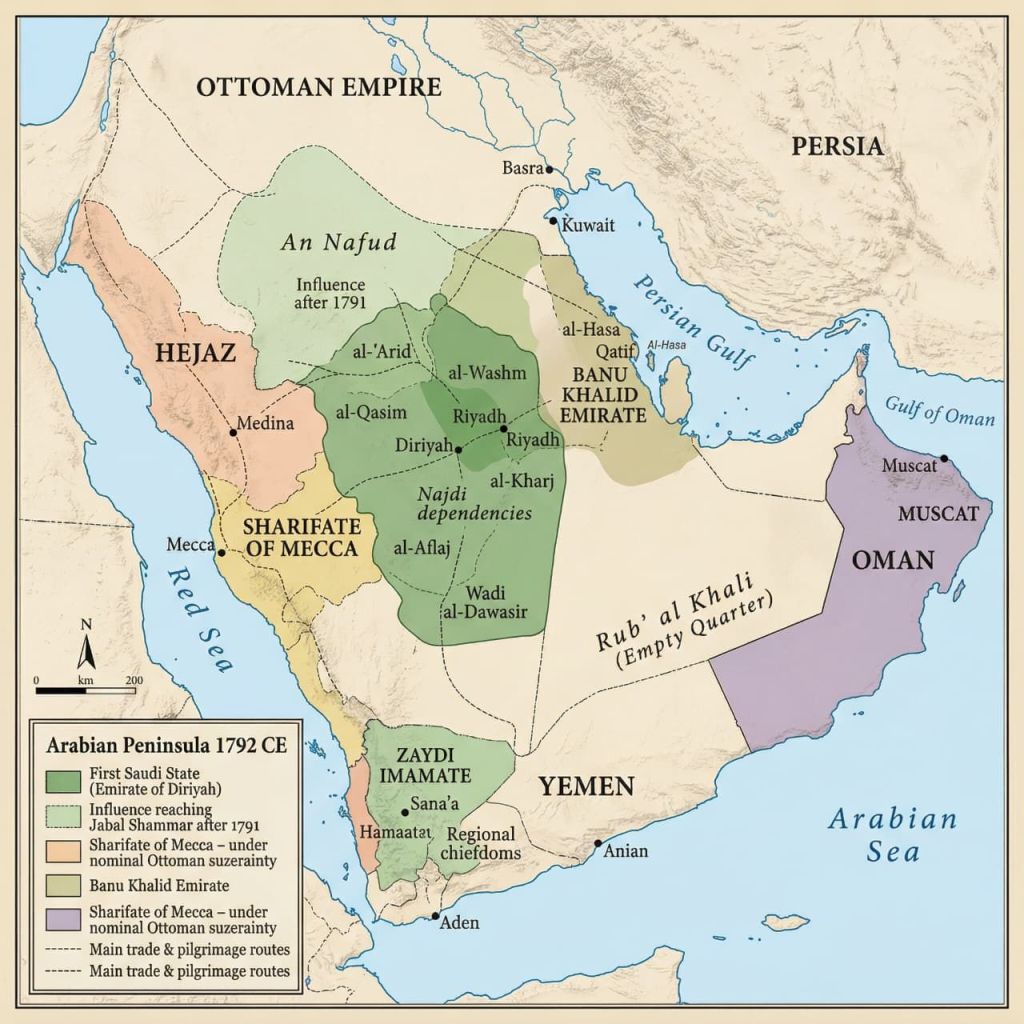
The first Saudi state (Name: The Emirate of Ad-Diriyyah) at the death of Muhammad bin Abdul Wahhab Rahimahullah (1792 CE). The dark green area shows the regions captured by them.
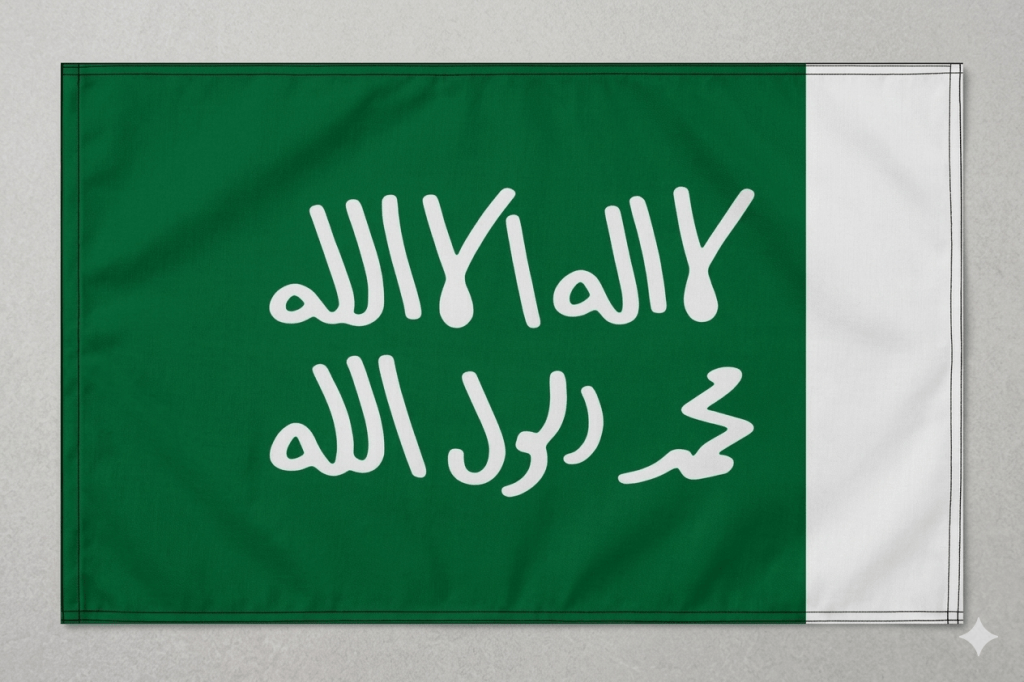
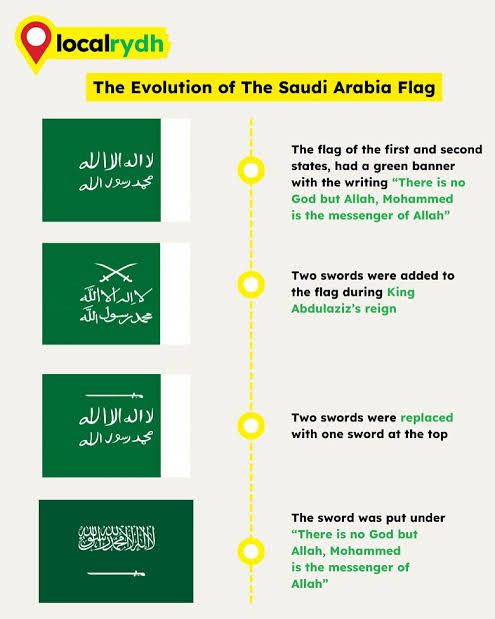
The flag of the Emirate of Ad-Diriyah (1744-1818), or you may call it ‘The First Saudi Flag’.
Map 4
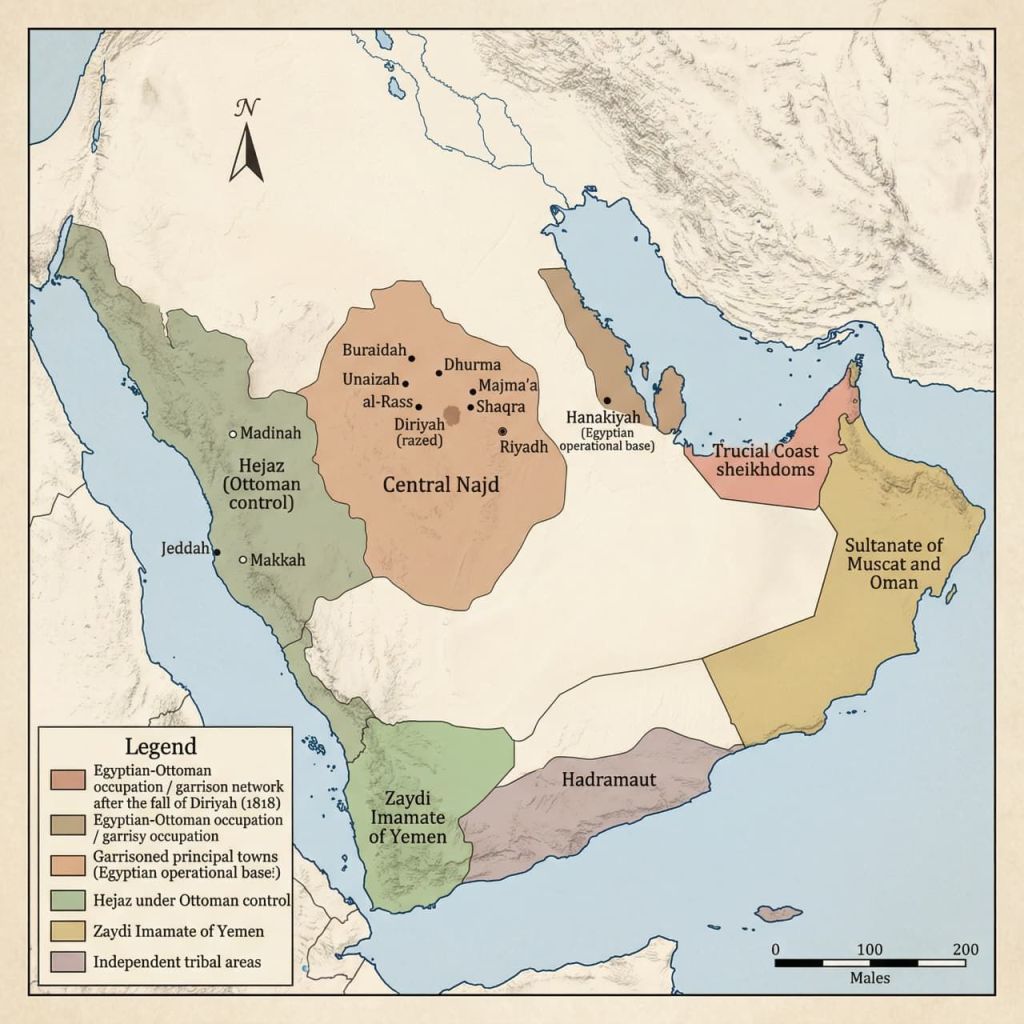
By 1818 CE the 1st Saudi state (The Emirate of Ad-Diriyyah) was destroyed and erased from the Arabian Peninsula by the Egyptian-Ottoman forces.
Map 5
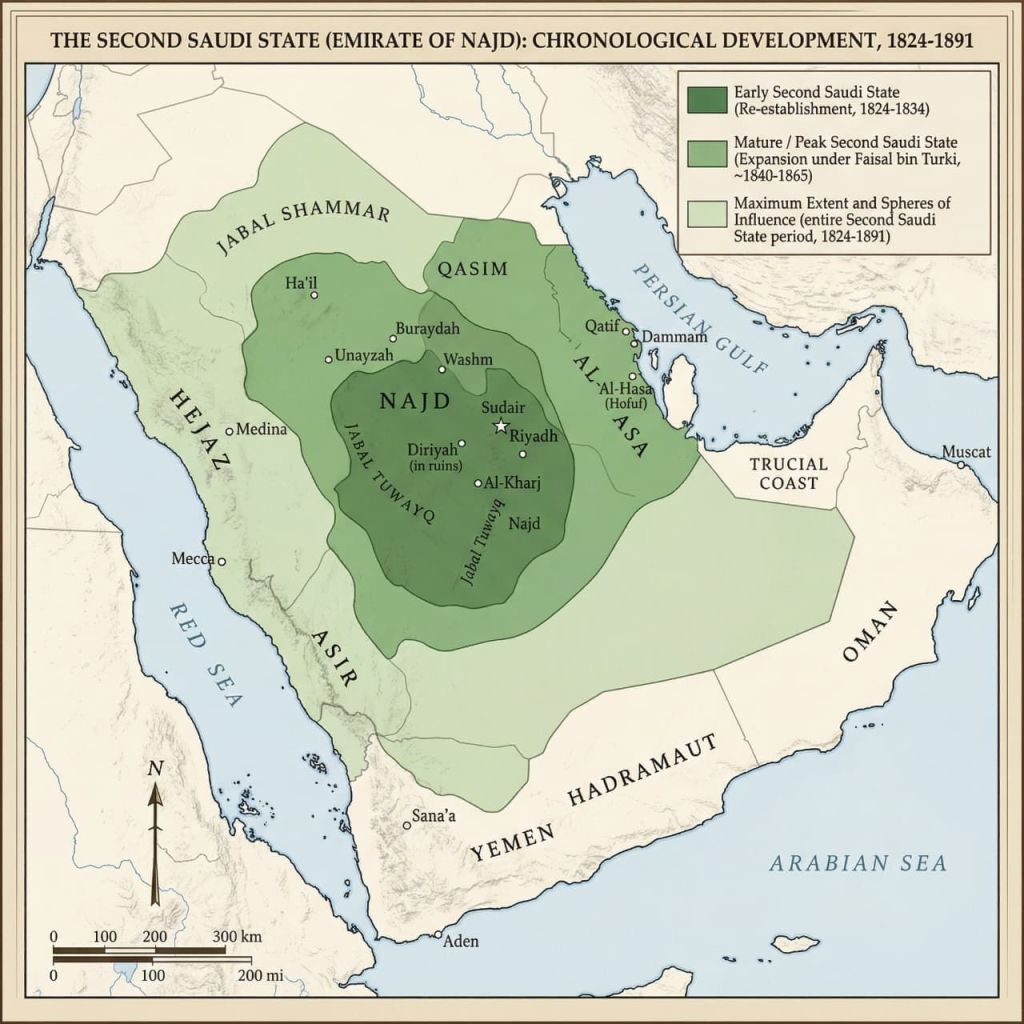
‘The Emirate of Najd’-name of the 2nd Saudi state. This map shows the phases of the 2nd Saudi State: the early re-established core under Turki bin Abdullah Aal-Saud, the broader mature phase under Faisal bin Turki Aal-Saud, and the contracted late territory before collapse in 1891.
Map 6
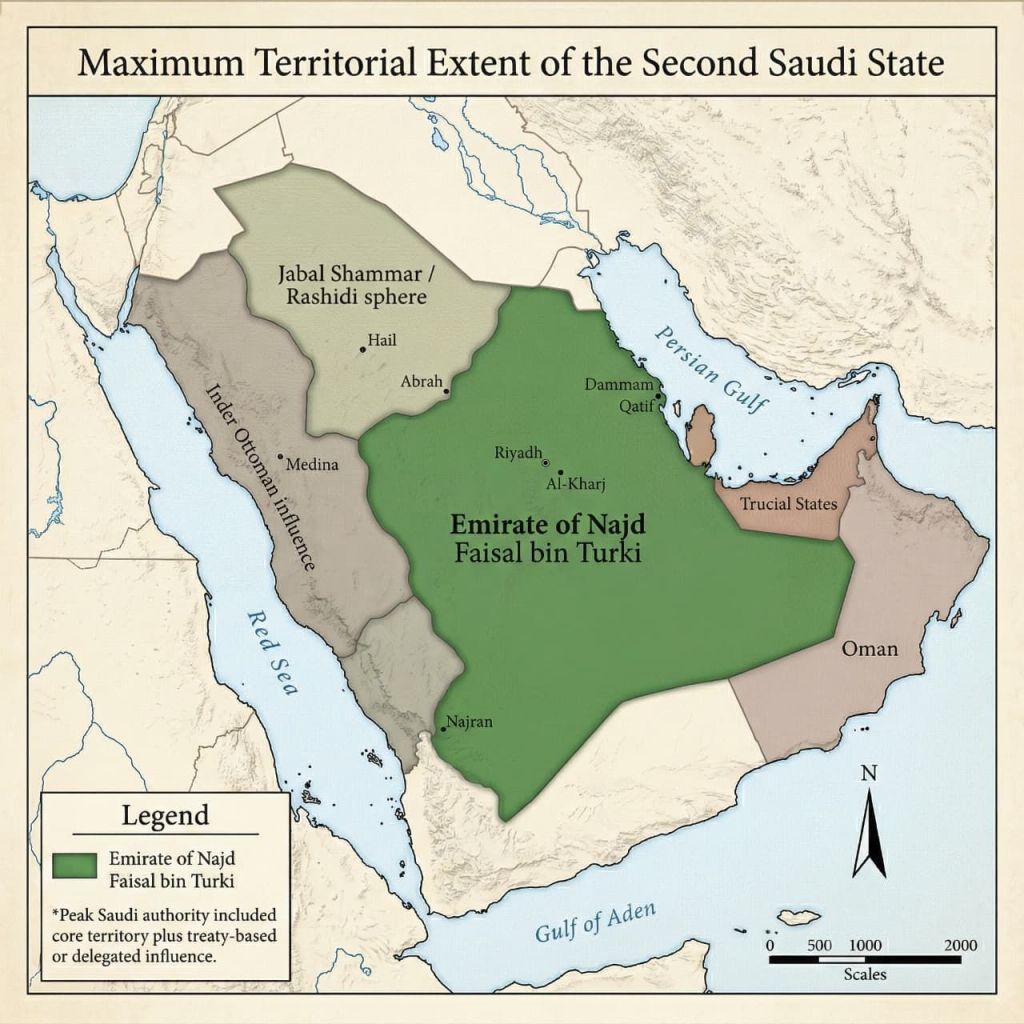
The Emirate of Najd (2nd Saudi state), maximum territories captured, under Faisal bin Turki Aal-Saud before its collapse.
Map 7
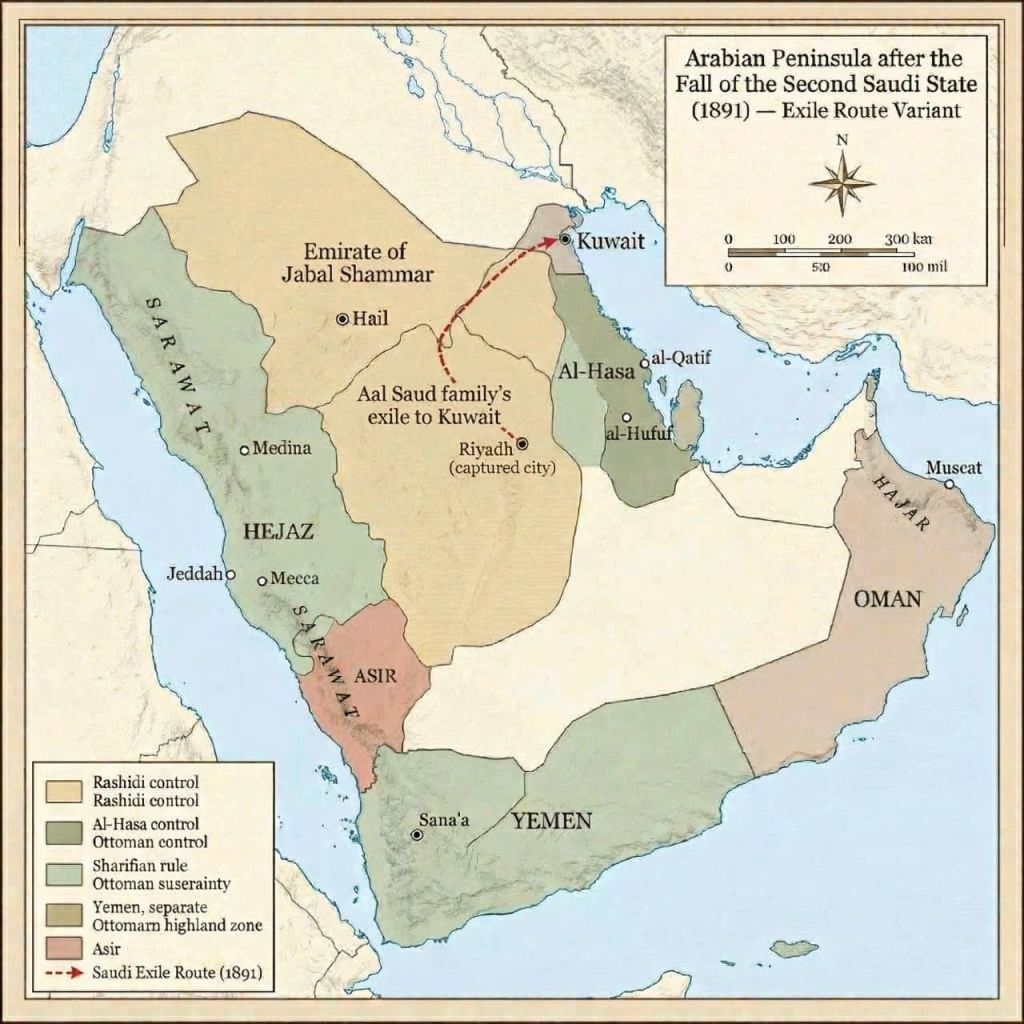
When Abdul Azeez bin Abdur Rahman Aal-Saud (born Jan 15, 1876) was around 15 years old, the Aal-Saud family escaped penniless to Kuwait to save their lives. They lived under the Kuwaiti ruler Shaykh Mubarak Al-Sabah’s protection. Helping them served Kuwait’s interests by using Abdul Azeez in the future to counter Muhammad Ibn Abdullah ar-Rashid (King of Emirate of Jabal Shammar), improving Kuwait’s regional position, and supporting Abdul Azeez’s eventual return to Riyadh in 1902 CE.
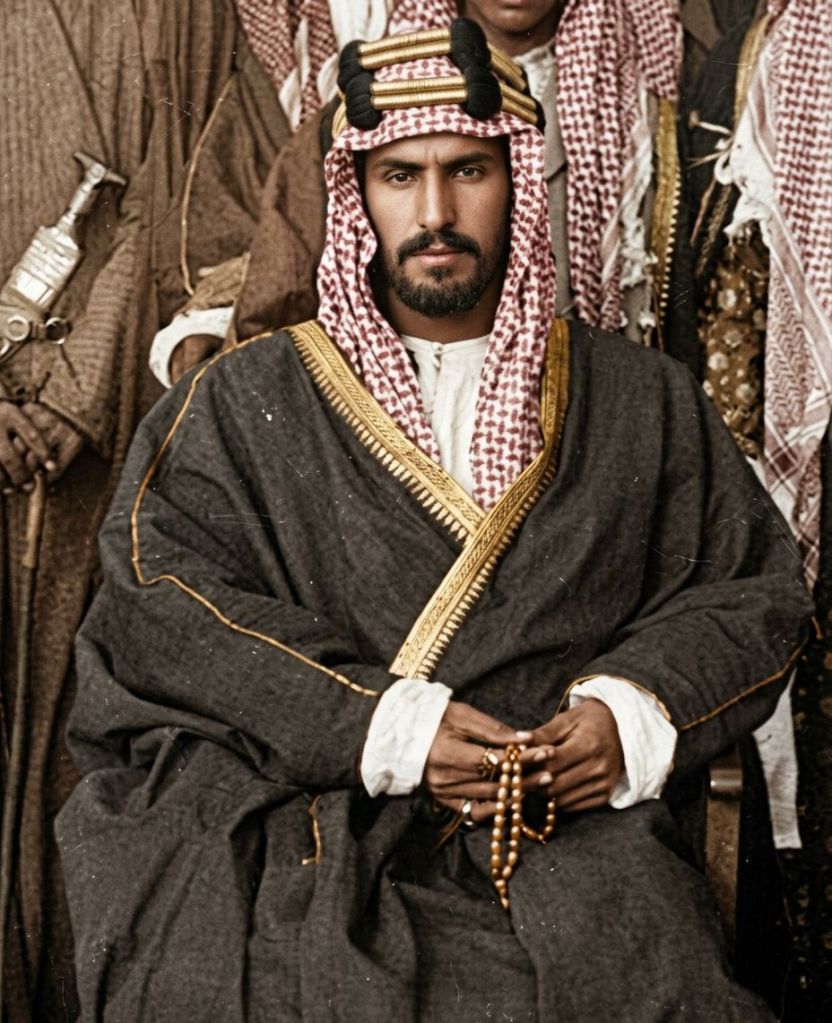
This image of King Abdul Azeez was originally black and white, I used AI to colourise it.
The entry of Abdul Azeez bin Abdur Rahman Aal-Saud
Abdul Azeez bin Abdur Rahman Aal Saud was the warrior-founder of the Third Saudi State (Father of the current King Salman). Driven into exile with his family after the fall of Riyadh in 1891, he grew up in Kuwait with the memory of a lost capital and a broken dynasty. Then, still a young man at 21, he returned in 1902 with a small strike force—a night assault with just 15 warriors—and captured the Riyadh fort in the raid that changed Arabian history. From that moment, Abdul Azeez was no longer only an exile or claimant, but a battlefield leader, state-builder, and unifier whose campaigns would eventually bring Najd, Hail, and the Hejaz under one rule. Was he perfect, or was he evil? No rather he was a man from the Muslims, a commander, a ruler, a gray figure with more goodness than evil, merciful at times and ruthless at times, Salafi in Aqeedah.
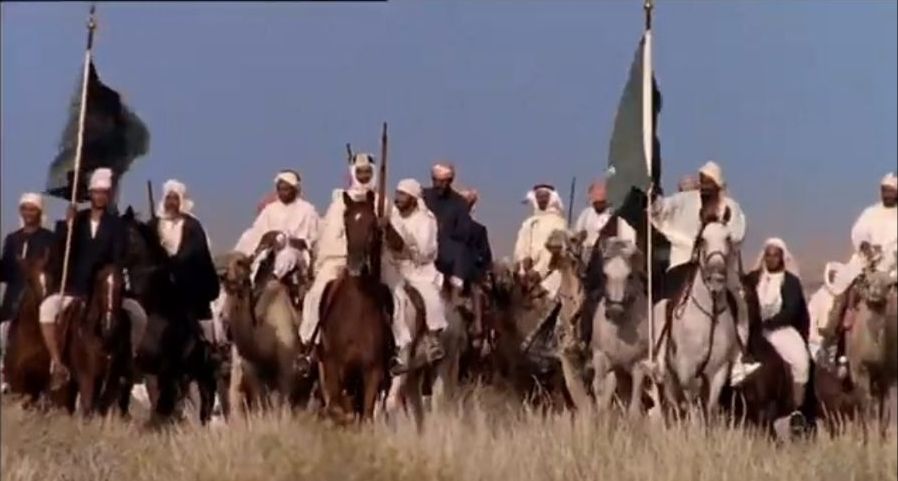
(A still from the movie King Abdul Azeez – Unity Part 1.)
Map 8 (‘6a’ as marked during image generation)
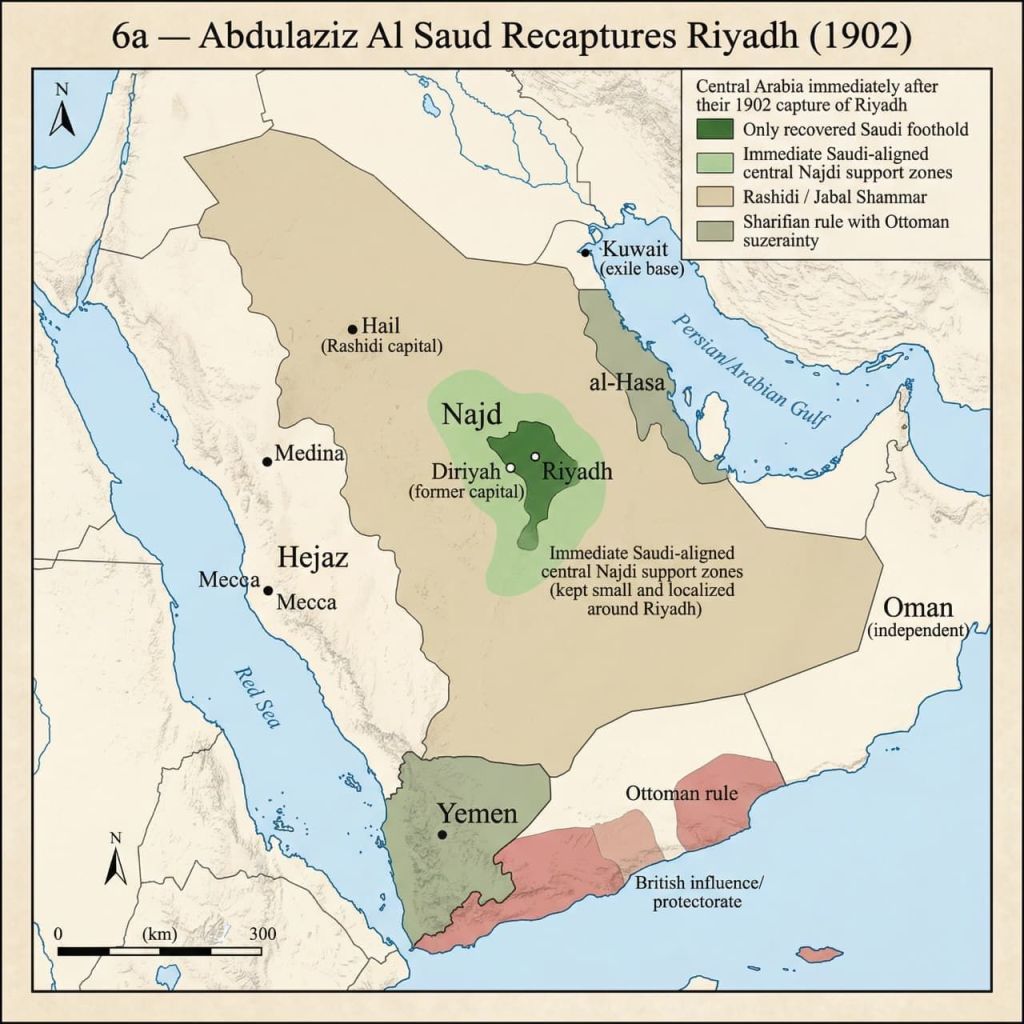
Abdul Azeez Aal-Saud at 21 years of age captures Riyadh (dark green) from the Emirate of Hail (Jabal Shammar) and starts expanding (light green).
Map 9 (6b)
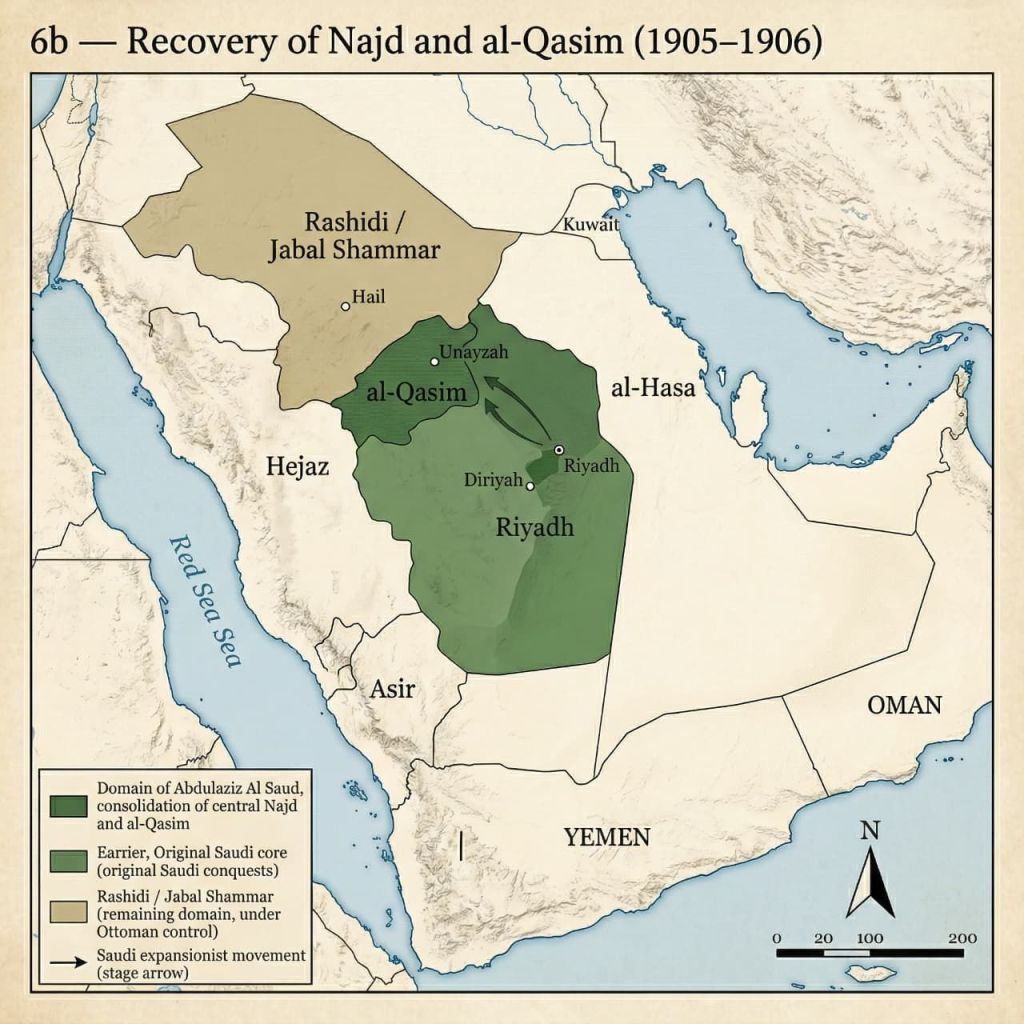
By age 30 he captures almost a half of the Emirate of Hail.
Map 10 (6c)
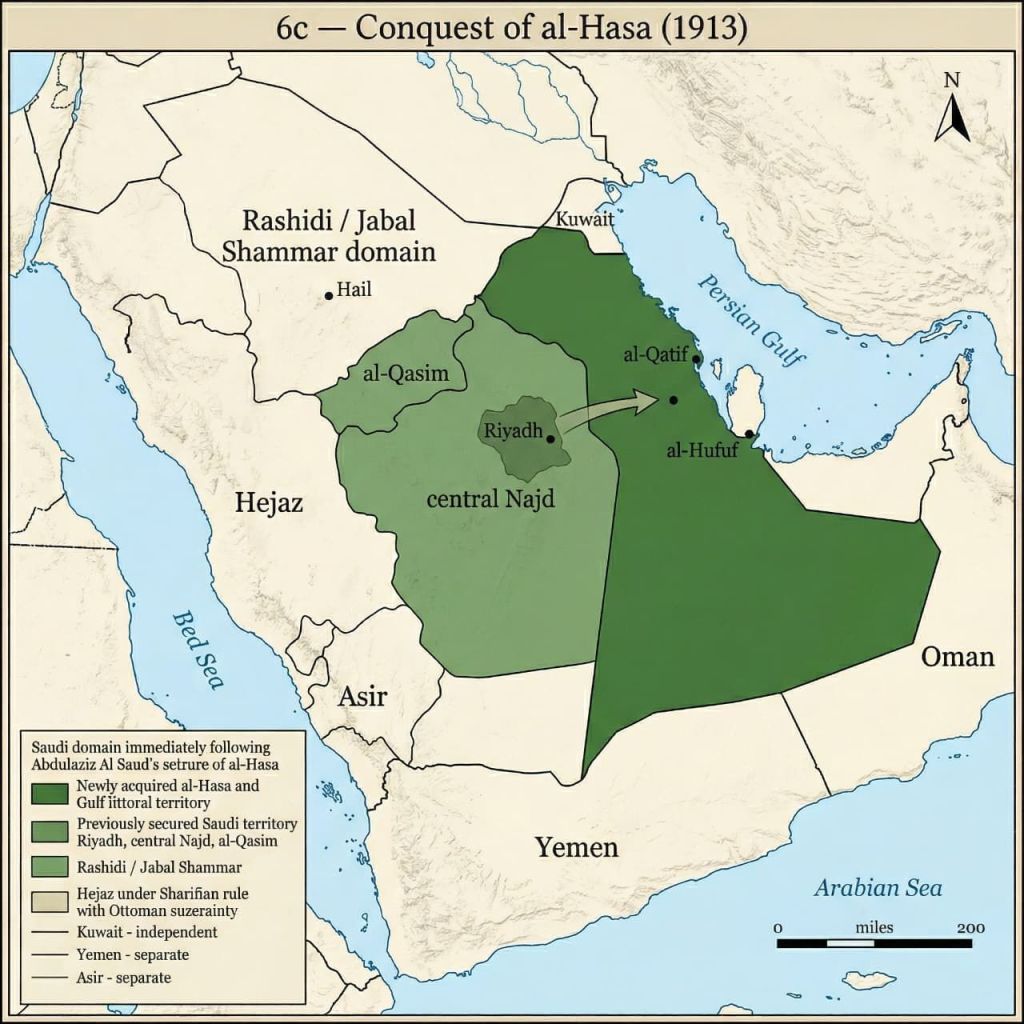
By age 37, a lot of region in the eastern side of the Arabian Peninsula is under Abdul Azeez.
Map 11 (6d)
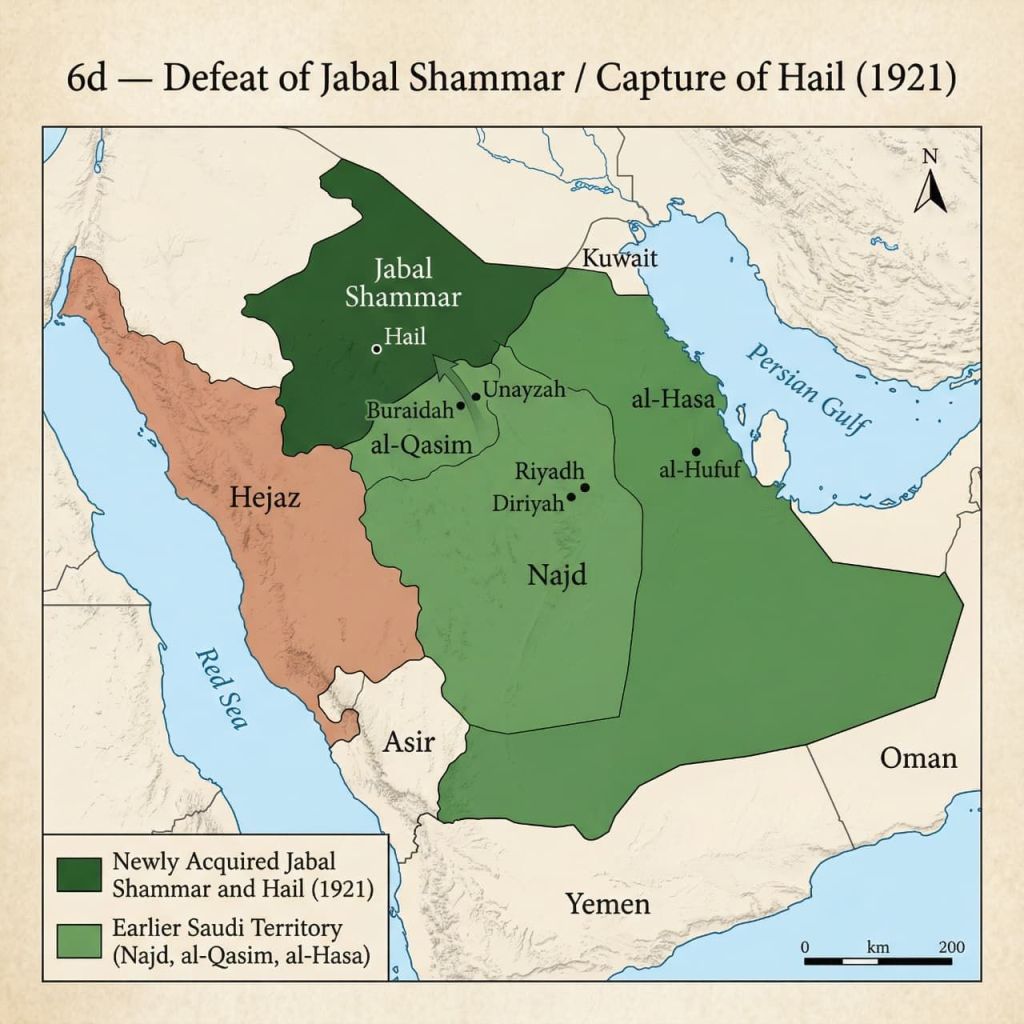
By age 45, Abdul Azeez totally captures what was called the Emirate of Jabal Shammar (Emirate of Hail). Makkah, Madina and Taif (Hijaz) is still not under his control.
Map 12 (6e)
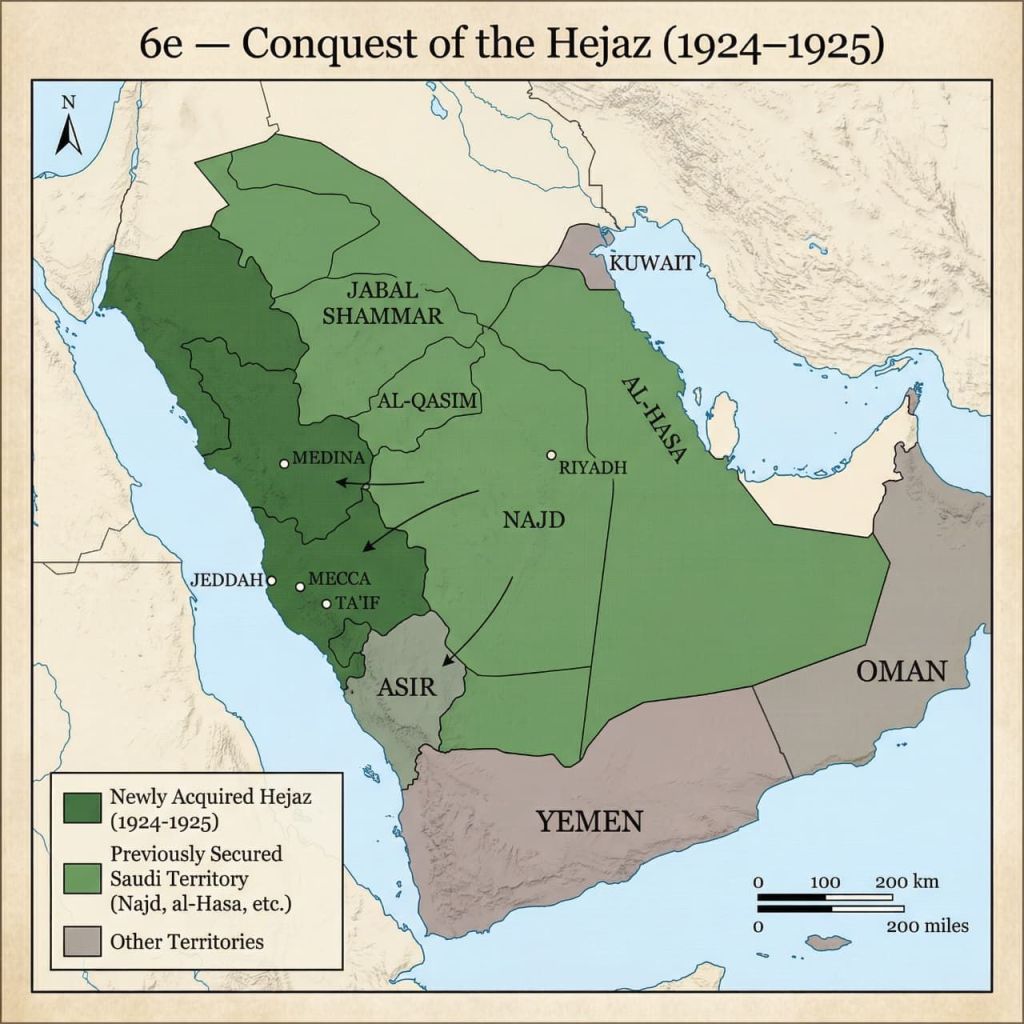
Finally Makkah, Madina, Taif and Jeddah were captured.
The map 12 (6e) shows the capture of the Hejaz and the transfer of the holy cities to Abdul Azeez Aal Saud. Sharif Husayn ibn Ali, (the Sufi) Governor of Makkah (under the Ottomans) had rebelled against the Ottomans in the Arab Revolt of 1916 and made himself King of the Hejaz. But by the mid-1920s, the balance of power in Arabia had changed. Abdul Azeez, advancing from Najd with the a powerful army, struck westward; Makkah was taken in 1924, and Madinah and Jeddah were taken when their populations surrendered in 1925. With that, Husayn’s order collapsed, and Abdul Azeez emerged not just as a conqueror of territory, but as master of Arabia’s most symbolically powerful region.
Map 13
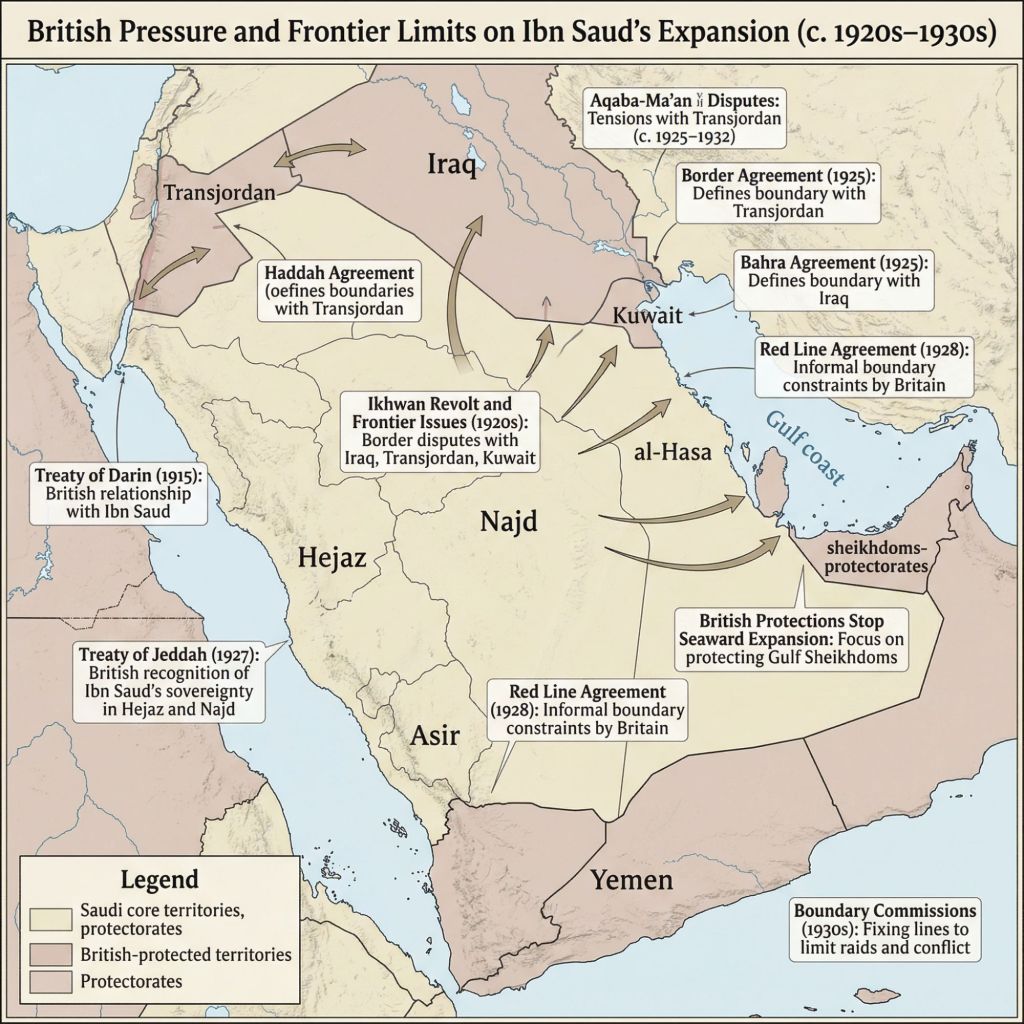
Why didn’t King Abdul Azeez expand the Saudi state further?
Not that he didn’t try. In modern-state terms, the places Abdul Azeez Aal-Saud or forces acting under his banner tried to capture, raid and attack, or dominate beyond the territory of present-day Saudi Arabia included Iraq, Jordan/Transjordan, Kuwait, Yemen, and later Oman / Abu Dhabi in today’s UAE through the Al-Buraymi dispute. The clearest full military success outside his final kingdom was against Yemen in 1934, which ended with the Treaty of At-Taif and confirmed Saudi possession of Asir and other disputed areas. By contrast, raids into Iraq and Transjordan did not lead to conquest, Kuwait was attacked and pressured but not annexed, and the Saudi move into Al-Buraymi was later reversed. Reason: The British protected these areas and forced Abdul Azeez to stop expansion.
British intervention was a major reason these conquests stopped. By the late 1920s, the lands beyond Abdul Azeez’s frontier—especially Iraq, Transjordan, Kuwait, and much of the Gulf coast—fell inside the British imperial sphere or under rulers protected by British treaties. Britain opposed further Saudi expansion, enforced borders, negotiated settlements such as al-ʿUqayr with Kuwait, and in some cases used direct force: British aircraft repelled the Ikhwan army (Saudi tribal military forces, not the Ikhwan-ul-Muslimeen group) raids into Iraq, and British-backed forces later drove Saudi troops out of Al-Buraymi. This pressure, combined with Abdul Azeez’s need to suppress the Ikhwan (Saudi tribal troops under him) and stabilize his new kingdom, changed Saudi policy from frontier conquest towards consolidation of whatever they already had.
Who were the Ikhwan army?
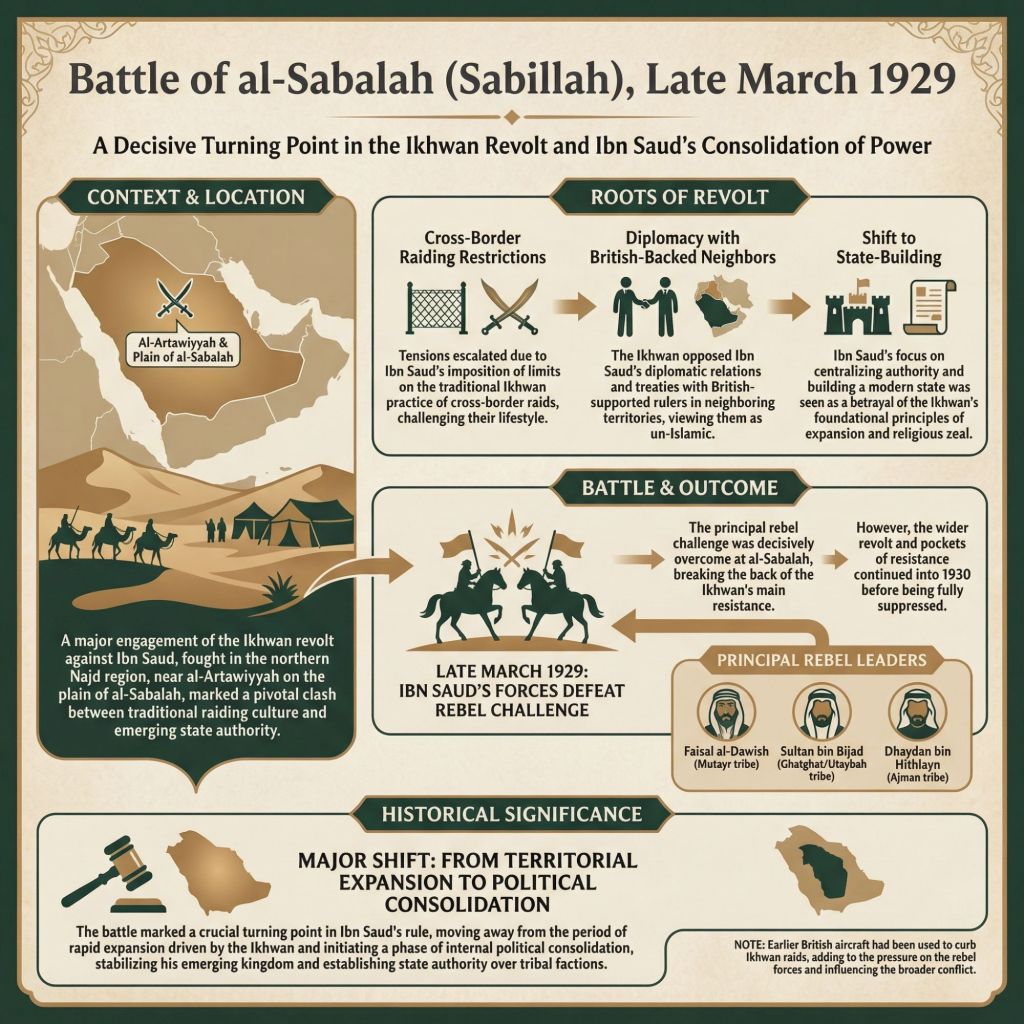
The Ikhwan were King Abdul Azeez Aal-Saud’s warrior-brethren. Bedouin fighters reshaped into a religious army by Abdul Azeez and unleashed to forge his kingdom across Arabia. They helped him attack rivals, seize Hail, overrun the Hejaz, and bring Makkah, Madinah, and Jeddah under his rule. But once the kingdom began to take shape, the alliance cracked. The Ikhwan wanted endless jihad beyond the frontier—into Iraq and Transjordan, they wanted to establish an Islamic state modelled like the Caliphs—while Abdul Azeez chose diplomacy, borders, and modern state-building. The Ikhwan were also against King Abdul Azeez agreeing to the British limits on Saudi expansion calling it un-Islamic.
Eaelier the British aircraft had already punished Ikhwan raids into Iraq in order to stop Saudi expansion at their hands.
At Sabilla in 1929, the Ikhwan army and its scholars rebelled against King Abdul Azeez. King Abdul Azeez shattered their revolt and crushed the Ikhwan, ending the age of Saudi expansion by this holy-war cavalry.
This was the beginning of the modern nation state phase of the Kingdom of Saudi Arabia.
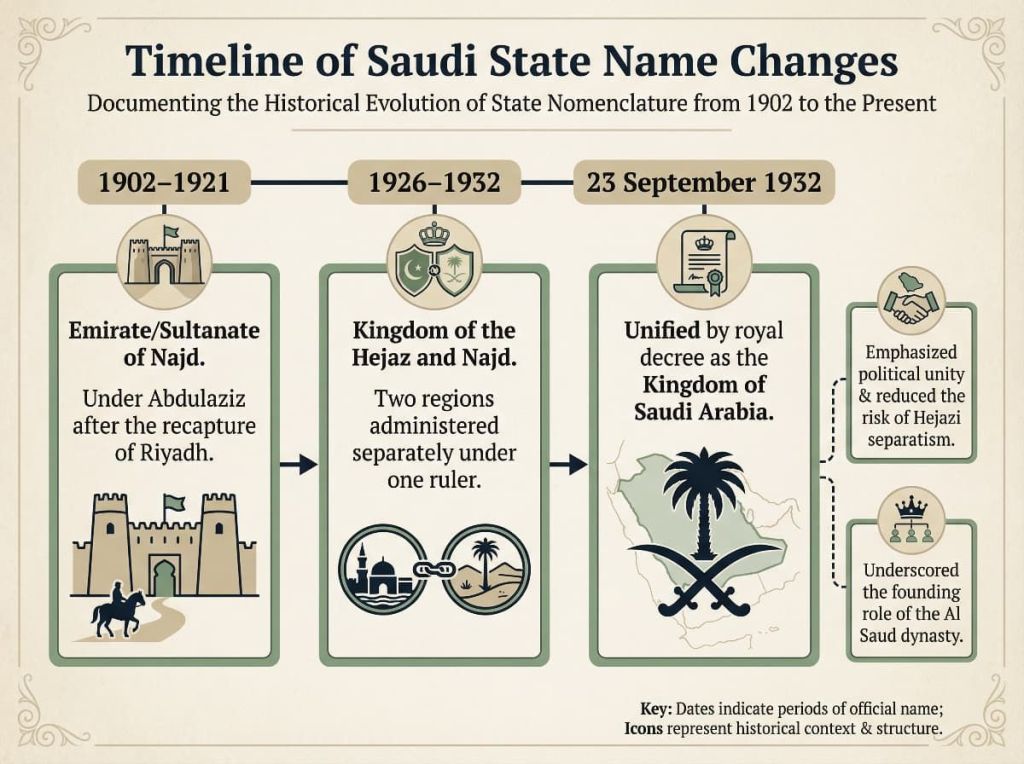
The Third Saudi State had two names before being finally named ‘The Kingdom of Saudi Arabia’.
[The End.]
[Compiled and written by Mohammed bin Thajammul Hussain Manna.]
 Saheehus-Seerah