Beneficial Notes On The Islamic Stance On Modern-Day Terrorism…

Assalamualaikum Wa Rahmatullahi Wa Barakatuhu…

1. What is the value Islam gives to human life?

Ans. Killing one innocent soul is like killing the whole of humanity.

Allah says in The Qur’an: “That is why We ordained for the Children of Israel that whoever takes a life—unless as a punishment for murder or mischief in the land—it will be as if they killed all of humanity; and whoever saves a life, it will be as if they saved all of humanity.” (Surah Al-Maidah 5:32)

2. What does Jihad mean in the Arabic language and what does it mean Islamically?

Ans. In Arabic, the word ‘jihad’ means striving and expending one’s energy.

In Islamic terminology, ‘jihad’ means the Muslim striving to make the word of Allaah supreme and to establish His religion on earth. (see islamqa.info|21961)

3. Does The Qur’an teach Muslims Jihad in the sense of fighting physically against an enemy?

Ans. Yes. The Qur’an teaches the Muslims to fight their enemies to protect themselves and their religion.

Allah says: “And fight in the way of Allaah those who fight you, but transgress not the limits (i.e. do not overstep the boundaries set by Allah). Truly, Allaah likes not the transgressors” [Surah Al-Baqarah 2:190]

4. Does Islam teach Muslims to fight all Kafirs (Non-Muslims)?

Ans. Allah orders us to be kind and just with those who did not oppress us or torture us for the sake of our religion. Jihad is to be fought against only those who harm us in our religion.

Allah explains both the cases in verses 60:8 and 60:9 – Allah says: “Allah does not forbid you from dealing kindly and fairly with those (people, Non-Muslims) who have neither fought nor driven you out of your homes. Surely Allah loves those who are fair.” (Surah Al-Mumtahanah 60:8)

Allah only forbids you to be friends with those who have fought against you on account of religion and who have driven you out of your homes and have abetted in your expulsion. And any who make friends with them, they are the wrong-doers.” (Surah Al-Mumtahanah 60:9)

5. What is the ruling on killing a Non-Muslim who is under a pact of security with another Muslim, or living under a Muslim state, or in an agreement with Muslims?

Ans. Narrated `Abdullah bin `Amr: The Prophet (ﷺ) said, “Whoever killed a Mu’ahad (a person/Non-Muslim who is granted the pledge of protection by the Muslims) shall not smell the fragrance of Paradise though its fragrance can be smelt at a distance of forty years (of traveling). [Sahih Al-Bukhari 6914]

6. What is the Islamic stance on killing women and children in Jihad?

Ans. Abdullah ibn Umar reported: A woman was found killed in one of the battles of the Messenger of Allah, peace and blessings be upon him, so the Prophet condemned the killing of women and children. (Ṣaḥīḥ al-Bukhārī 3014, Ṣaḥīḥ Muslim 1744)

7. What are the things included in Jihad?

Ans. Shaykh ‘Abd al-‘Azeez ibn Baaz (may Allaah have mercy on him) said:

“Jihad is of various kinds, with one’s self, one’s wealth, by making du’aa’, by teaching and guiding, by helping to do good in any way. The greatest form of jihad is jihad with one’s self (i.e., going oneself and fighting), followed by jihad with one’s wealth, jihad by speaking out and guiding others. Da’wah is also part of jihad. But going out oneself to fight in jihad is the highest form.

(Fataawa al-Shaykh Ibn Baaz, 7/334, 335)

8. Are suicide bombing operations counted as Jihad?

Ans. Blowing oneself up is suicide, which is haraam (forbidden) because Allah, may He be exalted, says (interpretation of the meaning): “And do not kill yourselves” [an-Nisa’ 4:29]. And the Prophet (blessings and peace of Allah be upon him) said: “ … “Whoever kills himself with a piece of iron will have that iron in his hand, thrusting it into his belly in the Fire of Hell for ever and ever.” Narrated by al-Bukhaari, 5442; Muslim, 109. [Taken from islamqa.info|217995]

9. What is the opinion of the scholars of Islam about the statement of some deviant speakers that ‘We can loot the wealth of the disbelievers in non-Muslim countries’?

Ans. Imam Ash-Shaafa’i (may Allaah have mercy on him) said: When a Muslim enters dar al-harb (the non-Muslim lands) on peaceful terms, and finds himself in position to take something of their wealth, it is not permissible for him to take it, whether it is a little or a lot, because if he is safe from them, they should be safe from him, and because it is not permissible for him to take anything from them when they have given him safety except what it is permissible for him to take from the wealth of the Muslims and ahl al-dhimmah (non-Muslims living under the protection of the Muslim state). Wealth may be forbidden for a number of reasons:

If the owner is a Muslim: If the owner is (a non-Muslim) living under the protection of the Muslim state, (and) if the owner is one with whom there is a peace deal, until the deal expires; such people are considered to be like ahl al-dhimmah as far as the sanctity of their wealth is concerned, until the deal expires. Al-Umm, 4/284. [See Islamqa.info|14367]

10. What are some beneficial books to learn about the Islamic stance on modern day terrorism?

Ans. There are numerous books on the subject, some of them are:

(a) The Treatment of Terrorism in Light of the Qur’an and Sunnah by Shaykh Abdur-Rahman as-Sudays.

(b) Terrorism, Its Reasons and the Means to Remedy It by Shaykh ‘Abdul-‘Aziz Al ash-Shaykh.

(c) With Which Intellect and Religion can Suicide Bombings and Destruction be Considered Jihaad? by Shaykh Abdul-Muhsin al-Abbaad.

(d) Anwar al-Awlaki and His Errors in the Issue of Jihaad by Salafi Manhaj.

(e) Islam, A Religion of Terror? by Tasaddaq Husayn.

[The PDFs of these books are available online, yet we would encourage you to buy the physical copies of these books.]

-Compiled by Mohammed Thajammul Hussain Manna.

Some Essential Issues Related To Fasting In Shawwal

Assalamualikum Wa Rahmatullahi Wa Barakatuhu. The following are a compilation of essential questions and answers related to fasting the six days of Shawwal after Ramadan, do read them and benefit from them, In-Sha-Allah.

Summary of the note:

1. Fasting six days in Shawwal after Ramadan is highly virtuous, akin to fasting the entire year, as emphasized in Sahih Muslim and other authentic Hadiths.


2. The virtue of fasting six days is not limited to Shawwal; it can be observed at any time after Ramadan, according to various scholars.


3. It’s permissible to fast the six days of Shawwal before completing missed fasts from Ramadan, based on the broad time frame for making up missed fasts.


4. If unable to fast in Shawwal due to valid reasons, one can make up for it later, and still attain the rewards.


5. To maximize rewards, align fasting in Shawwal with Mondays, the middle days of the lunar month, or other recommended fasting days.


6. Fasting the six days consecutively at the beginning of Shawwal is recommended, but non-consecutive fasting or delaying them within Shawwal is permissible.

The Above Points Have Been Explained In Detail Below

The Virtue of fasting 6 days in Shawwal after Ramadan

Abu Ayyub reported: The Messenger of Allah, peace and blessings be upon him, said, “Whoever fasts the month of Ramadan and then follows it with six days of fasting in the month of Shawwal, it will be as if he has fasted for the entire year.” (Sahih Muslim 1164)

Thawban reported: The Messenger of Allah, peace and blessings be upon him, said, “Fasting the month of Ramadan is like ten months of fasting and fasting six days of Shawwal is like two months of fasting. Thus, they are like fasting for a year.” (Ṣaḥīḥ Ibn Khuzaymah 2115, Sahih (Al-Albani))

Virtue of fasting any 6 days after Ramadan

It was narrated from Thawban, the freed slave of the Messenger of Allah (ﷺ), that the Messenger of Allah (ﷺ) said: “Whoever fasts six days after the Fitr will have completed the year, for whoever does a good deed will have the reward of ten like it.” (Sunan Ibn Majah 1715, Sahih (Zubair Ali Zai))

According to many Ulama the virtues of fasting the entire year, may be attained by fasting the six days of Shawwal or other than Shawwal, because Allah said: “Whoever comes with a good deed will be rewarded tenfold. …” (Quran 6:160)

Al-‘Adawi said in his commentary on Sharh Al-Khurashi (2/243): “The Lawgiver only mentioned Shawwaal in order to make it easier with regard to fasting, not to restrict the ruling to that time only.” End quote. (See islamqa.info|83292)

Ibn Muflih said in al-Furoo’ (3/108): “It is possible that the reward may be attained even when fasting them at a time other than Shawwaal, according to some scholars. This was mentioned by al-Qurtubi, because the virtue of that is based on the fact that one good deed (hasanah) will be rewarded tenfold, as it says in the report of Thawbaan.” End quote. (See islamqa.info|83292)

Can we fast the six days of Shawwal before completing the pending fasts of Ramadan?

Yes. According to an opinion of the Ulama it is permissible to fast the six days of Shawwal before completing the pending fasts from Ramadan, as there is no evidence that such a thing is not permissible.

Sheikh Muqbil bin Hadī al-Wad’ii said: If one is able to make up the days wherein he broke his fast during Ramadan, and then fast the six days then this is an affair which is good.

If he is not able to fast them both, then it’s permissible for him to fast the six days regarding which the Prophet ﷺ said, “Whoever fasts Ramadan then follows it up with six days from Shawwāl, then it is as if he fasted for the entire year.”

Why do we say this? Because the time for making up the fast is broad, as opposed to fasting the six days; there’s no room for it except within Shawwāl.

As for the time of making up the fast, there has come on the authority of Ā’ishah (may Allah be pleased with her), that she said, “I wouldn’t be able to make up my missed days of fasting except in Sha’bān.” Meaning: because she was occupied with the Prophet ﷺ.

(From the recording: Questions from Al-Mahrah. https://www.muqbel.net/fatwa.php?fatwa_id=2278)

If someone follows the opinion of the scholars who say that ‘the six days should be fasted in Shawwal itself’, if they could not fast in Shawwal because of a valid reason, can they fast them later?

Shaykh ‘Abd ar-Rahmaan as-Sa‘di said: “If he or she had an (valid) excuse, such as sickness, menses, nifaas (post-partum bleeding) and the like, because of which he or she delayed making up those days or delayed fasting the six days (of Shawwal), then there is no doubt that he or she will attain that particular reward (even if they fast after Shawwal), as was stated by the scholars. …” Al-Fataawa as-Sa‘diyyah (p. 230) [See the full Fatwa on islamqa.info|112141]

How can we increase our rewards when we fast in Shawwal?

Aligning the fasting of the six days in Shawwāl with Mondays, the three middle days (Ayyamul-Beez) of the lunar month, and similar days is recommended to maximize rewards and receive the rewards of both the fasting of Shawwal as well as the rewards of that particular day.

Should we fast the six days consecutively or can we seperate between them?

It is permissible to fast the six days of Shawwal non-consecutively.

Al-Nawawi said:

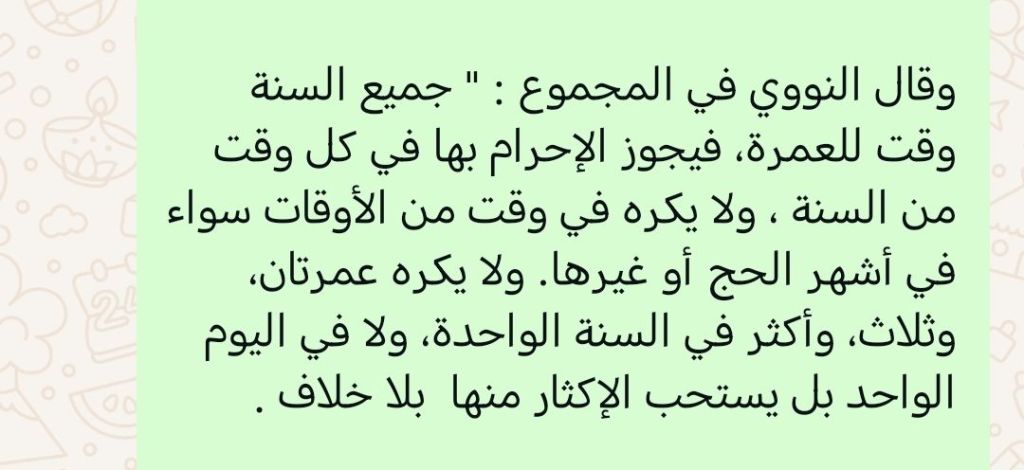
“Our companions said: it is mustahabb to fast six days of Shawwal . Because of this hadith they said: it is mustahabb to fast these days consecutively at the beginning of Shawwal, but if one separates them or delays them until later in Shawwal, this is permissible, because he will still be following the general guidelines of the hadith. We have no dispute regarding this matter, and this was also the view of Ahmad and Dawud.” (Al-Majmu’ Sharh al-Muhadhdha) (islamqa.info|7858)

-Compiled by Mohammed Manna (12th April 2024)

Participating In Elections In Non-Muslim or Un-Islamic Countries

Compiled below are some Fataawa by prominent Salafi Ulama on the issue of ‘Elections and Voting’.

Shaykh Saalih bin Muhammad al-Luhaydaan (Rahimahullah)

Question: “A question was asked concerning voting and if voting should be done if it would bring forth some benefit or take away some harm, or give the Muslims more power. And the Shaykh ibn ‘Uthaymeen, when he was here he deemed it permissible but some people still deem it haraam. What is the just saying on this?”

Answer: “The Shaykh said that he answered this a few years back, either in the Haram or on the program call Noor ‘alad-Darb. He said that the Muslim should do that which would bring benefit to Islaam and the Muslims, and it is known that no benefit can come about through disobedience of Allaah and His Messenger. Where there is no ruling concerning a matter, in the book or the Sunnah, and this action would bring forth some type of benefit to Islaam, then it can be done. As such, voting for a man who might bring to the Muslims something better than which they have, or keep away from them harm that is upon them, or he is better in comparison with his opponent; then there is no problem with voting for that man.

The Muslims should make ijtihaad i.e. a great effort in finding out what is best for them and most beneficial. They may get it or they may not, but they would have tried based upon hope that they would have done this good and brought benefit to Islaam and there is no haraam in that. In some lands the number of Muslims is great and if they work together they would have a good effect in choosing. For instance, if there are ten million (10,000,000) Muslims and they vote for a man they see is not taken by desires, swung left and right, but he is truthful and returns the favour, then there is no problem in choosing such a man.” (End quote.)

[Source: https://www.salafi-dawah.com/regarding-voting-to-remove-harm-or-to-bring-benefit.html]

Another question (to Shaykh Saalih bin Muhammad Al-Luhaydaan): “Wouldn’t voting or participating in elections be considered as assisting the kuffaar in having authority over the Muslims?”

Answer: “If the Muslims refrain from voting, then are the elections going to be nullified or are they still going to go forth or not? If this President is going to be put forth (elected), and if it is true that whether the Muslims vote or not it’s going to go through, and they see that in electing someone to office is better for them than the opposing party – if they see that this is the situation; or if they see that this person is better than the other he’s going to be easy with the Muslims or better with them than the opposition, then in this situation, it is good for them to vote.

But if they don’t vote and they sit back and there is an opposing party that is clear that it is opposing the Muslims, and it would cause some harm upon the Muslims, then this is not good. In fact, it would be hurting the Muslims, or helping to hurt the Muslims because you have not voted for the party that would help the Muslims.”

[Source: https://www.salafi-dawah.com/wouldnt-voting-or-participating-in-elections-be-considered-as-assisting-the-kuffaar-in-having-authority-over-the-muslims.html]

Shaykh Abdul-Muhsin al-‘Abbaad (Hafidhahullah)

[Part-1] Is it permissible for Muslim minorities to vote in the lands of non-Muslims? (Reference: Private sitting with the Shaykh on January 19th, 2007 (29 Dhul Hijjah 1427), By Shaikh Abu Abdur-Razzaaq, Tahir Wyatt.)

There is a question from America related to the ruling of Muslims living in non-Muslim countries who vote in local elections. Is it permissible for these Muslim minorities to vote in local elections if they believe that one of the candidates can benefit the Muslims by giving land, allowing them to give dawah, or other benefits?

Shaykh: There is no harm in voting for candidates who will be of more benefit to the Muslims than the others. In this instance, voting for them is an example of doing the lesser of two evils to avoid the greater evil. All of the candidates are disbelievers and, therefore, harmful. However, the candidate who is less harmful to the Muslims is better than the candidate whose harm is far greater.

Questioner: For the one who says that voting is from the innovated means, for example…?

Shaykh: In any event, this is something evil with which the people have been afflicted. If people have two choices, one being abhorrent and the other also detestable but of less harm, which should the people choose? The people should choose the lesser of the two evils, correct? Even though the Roman Christians and the Persians are all disbelievers, the people were happy when the Roman Christians were victorious over the Persians.

Questioner: Some people oppose this by mentioning that they are not forced to vote in the first place?

Shaykh: What I have mentioned is based on the premise that some benefit for the Muslims may be attained by voting. However, if there is no benefit then they should not participate.

For further clarification, refer to the article entitled “Confusion about Voting?” https://madeenah.com/confusion-about-voting/

[Part-2] Is it permissible for Muslim minorities to vote in the lands of non-Muslims? Reference: Recording done with the Shaykh’s permission on January 24th, 2007 (5 Muharram 1428)

The following question, from America, is about voting for those it is believed will benefit the Muslims. We are not asking about a Muslim entering into an election as a candidate, nor are we concerned about Federal elections. Rather, the question is about voting in local elections for those who have the authority to delegate plots of land to the Muslims, abandoned buildings, and other such benefits. If the Muslims don’t vote for them, other groups will and, therefore, acquire these benefits. So, may Allah reward you well dear Shaykh, do you have any advice in this matter?

Shaykh: That which appears correct to me, insha’Allah, is that if some good is anticipated as a result of voting, then we vote. We vote for the candidate as long as he is presently benefiting the Muslims or promises to benefit the Muslims in the future, even if he is not a Muslim. It would be inappropriate for the Muslims to refrain from voting for this individual, especially if the leader of the Muslims can dictate terms, conditions, and other stipulations on him as a result of the Muslims voting. For example, the leader of the Muslims says, “We will vote for you on the condition that you support our interests, mention them to your superiors, etc.” And this applies in any country where the Muslims are a minority, not just in America.

By voting the Muslims may gain needed influence over politicians and other authorities. In return, these politicians and authorities may do something that will benefit Islam and the Muslims. This is especially the case in local elections where, as you have mentioned, the one who wins may have the authority to give away plots of lands on which schools can be built. I am familiar with this because it is even practiced in India. In this instance, it is not befitting in the least for the Muslims to hesitate or delay voting for these candidates.

The Muslims should not hesitate to vote because withholding their votes will not harm these candidates in the least. They will win by the votes of non-Muslims regardless if the Muslims vote or not. For this reason, the Muslims should use their vote as a favor to these candidates. As a result, the Muslims will be placed in an advantageous position of influence over these candidates. When they feel that they are indebted to the Muslims, the Muslims can benefit from their empathy and their sympathetic views and understanding of Muslim causes. This is a general Islamic benefit required by the Islamic public interests. This is our belief.

This is also the verdict given by our Shaykhs in India. Even Shaykh Bin Baaz (may Allah have mercy on him), from what we have heard, used to rule with the permissibility of participating in elections. And for this, insha’Allah, we hope from Allah a good future for the Muslims in every land. If this affair brings good to the Muslims then it’s not befitting to hesitate.

Questioner: May Allah reward you with good. In order to bring about further benefit, dear Shaykh, for those who say that this action includes assisting one who rules by other than what Allah revealed…

Shaykh: This doesn’t assist the one ruling by other than what Allah has revealed in view of the fact that if we don’t vote, the [non-Muslims] will win by their own votes. They will be elected without a doubt. They will come into power by their own accord whether or not we isolate ourselves from them or from the entire world… Thus, this does not assist them in establishing non-Islamic laws. They are the rulers and the ones in authority in those lands whether we vote for them or not. As a result, we should make an effort to influence them in a way that will be beneficial to Islam and the Muslims, insha’Allah.

Questioner: May Allah reward you with good dear Shaykh. Please excuse us for taking so much of your time.

Shaykh: May Allah reward you with good. I mention this with a clear conscience because we have heard our shaykhs give this verdict, especially when it benefits the Muslims. This is also the case in India; some of the idol worshipers in the Parliament speak on behalf of the Muslims and their interests…and it is possible that Allah will aid the deen by using a disbeliever.

[End.]

Shaikh Muhammad bin Saalih Al-Uthaymeen (Rahimahullah)

Shaykh Muhammad ibn ‘Uthaymeen (may Allaah have mercy on him) was asked about the ruling on elections, and he replied: I think that elections are obligatory; we should appoint the one who we think is good, because if the good people abstain, who will take their place? Evil people will take their place, or neutral people in whom there is neither good nor evil, but they follow everyone who makes noise. So we have no choice but to choose those who we think are fit.

If someone were to say: We chose someone but most of the parliament are not like that,

We say: It does not matter. If Allaah blesses this one person and enables him to speak the truth in this parliament, he will undoubtedly have an effect. But what we need is to be sincere towards Allaah and the problem is that we rely too much on physical means and we do not listen to what Allaah says. So nominate the one who you think is good, and put your trust in Allaah. End quote.

From Liqaa’aat al-Baab al-Maftooh, no. 210.

[Source: https://islamqa.info/en/answers/107166/ruling-on-democracy-and-elections-and-participating-in-that-system ]

Shaykh ‘Abdul-‘Azeez Aal ash-Shaykh (Hafidhahullah)

Questioner: “Soon elections will take place in the Netherlands, and the brothers there are asking if it is permissible to partake in the elections, knowing that there are certain parties who are against Islam and the Muslims, and we fear that if they come to power, it will be harmful for Islam and the Muslims?”

Shaykh: “Let them participate [i.e. by voting]; hopefully, Allah will make it of benefit for Islam and the Muslims.”

Questioner: “So it is permissible to partake in the elections?”

Shaykh: Take part [i.e. go vote]! And let them take part; hopefully Allah will strengthen their voice.”

[Source: https://www.salafi-dawah.com/muslim-minorities-in-non-muslim-countries-voting-to-prevent-a-greater-evil.html]

Shaikh Muhammad Nasirud-Deen Al-Albani (Rahimahullah)

[Article] The distinction between Voting for the Lesser Harm and running in Elections.

After being asked general questions pertaining to elections, the last specifically related to local elections, al-Allaamah Nasiruddin al-Albaani responded:

Elections emanate from a non-Islamic principle. In fact, they stem from a Zionist principle, namely, the ends justify the means.

However, I distinguish the issue of a Muslim who runs for office from the issue of voting for one whose harm in that office may be less than others.

The distinction between the two issues is essential even in the major elections. Jamaa’atul-Inqaadh in Algeria sent me a question about elections so I wrote them a detailed clarification. I mentioned to them, as I have mentioned previously, that elections and Parliaments are not Islamic and that I do not advise any Muslim to nominate himself as a representative in Parliament because he will never be able to do anything for Islam. Rather, the movement will overcome him just as it has happened with all of the existing governments in the Arab countries.

Even with that being the case, I noted that in all of the Muslim lands, regrettably, there are Muslims who nominate themselves to Parliament claiming that they will reduce evil. We can not forcefully prevent them from campaigning; all we can do is advise, clarify, and convey [the truth]. Hence, if a Muslim is going to nominate himself as opposed to a Christian or Communist, whether it be for major or minor elections (according to your terminology) then we vote for him.

Why? Because there is an Islamic principle upon which I have based my answer. If a Muslim is placed between two evils he chooses the lesser of the two evils. There is no doubt that having a Muslim as the president (mayor) of local government is less harmful – and I don’t say better – than having a mayor that is a disbeliever or an atheist.

However, this politician destroys himself without even realizing it. When he nominates himself with the claim that he desires to lessen the evil – and he may do so – he doesn’t know that he is being burnt from another angle. His example is that of the scholar who does not act according to his knowledge. The Prophet said, “The example of the learned one who does not act according to his knowledge is like that of a lamp [lit. a burning wick]; it burns itself while providing others light.”

For this reason we differentiate between voting and campaigning. We do not campaign for office because we will burn. As for the Muslim who insists on burning himself, be it mildly or severely, by running for office, then we vote for him as opposed to the disbeliever or the atheist using the principle of repelling the greater evil with the lesser evil.

Questioner: Our Shaykh, I understand from this that as it relates to Parliament and even local elections that if a there is a Muslim candidate it is permissible to vote for him.

Shaykh: Yes, however based on the principle, and memorize what I am saying, based on the principle of repelling the greater evil with the lesser evil; not because he is better. [End quote.]

[Source: https://madeenah.com/the-distinction-between-voting-for-the-lesser-harm-and-running-in-elections/]

Do The Hindu Scriptures Preach The Oneness of God Like The Qur’an? (Comments on Dr.Zakir Naik’s approach.)

Many Muslims (based on the arguments of Brother Dr.Zakir Naik) argue that _the Hindu Scriptures preach The Oneness of God, and it is the Hindus who do not understand their scriptures and commit polytheism_. To defend this they have also memorized some verses from the Hindu Scriptures, the same ones Dr. Zakir Naik quotes.

In reality, the one who has ever gone through the Gita or the Vedas line-by-line, will realise that this understanding is false. The Hindu Scriptures have a mixture of pantheism (i.e. the idea that everything is god) and polytheism (multiple gods), they also at times mention some quotes which ‘may appear’ to speak about monotheism but are in reality pantheism again.

The example of saying or thinking that Dr.Zakir Naik understands and explains the Hindu Scriptures better than the Hindu priests and scholars, is similar to thinking that some non-Muslims can understand and interpret The Qur’an And Sunnah better than Muslim scholars, and yes, it is absolutely false to think so.

If some verses amongst the thousands of verses in Hindu Scriptures prove that there is ‘Oneness of God’ in Hinduism (like Dr.Zakir Naik asserts), then (like some non-Muslims falsely say) The Qur’an is ‘perrenialistic’ (i.e everyone who believe in Allah and does good deeds will go to Paradise, i.e not necessary to be a Muslim) based on some misquoted Ayaat of The Qur’an.

Muslims, especially students of knowledge, should inculcate the value of cross checking anything that they take from any speakers or scholars. Anything doesn’t become true just because Dr.Zakir Naik or anyone else of a greater stature than him said so. (For the information of the readers, I completed reading the translation and explanation of Gita by A. C. Bhaktivedanta Swami Prabhupada (the one published by ISKON) around 10 years ago, I also went and discussed some issues with ISKON priests at the same time once I was done with reading it.)

I will just give one example where Dr.Zakir Naik has unintentionally misinterpreted the Hindu Scriptures. He says, The Gita condemns worship of demi-gods (small gods), “Those whose wisdom has been taken away by this or that desire, go to other gods (demi-gods), following this or that rite, led by their own nature.” (Gita 7:20)

But perhaps he forgot to check that this statement was made by Krishna, so Krishna is not telling (in our terms) that idol worship is ‘Haraam’ (prohibited), he is just telling it is lightly ‘Makrooh (disliked)’. In 7:23, Krishna says that those who worship demi-gods will get a small reward but those who worship the main god (Krishna himself) will have infinite reward.

In the Gita 7:23, Krishna says, “Verily, the reward (fruit) that accrues to those men of small intelligence is finite. The worshippers of the gods go to them, whereas My devotees come to Me.”

So again, we see that idol worship is not even ‘Makrooh’ (disliked) in the Hindu Scriptures, rather it is also rewarded in a small way. And the ‘one’ that is being invited to be worshipped, it is actually ‘Krishna’, who has a human nature as well as a divine nature according to Hindu Scriptures. So there is nothing similar to the Islamic concept of Tawheed (The Oneness of Allah) in The Gita, let alone the Vedas.

Also, in The Gita itself, Krishna shows Arjuna, his ‘true self’ with all the planets and gods inside him. Thus Krishna also asserts, that there are multiple gods, albeit smaller ones, besides him.


(Arjuna said:) I am delighted, having seen something never seen before; yet my mind is distressed with fear. Show me that form only, O God; have mercy, _O God of gods_, O Abode of the universe. (Gita 11:45)


“The Blessed Lord (Krishna) said, “It is very hard indeed to see this form of Mine which thou hast seen; _even the gods are ever longing to behold it_.”” (Gita 11:52)

As a conclusion, Muslims should invite non-Muslims to Islam based on The Quran And Sunnah. Not based on telling, ‘The Quran has the same message as The Gita and The Vedas’ so accept Islam.

This is also for the brothers forwarding the videos of some callers to Islam, who at times in TV debates yell out, ‘Come to The Gita, Vedas, Upanishads, The Qur’an, Hadith, and Worship Allah Alone and follow Prophet Muhammad (Sallallahu alaihi wasallam)’.

Know my dear brothers, that the difference between what is there in The Quran and what is there in The Hindu Scriptures, is like the difference between chalk and cheese. May Allah guide all of us to what is correct. Aameen.

[Whatever I wrote with regards to Dr.Zakir Naik is in order to show his wrong approach when dealing with the Non-Ahlul-Kitaab books, like the Hindu, Sikh and Buddhist Scriptures. However when Muslims deal with the scriptures of the Ahlul-Kitab (Jews and Christians), we may point out their inconsistencies and scriptural errors, since the followers of these two faiths claim that they’re on the same religion as Prophet Ibraheem (Alaihis Salaam) and they have been challenged likewise by Allah for their errors in The Quran and The Sunnah.]

-Mohammed Manna (January 24, 2024)

Islamic Studies Syllabus For 3-5 Year Olds

Assalamualaikum. Muslim parents keep asking me what are the ideal books to be covered for a child from ages 3-4 or 4-5. The below are some of my suggestions based on my experience.

[Islamic Knowledge That Children Of Ages 7-10 Must Have. Read here.]

There is no one perfect size that can be given to all kids alike. But in general the for children (from ages 3 to 5) the following things have to be taught and covered at minimum:

1. Importance of Tawheed (Oneness of Allah), meaning of Tawheed (without going into technical details). Showing examples of Shirk and explaining what is Shirk.

2. Explaining what foods are Halal and Haraam based on what they see and eat.

3. Teaching, ‘What is Islam?’ and ‘Who is Prophet Muhammad (Peace be upon him)?’ (With a lot of repetition.)

4. Memorization of the last six Surahs of The Qur’an, plus Suratul-Fatiha. (And if the child has a good memory extend add more Surahs from the end.)

5. Should be able to read Arabic alphabets, and start with Noorani Qaidah. (Try to complete the Noorani Qaidah by the time he reaches his 5th or 6th year.)

6. You’ve to sit with the child and tell him/her stories of the Prophets. (You may have to read or watch lectures on the same and tailor a bed time story for your child.)

7. The child should learn short essential duas with daily repetition. Dua while waking up, sleeping, going to toilet, coming out, Adhkaar of morning and evening (especially the ones to protect oneself from harm), etc.

8. What are the five prayers, method of prayer (Salah) and ablution (Wudhu), and all acts of worship that we do- we’ve to try to get the child involved in it.

9. Remember to take it slow and not pressurize the child. All children are different, if your child is slow, set his speed according to his level, if you see him quick to learn things, give him more, In-Sha-Allah.

10. Take the child on outings and spend time talking to the child, ask him questions about nature, and try to make him realise the blessings of Allah, and the creations of Allah as and when he sees something scenic. Remind him of Allah’s favors whenever you see someone who’s poor or ill or disabled.

May Allah guide all of us to be good parents and forgive our shortcomings. Aameen.

-Mohammed Manna.