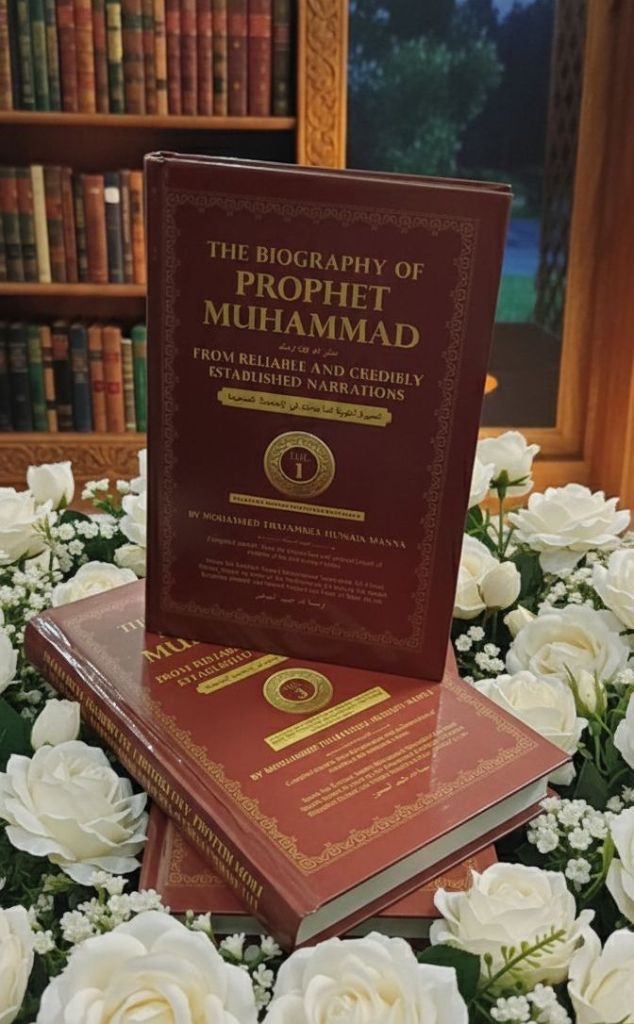
‘The Etiquettes of Correcting Someone’ Learnt From Ibn Baaz (Rahimahullah)’s Letter To Another ‘Aalim…

Title : A letter of advice and a reminder to his eminence Ash-Shaikh Hassanein Makhlouf from Shaikh Abdul Azeez bin Abdullah bin Baaz.
[Translators’ note: Ash-Shaikh Hassanein Muhammad Makhlouf (6th May 1890 to 15th April 1990) was one of the major scholars of The Al-Azhar University. He served as the Mufti of Egypt for quite a long time. Shaikh ʿAbdul ʿAzeez bin ʿAbdullāh bin Baaz,(21 November 1912 – 13 May 1999) was a major Salafi scholar from Saudi Arabia who served as the Grand Mufti of Saudi Arabia from 1993 until his death in 1999. May Allah be pleased with them both.]

{The letter…}

From Abdul Azeez bin Abdullah bin Baaz to the esteemed brother, the honorable Shaikh Hassanein Makhlouf, may Allah grant him every goodness. Salamun Alaikum Wa Rahmatullahi Wa Barakatuhu.

Ba’dahu (thus), O beloved one, I was informed by some reliable people that on the night of Thursday, 17/2/1393 AH, they tuned in to the Cairo Radio station and found it broadcasting a response stating the impermissibility of praying the Tahiyyatul-Masjid prayer, while the Imam is delivering the Friday Khutbah.

I was surprised by that; Because it is not hidden from anyone like you that it has been authentically reported from the Prophet (Sallallahu alaihi wasallam), regarding his command to the one who entered (the Masjid) while he was delivering the Friday Khutbah to pray two Rak’ahs. [Translator: See Sahih Muslim 875g.]

Perhaps your eminence had forgotten that, and therefore I thought I would remind you on this issue out of (acting upon) ‘cooperation in Al-Birr (righteousness) and At-Taqwa (piety)’, and it would be better for your eminence to rectify (correct) the answer to this issue and announce it (publicly on radio) as you announced (the previous answer) the first time.

May Allah reward your efforts, and bless your efforts,and benefit from your knowledge, and make us, along with all our brothers, from callers to guidance. May He grant us correctness in speaking and acting truthfully. Indeed, He is the best of those to be asked.

Was-Salamu Alaikum Wa Rahmatullahi Wa Barakatuhu.

Dated: 22/3/1393 AH.

{Reference: Ar-Rasail Al-Mutabadilah Bayna Ash-Shaikh Ibn Baaz Wal ‘Ulamaa, page 685.}

The Hadith:

Jabir bin ‘Abdullah [Radi Allahu ‘Anhu] reported: Sulaik Al-Ghatafani [Radi Allahu ‘Anhu] came on Friday when the Messenger of Allah (ﷺ) was delivering the Khutbah (sermon). He (Sulaik) sat down. He (the Holy Prophet) said to him: “O Sulaik! Stand and observe two Rak’ahs and make them short, and then said: When any one of you comes on Friday, while the Imam delivers the sermon, he should observe two rak’ahs and should make them short.” (Sahih Muslim 875g, sunnah.com)

[Translated by Mohammed Manna, 8th January 2024.]

Saying, ‘Hasbi Allahu La Ilaha Illa Huwa Alaihi Tawakkaltu Wahuwa Rabbul Arshil-Adheem’- Authentic or not?

Alhamdulillah was Salaatu was Salaamu Ala Rasoolillah wa Ala Aalihi wa Ashaabihi Ajmaeen. I will be sharing two Fatwas from Shaikh Abdul Azeez bin Abdullah bin Baaz Rahimahullah on the issue, and pen down a conclusion. In-Sha-Allah.

The Narration As In Sunan Abu Dawud and the famous Dua book Hisnul Muslim.

(Fatwa 1)

Question: What is the authenticity of the Dua, “Whoever says in the morning or evening -Hasbi Allahu Alladhi La Ilaha Illa Huwa Alaihi Tawakkaltu Wahuwa Rabbul Arshil-Adheem…”?

Answer by Shaikh Ibn Baaz Rahimahullah:

Alhamdulillah.

Yes, this Hadith has been narrated from the Prophet (Peace be upon him) but it is Daeef (weak), the Hadith is Daeef (weak) and these wordings are Tayyib (good), and if a person repeats it often it is Tayyib (good).

“Hasbi Allahu Alladhi La Ilaha Illa Huwa Alaihi Tawakkaltu Wahuwa Rabbul Arshil-Adheem”, and this is also the ending (Last Ayah) of Surah At-Tawbah (9:129), this statement is good and Adheem (great) if a person recites this and repeats it, it is a good statement (a good Dua).

However, its attribution to the Prophet Muhammad (peace be upon him) about (the rewards of) the one who repeats it seven times, and the resulting benefits mentioned, is weak and not established authentically from the Prophet (peace be upon him). End of the Fatwa.

Source: Audio Fatwa from the Noor Ala Ad-Darb programme.

(Fatwa 2)

Question: Is this Hadith Saheeh (authentic) or not- “Whoever says during the morning and evening, Hasbi Allahu La Ilaha Illa Huwa Alaihi Tawakkaltu Wahuwa Rabbul Arshil-Adheem, seven times, Allah will suffice him for what concerns him of the affairs of this world and the Hereafter.”?

Answer by Shaikh Ibn Baaz Rahimahullah:

Alhamdulillah.

This Hadith has been narrated Mawqoof (reaches upto a companion) till Abud-Darda (Radiallahu Anhu), from the narrations of Sunan Abi Dawud with a Jayyid (good) chain.

And the words are, ‘Whoever says in the morning and evening, Hasbi Allahu La Ilaha Illa Huwa Alaihi Tawakkaltu Wahuwa Rabbul Arshil-Adheem, Allah will be sufficient for him against anything which grieves him… (till the end)’, there are no extra additional wordings to it as mentioned (in the question) that, ‘from the affairs of the world and the hereafter’.

And it is a Hadith Mawqoof from Abud-Darda, and it is not a Hadith Marfoo till the Prophet (i.e. the chain doesn’t reach till the Prophet (peace be upon him)). However it is ruled to be (similar to) Marfoo, because things similar to this are not narrated based on opinion. And Allah is the source of strength.

(Majmua Fatawa Ibn Baaz 26/65.)

Conclusions And Benefits:

1. The narration has been authentically reported from the Sahabi, Abud-Darda (Radiallahu Anhu).

2. It has not been authentically reported that the Prophet (peace be upon him) narrated it.

3. However it is not something that a Sahabi would have spoken from his own opinion, hence it is good to act upon this narration.

4. An important principle to be noted from the first Fatwa of Shaikh Ibn Baaz is that, even if a Dua is proven from a weak Hadith, but it’s wordings are good in meaning, it can be used as a general Dhikr, without specifying the time, number and virtues.

5. However, since this narration is authentic from a Sahabi, it can be recited seven times in the morning and the evening, and it will ease our difficulties, In-Sha-Allah.

6. Sometimes a narration related to a Dua or any Hadith may be proven from a Daeef (weak) route from the Prophet (peace be upon him), but may be found to be authentically proven from a Sahabi. Such narrations are acceptable and similar to a Hadith narrated from the Prophet in ruling, because the Sahaba don’t speak about such matters from their desires.

Jazakallahu khairan for reading.

[Both the Fatawa were translated by me (Mohammed Manna). I wasn’t aware that the Arabic Fatwa (#2) was already available in English on Islamqa.info . Also, I haven’t used the Arabic text to write Salallahu Alaihi Wa Sallam as it would misalign the text when this post is published.]

-by Mohammed Manna (14th December 2023)

Critique of the narration attributed to ‘Abdullah ibn Saba (The Jew) that he used to say: ‘Begin by criticizing and attacking your leaders. And appear to enjoin the good and forbid evil so the people incline towards you.’ [Tareekh At-Tabari’ (4/341)]

Alhamdulillah Was-Salatu Was-Salamu ‘Ala Rasoolillah, Amma Ba’d:

The Full Narration:

It was transmitted to me in writing by As-Sari from Shu’ayb from Sayf from ‘Atiyyah from Yazid Al-Faq’asi (that): ‘Abdullah bin Saba was a Jew from the people of San’a, and his mother was a black woman. He converted to Islam in the era of ‘Uthman (Caliphate of Uthman bin Affab), then roamed about the lands of the Muslims, attempting to lead them into error. He began in the Hijaz, and then (worked) successively in Basrah, Kufah, and Shaam. He was unable to work his will (his evil plans) upon a single one of the people of Shaam; they drove him out and he came to Egypt .

He (‘Abdullah bin Saba) settled among the Egyptians, saying to them, among other things, “How strange it is that some people claim that Jesus will return [to the earth], while denying that Muhammad will return. And Almighty God has said (in The Quran), ‘Surely the One who has enjoined the Qur’ān upon you will surely bring you back to a place of return.’ [Quran 28:85] Now Muhammad is more worthy than Jesus to return.”

(Yazid Al-Faq’asi) says: This gained the approval [of his listeners], and so he fabricated for them [the notion of] the Return (Ar-Raj’ah, initially it meant the doctrine of the second coming of Muhammad ﷺ, it later evolved to mean the return of the 12th Imam of the Shia), and they discussed it among themselves. Later on, (Ibn Saba) said to them, “Verily there have been a thousand prophets; every prophet has an executor (executor of his will, Wasi) and ‘Ali was the executor of Muhammad.” He continued, “Muhammad is the seal of the prophets, and ‘Ali is the seal of the executors (Khatam-ul-Awsia).”

Then after that he said, “Who commits a greater wrong than a man who has not carried out the testament of the Messenger of Allah ﷺ, who has attacked the executor of the Messenger of Allah ﷺ, and who has usurped power over the Ummah?” Then he told them, “Verily, ‘Uthman has taken it without right, while this one [that is, ‘Ali] is the executor of the Messenger of Allah. Therefore, champion this cause and set it going (work towards it).

(‘Abdullah bin Saba said:) Begin by censuring your Umaraa (leaders, governors). Proclaim publicly the commanding of good and the forbidding of evil, and you will (then) win over the people. Summon them to this cause.

Then he dispersed his agents (callers to his cause, Du’aat) and wrote to those whom he had corrupted in the garrison towns. They returned his correspondence and secretly preached their notions [to others].

In public they proclaimed the commanding of good and the forbidding of evil. They began sending letters to the garrison towns, filling them with censure (mentioning the faults) of their rulers, while their brethren would write back to them in similar terms. Among (these dissidents) the inhabitants of each garrison town would write about their activities to another garrison town. Those involved would read this aloud in their various garrison towns, until finally they extended this [agitation] to Madinah and spread his message throughout the land. Their real aim was different from the one that they proclaimed in public, and what they kept secret was different from that which they presented openly. Thus, the inhabitants of every garrison town were saying, “We are secure from the trials facing everyone except the Madinans (people of Madinah).” As the latter became aware of (the agitation) in all the garrison towns, they said, “We are secure from the situation facing the people.”

At this point (the narrator) is joined by Muhammad and Talhah: (The Madinans) came to ‘Uthman and said, “O Commander of the Faithful, have you heard what we hear concerning the people?” He answered, “No, by Allah. I have only heard about order and security.” They continued, “(Certain things) have come to our attention,” and they told him what had been communicated to them. Then (‘Uthman) said, “You are my associates (Shuraka) and the men of probity (Shuhood, witnesses) among the believers, so advise me.” They responded, “We advise you to send men whom you trust to the garrison towns so that they may bring back their reports to you.”

Then he summoned Muhammad bin Maslamah and dispatched him to Kufah; he also sent Usamah bin Zayd to Basrah, ‘Ammar bin Yasir to Egypt, and ‘Abdullah bin ‘Umar to Shaam. In addition to these, he sent men to various other places. They all returned before ‘Ammar and said, “O people, we did not disapprove of anything [which we found during our tours of inspection], nor did the notables (A’lam) or commoners (‘Awaam) among the Muslims.” They said also, “The affairs of the Muslims are in good order if only their governors (Umaraa) act equitably (i.e. with justice) among them and keep watch over them.”

The people waited so long for ‘Ammar that they thought that he had been assassinated. Then unexpectedly they got a letter from ‘Abdallah bin Sa’d bin Abi Sarh, informing them that a band of men (Qawm) in Egypt had focused all their efforts on ‘Ammar (bin Yasir) and won him to their cause. Among these were ‘Abdallah bin As-Sawda’ [that is, ‘Abdullah Ibn Saba], Khalid bin Muljam, Sudan bin Humran, and Kinanah bin Bishr.

[Tareekh At-Tabari, translated into English by R. Stephen Humphreys, University of Wisconsin, Madison, State University of New York Press as, ‘The History Of Al-Tabari’, Volume 15, pages 145-148. In the original Arabic book, Vol.4, page 340-341. See ‘Events of 35 Hijri’. I have slightly adapted and corrected the English translation without changing anything from the main text.]

Some reasons why this narration is not reliable and very weak:

1. Regarding this narration, the Muhaqqiqoon (the ones who researched the chains of narration of Tareekh At-Tabari), who compiled after a thorough research Saheeh wa Da’eef Tareekh At-Tabari (Muhammad Subhi bin Hassan Hallaq and Muhammad Taher Al-Barzanji) stated:

The chain of this narration is weak and contains Nakarah Shadeedah (things that are to be severely criticised). The mentioned narration by Saif stated that when Uthman ibn ‘Affan sent ‘Ammar ibn Yasir (may Allah be pleased with him) to Egypt, he (‘Ammar) delayed his return. It became apparent to the Muslims that the reason for his delay was his being influenced by the opinions of the Jew- ‘Abdullah ibn Saba (Ibn As-Sauda). The truth that should be said is that, there is no authentic, well-established narration demonstrating that any of the companions were (ever) influenced by the words of ‘Abdullah ibn Saba. In fact, weak narrations sometimes assert that the companions only considered him a Jew, as seen in the weak narration by Saif about the disagreement between Mu’awiyah and Abu Dharr (may Allah be pleased with them) and Abu Dharr’s departure to Madinah and then to Rabadha after consulting with Sayyiduna ‘Uthman ibn Affan, the Commander of the Faithful (may Allah be pleased with him) – refer to (4/330/787). (End quote.)

[After writing this, the researchers mention in this same footnote the reality of the existence of ‘Abdullah bin Saba and how he was involved in the murder of ‘Uthman bin ‘Affan, from various Sunni and Shia sources, but we will not add it here as it is not necessary for our discussion.]

2. Let us mention the condition of two narrators from the chain of the narration above:

Sayf bin Umar (Al-Usayyidi At-Tamimi):
Imam Yahya ibn Ma’een said, “Weak in hadith. When asked about him, Abu Ja’far Al-Hadrami said, ‘There is no goodness in him’.” Imam Abu Hatim Ar-Razi said, “His Hadith are considered unreliable, and his narration resembles the narrations of Al-Waqidi.” [See: hadith.islam-db.com/]

Shuaib bin Ibrahim (Al-Kufi):
Imam Abu Ahmad ibn ‘Adi Al-Jurjani, “He has narrations and reports, but he is not well-known in this regard. The quantity of what he narrates in terms of hadith and reports is not much, and some of his reports and narrations are questionable due to their containing criticism of the early generations.” Imam Ibn Hajar Al-Asqalani, “Feehi Ba’dh Nakarah (There is some criticism regarding his narrrations).” Imam Adh-Dhahabi: There is ignorance about his condition.” [See: hadith.islam-db.com/]

3. The text of the narration is also problematic as it says that ‘Ammar bin Yasir, the noble Sahabi, was influenced by the deceptive words of ‘Abdullah bin Saba and his companions. May Allah keep us safe from thinking as such about the Sahaba (the Prophet’s ﷺ companions).

4. The narration of ‘Abdullah bin Saba is being shared these days to imply that it is not allowed to speak ill of an oppressive ruler even if it is with an intention of ordering good and forbidding evil, and not to cause a rebellion. Rather this contradicts narrations from the pious predecessors and scholars about ‘backbiting an evil ruler’. Some of them are below:

a. The following are some quotes from ‘Kitab-us-Sunnah Min Masail Harb bin Ismail Al-Hanzali Al-Kirmani’ (translation from al-aqeedah.com):

(Point:) 117 / 656 – ‘Abdullāh ibn ‘Abdil-Wahhāb narrated to us and said: Ziyād ibn Ar-Rabī’ narrated to us, from ‘Abdur-Rahmān ibn Udhaynah who said: Our ashyākh (pl.shaykh) said: “Three (types of people) have no backbiting: The unjust oppressing ruler, the sinner who exposes his sins and an innovator.” Narrated by Harb in his ‘Masāil’ (1412).


(Point:) 121 / 660 – I asked Ishāq: about the backbiting of the oppressive ruler? He said: “It is not (backbiting when) regarding them. Except that it is disliked that a person makes his tongue used to (speaking bad about people).” [Narrated by Harb in his ‘Masāil’ (1415)]

(Point:) 122/661- Al-Akhdar narrated to us and said: ‘Ārim narrated to us and said: Wuhayb ibn Khālid narrated to us and said: I heard ‘Ubayd-Allāh saying regarding the backbiting of the Khawārij and the ruler who has publicly shown (his mistakes): that he did not see any backbiting of them. But as for them one about whom it is known that he is a sinner and he likes to screen himself, then he considered that (i.e., speaking about him) backbiting from them. [Narrated by Harb in his “Masāil” (1416).]

[Note: Even if someone says that some of or all of the above quotes are weak, it should be noted that, the presence of these quotes shows that it was from the belief of Imam Harb Al-Kirmani, that there is no prohibition of backbiting with regards to an oppressive ruler.]

b. Ali ibn Salama Al-Lubqi, may Allah have mercy upon him, said: “I heard Imam Sufyan ibn ‘Uyaynah saying, ‘There are three for whom there is no (prohibition from) backbiting: the oppressive ruler, the sinful one who sins publicly, and the innovator who calls people to his innovation.'” [Shu’ayb Al-Iman of Imam Al-Bayhaqi (127/9).]

c. Imam Muqbil (Rahimahullah) said: Those who say that advising [rulers] should only be done in secret, they do not have any evidence, and the hadith (about advising privately) is weak. Advising should be done secretly when one knows that it will be accepted, or when it is known that public advice from the pulpits may stir up discord. However, if it is known that the wrongdoing can be removed, because governments have informants in large societies, and the information might reach them (about their public criticism being done), and they fear people criticizing them and so this will lead to them removing this wrongdoing. When we read the biographies of our scholars, we find among them those who openly criticized the rulers, and among them, those who refrained from doing so to avoid causing discord. As for abandoning clarification (of these sins), then when will these rulers reform?!”

(From the Fiqh of Imam Al-Wadi’i, 3/403.) [Taken from X.com: @M_ALWadiee]

  • by Mohammed Manna, dated 30th November 2023.

Assessment of the books of Abul-Ala Al-Mawdudi, Abul-Hasan An-Nadawi, and Sayyid Qutb.- Shaikh Ibn Baaz

Assessment of the books of Abul-Ala Al-Mawdudi, Abul-Hasan An-Nadawi, and Sayyid Qutb.


The question:
A message arrived at the program from the listener (A.A. Az-Zaawi) from Tripoli, Libya. Our sister has a number of questions, including one in which she says: I ask Your eminence to kindly express your opinion about the writings of Abul-Ala Al-Maududi, Abul-Hasan An-Nadawi, and Sayyid Qutb. [Shaikh Abul-Hassaan Ali An-Nadwi was alive at the time this answer was given but Abul-Ala Al-Maududi and Sayyid Qutub had passed away).]


The answer (by Shaikh Abdul Azeez bin Abdullah bin Baaz [Rahimahullah]):


All of their books are beneficial. The writings of these three – may Allah have mercy on them all – are all beneficial, containing much goodness. However, they are not immune from some mistakes. Each person takes what is useful and leaves what is not. They are not infallible. A student of knowledge, when he contemplates their works, recognizes both the errors and the truths within. They – may Allah have mercy on them – exerted effort for the good. They called to goodness and endured hardship in doing so.

Abul-Hasan is present (i.e. he was alive at the time this answer was given)- by the grace of Allah – and there is much good in him. However, he is not infallible, and neither are other scholars. Infallibility is for the messengers – peace and blessings be upon them – in conveying what they receive from Allah. Allah preserves the messengers in everything they convey from Him, and likewise, the prophets. As for the scholars, every scholar makes mistakes and attains correctness, but, by the grace of Allah, their correctness outweighs their mistakes. They have benefited, excelled, and provided assistance to people.


Malik ibn Anas – may Allah have mercy on him – the Imam Dar-ul-Hijrah (i.e. leader of the land of Hijrah [Madinah]) in his time, said: ‘There is none among us except that his opinion may be accepted or rejected, except the occupant of this grave,’ meaning the Prophet, peace and blessings be upon him.


So, the believer seeks knowledge, and likewise, the believing woman seeks knowledge. Each person strives to understand the religion, gains insight, asks about what he is confused about. They read the Quran, read the Sunnah, and take care to know the truth with its evidence. They also learn to recognize errors if a scholar makes a mistake.

It is not permissible to say, ‘The opinion of such-and-such a distinguished scholar is taken wholly without scrutiny!’ No, rather, it is necessary to scrutinize and be careful, presenting the opinions to the evidence of Shariah. What aligns with it (The Shariah, Quran and Sunnah) is accepted, and what contradicts the evidence of Sharia is abandoned, even if the person is great, even if he has great rewards (in his account of good deeds), is diligent (and striving) in doing good, and is famous (well-known). Yes. [End of the answer.]

-by Shaikh Abdul Azeez bin Abdullah bin Baaz from the programme ‘Noor Ala-Ad-Darb’.

[-Translated by Mohammed bin Thajammul Hussain Manna 29th November 2023.]

Translator’s Note: Shaikh Abdul Azeez bin Abdullah bin Baaz passed away on 13 May 1999 (aged 86), Sayyid Abul-Ala Al-Mawdudi on 22 September 1979 (aged 75), Sayyid Qutb on 29 August 1966 (aged 59) , and Abul Hasan Ali An-Nadwi on 31 December 1999 (aged 85), may Allah have mercy upon them all and forgive their mistakes and accept their good deeds.

Source: https://binbaz.org.sa/fatwas/8989/%D8%AA%D9%82%D9%8A%D9%8A%D9%85-%D9%83%D8%AA%D8%A8-%D8%A7%D8%A8%D9%8A-%D8%A7%D9%84%D8%A7%D8%B9%D9%84%D9%89-%D8%A7%D9%84%D9%85%D9%88%D8%AF%D9%88%D8%AF%D9%8A-%D9%88%D8%A7%D8%A8%D9%8A-%D8%A7%D9%84%D8%AD%D8%B3%D9%86-%D8%A7%D9%84%D9%86%D8%AF%D9%88%D9%8A-%D9%88%D8%B3%D9%8A%D8%AF-%D9%82%D8%B7%D8%A8

Note: This post is not a defence of Syed Qutub. In order to see the refutation of some of the serious errors of Syed Qutb, refer to the following book where the statements of many Ulama have been compiled: Baraa’ah Ulamaa-il-Ummah Min Tazkiyah Ahl il-Bid’ah wal-Mudhammah.

Asking For Ruqyah To Be Done Upon Yourself By Others Will Not Exclude You From The 70,000 People Who Will Enter Jannah Directly Without An Account- Fatawa by Shaikh Ibn Baaz (رَحِمَهُ ٱللَّٰه)

The questioner: “Your Eminence, there is a Hadith in which the Prophet ﷺ mentioned that seventy thousand people from the Ummah of Muhammad ﷺ will enter paradise without being taken into account or subjected to punishment. When the companions (May Allah be pleased with them all) discussed among themselves who these people were and what their qualities were, the Prophet ﷺ came out to inform them about their discussion. He ﷺ said that they are the ones who do not practice ‘Ruqyah’, do not believe in omens, and do not cauterize.” The questioner requests: “We hope, your eminence, that you explain these qualities to us so that we can adhere to them.”


The answer (by Shaikh Abdul Azeez bin Abdullah bin Baaz): The Prophet ﷺ informed that from his Ummah, there will be seventy thousand people who will enter paradise without being held accountable or punished [1]. In another narration he ﷺ said, for every thousand (who will enter Paradise directly), there will be another seventy thousand (who will also enter Paradise directly without being taken into account) [2]. When he ﷺ was asked about their qualities, he said: “They are the ones who do not practice ‘Ruqyah’, do not believe in omens, do not cauterize, and solely rely (have Tawakkul) on their Lord.”

This means they (the seventy thousand and those who will enter Paradise directly) are the ones who uphold the religion of Allah, have piety and faith, worship Allah alone, fulfil their religious obligations, avoid forbidden acts, and strive in various forms of goodness. They even refrain from some recommended acts like ‘Ruqyah’ and cauterization, as their faith is complete and perfect.

“They do not seek Ruqyah” [3]- meaning they do not ask others to recite Ruqyah for them, and “they do not cauterize”- because leaving it is better except in cases of necessity. Refraining from both practices indicates their Kamaal-ul-Imaan (perfection of faith). And if a person is in need of Ruqyah, there is no harm in seeking it (from others). As the Prophet ﷺ instructed Aisha to do Ruqyah [4], and directed the mother of the sons of Ja’far ibn Abi Talib to do Ruqyah for her children when they were afflicted with the evil eye, it indicates that there is no harm in asking someone to do Ruqyah upon yourself when there is a need.
But, leaving these practices is better if an alternative remedy is available and is sufficient. Similarly, cauterization is better to be avoided if there are other suitable treatments. If there is a genuine need for cauterization, then it is permissible. The companions, including Khabbab ibn Al-Aratt [5] and others, resorted to cauterization when necessary. The Prophet ﷺ cauterized some of his companions out of necessity [6].

It is considered virtuous (to not practice Ruqyah and cauterization), but it does not exclude them from the seventy thousand. Leaving cauterization when it is not necessary and refraining from seeking ‘Ruqyah’ when it is not needed are among their good deeds. The seventy thousand are the people of uprightness, those who are devoted to goodness and obedience to Allah, abstaining from disobedience, and safeguarding righteousness. Yes, indeed.

End of the Fatwa.

***

Footnotes:
[1] Al-Bukhaari (6472) and Muslim (220) narrated from Ibn ‘Abbaas that the Messenger of Allah ﷺ said: “Seventy thousand of my ummah will enter Paradise without being brought to account; they are the ones who did not ask for Ruqyah (from others) or believe in omens or use cautery and they put their trust in their Lord.” (Part of a lengthy Hadith.)

[2] Abu Umamah narrated the Messenger of Allah ﷺ said: “My Lord promised me that seventy thousand of my Ummah shall be admitted into Paradise without a reckoning against them nor any punishment. With every thousand, are seventy thousand and three measures from His measures.” Jami` at-Tirmidhi 2437 (Hasan (Shaikh Zubair Ali Zai)).


[3] ‘Ruqyah’ involves healing illnesses -physical and spiritual- through the recitation of specific Qur’anic verses and supplications, following the guidance of the Messenger of Allah ﷺ. It serves as a remedy for problems like the evil eye, magic, and various physical ailments. [4] It was narrated that Aishah said: The Messenger of Allah ﷺ commanded me, or he commanded (the people) to use Ruqyah to deal with the evil eye. [Sahih Al-Bukhari 5279]


[5] Qais said: “I entered upon Khabbab when he had been cauterized on his stomach seven times. He said: ‘Were it not that the Messenger of Allah forbade us to pray for death, I would have prayed for it.”‘ Sunan An-Nasa’i 1823 (Sahih (Shaikh Zubair Ali Zai)). [6] Jabir bin ‘Abdillah reported that on the day of Ahzab, Ubayy received the wound of an arrow in his medial arm vein. Allah’s Messenger (ﷺ) cauterised it. Sahih Muslim 2207.

[6] Jabir bin ‘Abdillah reported that on the day of Ahzab, Ubayy received the wound of an arrow in his medial arm vein. Allah’s Messenger (ﷺ) cauterized it. Sahih Muslim 2207.

***

-Translated by Mohammed Manna (30th October 2023)