The main aim of our site is to purify The Seerah of Prophet Muhammad ﷺ from weak and fabricated narrations using the works of the scholars of Islam. We may add other beneficial material as well.
1. The Narration of Mu’awiyah ibn Abi Sufyan (Radi Allahu Anhu) as related by Abu Sa’id Al-Khudri (Radi Allahu Anhu)
Abu Sa’id Al-Khudri reported that when Mu’awiyah regarded half a sa’ of wheat as equivalent to one sa’ of dates, Abu Sa’id objected and said: “I will not give in it except what I used to give during the lifetime of the Messenger of Allah (Sallallahu ‘Alayhi wa Sallam): one sa’ of dates, or one sa’ of raisins, or one sa’ of barley, or one sa’ of dried curd.” (Sahih Muslim 985e, Book 12, Hadith 25.)
Benefit: The apparent meaning is that a Companion (Mu’awiyah) considered equivalence in value/quality when estimating the amount of Zakat Al-Fitr, even though another Companion preferred to remain upon the original one-sa’ measure. Thus half a sa’ of expensive wheat was considered enough and comparable to one sa’ of dates.
2. The Narration of Abdullah ibn Umar (Radi Allahu Anhuma)
The Messenger of Allah (Sallallahu ‘Alayhi wa Sallam) obligated Zakat Al-Fitr as one sa’ of dates or one sa’ of barley. Abdullah ibn Umar then said: “The people later equated that with two mudds of wheat.” (Sahih Al-Bukhari 1507, Book 24, Hadith 107; Sahih Muslim 984d, Book 12, Hadith 19.)
Benefit: The apparent meaning is that the early Muslims recognized an equivalent measure in wheat, showing consideration of comparative worth and not only literal item-for-item restriction.
3. The Athar of Mu’adh ibn Jabal (Radi Allahu Anhu)
Mu’adh (Radi Allahu Anhu) said to the people of Yemen: “Bring me goods—garments of khamis or labis—in charity instead of barley and corn; that is easier for you and better for the Companions of the Prophet (Sallallahu ‘Alayhi wa Sallam) in Madinah.” (Cited by Imam Al-Bukhari in Sahih Al-Bukhari, Kitab Al-Zakah, chapter: Bab Al-‘Ard fi Al-Zakah (as a chapter-heading report / mu’allaq report from Tawus).)
Benefit: The apparent meaning is that replacement by non-food value/items was accepted when it was easier for the payer and more beneficial for the recipients.
Narrations from the Tābiʿīn
4. The Letter of Umar ibn Abd Al-Aziz (Rahimahullah) – First Report
I heard the letter of Umar ibn Abd Al-Aziz being read to Adi in Basrah: “Half a dirham is to be taken from the people of the register from their stipends for each person.” (Musannaf Ibn Abi Shaybah, no. 10660 (alternate numbering: 10368).)
Benefit: The apparent meaning is that the caliph treated a cash amount as an accepted discharge of the obligation per person.
5. The Letter of Umar ibn Abd Al-Aziz (Rahimahullah) – Second Report
A letter from Umar ibn Abd Al-Aziz came to us regarding Zakat Al-Fitr: “Half a sa’ from each person, or its value: half a dirham.” (Musannaf Ibn Abi Shaybah, no. 10661 (alternate numbering: 10369).)
Benefit: The apparent meaning is explicit—either the measured food amount or its monetary value could be taken.
6. The Statement of Al-Hasan Al-Basri (Rahimahullah)
Al-Hasan Al-Basri said: “There is no harm in giving dirhams in Sadaqat Al-Fitr.” (Musannaf Ibn Abi Shaybah, no. 10662 (alternate numbering: 10370).)
Benefit: The apparent meaning is a clear early endorsement of giving cash in place of food for Zakat Al-Fitr.
7. The Statement of Abu Ishaq Al-Sabi’i (Rahimahullah)
I heard Abu Ishaq say: “I found them (i.e. the Sahabah and the early Muslims of his time) giving dirhams in the charity of Ramadan according to the value of the food.” (Musannaf Ibn Abi Shaybah, no. 10663 (alternate numbering: 10371).)
Benefit: The apparent meaning is that Abu Ishaq witnessed earlier Muslims giving cash by food-value, indicating an established early practice.
8. The Statement of Ata’ (Rahimahullah)
It is reported from Ata’ that he disliked giving silver coins in Sadaqat Al-Fitr. (Musannaf Ibn Abi Shaybah, no. 10664.)
Benefit: The apparent meaning is that the issue was known and debated among the early generations, so one also finds early preference amongst the scholars for keeping Zakat Al-Fitr in food form.
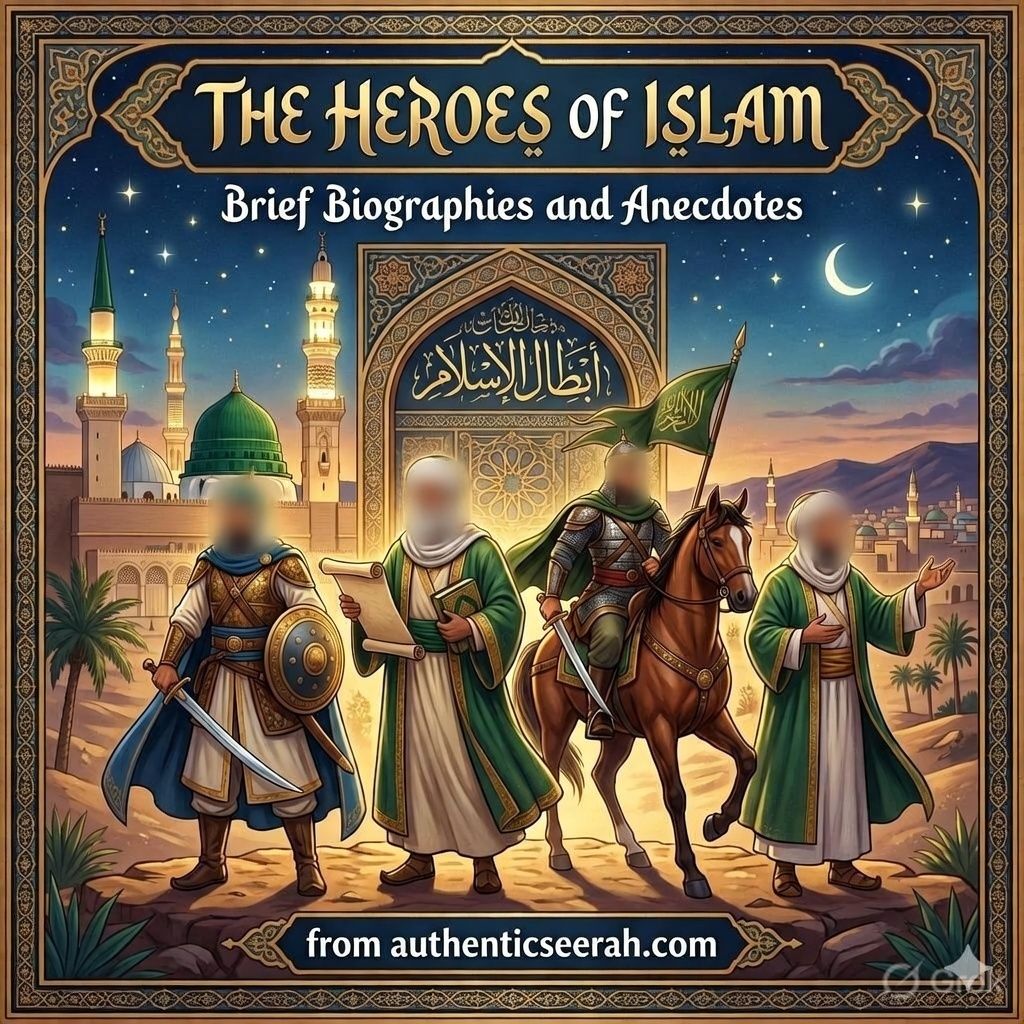
A curated collection of biographies, booklets, and articles featuring the servants of Islam—soldiers, scholars, kings, philanthropists, and reformers who shaped our Ummah’s history.
The Heroes
1. Ameer Abdul-Qadir al-Jazairi– The Algerian resistance leader who fought French colonialism for 15 years, uniting tribes under the banner of Islam and establishing one of the most organized resistance movements in modern history. Read
2. Ameer Al-Khattabi– The Moroccan Rif leader who resisted both French and Spanish colonial forces, inspiring generations with his courage and strategic brilliance. Read
3. Imam Abdul-Hameed Ibn Badees– The Algerian scholar-resistance figure and founder of the Association of Algerian Muslim Ulama, who used his pen and voice to awaken the Algerian people against French occupation. Read
4. Ossu Obsalaam– The Berber leader who led 7,000 fighters against 83,000 French troops at the Battle of Boughafer (1933), choosing resistance over submission. Read
5. Imam Shamil of Chechnya– The legendary leader who led Dagestan and Chechnya’s resistance against Russian expansion for 25 years, becoming a symbol of unwavering faith and defiance. Read
6. Shaikh Khaleel bin Abdur Rahman Al-Qari Al-Kashmiri – The Kashmiri scholar who taught for 53 years in Masjid an-Nabawi, leaving behind a legacy of knowledge that continues to benefit the Ummah. Read
7. The Barbarossa Brothers– The Ottoman naval commanders who secured Mediterranean dominance, protecting Muslim lands and establishing naval supremacy that lasted for centuries. Read
8. Sultan Selim I – The Ottoman Sultan who expanded the Caliphate and protected the Holy Lands, earning the title “The Grim” for his decisive leadership. Read
9. Sultan Suleiman al-Qanuni – The Ottoman ruler who presided over the empire’s golden age across three continents, establishing justice and prosperity. Read
10. An anecdote from the life of Sultan Nuruddin Zangi – The predecessor of Salahuddin Ayyubi who laid the groundwork for liberating Jerusalem, known for his piety and preparation for the noble cause. ReadRead Comic
11. An anecdote from the life of Abdullah ibn al-Mubarak – The scholar-warrior who combined knowledge with action, known for his generosity and military expeditions. Read Comic
12. Anecdotes from the life of Tipu Sultan– The Tiger of Mysore who abolished Kerala’s oppressive “breast tax” and fought British colonialism with innovative military tactics. Read 1Read 2
13. Indonesian Heroes of Bosnia– The Indonesian who traveled across the world to defend Bosnian Muslims during the 1990s war, embodying the spirit of global Muslim brotherhood. Read
14. Sulayman al-Halabi– The Kurdish youth who assassinated French commander Jean Baptiste Kléber, sacrificing his life to strike against colonial occupation. Read
15. Şule Yüksel Şenler– The Turkish hijab activist who became a symbol of Islamic identity and women’s rights in modern Turkey. Read
16. The Two Sons of Kuwait – The story of Dr Abdur Rahman As-Sumait and the Direct Aid Society, showcasing Kuwait’s contribution to global Islamic welfare. And the heroics of Sheikh Fahad (bin) Ahmad Al-Jaber Al-Sabah of Kuwait during the Palestinian liberation wars. Read
17. King Fahad bin Abdul Aziz – The Saudi King who provided $600 million in aid and personally lobbied the UN to lift the embargo on Bosnia during the 1990s war. And how he compelled the USA to bomb the Serbian forces. Read
18. Dr Abdur Rahman As-Sumait– The Kuwaiti physician and philanthropist who founded Direct Aid Society, building 5,700 mosques, 860 schools, 4 universities, 124 hospitals, and sponsoring over 9,500 orphans across Africa. ReadRead
19. Bediuzzaman Saeed Nursi – The 20th-century Kurdish Islamic scholar and author of the 6,000-page Risale-i Nur, who endured 25 years of imprisonment and exile for his writings. ReadRead
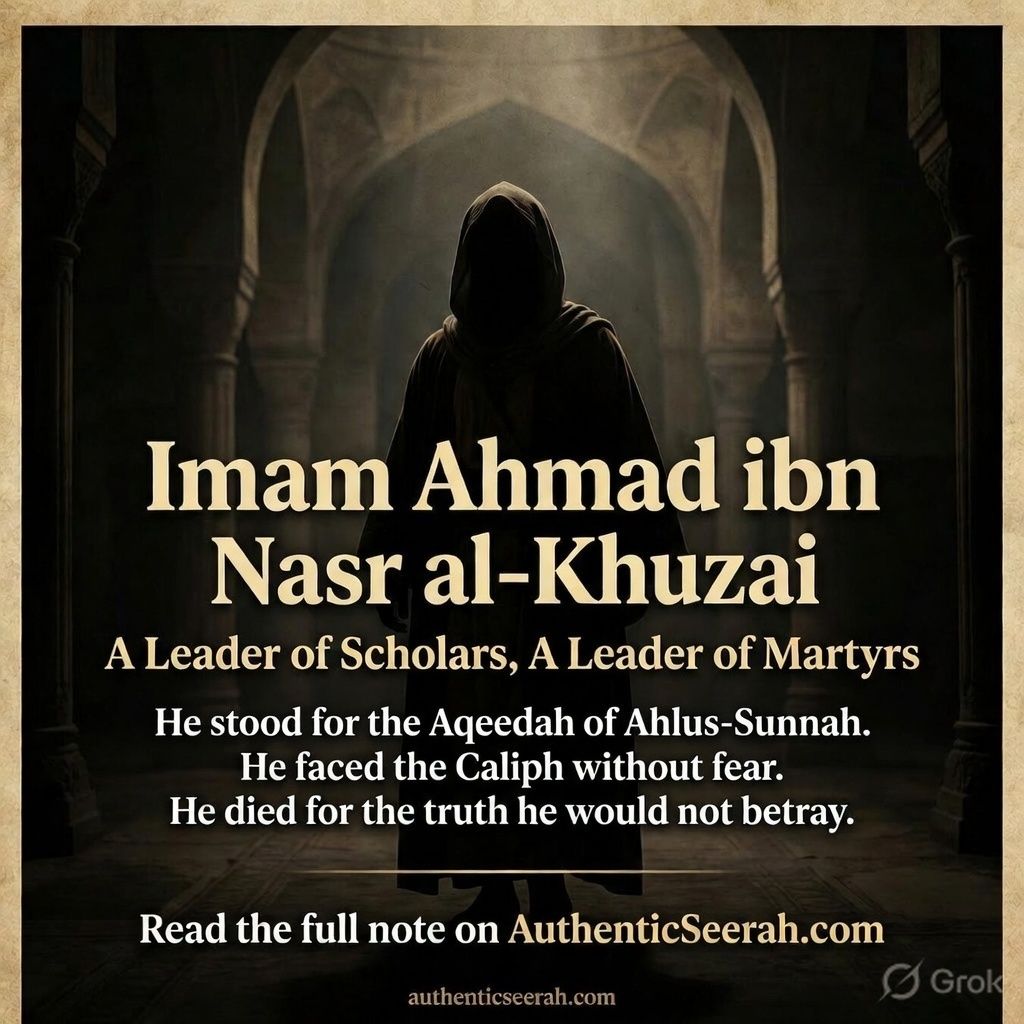
20. Imam Ahmad ibn Nasr Al-Khuzai – The scholar who chose martyrdom over compromise during the Abbasid Mihna (Inquisition), steadfastly defending the uncreated nature of the Quran against Caliph Al-Wathiq’s heresy. A descendant of a prominent Abbasid family, he studied under giants like Sufyan ibn Uyaynah and Imam Malik, and when forced to choose between his life and his aqeedah, he chose truth. Read
21. Shaykh Saleh bin Fawzan Al-Fawzan – The contemporary Saudi scholar and member of the Council of Senior Scholars, known for his knowledge and service to Islamic jurisprudence. Read
22. Shaykh Abdul Aziz al-Zahrani – The Saudi hadith specialist who dedicated his life to the preservation and teaching of authentic hadith. Read
23. Shaykh Muhammad Rafiq Tahir– The Kashmiri scholar who taught at Masjid al-Haram, leaving a legacy of knowledge and piety. Read
24. Shaikh Iskilipli Mehmed Atif Hoca – The Turkish scholar executed in 1926 for refusing to compromise on his religion, choosing death over accepting secular reforms that contradicted Islamic principles. Read
25. Moulana Ghulam Ahmad Vastanvi: Maulana Ghulam Mohammad Vastanvi (1 June 1950 – 4 May 2025) was a prominent Indian Islamic scholar and educationist. He was widely recognized for his pioneering efforts to integrate modern, contemporary disciplines into traditional Islamic education. He established many modern Muslim college and universities. Read
O Allah, guide us to follow in the footsteps of these noble servants of Islam. Grant us the courage of the soldiers, the wisdom of the scholars, the justice of the rulers, and the generosity of the philanthropists. Make us among those who serve Your Deen with sincerity and sacrifice. O Allah, accept our humble efforts and make us worthy of being counted among the inheritors of the Prophets. Ameen.
Please Reshare
If you found this reading list beneficial, please share it with your family, friends, and communities. These stories of courage, sacrifice, and faith deserve to be known and celebrated. Let us inspire one another by learning from the heroes of our Ummah.
(Compiled by Mohammed bin Thajammul Hussain Manna, author-compiler of the first Seerah book in the English language that uses only authentic Ahadith for the Prophet’s Biography, ‘The Biography of Prophet Muhammad From Reliable And Credibly Established Narrations (3 Vols))
“He sold himself, and faced death without fear.” – Ibn Kathir, Al-Bidayah wan-Nihayah, Vol. 10, p. 316
I. A Name Written in Noble Blood – His Lineage
There are men whose greatness is not merely inherited but earned – through fire and through sacrifice. Imam Ahmad ibn Nasr Al-Khuzai was such a man. His full name was Ahmad ibn Nasr ibn Malik ibn Al-Haytham Al-Khuzai Al-Marwazi, and he was later known as the Baghdadi – the man of Baghdad, the city whose streets would echo with his call and whose soil would drink his blood. His kunya was Abu Abdillah. [Ibn Kathir, Al-Bidayah wan-Nihayah, Vol. 10, p. 316; Adh-Dhahabi, Siyar A’lam An-Nubala]
His roots ran deep into the very foundations of the Abbasid state. His grandfather, Malik ibn Al-Haytham, was recorded as one of the greatest and most celebrated campaigners (du’at) of the early Abbasid revolution – the very men whose swords and sacrifices had raised the black banners of the Abbasid dynasty (Banu Abbas) across the Muslim world. So honoured was this family that the Nasr Marketplace (Suq Nasr) in the heart of Baghdad was named after his father, Nasr ibn Malik – a man so beloved among the scholars that the Ahlul-Hadith would gather around him as students gather around a lantern. [Ibn Kathir, Al-Bidayah wan-Nihayah, Vol. 10, p. 316]
Ahmad ibn Nasr was born into this world of honour, but he would elevate it to a place no worldly prestige could ever reach – through the honour of shahadah: martyrdom in the path of truth.
II. The Making of a Scholar – His Teachers and Formation
In the great tradition of Islamic scholarship, knowledge is carried on the backs of men – from heart to heart, from lip to ear, across generations. Ahmad ibn Nasr sat at the feet of some of the most towering scholars of his age and drank deeply from the wells of authentic knowledge. [Ibn Kathir, Al-Bidayah wan-Nihayah, Vol. 10, p. 316]
He received Hadith directly from Hammad ibn Zayd – the great master of Basra and one of the most precise memorisers (Huffadh) of Hadith in his era – and from Hashim ibn Bashir, all of whose writings Ahmad preserved and safeguarded with extraordinary care. [Ibn Kathir, Al-Bidayah wan-Nihayah, Vol. 10, p. 316]
He sat with Sufyan ibn Uyaynah – the celebrated Imam of Makkah, whose chains of transmission were considered among the most impeccable of his era. It was a narration of Sufyan ibn Uyaynah that Ahmad would quote in the most consequential and charged moment of his life: standing bound before a caliph who demanded his recantation. [Ibn Kathir, Al-Bidayah wan-Nihayah, Vol. 10, p. 318]
Most significantly, he sat with Imam Malik ibn Anas (Rahimahullah) – the Imam of Madinah, the Imam Dar Al-Hijrah – and heard from him directly a great number of Ahadith. To have direct narration from Imam Malik was a mark of scholarly standing of the highest order and a certificate of authentic transmission. [Ibn Kathir, Al-Bidayah wan-Nihayah, Vol. 10, p. 316]
Those who narrated from him include the hadith master Yahya ibn Ma’in, and Ahmad ibn Ibrahim Ad-Dawraqi together with his brother Ya’qub ibn Ibrahim – all of whom counted among the senior transmitters of their generation. Adh-Dhahabi mentions Yahya ibn Ma’in in his Mizan Al-I’tidal as one of the most exacting critics in matters of tawthiq (authentication of narrators), and it is this same Yahya who would later weep for Ahmad and bear personal testimony to his martyrdom. [Adh-Dhahabi, Mizan Al-I’tidal; Ibn Kathir, Al-Bidayah wan-Nihayah, Vol. 10, p. 316]
III. A Storm Rising in the Palace – The Dark Age of the Mihna
To understand the magnitude of Ahmad ibn Nasr’s sacrifice, one must first understand the darkness against which he stood – a darkness that did not come from outside the Muslim world, but from within its very throne room. In the year 218 H (833 CE), the Abbasid Caliph Al-Ma’mun launched what historians would record as one of the most painful chapters in Sunni Islamic history: the Mihna – the Inquisition. [Encyclopaedia Britannica, “Mihnah”; At-Tabari, Tarikh Ar-Rusul wal-Muluk]
Under the intellectual influence of Mu’tazilite theologians – scholars who had absorbed the rationalist methods of Greek philosophy – the Abbasid state adopted and then enforced a single theological position: that the Quran is created (makhluq). The Mu’tazilites argued with philosophical precision: God is an absolute unity admitting no divisions or co-eternal attributes. The Quran, as a verbal expression and material thing distinct from God’s essence, must therefore have been created in time – it could not be eternal and co-existing with God, for that, they argued, would compromise divine unity. [Encyclopaedia Britannica, “Mihnah”; Oxford Bibliographies, “Mihna”]
The Ahlus-Sunnah answered with the testimony of the Quran and the Sunnah of the Prophet (Sallallahu Alaihi wa Sallam): the Quran is the Word of Allah – not a creature, not a fabricated entity, but a divine attribute of the Most High, eternal in its essence, revealed in letters and sounds to His creation. This was not a minor academic dispute. It was a question about the very nature of Divine Revelation itself. [Ibn Kathir, Al-Bidayah wan-Nihayah, Vol. 10, p. 316; Encyclopaedia Britannica, “Mihnah”]
Al-Ma’mun imposed his doctrine with the full weight of imperial authority. Judges, scholars, and religious officials across the empire were summoned, questioned, pressured, and some tortured. Most acquiesced, citing the principle of taqiyyah (concealment of belief under duress), and some used tauriyyah (tauriyyah involves using ambiguous language or words with multiple meanings to convey a message that is true in one sense but misleading in another, often to protect oneself or others from harm). The few who refused were imprisoned, flogged, and humiliated. The greatest among the resisters was Imam Ahmad ibn Hanbal (Rahimahullah), who endured lashes and imprisonment, and yet repeatedly answered that, ‘The Quran is The Book of Allah, and un-created’.
When Al-Ma’mun died, his successor Al-Mu’tasim continued the Mihna. And when Al-Mu’tasim died, Al-Wathiq inherited the throne – and inherited the inquisition – making it, if anything, worse. The classical scholars recorded Al-Wathiq as “the most severe of all people in insisting upon the claim that the Quran is created – he would call to it day and night, publicly and privately.” Under him, scholars were tortured until they broke, the silent were pressured into compliance, and the Ulama walked the streets of Baghdad and Samarra with the sword perpetually hanging over their necks. [Ibn Kathir, Al-Bidayah wan-Nihayah, Vol. 10, p. 317]
IV. The Imam Rises – The Bay’ah and the Revolt
Ahmad ibn Nasr could not confine himself within walls while the Aqidah of the Ummah was being dismantled by a king wielding a philosopher’s pen and an executioner’s sword. He had watched long enough. He had seen scholars bent under torture, the Mu’tazilite chief judge Ahmad ibn Abi Du’ad moving through the courts as the ideological enforcer of the Mihna, compelling men to betray their convictions under pain of punishment. [Ibn Kathir, Al-Bidayah wan-Nihayah, Vol. 10, p. 317]
So in the year 231 H, in the blessed month of Sha’ban, Ahmad ibn Nasr did something breathtakingly courageous: he called the believers of Baghdad – laypeople, merchants, and ordinary Muslims who had neither the title of scholar nor the protection of the state – and they gave him the Bay’ah: the pledge of allegiance. They pledged upon commanding the good and forbidding the evil, and pledged to resist a ruler who had corrupted the religion with heretical doctrine and tortured those who spoke the truth. The Bay’ah was taken secretly. Thousands joined him. The Eastern Province of Baghdad was organised by Abu Harun As-Siraj, and the Western Province by a man named Talib. Plans were laid with care, dates were set, and a signal was agreed upon – a drumbeat on a specific night, upon which the movement would rise. [Ibn Kathir, Al-Bidayah wan-Nihayah, Vol. 10, pp. 317-318]
But Allah (Subhanahu wa Ta’ala) had willed something different from what the Imam had planned. Two of his followers – men from Banu Ashras – were overcome by the heedlessness of intoxication and beat the signal drums a full night early. The premature signal plunged everything into chaos. The Caliph’s forces mobilised swiftly. The exposed conspirators were captured and, under torture, confessed the name of their leader. Ahmad ibn Nasr was arrested, bound in ropes, and transported under armed escort from Baghdad to the Abbasid capital of Samarra, where Al-Wathiq awaited him. [Ibn Kathir, Al-Bidayah wan-Nihayah, Vol. 10, p. 318]
V. The Court of a Tyrant – The Dialogue of a Man Unafraid
This is the most extraordinary passage in the life of Ahmad ibn Nasr – a dialogue that deserves to be read slowly, and felt deeply. It is preserved in its most complete form by Ibn Kathir in Al-Bidayah wan-Nihayah, and confirmed in its essentials by At-Tabari.
The hall of Al-Wathiq in Samarra was not a place of justice. It was a stage of power. Spectators were assembled – courtiers, soldiers, and officials – to witness what the Caliph intended as an example. Present at his side was the infamous Qadhi Ahmad ibn Abi Du’ad, the Mu’tazilite chief judge and principal architect of doctrinal persecution. The powerful men of the Abbasid state surrounded them. [Ibn Kathir, Al-Bidayah wan-Nihayah, Vol. 10, p. 318]
Then they brought Ahmad ibn Nasr. He was an elderly man. His hands were bound with ropes. He was made to stand upon a matahah – a leather mat specially laid for executions, so the blood would not stain the palace floor. Al-Wathiq had no intention of justice. He had already made up his mind. Yet the face of the Imam showed no fear. [Ibn Kathir, Al-Bidayah wan-Nihayah, Vol. 10, p. 318]
Al-Wathiq, rather than addressing the rebellion – the actual political charge – turned the entire proceeding into a theological examination. He would use the veneer of religious law to execute a man of religion for a matter of religion. He asked first regarding the Quran:
Al-Wathiq: “What do you say regarding the Quran?”
The Imam’s answer was neither a philosophical treatise nor a political calculation. It was the simple, clear voice of a man whose heart was filled with certainty:
Ahmad ibn Nasr: “It is the Word of Allah.”
Al-Wathiq pressed harder, seeking the one word that would complete his charge:
Al-Wathiq: “Is it created (makhluq)?”
Again, the Imam did not yield. He did not soften his words. He did not seek the exit of ambiguity:
Ahmad ibn Nasr: “It is the Word of Allah.”
He repeated the same answer – not from evasion, but from profound theological precision. To say “the Word of Allah” was itself the complete and sufficient doctrinal statement. The Word of Allah is not created; it requires no further qualification from a man standing at the gate of death. [Ibn Kathir, Al-Bidayah wan-Nihayah, Vol. 10, p. 318]
Al-Wathiq, finding no opening in the Imam’s armour of faith, shifted to the second great flashpoint of Mu’tazilite theology – the question of the Ru’yah: the physical seeing of Allah on the Day of Resurrection, which the Mu’tazilites categorically denied:
Al-Wathiq: “What do you say about your Lord? Will you see Him on the Day of Resurrection?”
The Imam lifted his gaze and answered with the Quran and the authenticated Sunnah:
Ahmad ibn Nasr: “O Amir Al-Mu’minin: It has come in the Quran and in the narrations – ‘Some faces, that Day, will be radiant – looking at their Lord.’ (Al-Qiyamah: 22-23). And the Prophet (Sallallahu Alaihi wa Sallam) said: ‘Verily, you will see your Lord, just as you see this moon – you will not be harmed by the crowd in seeing Him.'” [Ibn Kathir, Al-Bidayah wan-Nihayah, Vol. 10, pp. 318-319; Sahih Al-Bukhari; Sahih Muslim]
The Caliph erupted:
Al-Wathiq: “Woe to you! Will He be seen as a limited body is seen?! I disbelieve in a Lord who can be seen in the limitation of bodies!”
The courtiers stirred. But Ahmad ibn Nasr remained unmoved – a mountain in human form, unshaken by the thunder of royal rage. He pressed his point with a narration from his own teacher, Sufyan ibn Uyaynah, and with the du’a of the Prophet (Sallallahu Alaihi wa Sallam):
Ahmad ibn Nasr: “Sufyan narrated to me – raising it as a Marfu’ Hadith: ‘The heart of the son of Adam is between two Fingers from the Fingers of Allah – He turns it however He Wills.’ And the Prophet (Sallallahu Alaihi wa Sallam) used to supplicate: ‘O Turner of Hearts! Make my heart firm upon Your Din.'” [Ibn Kathir, Al-Bidayah wan-Nihayah, Vol. 10, p. 319]
At this point, the Qadhi Ahmad ibn Abi Du’ad – perhaps seeking to offer the Caliph a face-saving exit – suggested that the Imam appeared mentally impaired and might not be held accountable for his words. It was an insult dressed as mercy: the man who stands firm in truth must be mad. Another official present, Ishaq ibn Ibrahim, also interjected. But Al-Wathiq was not interested in mercy. He had been denied the one thing he demanded – submission – and the anger of kings denied their will is a terrible thing. The Caliph rose from his throne. Before doing so, he turned to those around him and said: “When you see me getting up towards him, do not stand with me – for I want to be rewarded for my own steps.” [Ibn Kathir, Al-Bidayah wan-Nihayah, Vol. 10, p. 319]
VI. The Sword of the Caliph – The Martyrdom
What happened next was recorded by the great chroniclers with the precision of men who knew they were writing for judgment as much as for history.
Al-Wathiq descended from his seat and was handed the sword – As-Samsamah, a legendary pre-Islamic blade of celebrated reputation, now turned by the Commander of the Faithful against a faithful scholar of Islam. He walked toward the old Imam – bound, standing on the execution mat, ropes cutting into his wrists. There was silence in the hall. [Wikipedia, “Al-Wathiq”; Ibn Kathir, Al-Bidayah wan-Nihayah, Vol. 10, p. 319]
Then Al-Wathiq struck. The first blow landed upon the shoulder of Ahmad ibn Nasr. The Imam did not flinch. The Caliph struck again – a blow to the head. And then, with full force, he thrust the sabre into the belly of the Imam. Ahmad ibn Nasr fell to the ground. He had lived by the Word of Allah. He had spoken the Word of Allah. And now he died – his blood soaking the execution mat – as a testament to that same Word. [Ibn Kathir, Al-Bidayah wan-Nihayah, Vol. 10, p. 319]
The soldiers stepped forward. Sima Ad-Dimashqi – a Damascene soldier in the service of the Caliph – unsheathed his own sword. He struck the neck of the Imam. The head was separated from the body. The execution was complete. Twenty of Ahmad’s followers who had been arrested with him were thrown into prison. [Ibn Kathir, Al-Bidayah wan-Nihayah, Vol. 10, p. 319]
The head of Imam Ahmad ibn Nasr was carried to Baghdad and hoisted for public display in the Eastern Province for several days, then transferred and displayed in the Western Province. Attached to it was a placard – a royal inscription of grotesque irony – that read: “This is the head of the deviant pagan infidel, Ahmad ibn Nasr Al-Khuzai – from amongst those who were killed at the hands of Abdullah ibn Harun, the Imam, Al-Wathiq Billah, for his heresy.” [Ibn Kathir, Al-Bidayah wan-Nihayah, Vol. 10, p. 319]
The body was crucified in an open field at Samarra, hung beside the gibbet of Babak Al-Khurrami – a notorious executed rebel – as though the Caliph wished to equate the Imam of the Sunnah with a pagan insurrectionist. The body remained there – crucified, exposed to the open skies of Samarra – for six long years. [Ibn Kathir, Al-Bidayah wan-Nihayah, Vol. 10, p. 319; Wikipedia, “Al-Wathiq”]
VII. The Head That Spoke – A Recorded Karamah
Among the most extraordinary accounts preserved in the classical sources is a report narrated by Ja’far ibn Muhammad As-Sa’igh, who declared: “I saw the head of Ahmad ibn Nasr as it was being carried through the streets – and I heard it reciting the Quran.” A further narration states that the severed head was heard bearing witness to the Shahadah: La ilaha illAllah, Muhammadun Rasulullah – as it hung publicly displayed, while the people of Baghdad watched in awe and trembling. [Ibn Kathir, Al-Bidayah wan-Nihayah, Vol. 10, p. 319]
The scholars of the Sunnah recorded this as one of the karamat – the miraculous signs granted to the awliya of Allah (Subhanahu wa Ta’ala). That the man who refused to say the Quran was created should have his very severed head continue to recite that same Quran in the streets of Baghdad is a mercy and a divine sign recorded by Ibn Kathir and preserved across twelve centuries of faithful transmission. [Ibn Kathir, Al-Bidayah wan-Nihayah, Vol. 10, p. 319]
VIII. What the Great Scholars Said – Voices of Testimony
Imam Ahmad ibn Hanbal (Rahimahullah) – himself a titan who had endured the lashes of the Mihna – heard of the martyrdom of Ahmad ibn Nasr. He fell into deep reflection, then said with tears in his voice:
“May Allah have mercy upon him – how generous he was to Allah with his soul! He sacrificed it for Him.”
What greater eulogy could one man give another? The Imam of Ahlus-Sunnah, the man who bore the whip for the truth, declared that Ahmad ibn Nasr had given his very soul as a gift – a hiba – to his Lord. [Ibn Kathir, Al-Bidayah wan-Nihayah, Vol. 10, p. 320]
Yahya ibn Ma’in – the master critic of Hadith, who had personally narrated from Ahmad ibn Nasr – raised his hands in supplication upon hearing of his martyrdom and said:
“May Allah have mercy upon Abu Abdillah. He has been granted what he sought – martyrdom in the path of Allah.”
He had sought this end. He had walked toward it with open eyes and a willing heart. The martyrdom was not an accident of history. It was the destination of a journey begun the moment Ahmad ibn Nasr chose truth over comfort, Din over position, and Allah over every fear that men carry. [Ibn Kathir, Al-Bidayah wan-Nihayah, Vol. 10, p. 320]
Adh-Dhahabi (Rahimahullah) described him in Siyar A’lam An-Nubala as: “A commander of Good and a speaker of Truth.” And elsewhere, in summarising his legacy: “He was from amongst the people of knowledge, piety and justice, righteous deeds, and striving in doing good; and he was from amongst the Imams of Ahlus-Sunnah, those who would command the good and forbid the evil.” [Adh-Dhahabi, Siyar A’lam An-Nubala]
Ibn Kathir (Rahimahullah), writing from across the centuries in Al-Bidayah wan-Nihayah, summarised his legacy in one of the most powerful lines ever penned about a martyr of this Ummah:
“He sold himself, and faced death without fear.” [Ibn Kathir, Al-Bidayah wan-Nihayah, Vol. 10, p. 316]
IX. The Body Comes Home – Justice After Six Years
For six years, the body of Imam Ahmad ibn Nasr hung crucified in the field of Samarra – under open sky, through heat and rain, through summer and winter – while his family mourned without burial and his followers remembered him in hushed voices.
Then came Al-Mutawakkil Alallah, the new Abbasid Caliph, who turned the tide of history back toward the Sunnah with the authority of his throne. On the blessed day of Eid Al-Fitr, he issued his order: the body of Imam Ahmad ibn Nasr Al-Khuzai was to be taken down from the gibbet and returned – together with his severed head – to his family, for undergoing the proper burial rites. Ibn Kathir records: “The people were very pleased with this, and a great number gathered for his Janazah.”
Al-Mutawakkil then issued a sweeping proclamation to every land of the Caliphate: the debate regarding the createdness of the Quran was henceforth forbidden; the claim that the Quran is created was prohibited from being taught or spread; all prisoners who had been incarcerated for refusing to accept the Mihna doctrine were to be immediately released; and the study of speculative rationalist theology (Ilm Al-Kalam) as a state-imposed doctrine was to be abandoned. A chapter of state-enforced darkness thus closed. A martyr was finally laid to rest. And the Sunnah – bloodied but never broken – stood again. [Summarized from Ibn Kathir, Al-Bidayah wan-Nihayah, Vol. 10, p. 320; Encyclopaedia Britannica, “Mihnah”]
X. His Legacy – A Torch That Never Went Out
What is the meaning of a life like that of Ahmad ibn Nasr Al-Khuzai? He was not the most prolific writer of his age, nor did he leave behind volumes of fiqh or mountains of commentary. He left behind something rarer and infinitely more precious: a moment of absolute truthfulness – a moment when the entire weight of an empire descended upon one man and demanded he say a single word of compromise, and he refused. He stood before a caliph armed with a legendary sword, surrounded by soldiers, courtiers, and a state judge, with ropes on his wrists and a leather mat beneath his feet – and he said only what was true: “It is the Word of Allah.” That is all. That is everything.
In the grand tapestry of Islamic history, there are scholars who wrote and scholars who taught, scholars who debated and scholars who built institutions. But there is a rarer kind – the scholar who bleeds for the Aqidah. The scholar who, when truth and life are placed on opposite scales, does not hesitate to choose truth. These are the ones the Prophet (Sallallahu Alaihi wa Sallam) described as the heirs of the Prophets – not in their comfort, but in their courage. Ahmad ibn Nasr Al-Khuzai stands among the highest of that noble rank.
He reminds every scholar of this Ummah – in every era, in every land – that the worth of knowledge is measured not by how elegantly it is expressed, but by how dearly it is held when the cost of holding it becomes unbearable. He reminds us that positions, salaries, titles, and the smiles of rulers are worth nothing against the weight of a single moment of truthfulness before Allah (Subhanahu wa Ta’ala). He reminds us that death does not belong to the sword of a caliph. Death belongs to Allah alone. And the man who truly knows this – in the very marrow of his bones – is the freest man who ever lived. [Summarized Ibn Kathir, Al-Bidayah wan-Nihayah, Vol. 10, pp. 316-320]
“He sold himself, and faced death without fear.” – Ibn Kathir, Al-Bidayah wan-Nihayah, Vol. 10, p. 316
May Allah (Subhanahu wa Ta’ala) have mercy upon Imam Ahmad ibn Nasr Al-Khuzai. May He raise him with the Prophets, the Siddiqin, the Shuhada, and the Salihin. May He make his grave a garden from the gardens of Paradise. May He cause his story to ignite in our hearts the same fire of Ghayrah – sacred jealousy for this Din – that burned in his chest until his very last breath.
(Ameen Ya Rabb al-Alamin)
-Authored by Mohammed bin Thajammul Hussain Manna.
Every year, as the blessed days of Eid al-Fitr and Eid al-Adha arrive, the same question resurfaces in communities across the world — and occasionally across arguing WhatsApp groups: How many extra takbeers are in the Eid prayer?
For many Salafi brothers, the answer is clear: 7 in the first rak’ah, 5 in the second — both before the recitation of al-Fatihah.
For Ḥanafī brothers, the answer is equally clear: 3 in the first rak’ah before the recitation, and 3 in the second rak’ah after the recitation, immediately before going into rukū’.
Each group tends to assume that the other’s method is either weak, fabricated, or a later innovation. The reality, as we shall demonstrate with chains and gradings in hand, is that both methods are established from the Companions of the Prophet (Salallahu Alaihi Wa Sallam) — the very Salaf that everyone claims to follow.
This article is not a call to abandon either method. Rather, it is an invitation for both sides to drop the rhetoric of bidʿah and daleel-lessness against one another, and to recognise that the blessed generation of the Ṣaḥābah — radiyallāhu ʿanhum ajmaʿīn — themselves differed on this matter, and the scholars of the past regarded both positions as valid ways of the Eid prayer.
As Imām Aḥmad ibn Ḥanbal said regarding the Eid takbeers:
“Everything that was narrated from the Companions concerning the additional takbeers in the Eid prayer is acceptable.” —al-Furoo‘ (3/201). Cited in Islam Q&A, answer no. 224032
Part One: The First Method — 7 Takbeers Then 5 (This is what we will call the Salafi Position)
The Method Explained: In the first rak’ah, after the opening Takbīrat al-Ihrām and the opening supplication (du’ā’ al-istiftāḥ), the imam says seven additional takbeers before reciting al-Fātiḥah. In the second rak’ah, after standing up from rukū’, he says five additional takbeers before reciting al-Fātiḥah. These additional takbeers are all before the Quranic recitation in both rak’ahs.
This is the position of the majority of scholars, including the Mālikīs, Shāfiʿīs, and Ḥanbalīs in the most well-known reports, as well as the modern Salafi scholars.
References of the ‘Salafi’ method of the Eid prayer:
The Ḥadīth of ‘Amr ibn Shu’ayb, from his Father, from his Grandfather, “The Messenger of Allāh (Salallahu Alaihi Wa Sallam) said the takbīr in the ‘Eid prayer: seven times in the first rak’ah, then he recited, then went into rukū’. Then he stood up and made five takbīrāt, then recited, then made takbīr and went into rukū’…” — Reported by Abū Dāwūd (no. 1152), Ibn Mājah (no. 1278), Aḥmad (2/180). Graded Ḥasan due to supporting narrations. (Irwā’ al-Ghalīl, 3/108-112)
The above narration in different forms is present in many places:
1. Ḥadīth of ʿĀʾishah (Radi Allahu Anha) – Abū Dāwūd — no. 1150 – Ibn Mājah — no. 1280 – Aḥmad — 6/70 – Al-Bayhaqī — 3/287 – Authentication: Isnād graded Ṣaḥīḥ — explicitly stated by al-Albānī in Ṣaḥīḥ Abī Dāwūd and in Irwāʾ al-Ghalīl (3/108–112)
2. Ḥadīth of ʿAmr ibn Shuʿayb, from his Father, from his Grandfather – Abū Dāwūd — no. 1152 – Ibn Mājah — no. 1278 – Aḥmad — 2/180 – Authentication: Graded Ḥasan due to supporting narrations — al-Albānī, Irwāʾ al-Ghalīl (3/108–112)
3. Ḥadīth of ʿAbdullāh ibn ʿAmr ibn al-ʿĀṣ (Radi Allahu Anhuma) – Aḥmad — Musnad – Al-Dāraquṭnī — Sunan – Authentication: Graded Ḥasan by Shuʿayb al-Arnāʾūṭ in the takhrīj of Musnad Aḥmad
4. Narration of Ibn ʿUmar on the Authority of Abū Hurayrah (Radi Allahu Anhuma) – Mālik ibn Anas — al-Muwaṭṭaʾ, Book 10, no. 4.9 – Authentication: Isnād graded Ṣaḥīḥ by al-Albānī in Irwāʾ al-Ghalīl
5. Narration of Kathīr ibn ʿAbdullāh ibn ʿAmr ibn ʿAwf, from his Father, from his Grandfather (Radi Allahu Anhum) – Al-Tirmidhī — no. 536 – Ibn Mājah — no. 1278 – Authentication: Authenticated by Imām Aḥmad ibn Ḥanbal and ʿAlī ibn al-Madīnī as cited in Sunan al-Tirmidhī.
Part Two: The Second Method — 3 Takbeers Before Recitation, 3 After Recitation (The Ḥanafī Position)
The Method Explained
In the first rak’ah, after the Takbīrat al-Ihrām and the Sanā’ (opening supplication), three extra takbeers are said, then al-Fātiḥah and a sūrah are recited. In the second rak’ah, al-Fātiḥah and a sūrah are recited first, and then three extra takbeers are said immediately before going into rukū’. The takbeer of rukū’ itself serves as a fourth and final takbeer in the second rak’ah, completing the action.
This is the position of Imām Abū Ḥanīfah (d. 150H), and it is rooted in the Fiqh school of Kūfah, which drew heavily from the legal opinions of ‘Abdullāh ibn Mas’ūd (Radi Allahu Anhu).
We will mention the evidences here in detail InshaAllah, because these narrations are not as widely spread on online sites and forums.
The Evidences
Evidence 1: The Marfū’ Ḥadīth in Sharḥ Ma’ānī al-Āthār of Imām at-Ṭaḥāwī-
“The Prophet (Salallahu Alaihi Wa Sallam) prayed with us on the day of ‘Eid, so he did takbīr — four [in the first rak’ah] and four [in the second] — and then he turned to us with his face when he finished and said: ‘Do not forget, [the takbīrs of ‘Eid are] like the takbīr of janāzah.’ And he gestured with his fingers and clutched his thumb (signalling the number four).” — Imām at-Ṭaḥāwī, Sharḥ Ma’ānī al-Āthār, 2:371 (no. 321). Graded Ḥasan by Imām at-Ṭaḥāwī; its isnād is ṣaḥīḥ according to ‘Allāmah al-‘Aynī in Nukhab al-Afkār (16:442).
This is a marfū’ ḥadīth — traced directly back to the Prophet (Salallahu Alaihi Wa Sallam)— narrated by a Ṣaḥābī (whose name is preserved in the chain through al-Qāsim ibn ‘Abd al-Raḥmān). The Prophet instructed: “like the takbīr of Janāzah” — and since the Janāzah prayer has four takbeers, this means four per rak’ah. Crucially, the “four” in the first rak’ah includes the Takbīrat al-Ihrām (opening takbeer), and the “four” in the second rak’ah includes the takbeer of rukū’ — yielding three extra takbeers before recitation in the first rak’ah, and three extra takbeers after recitation (before rukū’) in the second. (Reference: IlmGate)
Evidence 2: The Athar of ‘Abdullāh ibn Mas’ūd [Radi Allahu Anhu] (Musannaf ‘Abd ar-Razzāq)
This is the cornerstone narration of the Ḥanafī position. It comes via an incident involving three senior Companions:
“An emīr from the emīrs of Kūfah sent for ‘Abdullāh ibn Mas’ūd, Ḥudhayfah ibn al-Yamān, and ‘Abdullāh ibn Qays (i.e., Abū Mūsā al-Ash’arī). He said: ‘Indeed ‘Eid has come — what is your opinion?’ They deferred the matter to ‘Abdullāh [ibn Mas’ūd]. Ibn Mas’ūd said: ‘One does takbīr four times and then he recites, then he bows, and then he stands in the second (rak’ah) and he recites, and then he does takbīr four times after recitation.'” — Recorded by ‘Abd ar-Razzāq in his Muṣannaf, no. 5687 (3:293-4). (Al-Albānī graded its isnād as ṣaḥīḥ. Masjid Ibrahim PDF) Source
Evidence 3: The Explicit Instruction of Ibn Mas’ūd (Muṣannaf Ibn Abī Shaybah)
“You do nine takbīrs: one takbīr with which to open the Ṣalāh, and then you do three takbīrs, and then you recite a sūrah, and then you do takbīr and then you bow. Then you stand (in the second rak’ah) and you recite a sūrah, and then you do four takbīrs and bow with one of them.” — Recorded by Ibn Abī Shaybah in his Muṣannaf. (Graded ṣaḥīḥ by al-Albānī. Masjid Ibrahim PDF)
Evidence 4: The Practice of ‘Abdullāh ibn ‘Abbās (Radi Allahu Anhuma)
“‘Abdullāh ibn al-Ḥārith reported: ‘Abdullāh ibn ‘Abbās prayed with us on the day of Eid and he gave nine takbīrāt — five takbeers in the first and four takbeers in the second.” — Reported by Ibn Abī Shaybah in his Muṣannaf (no. 5757). Al-Albānī graded its isnād as authentic. Masjid Ibrahim PDF
‘Abdullāh ibn ‘Abbās (Radi Allahu Anhuma) — Tarjumān al-Qur’ān, the scholar of the Ummah, the cousin of the Prophet — is here praying with a count of 5 takbeers in the first rak’ah and 4 in the second. If we understand:
– First rak’ah: Takbīrat al-Ihrām + 3 extra + 1 rukū’ takbeer = 5 – Second rak’ah: 3 extra + 1 rukū’ takbeer = 4
… this maps perfectly onto the Ḥanafī method. The “nine” total in Ibn ‘Abbās’s practice is the exact same total as Ibn Mas’ūd’s instruction above.
Part Three: For those who wish to appreciate the full scope of this discussion, the following additional positions were held by the Ṣaḥābah and early scholars:
– Anas ibn Mālik, al-Mughīrah ibn Shu’bah, and a report from Ibn ‘Abbās: 7 in the first and 7 in the second (reported by Ibn Abī Shaybah) – Mālik (one opinion) and Aḥmad (one report): The Takbīrat al-Ihrām is counted as one of the seven in the first rak’ah (giving 6 extra before recitation) – ‘Umar ibn ‘Abd al-‘Azīz: 9 takbeers before recitation in the first rak’ah and 9 in the second (though this is a minority position)
Conclusion: Both methods have authentic isnāds reaching back to the Ṣaḥābah. Both methods have been practiced by senior Companions of the Prophet (Salallahu Alaihi Wa Sallam). Both represent legitimate juristic traditions. The only question is one of preference and following one’s imām in congregation — not one of bid’ah versus sunnah.
A final reminder for the reader: If you pray behind an imām whose method differs from yours on this issue, follow him completely. Do not silently adjust the takbeers to your preferred count while he leads. The imām’s role is precisely to unify the congregation — and unity is itself a Sunnah, and a major one at that.
May Allāh grant us the tawfīq to follow the Sunnah in its entirety, to honor the Companions in their breadth, and to honor one another in our valid differences of opinions.
(Compiled by Mohammed bin Thajammul Hussain Manna.)
Dr. Abdur Rahman As-Sumait: A renowned Kuwaiti philanthropist and Islamic Daee, dedicated his life to serving humanity and spreading Islam’s message of compassion. His tireless efforts earned him global recognition and respect.
Bediüzzaman Saeed Nursi: A prominent Turkish Islamic scholar, Nursi’s works continue to inspire millions with his profound insights into the Quran and the human condition. His unwavering commitment to faith and reason remains a beacon of hope.

 Saheehus-Seerah