Abū Isḥāq ash-Shīrāzī, the Shāfi‘ī jurist (may Allah have mercy on him), said:
“My father and I were imprisoned, and we prayed while the other prisoners were asleep. So I said, ‘None of these people got up to pray two units of prayer!’ He replied, ‘O my son, if you had died, it would have been better for you than falling into [criticizing] people.'”
Your uprightness does not grant you the right to mock the misguidance of others. Therefore, do not look down upon the sinner with a gaze of superiority, for hearts are between two fingers of the Most Merciful, He turns them as He wills. When Allah chose you for the path of His guidance, it was not because you are special or due to any obedience from your part; rather, it was a mercy from Him that encompassed you, and He may withdraw it from you at any moment. Thus, do not be deluded by your deeds or your worship, and do not look with disdain upon those who have strayed from His path, for were it not for Allah’s mercy upon you, you would be in their place.
And do not imagine that steadfastness upon uprightness is one of your personal achievements, for Allah said to His Prophet (peace be upon him), the best of mankind: {And if We had not strengthened you, you would have almost inclined to them a little.} [Al-Isrā’: 74] So, what about you?!
‘Umar ibn ‘Abd al-‘Azīz said: “We found the predecessors (Salaf) not considering worship to be merely in fasting or prayer, but rather in refraining from [speaking ill of] people’s honor. For the one who fasts by day and prays by night, if he does not guard his tongue, he will be bankrupt on the Day of Judgment.”
[From the telegram channel of Ash-Shaikh Uthman Ahmad Uthman. Benefit translated from Arabic to English.]
Check authenticseerah.com for more benefits.
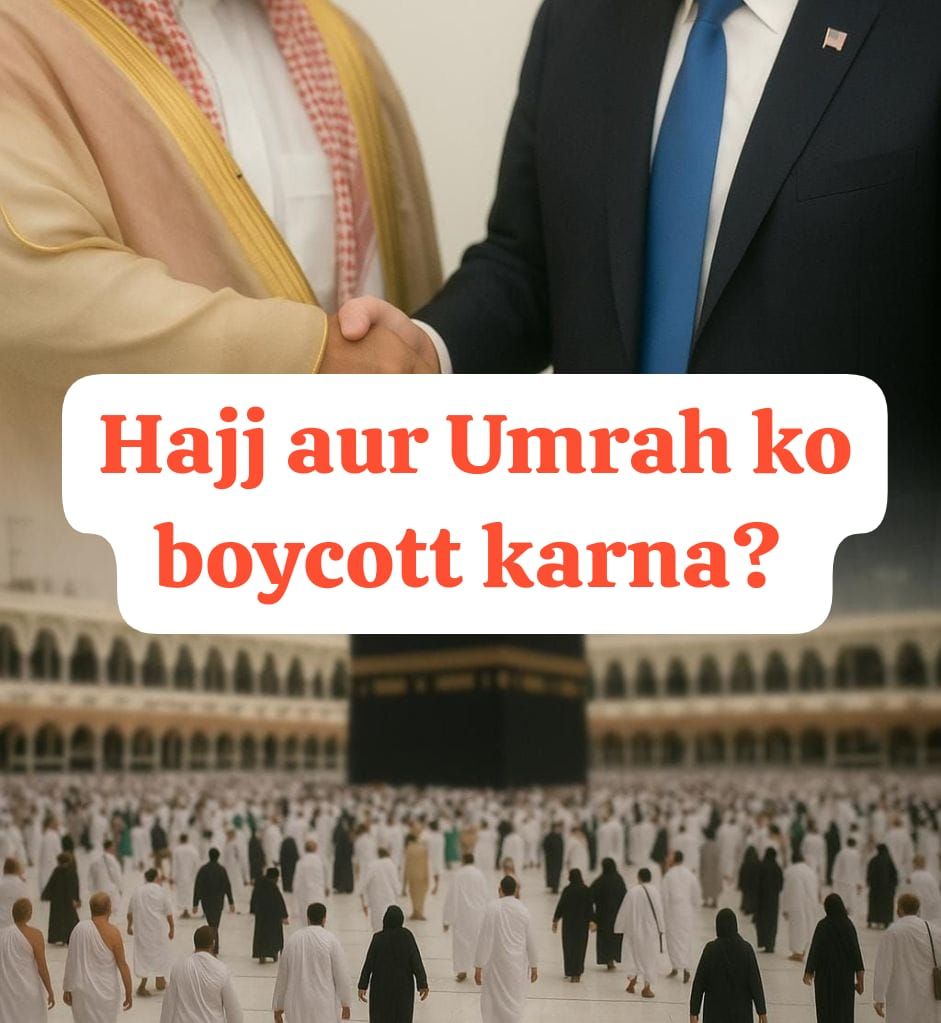
Kya Hajj aur Umrah ka boycott karna jaiz hai kyunki Haramain Sharifain Aal-e-Saud ke hukoomat mein hain?
Alhamdulillah was Salatu was Salamu Ala Rasoolillah Amma Ba’ad.
Ek sawal uthaya gaya tha ke Hajj aur Umrah se parhez kiya jaye jab tak Haramain Sharifain Aal-e-Saud ke hukoomat mein hain, is bunyad par ke is se hone wala munafa Trump (America ke President) ko milta hai. Iske jawab mein hum kehte hain:
Maine kuch bhaiyon se is mamle mein kuch hosla afzai suni hai, lekin is par fiqhi (shar’i) aur aqali (dimaaghi) dono nuqta-e-nazar se gehri soch-vichar ki zaroorat hai.
Fiqhi nuqta-e-nazar se, Hajj aur Umrah farz aur mustahab (pasandeeda) ibadaton mein shamil hain, jabke cheezon ki khareed-o-farokht aur is jaisi cheezen aam taur par jaiz mamlaat mein aati hain. Yeh farq bohat ahem hai, kyunke kisi ko woh cheez nahi chhodni chahiye jo Islami taleemat ne farz ya mustahab qarar di hai, sirf is wajah se ke koi mukhalif taaqat in ibadaton ko ada karne ke nataij se faida utha sakti hai.
Hajj aur Umrah jaiz ibadatain hain, chahe Haramain Sharifain maujooda hukoomat ke tehat hi kyun na hon. Nabi Muhammad (Salallahu Alaihi Wa Sallam) aur unke sahaba ne Umrah kiya tha jab Masjid-e-Haram asal kafiron ke qabze mein thi. Yeh Sulah Hudaybiyyah ke dauran wazeh tha, jab unhe shuru mein dakhil hone se roka gaya tha jab Quraysh jang ki halat mein the. Baad mein, sulah ke baad, unhone Umrah kiya, jo is mamle mein wazeh saboot hai. Is mein koi shak nahi ke Quraysh ke kafiron ne Umrat al-Qadha (Sulah Hudaybiyyah ke baad ada ki gayi Umrah) ke dauran kiye gaye akhrajaat se mali faida uthaya, aur shayad woh wasail baad mein unke liye sulah todne aur Nabi (Salallahu Alaihi Wa Sallam) aur unke sahaba ke khilaf jang karne mein madadgar sabit hue.
Maliyat ka milna-julna, chahe kamai mein ho ya akhrajaat mein, len-den ka ek na-pasand pehlu hai. Is mein koi shak nahi ke jo kuch aap khareedte hain uska ek hissa bil-aakhir Islam ke dushmano ko faida pahuncha sakta hai, aur aapki kamai ka kuch hissa na-jaiz zariye se aa sakta hai. Lekin, faisla kun amal aapka seedha amal hai. Agar koi us grocery store se khana khareedta hai jo tambaku ya magazines bhi bechta hai, to yeh aise pehluyon ki himayat nahi hai. Isi tarah, agar koi kisi aurat ko kapda bechta hai jo baad mein usay aisa libas banane ke liye istemal karti hai jo fitne ka sabab banta hai, to iska matlab yeh nahi ke aapne usay haram kaam mein madad di hai.
Haji ya Umrah karne wala in amalon mein hukoomat ko Trump ko mali madad dene ke liye shamil nahi hota; balkay, woh ek raqam ada karta hai jo usay apne arkaan poore karne ke qabil banati hai. Unka irada Hajj ke akhrajaat ko poora karna aur un logon ko muawza dena hai jo is mein sahoolat faraham karte hain. Jahan tak in khidmat faraham karne walon ki kamai kaise kharch hoti hai, is silsile mein haji par bilkul koi zimmedari nahi hai.
Aqali nuqta-e-nazar se, jis boycott ki himayat ki ja rahi hai, woh aisa nahi hona chahiye jo hamen dunyawi mamlaat mein nuqsan pahunchaye, deeni mamlaat ki to baat hi kya. Warna, hum cars, computers, aur mobile phones ka fard-e-wahid ki satah par boycott kyun nahi karte, hathiyaron, saman, aur technology ke bade paimane par boycott ki to baat hi kya? In mein se bohat se akhrajaat haqeeqi aur seedhe taur par America ko faida pahunchate hain, Hajj aur Umrah se mutaliq funds ke bar-aks.
Khaas taur par Hajj aur Umrah se mutaliq funds woh nahi hain jo Trump ko is hukoomat se milte hain. Balkay, Hajj aur Umrah ke zyadatar akhrajaat hajiyon ki khidmat aur Haramain Sharifain ki dekhbhal par kharch hote hain, jin mein bade mansoobe shamil hain jin ke liye bohat zyada mali wasail ki zaroorat hoti hai. Trump ko jo bunyadi faida hota hai woh petroleum se hasil hone wali aamdani se hota hai.
Boycott ke peeche ek wazeh maqsad hona chahiye. Agar maqsad in funds ko Trump tak pahunchne se rokna hai, to yeh hasil nahi hota, kyunke paisa us tak pahunchega chahe hum Hajj karen ya na karen. Agar maqsad us tak pahunchne wali raqam ko kam karna hai, to yeh bhi na-qabil-e-husool hai, kyunke Hajj aur Umrah karne ke mauqe ka besabri se intezar karne wale awam un logon ki kami ko poora kar denge jo boycott ka intikhab karte hain. Yeh dalil aam Musalman abadi ko qail nahi karegi, jo Haramain Sharifain ke liye shiddat se taraste hain, siwaye ek choti aqalliyat ke jo aisi hukm mein sahih baat pa sakte hain aur us par amal karne ka intikhab kar sakte hain.
Isliye, hum apne bhaiyon ko mashwara dete hain ke woh aise mamlaat mein jazbati josh se parhez karen jo Islam aur Musalmanon ko faida nahi pahunchate balkay unhe zaati taur par nuqsan pahunchate hain. Hum Allah Ta’ala se dua karte hain ke woh hamen Islami Khilafat ke hukoomat mein Hajj aur Umrah karne ka mauqa ata farmaye. Hamare Nabi Muhammad, unke ahl-e-bait, aur unke sahaba par durood-o-salam ho.
-Shaykh Dr. Muhammad bin Rizq bin Tarhuni.
Source
(Asal tehreer ki tareekh: 17 Dhul-Hijjah 1440 AH – 18 August 2019 CE.)
(Tarjuma: Mohammed bin Thajammul Hussain Manna.)
Islam Mein Yateemon Ki Kifalat Ki Fazilat Aur Bachchon Ko Adopt Karne Ki Nabawi Hidayaat

Islam Mein Yateemon Ki Kifalat Ki Fazilat
Allah Ta’ala Quran-e-Kareem mein farmata hai:
“Aur woh tum se (Aye Nabi) sharab aur juwe ke mutalliq sawal karte hain. Keh do: “In mein bada gunah hai, aur logon ke liye (kuch) faide bhi hain, lekin inka gunah inke faide se zyada hai.” Aur woh tum se puchte hain ke woh kya kharch karen. Keh do: “Jo tumhari zarooraton se zyada ho (extra maal).” Isi tarah Allah tumhare liye apne ahkam wazeh karta hai taake tum gaur karo.” (Duniya ki) is zindagi aur Aakhirat mein. Aur woh tum se yateemon ke mutalliq sawal karte hain. Keh do: “Behtareen cheez yeh hai ke tum unke maal mein imandari se kaam karo, aur agar tum apne mamlaat unke sath mila lo, to woh tumhare bhai hain. Aur Allah janta hai jo fasad ka irada rakhta hai (maslan unka maal hadapna) us se jo bhalai ka irada rakhta hai (maslan unka maal bachana). Aur agar Allah chahta, to woh tumhe mushkil mein daal deta. Beshak, Allah zabardast, hikmat wala hai.”[1]
Abu Huraira (Radi Allahu ‘Anhu) se riwayat hai ke Allah ke Rasool (Sallallahu ‘Alaihi Wa Sallam) ne farmaya: “Jo shakhs yateem ki dekh bhaal karta hai, chahe woh uska rishtedar ho ya na ho, main aur woh Jannat mein is tarah honge,” aur (Imam) Malik ne apni shahadat ki ungli aur beech ki ungli ko qareeb kar ke ishara kiya.[2]
Abu Huraira (Radi Allahu ‘Anhu) se riwayat hai ke Allah ke Rasool (Sallallahu ‘Alaihi Wa Sallam) ne farmaya: “Aye Allah, gawah rehna ke maine do kamzoron ke huqooq (ki adaigi mein nakami) ke mutalliq tanbeeh jari ki hai: Yateem aur auraten.”[3]
Bachche Ko Adopt Karne Ki Nabawi Hidayaat[4]
Bismillahir Rahmanir Raheem,
Kisi doosre ke bachche ko adopt karna (goud lena), uski parwarish karna, uski taleem-o-tarbiyat ka khayal rakhna aur uske sath narmi aur achha sulook karna bahut fazilat wala aur qabil-e-tareef amal hai. Agar bachcha yateem ho aur uska koi sahara na ho, to iska sawab aur bhi zyada hai.
Imam Bukhari ne apni Sahih mein ek Hadith riwayat ki hai, ke Allah ke Rasool (Sallallahu ‘Alaihi Wa Sallam) ne farmaya: “Main aur yateem ka kafalat karne wala Jannat mein is tarah honge,” aur Nabi (Sallallahu ‘Alaihi Wa Sallam) ne apni shahadat ki ungli ko apni beech ki ungli se milaya. (Sahih al-Bukhari)
Iska matlab yeh hai ke jo shakhs yateem ki dekh bhaal karta hai, woh Jannat mein Nabi (Sallallahu ‘Alaihi Wa Sallam) ke bahut qareeb hoga.
Yeh hamare pyare Nabi (Sallallahu ‘Alaihi Wa Sallam) ki ek aisi Sunnat hai jispar bhut kam amal kiya jata hai, aur hamein yaqeenan khud ko aur doosron ko is baare mein targheeb deni chahiye.
Lekin, hamesha yeh zehen mein rakhna chahiye ke Shariat ke mutabiq, adopt kiye gaye bachche ka nasab (nasli rishta) adopt karne wale walidain se qaim nahi hota. Bachche ko adopt karne ka Shariat mein koi qanooni asar nahi hota. Bachche ko uske haqeeqi walidain (biological parents) ke siwa kisi aur ki taraf mansoob nahi karna chahiye, adopt kiye huwe walidain ki taraf bhi nahi.
Yeh ek bunyadi usool aur hukm hai jo Quran-e-Kareem ne bayan kiya hai. Jahiliyyat (Islam se pehle ka daur) ke log adopt kiye gaye bachche ko har lihaz se haqeeqi bachcha samajhte the.
Quran ne is amal ki mazammat in ayaat se ki hai: “Aur usne (Allah ne) tumhare goud liye (adopt kiye) hue beton ko tumhare (haqeeqi) bete nahi banaya. Yeh to sirf tumhari zaban ki baat hai. Aur Allah tumhe seedhi raah dikhata hai. Unhe unke (haqeeqi) baapon ke naam se pukaro. Yeh Allah ke nazdeek zyada insaf ki baat hai.” (Quran, Surah Al-Ahzab: 4,5)
Allah ke Rasool (Sallallahu ‘Alaihi Wa Sallam) ne Sahabi Zaid ibn Haritha ko adopt kiya tha, isliye doosre Sahaba shuru mein unhe “Zaid ibn Muhammad” kehte the. Jab Quran ki mazkoora ayat nazil hui, to unhone dobara unhe “Zaid ibn Haritha” kehna shuru kar diya.
Shariat ke is ahem usool ke pesh-e-nazar, darj zail nuqtaat ko mad-e-nazar rakhna zaroori hai:
- Qanooni taur pe adopt karna (Legal adoption) jaiz nahi hai. Iska matlab yeh hai ke koi shakhs adopt kiye gaye bachche ka nasab (lineage) tabdeel nahi kar sakta aur uske haqeeqi walidain ke naam ki jagah adopt karne wale walidain ka naam nahi laga sakta. Bachche ko hamesha uske haqeeqi walidain se mansoob karna chahiye taake logon mein yeh aam tour par maloom ho sake ke uske haqeeqi walidain kaun hain.
- Agar adopt karne wali maa adopt kiye gaye bachche ko doodh pilati hai, to woh unka raza’i bachcha (foster child) ban jata hai. Is soorat mein bachcha nikah (shadi) aur hijab ke qawaid ke lihaz se haqeeqi bachchon ki tarah hoga, yani bachcha raza’i walidain se shadi nahi kar sakta, na hi raza’i walidain ke kisi bachche se. Tahum, wirasat ke lihaz se, bachcha khandan se wirasat nahi payega.[5]
- Agar adopt karne wali maa adopt kiye gaye bachche ko doodh nahi pilati, to raza’at ka rishta qaim nahi hoga aur bachcha nikah aur hijab ke lihaz se doosre bachchon ki tarah shumar hoga. Ek adopt kiya hua bachcha apne adopt karne wale walidain aur unke bachchon se shadi kar sakta hai. Agar ek ladke ko aurat adopt karti hai, to usay baligh hone ke baad us se hijab karna hoga aur iske bar-aks bhi. Adopt kiya hua bachcha (baligh hone ke baad) adopt karne wale walidain ke bachchon se bhi hijab karega.
- Ek adopt kiya hua bachcha apne adopt karne wale walidain se wirasat nahi payega aur wirasat ke mamle mein adopt kiye gaye bachche ko haqeeqi bachcha samajhna ghalat hai. Tahum, yeh yaad rakhna chahiye ke agarche bachcha god lene wale walidain se wirasat nahi pa sakta, lekin apni zindagi mein uske haq mein wasiyat (bequest) karna jaiz hai, balkay mustahab hai. Yeh “wasiyat” bachche ke liye apni daulat ke ek tihai (one third, 33%) hisse tak ki ja sakti hai, bashartike bachcha pehle se wirasat ki fehrist mein shamil na ho.
- Adopt kiye gaye bachche ko uske haqeeqi walidain se milne ki ijazat dena zaroori hai. Unhe milne se rokna aur koi rukawat paida karna zulm samjha jayega.
- Adopt kiye gaye bachchon ke sath achha sulook aur rawaiya ikhtiyar karna chahiye, khaas taur par agar woh yateem hon. Agar koi shakhs adopt kiye gaye bachche ki sahih tareeqe se dekh bhaal nahi kar sakta, to usay adopt nahi karna chahiye, warna usay sawab ke bajaye saza milegi.
- Adopt kiye gaye bachche ka maal, jo abhi baligh nahi hua hai, mehfooz rakhna chahiye. Agar bachche par paisa kharch karne ki zaroorat ho, to uske maal ko us par istemal kiya ja sakta hai. Tahum, isay nihayat ehtiyat se kharch karna chahiye aur koi fuzool kharchi nahi honi chahiye. Bachche ke maal se qarz nahi liya ja sakta, na hi usay sadqa mein diya ja sakta hai.[6]
(Translated by Mohammed bin Thajammul Hussain Manna from English to Roman Urdu.)
[1] Quran 2:219-220.
[2] Sahih Muslim 2983, Sahih Al-Bukhari 5304.
[3] Sunan Ibn Majah 3678 (Sahih (Al-Albani)).
[4] Yeh article Daruliftaa.com (Jo Fiqh-e-Hanafi par mabni hai) unke sawal-o-jawab “Bache ko god lena ka fiqh kya hai?” se liya gaya tha. [Mukammal jawab ka link: islamqa.org/hanafi/daruliftaa/7643/the-fiqh-of-adopting-a-child/] Asal sawal-o-jawab English mein thay, jiska tarjuma hamne Roman Urdu mein kiya hai.
[5] Shaikh Muhammad Saalih Al-Munajjid: Jis bachche ko ek aurat (kamsekam) paanch martaba doodh pilaye, do saal ki umar se pehle, to woh us aurat ka doodh shareek bachcha ban jata hai aur woh aurat uski (doodh pilane wali) maa ban jati hai. Uska shohar (doodh ka malik) us bachche ka (doodh shareek) baap ban jata hai, aur har woh shakhs jisay is aurat ne doodh pilaya ho, woh uska (doodh shareek) bhai ya (doodh shareek) behan ban jata hai, aur isi tarha waghaira waghaira. Yeh is riwayat ki wajah se hai jo Imam Muslim (1425) ne Aisha (Radi Allahu Anha) se bayan ki hai, unhone farmaya: “Jab Qur’an pehli baar nazil hua, to doodh pilane ki tadad jo bachche ko rishtedar (Mahram) banati thi, das thi, phir isay mansookh kar diya gaya aur iski jagah paanch ki tadad muqarrar ki gayi jo mashhoor hai.” (islamqa.info|27280)
[6] Answer to a question posed to Mufti Muhammad ibn Adam, Darul-Iftaa, Leicester , UK.
The Prophetic Guidance of Adopting a Child and The Virtue of Sponsoring Orphans In Islam
The Virtue of Sponsoring Orphans In Islam
Allah says in The Quran:
They ask you (O Muhammad [Sallallahu ‘Alaihi Wa Sallam]) concerning alcoholic drinks and gambling. Say: “In them is a great sin, and (some) benefit for men, but the sin of them is greater than their benefit.” And they ask you what they ought to spend. Say: “That which is beyond your needs (surplus wealth).” Thus Allah makes clear to you His Laws in order that you may give thought.” In (to) this worldly life and in the Hereafter. And they ask you concerning orphans. Say: “The best thing is to work honestly in their property, and if you mix your affairs with theirs, then they are your brothers. And Allâh knows him who means mischief (e.g. to swallow their property) from him who means good (e.g. to save their property). And if Allah had wished, He could have put you into difficulties. Truly, Allah is All-Mighty, All-Wise.”[1]
Abu Huraira reported that Allah’s Messenger (Sallallahu ‘Alaihi Wa Sallam) said: The one who looks after the orphan whether he is his relative or not, I and he would be together in Paradise like this, and (Imam) Malik (explained it) with the gesture by drawing his index finger and middle finger close together.[2]
Abu Hurairah narrated that the Messenger of Allah (Sallallahu ‘Alaihi Wa Sallam) said: “O Allah, bear witness that I have issued a warning concerning (the failure to fulfill) the rights of the two weak ones: Orphans and women.'”[3]
The Prophetic Guidance of Adopting a Child[4]
In the name of Allah, The Most Compassionate, The Most Merciful,
Adopting someone else’s child, bringing it up, seeing to its education and training and being kind and good towards him/her is very virtuous and a commendable act. If the child is an orphan and has no support, then the reward is much more.
In a Hadith recorded by Imam al-Bukhari in his Sahih, the Messenger of Allah (Sallallahu ‘Alaihi Wa Sallam) said: “I and the guardian of the orphan will be in Paradise like this” and the Prophet joined his index finger with his middle finger. (Sahih al-Bukhari)
Meaning that the one who looks after the orphan will be very close to the Prophet (Sallallahu ‘Alaihi Wa Sallam) in Paradise.
This is an extremely neglected Sunnah of our beloved Prophet (Sallallahu ‘Alaihi Wa Sallam), and we should definitely encourage ourselves and others towards this direction.
However, it should always be kept in mind that according to Shariah, the lineage of the adopted child does not become established with the adoptive parents. Adoption of a child has no legal effect in Shariah. The child should not be attributed except to the natural parents, and not to those who have adopted him/her.
This is a fundamental principle and ruling laid down by the Holy Qur’an. The people in the days of ignorance (Jahiliyyah, pre-Islamic period) used to treat an adopted child as the real one in all aspects.
The Qur’an condemned this practice with the following verse: “And He (Allah) did not make your adopted sons your sons. That is only your speech by your mouths. And Allah guides you to the right path. Call them by (the names of) their (real) fathers. It is more just in the sight of Allah.” (Qur’an, Surah Al-Ahzab:4,5)
The Messenger of Allah (Sallallahu ‘Alaihi Wa Sallam) adopted the companion Zaid ibn Haritha, thus the other companions initially referred to him as “Zaid ibn Muhammad”. When the abovementioned verse of the Qur’an was revealed, they reverted to calling him “Zaid ibn Haritha”.
In view of this important principle of Shariah, the following points need to be taken in to consideration:
1) Legal adoption is not permissible. This means that one cannot change the lineage of an adopted child and substitute the names of his real parents with adoptive parents. The child should always be attributed to the real parents so that it becomes common knowledge amongst the people who the real parents are.
2) If the adoptive mother breastfeeds the adopted child, then it becomes their foster child. In this case the child will be similar to the real children with regards to the Nikah (marriage) and Hijab rules, i.e. the child can not marry the foster parent, neither any of the foster parent’s children. However with regards to inheritance, the child will not inherit from the family.[5]
3) If the adoptive mother does not breastfeed the adopted child, then the relationship of fosterage will not be established and the child will be classed as other children with regards to Nikah and Hijab. An adopted child can marry its adoptive parents and their children. Also if a male child is adopted by a woman, she will have to observe Hijab from him after he reaches the age of puberty and visa versa. The adopted child will also (after puberty) observe Hijab with the adoptive parent’s children.
4) An adopted child will not inherit from his adoptive parents and to regard an adopted child as a real child in the matter of inheritance is incorrect. However, it should be remembered that although the child cannot inherit from the adoptive parents, it is permissible, rather advisable to make a bequest in its favour in ones life time. This “will” for the child can be made up to one third of one’s wealth, provided the child is not already included in the list of inheritors.
5) It is necessary to allow the adopted child to meet its real parents. Preventing him/her from meeting them and creating any obstacles will be considered as oppression.
6) Good behaviour and conduct should be displayed towards the adopted children, especially if they are orphans. If a person cannot look after the adopted child in a proper manner, then he should not adopt, otherwise he will earn punishment rather than reward.
7) The wealth of the adopted child, who has not yet reached puberty, should be kept safe. If there is a need to spend the money on the child, then one can utilize the child’s money upon him. However it should be spent with extreme care and there should be no extravagance. Loans cannot be taken from the child’s money, nor can it be given in charity. End quote.[6]
[1] Quran 2:219-220.
[2] Sahih Muslim 2983, Sahih Al-Bukhari 5304.
[3] Sunan Ibn Majah 3678 (Sahih (Al-Albani)).
[4] This article was extracted from the answer to the question, ‘What is the Fiqh of adopting a child?’ from Daruliftaa.com (based on the Hanafi Madhhab). [Source for the full answer: islamqa.org/hanafi/daruliftaa/7643/the-fiqh-of-adopting-a-child/]
[5] Shaikh Muhammad Saalih Al-Munajjid: Whoever is breastfed by a woman five times, before the age of two years, becomes her child through breastfeeding and she becomes his (foster) mother. Her husband (the “owner of the milk”) becomes a (foster) father to him through breastfeeding, and everyone who was also breastfed by this woman becomes his (foster) brother or (foster) sister through breastfeeding, and so on.
That is because of the report narrated by Muslim (1425) from ‘Aishah who said: “When the Qur’an was first revealed, the number of breast-feedings that would make a child a relative (Mahram) was ten, then this was abrogated and replaced with the number of five which is well-known.” End quote. (islamqa.info|27280)
[6] Answer to a question posed to Mufti Muhammad ibn Adam, Darul-Iftaa, Leicester , UK.
The Fitnah That Imam Al-Bukhari Was Tested With And What Occured Between Him And Imam Adh-Dhuhli
Shaykh Abdul Kareem bin Abdullah Al-Khudair mentioned a benefit on his website:
‘The Fitnah That Imam Al-Bukhari Was Tested With And What Occured Between Him And Imam Adh-Dhuhli’
A strong dispute, discord, and disagreement arose between Imām Al-Bukhārī (may Allah have mercy on him) and Imām Muḥammad ibn Yaḥyā Adh-Dhuhlī (may Allah have mercy on him)—who was one of the imams of the Muslims—regarding the issue of “the utterance” (al-lafẓ). This story was mentioned by Ibn Ḥajar (may Allah have mercy on him), who said: “He mentioned what occurred between him and Adh-Dhuhlī concerning the issue of al-lafẓ, and the tribulation that befell him because of it, and his exoneration from what was attributed to him regarding it…” [Hadī As-Sārī, Introduction to Fatḥ Al-Bārī (p. 490)].
Among what was mentioned was that when Imām Al-Bukhārī arrived in Naysābūr, people crowded around him until the house and rooftops were filled. On the second or third day of his arrival, a man stood up and asked him about the utterance of the Qur’an (i.e. if our utterance of the Qur’an was created or uncreated). He replied: “Our actions are created, and our utterances are from our actions.”
Consequently, a disagreement arose among the people, and this became a key to evil, all due to the person who posed this question. Some people today do similar things: if they see people flocking to an individual whom they wish to “bring down”—as they term it—they ask a provocative question, seeking to stir up discord. Then, tribulations ensue, fanaticism is incited, animosity and instigation arise, matters worsen, and students—especially the ignorant among them—spread, publicize, and interpret such statements, thereby widening the rift, even though the disagreement is very minor.
For Allah, the Most High, says: {And Allah has created you and what you do} [Aṣ-Ṣāffāt: 96]. Imām Al-Bukhārī also has a work on this topic titled “The Creation of the Servants’ Actions” (Khalq Af‘āl Al-‘Ibād). However, the term “utterance” (al-lafẓ) is general; therefore, neither Al-Bukhārī nor others used it in an absolute sense. Rather, they attributed to him what he did not say.
Adh-Dhahabī (may Allah have mercy on him) narrated the story in its entirety and then commented:
“I say: The issue was whether the utterance (al-lafẓ) is created. Al-Bukhārī was asked about it and he paused on the matter. When he paused and argued that ‘our actions are created,’ and provided evidence for that, Adh-Dhuhlī understood from him that he was affirming the issue of the utterance [being created]. So, he spoke against him, and he and others held him accountable for the necessary implication of his statement.” [Siyar A‘lām An-Nubalā’ 12/457, 458].
Thus, the matter became clear: the entire affair stemmed from envious individuals who misunderstood and attributed to Al-Bukhārī a necessary implication that he did not commit to. His statement (may Allah have mercy on him) was indeed true, for the actions of servants are created. However, envy and the desire to sow discord among scholars have existed in every era and every land. Some ill-intentioned individuals exploited this, seeking to divide the two imams. They found an opening and seized this opportunity, and what happened, happened.
(Translated by Mohammed bin Thajammul Hussain Manna)
 Saheehus-Seerah