The main aim of our site is to purify The Seerah of Prophet Muhammad ﷺ from weak and fabricated narrations using the works of the scholars of Islam. We may add other beneficial material as well.
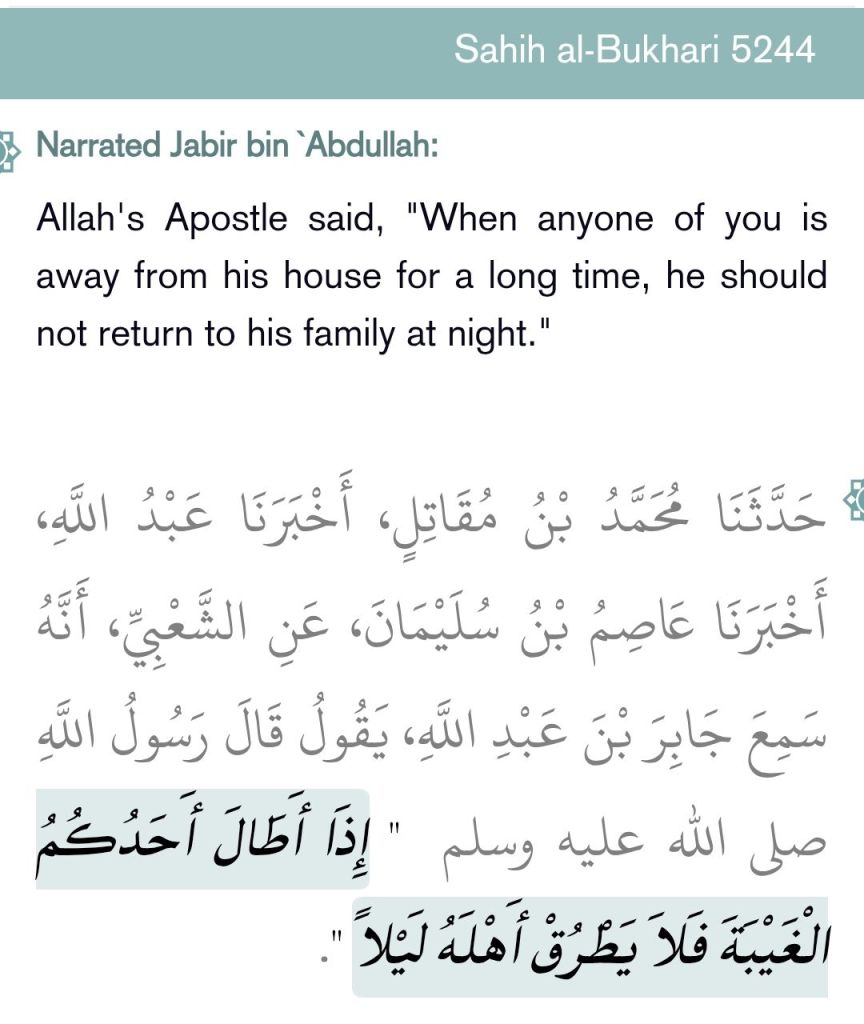
The Prophet (peace and blessings be upon him) set the most magnificent examples in good character and pleasant company between a man and his household.
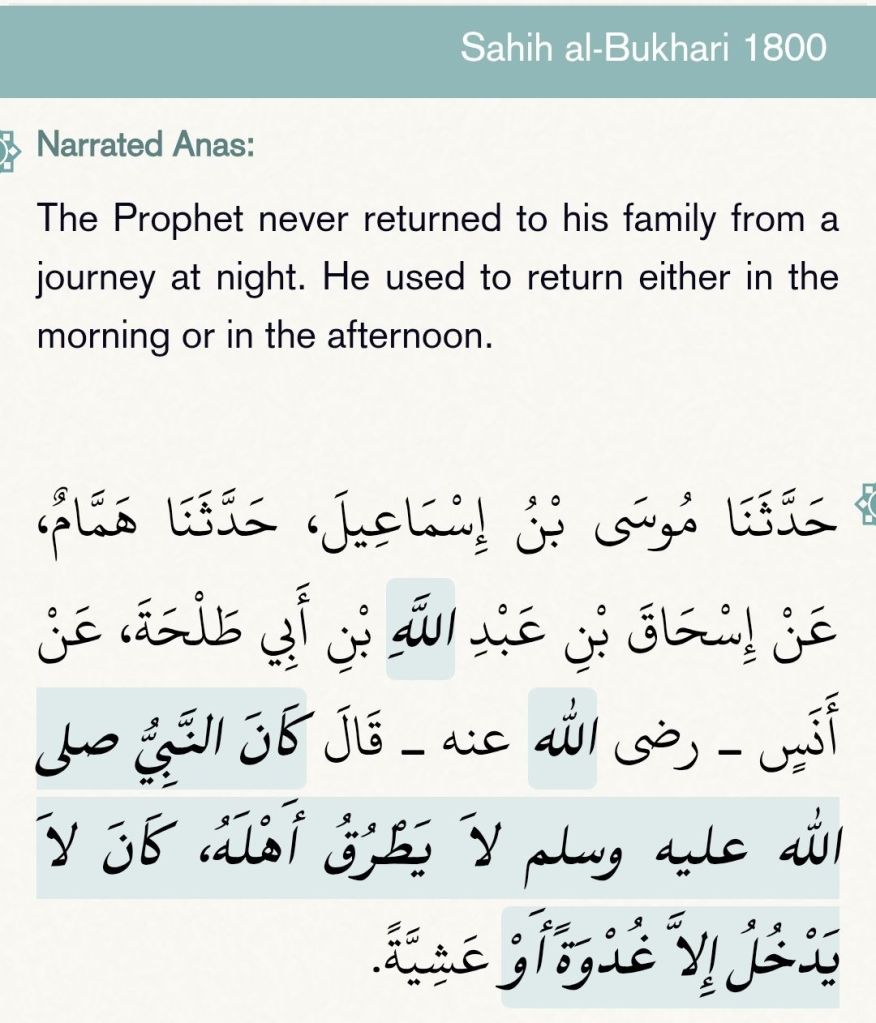
In this Hadith, Anas bin Malik (may Allah be pleased with him) narrates that the Prophet (peace and blessings be upon him) would not enter upon his family at night when he returned from a journey.
Instead, he would arrive in the early morning (Ghudwa), which is from the Fajr prayer until sunrise, or in the late afternoon/evening (Ashiyya), which is from the decline of the sun (the time of Dhuhr prayer) until its setting.
This is because a man’s arrival before his wife at night involves surprising her, and she may not be prepared to receive her husband, especially since he has been absent from her for a (long) period. Therefore, it was befitting that he not come to her suddenly at night.
The Prophet (peace and blessings be upon him) forbade—as narrated by Muslim from the Hadith of Jabir (may Allah be pleased with him)—that a man should arrive at his home at night (yatruq), suspecting them of treachery (yatakhawwanahum), or seeking out their faults (yaltamisu ‘atharātihim). This means suspecting their betrayal and uncovering their secrets to determine if they have been unfaithful or not.
Thus, it is disliked (yukrahu) for one whose journey has been long to present himself to his wife suddenly at night. As for one whose journey was short, and whose wife expects his arrival at night, there is no harm in it. (End of the explanation.)
Translator’s Note: The order to ‘not return at night’ in this Hadith is not one of being ‘obligatory’, rather this is a ‘recommended etiquette’. If someone visits his wife at night after travel, or returns home at night after a travel, it is not ‘prohibited’ for him to go to his own house at that time of the night.
In the early 1990s, the very heart of Europe was stained with the blood of the innocent. Following Bosnia and Herzegovina’s declaration of independence in March 1992, a vile, genocidal campaign was unleashed against its Muslim population by the Christian Serb forces.
As the siege of cities like Sarajevo began in April 1992, the world was confronted with the first genocide on European soil since World War II.
The Bosniak Muslims faced a horrific reality. Trapped in besieged cities, they were subjected to daily shelling, starvation, and sniper fire. Serb forces enacted a systematic policy of “ethnic cleansing,” resulting in gut-wrenching massacres, including massively organised rapes of Muslim Bosnian (Bosniak) women (estimated between 10,000 to 50,000 women) in what were called ‘rape camps’.
A devastating UN arms embargo was imposed, which cruelly disarmed the newly-formed (Muslim) Bosnian government while their aggressors, who controlled the vast arsenal of the former Yugoslav National Army (JNA), continued their slaughter.
This gut-wrenching inaction from the world powers reached its apex in July 1995 with the Srebrenica genocide, where Serb forces overran a UN “safe area” and systematically executed over 8,000 Muslim men and boys.
The Ummah was crying out, a living embodiment of the words of the Prophet Muhammad (peace and blessings be upon him): “The believers in their mutual kindness, compassion and sympathy are just like one body. When one of the limbs suffers, the whole body responds to it with wakefulness and fever.” [Sahih Al-Bukhari and Sahih Muslim]
In this darkest of hours, a heroic voice of leadership emerged from the Arabian Peninsula.
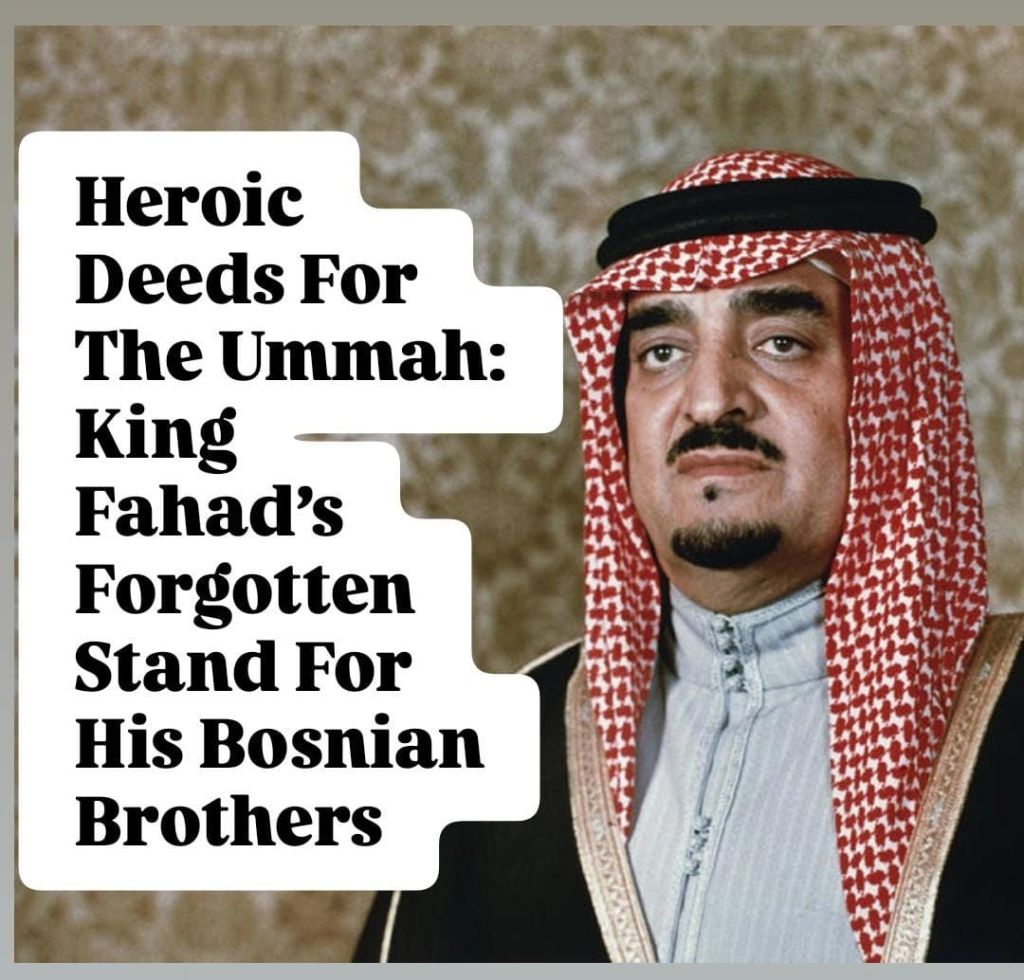
The Custodian of the Two Holy Mosques, King Fahd bin Abdul Aziz Aal-Saud (may Allah have mercy upon him), was not content to merely condemn the atrocities.
The Kingdom of Saudi Arabia, through its Supreme Commission for Donations to Bosnia-Herzegovina—headed at the time by Prince Salman bin Abdul Aziz (the current SaudiKing)—had already become a lifeline, providing over $600 million in vital humanitarian and relief aid. [Reports from the Saudi High Commission]
But King Fahad (Rahimahullah) understood that this Jihād by wealth [financial aid] alone was not enough; a political and military solution was required. Through his government and his ambassador in Washington, Prince Bandar bin Sultan, he became the most persistent advocate for the Bosniaks.
The US President, Bill Clinton (in office since January 1993), later confirmed this, stating: “The only world leader out there really plaguing a way to get us (the US and international community) involved was King Fahd… they were his fellow Muslims and they were being oppressed in Europe.” [Public statements by Bill Clinton]
The King’s central demand was for the US to adopt the “lift and strike” policy. This meant: first, to “lift” the unjust UN arms embargo to allow the Bosniaks to defend themselves, and second, to “strike” Serb artillery positions with NATO airpower. To remove any financial objections, King Fahad even offered to pay the full cost of arming and training the Bosnian army, a testament to his profound commitment. [Based on memoirs and diplomatic reports of the era]
President Clinton was initially hesitant, facing strong opposition from European allies like the UK and France, who feared for their peacekeepers on the ground. But the gut-wrenching Srebrenica genocide in July 1995 became the final breaking point.
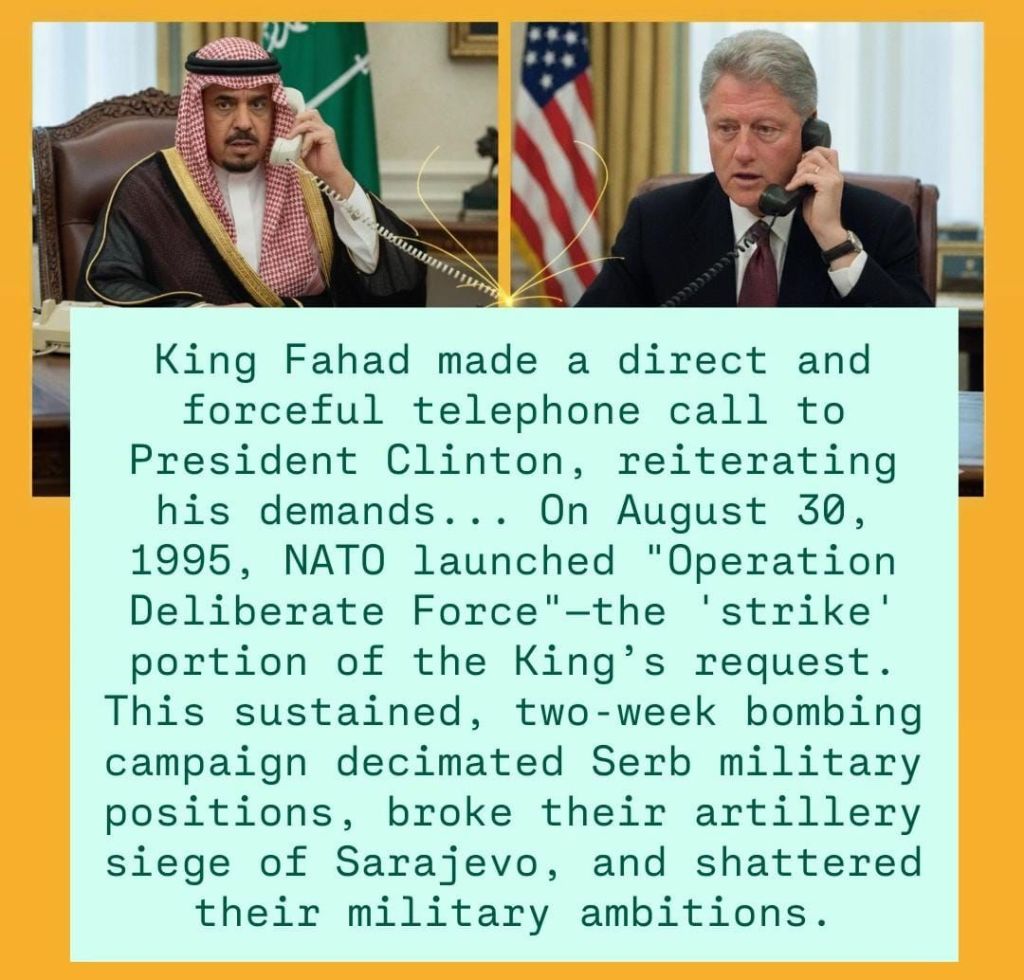
King Fahad made a direct and forceful telephone call to President Clinton, reiterating his demands. The King’s message was unequivocal: the genocide of his Muslim brethren was a red line, and if the West would not act, Saudi Arabia would be forced by its Islamic and moral duty to find its own way to arm the Bosnians.
The tide had turned. Faced with the unyielding pressure from King Fahad, outrage from the US Congress, and global horror over Srebrenica, the West could no longer abstain.
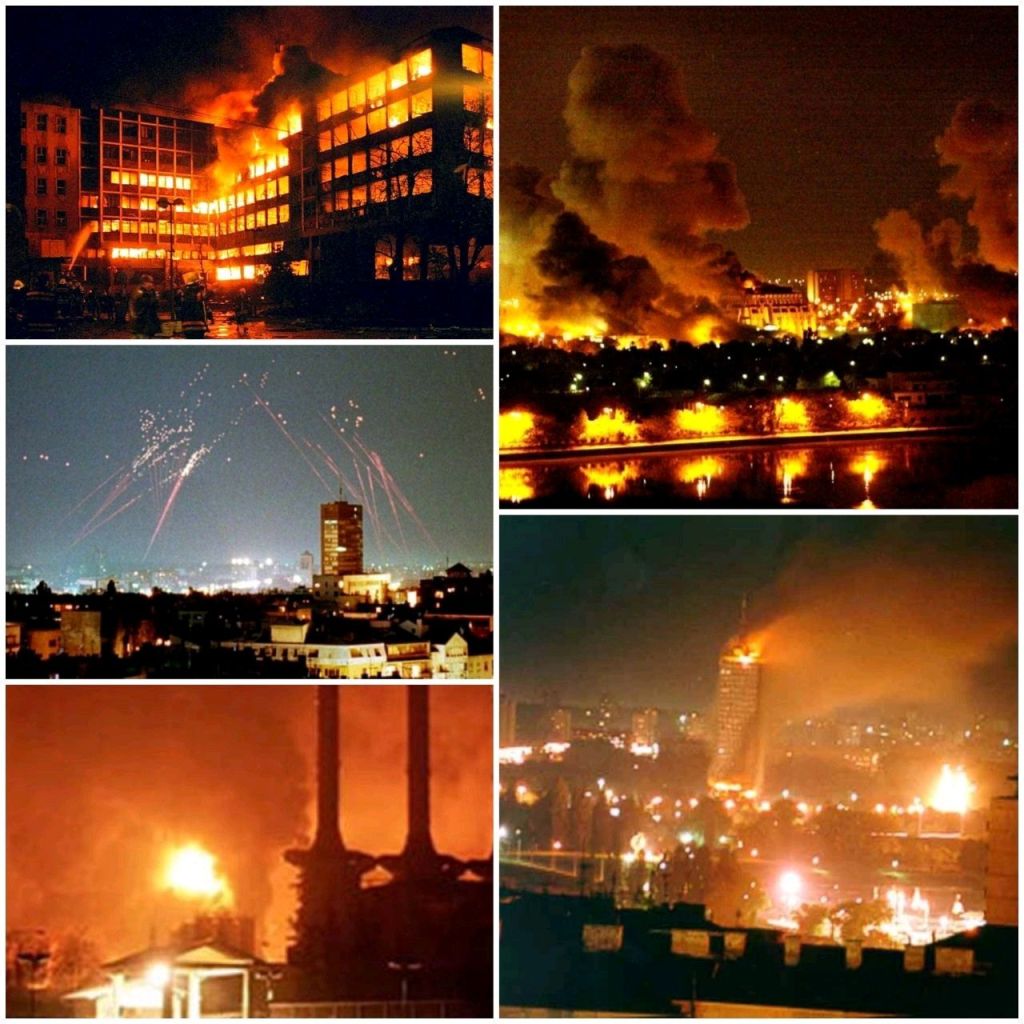
On August 30, 1995, NATO launched “Operation Deliberate Force”—the ‘strike’ portion of the King’s request. This sustained, two-week bombing campaign decimated Serb military positions, broke their artillery siege of Sarajevo, and shattered their military ambitions.The bombing campaign forced the aggressors to the negotiating table.
This led directly to the Dayton Accords in November 1995, which finally ended the war and preserved the state of Bosnia and Herzegovina.
King Fahad’s (Rahimahullah) stand was a profound example of pan-Islamic unity in action, demonstrating the immense power a faithful Muslim ruler wields when he acts with concern for the entire Ummah. He proved that the words of Allah (Subhanahu wa Ta’la), “The believers are but brothers…” (Qur’an 49:10), are a mandate for action.
We ask Allah, the Most Merciful, to accept this monumental deed from King Fahad bin Abdul Aziz, to forgive his shortcomings, to illuminate his grave, and to grant him the highest ranks of Jannah for his defense of the oppressed Muslims.
Shaykh Uthman Al-Khamees se Sawaal karne wala kehta hai: Kya Daulat-e-Usmania haq par thi?
Jawab: Daulat-e-Usmania deegar (Muslim) riyasaton ki tarah thi, jaise Daulat-e-Umawiyyah, Daulat-e-Abbasiyyah, aur Daulat-e-Ayyubiyyah. Usmein khair bhi tha aur shar bhi; usmein ghalati bhi thi aur durusti bhi. Lekin, ismein koi shuba nahi ke woh ek Islami riyasat aur ek Islami khilafat thi.
Aur Allah ne uske zariye Deen ko nusrat ata ki, aur uske zariye Musalmanon ko izzat bakhshi.
Aur ghalatiyan bhi maujood theen. Baaz hukmaranon mein tasawwuf tha, jaisa ke Daulat-e-Abbasiyyah mein I’tizal¹ tha—yaani Qur’an ke makhlooq hone ka aqeedah—jaisa ke [khulafa] al-Ma’mun, al-Wathiq, aur al-Mu’tasim ke daur mein tha.
Aur baaz governor aise thay jin mein fisq² ka unsar paaya jaata tha, khwaah Daulat-e-Umawiyyah mein ho ya Daulat-e-Abbasiyyah mein, ya riyasat-e-Andalus mein, ya Mamlukon mein. Yeh riyasatein aise baaz hukmaranon ke wujood se khaali na theen jin se zulm sarzad hua, ya jin se fisq sarzad hua, ya jin se ma’asi (gunah) aur is qism ke deegar af’aal sarzad hue.
Lekin, umumi taur par, Daulat-e-Usmania ke zariye Allah ne Islam ko izzat bakhshi, aur unke zariye Allah ne Yahudiyon, Nasraniyon, aur Majusiyon ki sar-kobi ki. Aur unke zariye Allah ne Islam ko sarbulandi ata farmayi, aur Islam ko apna urooj aur quwwat haasil hui.
Aur ismein koi shuba nahi ke woh ek ba-barkat riyasat thi, lekin us se ghalatiyan bhi sarzad huin—is amar mein koi shuba nahi.
Wallahu a’lam.
¹I’tizal (اعتزال): Mu’tazilism, ek aqliyeti Islami ilahiyati firqa jo 8th sadi mein Basra mein ubhra. Inka ek markazi aqeedah “Khalq al-Qur’an” yaani Qur’an ka makhlooq hona tha. ²Fisq (فسق): Ek Islami istelah jo shariat-e-Islami ki khilaf warzi, bad-ikhlaki, ya khullam khulla gunah ke liye istemal hoti hai.
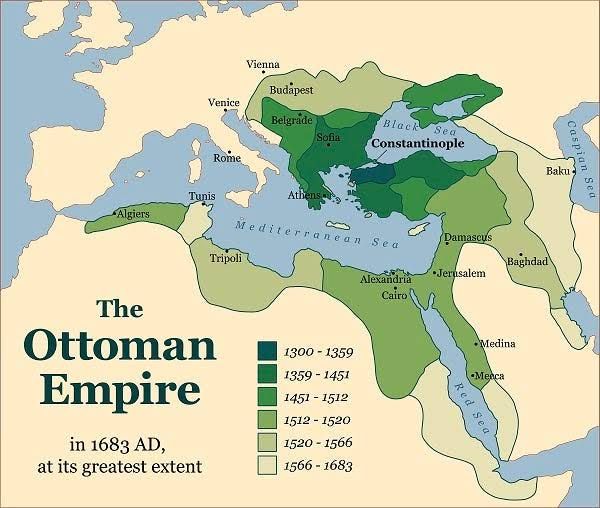
Question to Shaykh Uthman Al-Khamees (Hafidhahullah): Was the Ottoman State upon the truth?
Answer: The Ottoman State was like any other of the states, such as the Umayyad State, the Abbasid State, and the Ayyubid State. In them, there was good and there was evil; there was error and there was correctness. However, there is no doubt that it was an Islamic state and an Islamic caliphate.
And through it, Allah gave victory to the religion, and through it, Allah gave honor to the Muslims.
And mistakes were present. Among some of the rulers, there was Sufism, just as in the Abbasid State there was Mu’tazilism—the doctrine of the createdness of the Qur’an—like with [Caliphs] al-Ma’mun, al-Wathiq, and al-Mu’tasim.
And there were some governors who had an element of immorality (fisq), whether in the Umayyad State or the Abbasid State, or in the state of al-Andalus, or among the Mamluks. These states were not devoid of the existence of some rulers from whom occurred oppression, or from whom occurred immorality (fisq), or from whom occurred sins and other such things.
But in general, through the Ottoman State, Allah honored Islam, and through them, Allah disciplined the Jews, the Christians, and the Magians. And through them, Allah honored Islam, and Islam had its era of influence and its strength.
There is no doubt that it was a blessed state, but mistakes did occur from it—there is no doubt in this.
And Allah knows best. (End of the Shaykh’s words.)
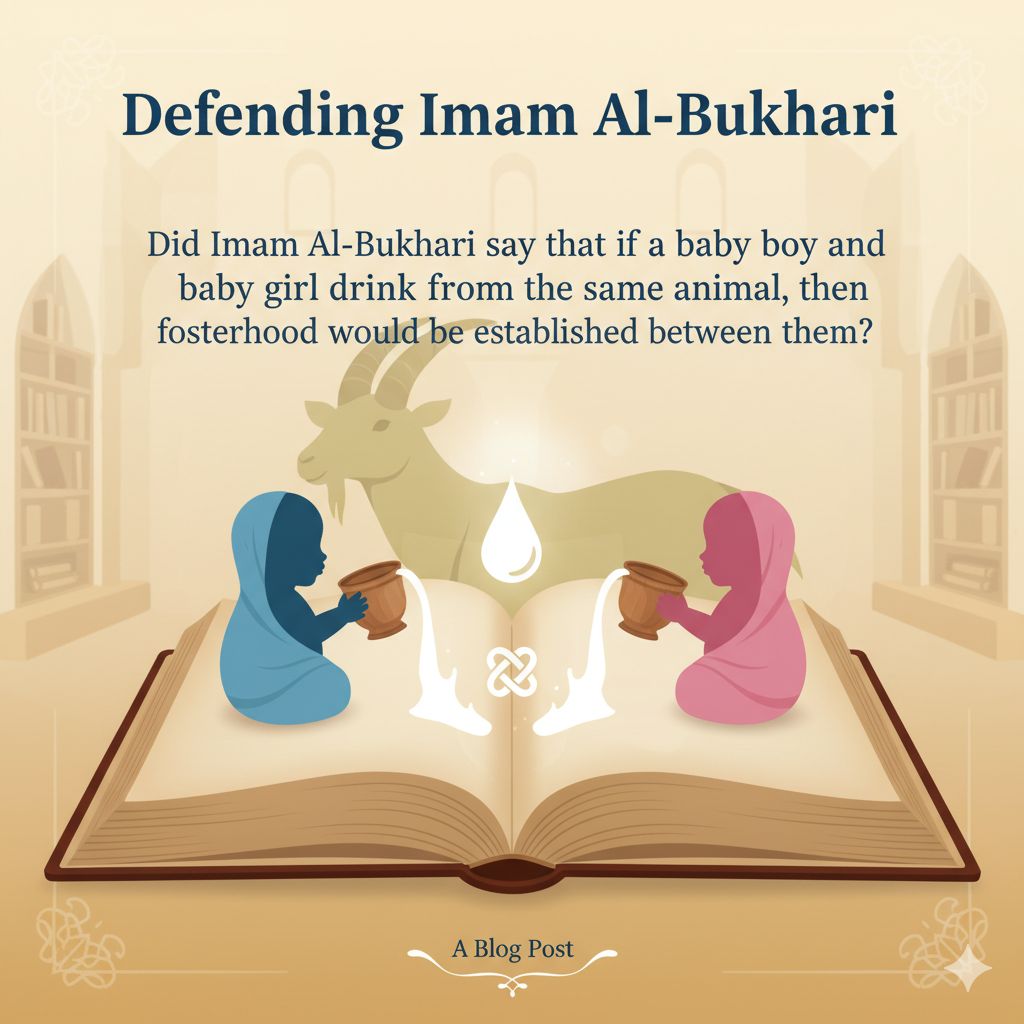
The Suspicion that Imām al-Bukhārī Held the Opinion that the Ruling of Fosterage Applies to Two Infants Who Suckled and Were Nourished by the Milk of a Single Cow, and that the Hurmah (Prohibition of Nikah) Spreads Between Them!
Question:Is it true that Imām al-Bukhārī holds the opinion that the ruling of fosterage applies to two infants who suckled and were nourished by the milk of a single cow, and that the prohibition spreads between them?
Imām as-Sarakhsī says: ‘If two infants drank the milk of a sheep or a cow, the prohibition of fosterage would not be established by it because fosterage is analogized to lineage (an-nasab), and just as lineage is not established between a human and animals, similarly the prohibition of fosterage is not established by drinking the milk of animals. Muḥammad ibn Ismā‘īl al-Bukhārī, the author of at-Tārīkh—may Allah be pleased with him—used to say: ‘The prohibition is established.’ This issue was the reason for his expulsion from Bukhārā, for he came to Bukhārā during the time of Abū Ḥafṣ al-Kabīr—may Allah have mercy on him—and began issuing fatwās (legal opinions). Abū Ḥafṣ—may Allah have mercy on him—forbade him, saying: ‘You are not qualified for it.’ He did not stop until he was asked about this issue, and he issued a fatwā affirming the prohibition. So the people gathered and expelled him.’ (Al-Mabsūṭ Vol. 30, p. 297, Sharḥ al-‘Ināyah ‘alā al-Hidāyah Vol. 3, p. 456.)
Answer: This is what is called in the science of narrators (‘ilm al-rijāl) as Undetailed and Unattributed Disparagement (al-jarḥ ghayr al-mufassar wa ghayr al-musnad) and from a man who has no standing in the science of narrators.
Rather, the Ḥanafīs do not prioritize the science of chains of transmission (‘ilm al-asānīd), but only in jurisprudence (fiqh), which they excel in.
However, what they transmit without a chain of transmission is not trustworthy.
Firstly: The story is a fabrication for the following reasons:
1. None of those who authored biographies and siyar (biographical chronicles)—whose preoccupation and custom was to collect reports about the figures they wrote about—mentioned this fatwā, even in a weakened or tentative formulation.
2. It is known among historians that the reason for al-Bukhārī’s departure from Bukhārā was that enmity and aversion occurred between him and its then-governor, Khālid ibn Aḥmad ad-Dhuhlī. The reason, as narrated by adh-Dhahabī in Siyar A‘lām an-Nubalā’, was that this Khālid asked al-Bukhārī to come to his house and read al-Jāmi‘ and at-Tārīkh to his sons. Al-Bukhārī refused to attend his house, so Khālid sent him a message asking him to hold a session exclusively for his sons and no one else. Al-Bukhārī refused and said: ‘I do not single out anyone.’ The governor then sought the help of Ḥurayth ibn Abī al-Warqā’ and others (Abū Ḥafṣ may have been among them) until they spoke ill of his madhhab (school of thought) and exiled him from the town. Al-Bukhārī prayed against them, and within only a month, an order from the Ṭāhiriyyah arrived that Khālid be publicly disgraced in the town, and he was paraded on a donkey. As for Ḥurayth, he was afflicted with his family and saw in them what is too great to describe. And as for the other person (?), he was afflicted in his children, and Allah showed him calamities concerning them.
3. This story has no authentic chain of transmission (sanad ṣaḥīḥ) from Imām al-Bukhārī, may Allah have mercy on him. Rather, the author of al-Mabsūṭ and others mentioned it without a chain. Thus, the burden is on the one who uses it as evidence to first prove its chain of transmission.
4. Finally: Jamaluddin Al-Qasimi said in his book Hayat Al-Bukhari: “Indeed, the fabricator of this tale intended to seek revenge for Abu Hanifa.” (Hayat Al-Bukhari by Al-Qasimi: 48.)
It is worth noting that the mentioned evidence is not from the words of the Messenger, but rather from the words of Al-Marghinani Al-Hanafi in Al-Hidayah, and consequently, not with this wording. Al-Marghinani only said: “Every two infants who gathered on the breast of one woman.”
The point is: Al-Marghinani’s statement is clear that effective fosterage is from a woman, not from a sheep!
And even if “Fiqh” (what they call Fiqh) was not Al-Bukhari’s craft, how could he not differentiate between his saying and the saying of someone born seven hundred years after him!
(Answer was penned by Shaykh Faisal Noor. Taken from his website. Source. Translated into English by Mohammed bin Thajammul Hussain Manna. )



 Saheehus-Seerah