The main aim of our site is to purify The Seerah of Prophet Muhammad ﷺ from weak and fabricated narrations using the works of the scholars of Islam. We may add other beneficial material as well.
Taken from the book ‘Mi’atu min ‘uzamā’i ummati al-Islām ghayyarū majra at-tārīkh’ by At-Turbani.[1] (He wrote : )
“Indeed, it is from Sulaymān, and indeed, it begins: In the Name of Allah, the Most Gracious, the Most Merciful} [An-Naml: 30]
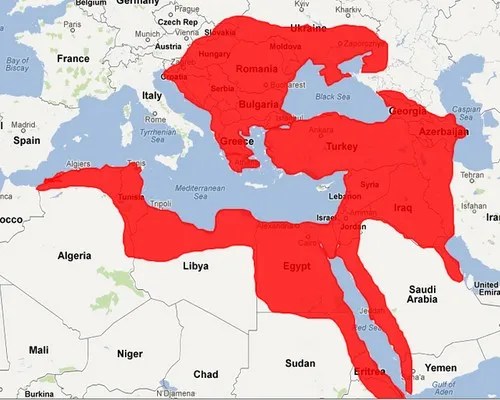
I am the Sultan of the White Sea, the Black Sea, the Red Sea, Anatolia, Rumelia, Karaman of the Romans, the province of Dhū al-Qadr, Diyār Bakr, Kurdistan, Azerbaijan, Persia, the Levant, Egypt, Makkah, al-Madīnah, Jerusalem, all the Arab lands, Persia, the country of Hungary, the land of Caesar, and many other lands which the hand of my majesty has conquered with the sword of victory, and all praise is for Allah…. Allah is the Greatest.
I am Sultan Sulaymān, son of Sultan Selim, son of Sultan Bayezid. (In his letter to “François,” king of the province of France, and what follows…)”
The West calls him “Suleiman the Magnificent,” and many historians consider him the greatest monarch known to humankind in the history of the earth. He annexed to his kingdom the greatest capitals of the three continents of Asia, Africa, and Europe. He added to the Islamic Caliphate “Athens,” “Belgrade,” “Budapest,” “Bucharest,” “Cairo,” “Tunis,” “Algiers,” “Makkah,” “al-Madīnah,” “Jerusalem,” “Damascus,” “Beirut,” “Istanbul,” “Tabriz,” “Baghdad,” “Sofia,” “Rhodes,” and other capitals of the world. The famous German historian (Halmar) said of him: “This Sultan was a greater danger to us than Ṣalāḥ al-Dīn himself!”
Sultan Sulaymān al-Qānūnī, was the son of Sultan Selim I, some of whose great attributes we have already mentioned. This cub was indeed a match for that lion. He was a mujāhid (warrior in the cause of Allah) whose equal is rarely found in the history of Islam; he conquered and developed lands, spread justice, and codified the supreme Ottoman laws (the reason for his being named “al-Qānūnī,” the Lawgiver).He restored Jerusalem to the best of conditions, improved the state of Makkah and al-Madīnah, developed the roads, and established schools. He assumed the position of the Caliphate when he was only twenty-six years old. The enemies thought he would be an easy morsel and coveted the lands of the Islamic Caliphate, but he dashed their hopes. He took them by surprise with a counter-offensive, conquering the fortified city of “Belgrade,” which had defied the best of his predecessors like Muḥammad al-Fātiḥ before him.
This prompted Muḥammad al-Fātiḥ to leave it, praying at its walls and saying: “O Allah, grant the conquest of this city to a man from my lineage.” Sulaymān was that very man, and Belgrade was conquered at his hands. After this, al-Qānūnī turned his attention seaward with his soldiers toward the island of Rhodes, where the “Knights of Saint John” or “Knights Templar” were spreading corruption, destruction, and death against Muslims throughout the Mediterranean, after having been expelled from the mainland of Jerusalem by Ṣalāḥ al-Dīn al-Ayyūbī. Sulaymān utterly destroyed the dominion of the knights on Rhodes, leaving the island in ruins upon its inhabitants (the Knights of Saint John subsequently fled to the island of Malta, where they continue to rule to this day!). At that moment, the kings of Europe realized they were facing a new Turkish hawk cut from the same cloth as al-Fātiḥ. The European monarchs thus raced to pay the jizyah (tribute) to the capital of the Caliphate in Istanbul. However, one king, named Louis II of Hungary, killed the Ottoman Caliph’s envoy who had gone to collect the jizyah. This prompted al-Qānūnī to advance in person, accompanied by one hundred thousand heroic mujāhidīn from the elite Ottoman forces—the “Janissary Cavalry”—toward Hungary to discipline its king. The Church in Rome then declared a state of utmost emergency across Europe, and the Pope offered indulgences (certificates of forgiveness) to anyone who participated in fighting the Muslims. The armies of “Hungary,” “Croatia,” “Czechia,” “Spain,” “Germany,” and “Serbia” gathered into a single, massive army in the Valley of Mohács to fight the Muslims. At dawn on the day of the battle, the Ottoman Caliph Sulaymān al-Qānūnī prayed Fajr with his army, then looked upon them with immense pride and proclaimed:
“It is as if the Messenger of Allah (peace be upon him) is watching you right now!”
The soldiers erupted in tears, embraced one another, and pledged to die in the cause of Allah and meet in Paradise. The two armies clashed at Mohács on the 20th of Dhū al-Qa‘dah, 932 AH, corresponding to August 28, 1526 CE. There, the two forces met, and the Muslims were victorious under the leadership of Caliph Sulaymān al-Qānūnī. The allied Crusader army suffered a crushing defeat, and Louis II fled in terror, only to drown in the waters of the Danube!
The astonishing thing in the story of Mohács is that the Muslims discovered, by chance, a new form of Shī‘ī treachery in the very heart of the European plains, in Hungary! And the people at large knew nothing of this treachery from within the Muslims’ own ranks!
The Janissary soldiers discovered that the Safavid Shī‘ah were, as is their habit, secretly aiding the Crusaders from behind the lines of combat. At that point, al-Qānūnī ordered his soldiers to head east to discipline the Shī‘ah. The Muslims would then discover anew that the Shī‘ah had desecrated the grave of Imām Abū Ḥanīfah an-Nu‘mān in Baghdad and announced in the marketplaces that whoever wished to answer the call of nature should do it at the grave of Abū Ḥanīfah, the Imām of Ahl al-Sunnah wal-Jamā‘ah! It was then that the Muslims, led by the Turkish hero Sulaymān al-Qānūnī, pounced like lions upon the dogs of the Safavids. They utterly demolished their strongholds until they had purged Baghdad of the filth of the Safavid Shī‘ah for a period of over five centuries… before they returned to it once again in the year 2003 CE!
After these magnificent victories, al-Qānūnī continued in the caliphate of the Messenger of Allah on earth for a total of 46 years, which he spent in jihād until the very last breath of his life, before being martyred while striving in the cause of Allah despite his old age. So may Allah reward you with all good, O Qānūnī, for what you offered to Islam and the Muslims.
It is worth mentioning that Caliph Sulaymān al-Qānūnī would begin his letters with the noble verse: {Indeed, it is from Sulaymān, and indeed, it begins: In the Name of Allah, the Most Gracious, the Most Merciful} [An-Naml: 30], seeking blessings through the name of the Prophet of Allah, Sulaymān, who was sent to the lands of the Levant (Bilād al-Shām).
This blessed land… brought forth for the Ummah a new hero who bore the same name as that great Ottoman Sultan, to teach the mercenaries of Napoleon Bonaparte a lesson in the meaning of honor and sacrifice! So who is that Sulaymān? And what compels the “Museum of Man” in Paris to preserve his skull to this very day?!!
(From the book‘Mi’atu min ‘uzamā’i ummati al-Islām ghayyarū majra at-tārīkh’ by At-Turbani, page 60-62. Translated by Mohammed bin Thajammul Hussain Manna.)
[2] The next chapter of the book discusses about Sulaiman Al-Halabi, which we will translate, if Allah wills. In brief- Sulaiman Al-Halabi, a Syrian Kurd student, assassinated French General Jean-Baptiste Kléber in Egypt in 1800. He’s celebrated by the Muslim world for resisting French colonial rule and avenging injustices. After his execution by impalement, his skull was taken to France as a trophy and later displayed at the Musée de l’Homme, initially used in phrenology exhibits to illustrate “criminality and fanaticism.” Today, it remains a symbol of colonialism’s complex legacy and the spirit of resistance.
The First English Seerah Book Only Based On Authentic Hadiths! click here
PDF-Famous but Unauthentic stories from The Seerah of The Prophet Muhammad click here.
The Giants of the Islamic Navy –The Barbarossa Brothers, Taken from the book ‘Mi’atu min ‘uzamā’i ummati al-Islām ghayyarū majra at-tārīkh’ by At-Turbani.[1]
Our admiral, the noble minister and mujāhid (one who strives in the path of Allah), Khayr al-Dīn, and Nāṣir al-Dīn—acting in the name of Islam, not merely for regional identity (al-Kinānah), and in the name of true knowledge, not out of caprice or the fleeting desires we often encounter—what a leader we have presented! He, along with many other truthful and sincere men whom we cannot enumerate, rescued countless souls from the hands of the disbelievers and polytheists, transporting them to the lands of Islam as an act of mercy and relief from terrible afflictions. (-A message sent by the people of Granada to Sultan Sulaymān al-Qānūnī, 1541 CE)[1]
The more I delve into this book and turn the forgotten pages of history, the more my conviction solidifies: our history, of which we ourselves are ignorant, is one where the very definition of knowledge has been distorted concerning the prominent figures of this Ummah (nation). These (distorters of our history) are the people who turned our lands into a playground for their whims for many long years—a stage crafted by an iron hand. Our leaders, the leaders of magnificent conquests, were eventually crushed in the very heartland of our jihād (struggle) and ‘aqīdah (creed). What reinforces this conclusion is not the fanciful thinking of a writer obsessed with conspiracy theories. I ask anyone who has watched pirate films produced by “Hollywood” about the name of the most famous pirate depicted in movies, stories, and even children’s television series. It would not take that person long to identify that renowned pirate: the one with the red beard, the severed head, and the wooden leg—Barbarossa. The truth I was reluctant to confront is that this Barbarossa, whom they portray to us in such a monstrous image, is none other than an unparalleled Islamic hero, a figure whose similitude is rare in all of human history. He was a man of complete honor, dignity, strength, and glory; a mujāhid in the path of Allah. He was not a bloodthirsty pirate as they depict him, but rather a hero working to save the lives of thousands of Muslims whose blood was about to be shed by the malevolent Crusaders!
The story begins with that meeting between the Ottoman Sultan Selim I (Selim Al-Awwal, may Allah have mercy upon him) and a formidable naval commander named ‘Arūj. He was an Ottoman commander, born to an Albanian father and a European Andalusian mother who had fled from the fires of the Crusader Inquisitions raging in the furnaces of Spain’s churches[2]. Allah willed that his Andalusian mother escape the clutches of the Crusader Inquisition in Andalusia to find protection under the care and patronage of a courageous Albanian Muslim man, who dedicated himself to her and to the protection of Muslims in Andalusia. Through these intertwined, almost poetic tales of Islamic valor, she narrated to them a foundational model of faith. They prioritized overcoming hardships over mere ritual worship. This mujāhidah[3] mother instilled the spirit of jihād into the hearts of her sons from their earliest youth. This highlights the role of the Muslim mother, the nurturer of generations. The magnanimous Ottoman Caliph, Selim I (may Allah be pleased with him), bestowed upon Commander Khayr al-Dīn Barbarossa the title of “Beylerbey” (Commander of Commanders). In truth, Sultan Selim I granted this title to both the Barbarossa brothers, making them commanders over the western Mediterranean, entrusting them with the mission of rescuing the Muslims of Andalusia from the vile churches. Selim I assigned him a task that, by worldly standards, was an impossible mission, and gave him the strategic directive for this endeavor:
The Impossible Mission
(1) To sail from the farthest eastern reaches of the Mediterranean in Turkey to its farthest western reaches in Andalusia, and to combat the combined Crusader naval fleets (Spanish, Portuguese, Italian, and the ships of the Knights of St. John).
(2) To successfully penetrate all those naval fortresses that formed a maritime wall around Andalusia, and to infiltrate and safely anchor in one of the Andalusian cities occupied by the Castilian Crusaders.
(3) To destroy the Spanish naval garrison of that city, neutralize the enemy’s defensive capabilities, land (the Muslim) forces, and engage in urban warfare against Spanish land troops in the alleys and streets of that city.
(4) The liberation of the Andalusian city anew, the raising of the Ottoman Islamic banner upon its citadels, and the sudden assault on the churches to prevent the escape of the Catholic priests who know the locations of the secret torture chambers.
(5) To immediately search all the dark cellars of the churches before the tortured Muslims could be smuggled away, and to successfully locate the secret chambers where Muslims were being tormented.
(6) Upon discovering the secret torture chambers, the Muslims were to be freed, ensuring they were not moved out from the cellars until sunset to prevent the captives from being blinded, as they had not seen sunlight for several years.
(7) The captives were to be carried to the Ottoman Islamic ships, taking into account the horrific physical condition in which they were found, and avoiding any burning of their frail skin during transport.
(8) To evacuate the city swiftly, ensuring the entire operation, from anchoring in the port to complete evacuation, does not exceed 6 hours, in order to avoid engagement with enemy reinforcements arriving from neighboring cities.
(9) To sail under the cover of darkness and successfully cripple the enemy’s naval movements during the return journey, bearing in mind that this time the return would not be towards Turkey, but rather towards Algeria via a different route, both to provide aid to the captives as quickly as possible and to deceive the enemy’s navy.
The Mission is Accomplished!
-Selim Al-Awwal.
Have you ever seen, heard, or read about a mission in human history more difficult than this mission?!
The remarkable thing is that Commander ‘Arūj executed this mission with unparalleled success! Even more astonishing is that he personally repeated it dozens of times. Those Albanian brothers, the “Barbarossas,” along with their brethren, saved tens of thousands of Andalusian Muslim souls from certain doom. Consequently, the name of ‘Arūj resounded throughout the seas of the world, and the streets of Catholic Europe buzzed with scattered tales of the heroism of an Ottoman admiral who sailed like a terrifying phantom, whom no one could ever stop. As for the Andalusian Muslims, they called him Bābā ‘Arūj or Bābā Arūj (Father ‘Arūj) in the language of European Andalusians, out of their profound admiration and appreciation for this hero who appeared in their time of tribulation to save them from the massacres of the Inquisition. The Italians then corrupted Bābā Arūj into “Barbarossa,” meaning “Redbeard” in Italian—the man with the red beard. Perhaps this is the secret behind the pirate who appears in their films having a red beard!
The crucial point is that Commander ‘Arūj was accompanied in his jihād by his brothers Isḥāq, Ilyās, and Khizr[4] (Khayr al-Dīn). Ilyās (may Allah have mercy upon him) was martyred in his jihād, and Khayr al-Dīn rose to fight the collaborating rulers allied with the Spanish Crusaders in the lands of Algiers. Meanwhile, ‘Arūj fell captive to the Knights of St. John on the island of Rhodes. However, the hero ‘Arūj, through a feat of incredible daring, managed to free himself. He then covertly made his way by sea to Italy. There, he seized a ship from the Crusader fleet after killing all the Crusader soldiers aboard. He then sailed it single-handedly from Italy to Egypt, where he met the Mamluk Sultan al-Ghūrī (may Allah have mercy upon him). Al-Ghūrī gifted him a ship with its armaments and mujāhidīn. With this, the formidable mujāhid ‘Arūj set forth to Algiers to meet his brother Khayr al-Dīn. The two brothers continued their campaign of jihād in the path of Allah with their few, modest ships. Within a mere few months, the name “Barbarossa Brothers” became one that struck terror into the hearts of the invading Crusader fleets across all the seas of the world, (this was) before one of the treacherous rulers loyal to Spain managed to open the gates of the city of Tlemcen to the Crusaders. The Spanish then demanded that Commander ‘Arūj and his accompanying mujāhidīn either surrender or flee. However, the heroic Commander ‘Arūj and his Turkish soldiers refused to flee or surrender, preferring to meet Allah as martyrs in His cause. So, ‘Arūj fought with unparalleled determination, single-handedly, having already lost his other hand previously while striving in the path of Allah to save Muslim women and children.
When the Spanish realized that it was Commander ‘Arūj himself who was fighting, they rushed in military reinforcements from Madrid to surround this hero from every direction. He fought on single-handedly, looking towards them, and towards Paradise where the martyrs who had preceded him awaited. The Crusaders then completely encircled him with their swords before they treacherously fell upon his body, hacking and tearing at him. Commander ‘Arūj raised his gaze to the heavens, remembering the smiles of the Andalusian children, smiles they had shared with him when he had rescued them and returned them to their mothers’ embrace.
And as the Crusaders plunged their swords into his heart, Commander ‘Arūj raised his two fingers high, moved his lips, and said: “Ashhadu an lā ilāha illā Allāh… wa ashhadu anna Muḥammadan Rasūlullāh” [I bear witness that there is no god worthy of worship except Allah… and I bear witness that Muḥammad is the Messenger of Allah]. And so, the heroic commander ‘Arūj fell. But with his death, the pillars of the lands of the Cross trembled with joy at his demise. For they were not content with merely killing him and drinking his blood; rather, those pirates cut off his head and took it to parade it through the cities of Catholic Europe, where church bells rang in celebration whenever the head of the nightmare-commander who had made them taste all forms of humiliation and disgrace—Barbarossa—passed by.
However, what matters in the Ummah of Islam is not who carries the banner, but that the banner itself remains forever raised!
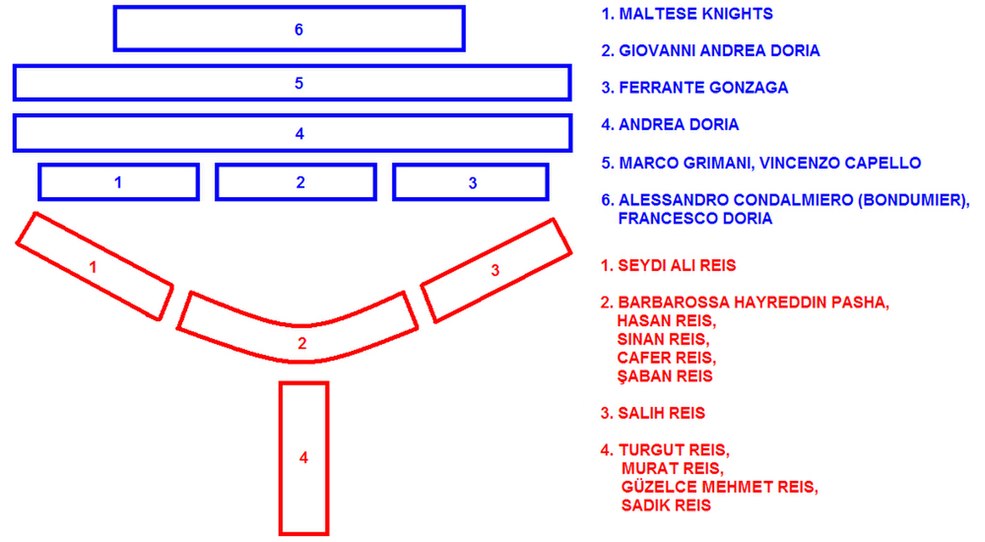
For every time a hero from the heroes of the Islamic Ummah falls, another hero is instantly born within this Ummah! After the fall of Commander ‘Arūj, the heroic deeds of a great commander in the Ummah of Islam came to the fore: the heroic Commander Khayr al-Dīn Barbarossa, brother of Commander ‘Arūj, who resolved to avenge the blood of his martyred brother (may Allah have mercy upon him). He equipped his ships and sailed directly to Tunis to destroy the Spanish vessels there. He liberated Tunis from the Crusaders and their lackeys. Then, with his Ottoman Turkish soldiers, he proceeded to liberate Algiers. Not content with this, he went on to occupy the Spanish Balearic Islands after decimating the Spanish fleet there. When Pope Paul III in Rome heard of the victories of this Muslim commander, he declared from the “Vatican” a general call to arms throughout all corners of Catholic Europe. A massive Crusader alliance was formed, consisting of 600 ships carrying some sixty thousand soldiers, under the command of a legendary admiral, the greatest admiral Europe had known in the Middle Ages, Andrea Doria, with the aim of completely eradicating Islam from the Mediterranean Sea. In contrast, the Ottoman Islamic forces comprised only 122 ships carrying just twenty-two thousand soldiers. On the 4th of Jumādā al-Ūlā, 945 AH (September 28, 1538 CE), the two fleets met in the Battle of Preveza. Despite the Crusaders’ superiority in numbers and equipment, Commander Khayr al-Dīn Barbarossa, commander of the Muslim navy, achieved a resounding victory. Khayr al-Dīn Barbarossa utterly annihilated the allied European fleet. Their counterfeit admiral, Andrea Doria, fled the battlefield from a battle that lasted no more than five hours. And history books have mentioned nothing about him after that disgraceful defeat!
The Naval Battle of Preveza(The Largest Naval Battle in the History of Islam)
Following this momentous Islamic victory, the intensity of fear and panic subsided across the Crusader principalities. The Ottoman Islamic navy became the undisputed master of the Mediterranean Sea for three consecutive centuries. Thanks to the triumph of the mujāhid commander Khayr al-Dīn Barbarossa, joy spread to Muslim lands everywhere. Happiness permeated the major Islamic cities such as Cairo, Baghdad, Makkah, Damascus, and Bursa; ululations filled the air and drums were beaten. By the grace of Allah, and then through the jihād of the lions of the sea from among the Muslim commanders—specifically, the heroism of the mujāhid commander Khayr al-Dīn Barbarossa—this came to pass. The esteemed Ottoman Caliph, son of the esteemed, Sulaymān al-Qānūnī, son of Sultan Selim I, received the news of this victory by prostrating in gratitude to Allah, having completed what his father, the mujāhid Selim I (may Allah have mercy upon him), had begun in rescuing the Muslims of Andalusia. He then appointed Commander Khayr al-Dīn Barbarossa as the supreme admiral of the Ottoman Islamic fleets deployed across all the seas of the world.
Barbarossa was not content with the glory he had achieved for Islam in that immortal battle. He immediately launched intensive campaigns to save the Muslims in Andalusia from the torture of the Inquisition courts. He sailed back and forth across the Mediterranean Sea, transporting Andalusian Muslim refugees, saving more than 70,000 Muslim men and women, including children, women, and the elderly. So much so that the people of Andalusia began to call him exclusively by the name Khayr al-Dīn (Goodness of the Faith) instead of his real name, Khiḍr, in gratitude for his benevolent actions.
So may Allah have mercy on the commander Khayr Ad-Din Barbarossa, and may Allah have mercy on his brother, the hero Aruj, before him, and all their Mujahidin brothers. For by Allah, the Barbarossa brothers were indeed the best of brothers. They did not compete for an inheritance they received from their father, nor for some fleeting worldly gain (lu’a’ah min ad-dunya). Rather, they competed as to which of them would be foremost in aiding Islam and rescuing innocent Muslims. And if these heroes were pirates, then how noble a type of pirate they were! But by Allah, they did not venture into the sea out of greed for a treasure buried at the bottom of the oceans, or for a ship sunk in the depths of the seas. Rather, they ventured into the sea out of longing for what is more precious than all the treasures of the world… Paradise!
To proceed… These were lines for our forgotten heroes. Indeed, the time has come for us to dust off the pages of our history, to extract from them the stories of our great heroes, and to present them to our youth. For the time when we would read what the enemies of the Ummah wrote for us has ended, and a time has come when we ourselves write our history.
And although I now understand the secret of the West’s terror of the name “Barbarossa” in their literature, we absolutely refuse the distortion of the images of our heroes and their branding as pirates. As for those in the West who are eager for stories of pirates and criminals, let them search for the origin of the founder of America’s largest bank, “Morgan Bank,” and let them read the stories of the pirate “American Morgan” and how he used to kill the Native Americans (referred to as Red Indians) and seize their wealth to build with it this bank that stands to this very day! As for our great heroes… they’re a red line!!!
But… in the midst of this Islamic-Crusader conflict in the western Islamic world, what were the remaining Safavid Shi’a planning in the eastern Islamic world? Did the Safavid Shi’a change their filthy habit of treachery and betrayal? Or did they leave the Muslims preoccupied in the West so that they themselves could execute their dangerous terrorist plot in the East? And what is the story of the great Battle of Mohacs, which is undoubtedly considered a (victorious) day from among the days of the Days of Allah The Eternal? And who is the great Ottoman Caliph whose kingdom surpassed that of Alexander the Great?
To answer these questions, we must sail on one of the ships of the massive Ottoman Islamic fleet to the capital of Islam at that time, Istanbul. So that we may follow together the story of a new great figure from among the great figures of Islam, whose kingdom many historians likened to the kingdom of the Prophet of Allah, Sulayman (‘alayhis salam). And our hero bore the same name … Sulayman!
To be continued………..
[1] Translator’s Note: The fall of Granada was in 1492. A message in 1541 CE would likely be from the Moriscos (Muslims forced to convert or live under Christian rule) appealing for aid.
[2] The Spanish Inquisition (1478-1834) targeted Muslims (Moriscos) and Jews, forcing conversions, confiscating properties, and executing those deemed heretics. After the Reconquista [Christian reconquest of Iberian Peninsula from Muslim rule], Spain sought to unify under Catholicism. Muslims faced expulsion (1609-1614), forced conversions, and cultural suppression. The Inquisition used torture, trials, and executions to enforce Catholic orthodoxy. Many Muslims were forced to flee or practice their faith in secret. This period significantly impacted Spain’s Muslim and Jewish populations, shaping the country’s history and cultural identity. The Inquisition’s legacy remains a complex and sensitive topic.
[4] Brother At-Turbani wrote ‘Khusraw’ here, however that seems to be a mistake. Khayr al-Din Barbarossa’s actual name at birth was Khizr. And Allah knows best.
Question: Is it permissible to listen to the Nasheed (song) “Zawjati” (My Wife) by Abu Khatir? Do some of its lyrics fall under the category of Sabb Ad-Dahr (reviling Time)? For example: “Life becomes pleasant, no matter how constricted the days become, if you are pleasant” – I refer to: “constricted the days.” And also, for example: “You are my lawful one, I fear no blamer whose concern is hatred. Time has permitted us an uninterrupted union.”
Answer: All praise is due to Allah, and may peace and blessings be upon the Messenger of Allah, and upon his family and Companions.
As for what follows: The prohibition of reviling Time (Sabb Ad-Dahr) is an established and well-known matter. This, and its meaning, has been previously clarified in these two Fatawa: 50029, 100933.
However, there is a significant difference between reviling Time and describing it: The first (reviling) is intended as criticism and reproach. The second (describing) is intended merely as clarification and information.
Likewise, attributing an action to Time (Az-Zaman) is merely a form of metaphorical expression and linguistic latitude (Tajawwuz wa Tawassu’ fi Al-Kalam). It is not intended to mean that Time itself manages and acts independently; rather, it is a creation, subservient to the command of Allah Ta’ala.
The eminent scholar Muhammad ibn Ibrahim Al Ash-Shaykh clarified this when he was asked about the phrase: “Circumstances did not permit me.” He said: “What has become common on the tongues of some people, such as attributing permission to Time (Ad-Dahr) and the like, is similar to attributing coming and going to Time and so forth; there is no difference between them. It is something common and found in the Book (the Qur’an) and the Sunnah, such as His (Subhanahu wa Ta’ala) saying: ‘Has there [not] come upon man a period of time…’ [Al-Insan 76:1]. And his (SallAllahu ‘alayhi wa sallam) saying: ‘No time will come upon you except that which follows it will be worse.’ It is well-known that the one who utters such a phrase does not intend that Time acts by itself; rather, he believes that Time is a subservient creation that neither comes nor goes except by the will of Allah (Subhanahu wa Ta’ala). This is merely a matter of metaphorical expression and linguistic latitude, like His (Subhanahu wa Ta’ala) saying: ‘…a wall about to collapse…’ [Al-Kahf 18:77]. However, proper etiquette (Adab) dictates abandoning it and similar expressions.”
However, if one intends that Time (Ad-Dahr) truly acts [independently], then this, undoubtedly, is associating partners with Allah (Subhanahu wa Ta’ala) (Ishrak). As for describing Time with hardship, ease, good, or evil, there is no harm in that, such as His (Subhanahu wa Ta’ala) saying: “…seven nights and eight days in succession…” [Al-Haqqah 69:7]. And His saying: “…seven hard [years]…” [Yusuf 12:48]. And his (SallAllahu ‘alayhi wa sallam) saying: “No time will come except that which follows it will be worse.” The evidences for this are very numerous.
As for reviling Time (Sabb Ad-Dahr), this is what the evidences have come to prohibit, warn against, and forbid, as in the Sahih from Abu Hurayrah, from the Prophet (SallAllahu ‘alayhi wa sallam) who said: “Allah said: ‘The son of Adam offends Me; he reviles Time, and I am Time. I alternate the night and the day.'” And in another narration: “Do not revile Time, for indeed, Allah is Time.” End quote.
Shaykh Ibn ‘Uthaymin said in Al-Qawl Al-Mufid: Reviling Time (Sabb Ad-Dahr) is divided into three categories:
First: To intend merely to convey information, without blame: This is permissible. For example, to say: “We are tired from the intense heat of this day, or its cold,” and similar expressions. This is because actions are by intentions, and such an expression is suitable for merely conveying information. An example of this is the statement of Lut (‘alayhis salam): “This is a distressing day” [Hud 11:77].
Second: To revile Time on the basis that it is the [actual] doer, such as believing, by reviling Time, that Time itself is what changes matters to good or evil. This is major polytheism (Shirk Akbar), because he has believed that there is another creator with Allah, as he has attributed events to other than Allah. And everyone who believes that there is another creator with Allah is a disbeliever (Kafir), just as whoever believes that there is another god with Allah deserving of worship is a disbeliever.
Third: To revile Time, not believing that it is the doer, but believing that Allah is the Doer, yet he reviles it because it is the locus of this matter that is disliked by him. This is forbidden (Muharram), but it does not reach the level of Shirk. It is a form of foolishness in intellect and misguidance in religion, because the reality of his reviling returns to Allah (Subhanahu wa Ta’ala), for Allah Ta’ala is the One who directs Time and brings about in it what He wills of good or evil. So Time is not the doer, and this reviling does not constitute disbelief (Kufr), because he did not revile Allah Ta’ala directly. End quote.
Dr. ‘Abd Ar-Rahman Al-Mahmud also elaborated on this in his treatise: Akhta’ fi Al-‘Aqidah (Errors in Creed).
Shaykh Salih Al Ash-Shaykh said in his commentary on Kitab At-Tawhid: “Describing years as difficult, or a day as black (i.e., bad), or months as ill-omened, and the like, is not considered reviling Time (Sabb Ad-Dahr). This is because such descriptions are qualified. This has come in the Qur’an, such as in His (Jalla wa ‘Ala) saying: ‘…during ill-omened days to make them taste the punishment of disgrace…’ [Fussilat 41:16]. So Allah (Jalla wa ‘Ala) described the days as ill-omened, and what is meant is: ‘during days that were ill-omened for them.’ He described the days as ill-omened because what befell them during those days was ill-omened for them. Similar to this is His (Jalla wa ‘Ala) saying in Surah Al-Qamar: ‘…on a day of continuous misfortune’ [Al-Qamar 54:19]. This is not reviling Time, because what is intended by this description is that what occurred during it had such-and-such a characteristic for this speaker. As for reviling Time, it is to attribute the action to it and then to revile Time because it did to him what displeased him. This is what constitutes an offense to Allah (Jalla wa ‘Ala).” End quote.
In conclusion: There is no harm in the first phrase. As for the second, although there is no [inherent] harm in it, proper etiquette (Adab) dictates abandoning it and similar expressions, as previously noted by the eminent scholar Ibn Ibrahim. For further benefit, refer to the following Fatawa numbers: 60888, 15822, 48377, 118868, 68788.
Question: What is the ruling on the Udhiyah? And is it permissible on behalf of the deceased?
Answer: The Udhiyah is a confirmed Sunnah (Sunnah Mu’akkadah) according to the majority of scholars, because he (SallAllahu ‘alayhi wa sallam) offered a sacrifice and encouraged his Ummah to offer the Udhiyah. The basic principle is that it is required at its prescribed time from a living person for himself and his household, and he may include whomever he wishes, living or deceased, in its reward.
As for the Udhiyah on behalf of the deceased: if the deceased had bequeathed it in, for example, one-third of his wealth, or designated it in an endowment (Waqf) for himself, it is obligatory upon the administrator of the Waqf or the executor of the will to carry it out. If he did not bequeath it, nor designate an endowment for it, and a person wishes to offer an Udhiyah on behalf of his father, mother, or someone else, then this is good (Hasan). This is considered a type of charity (Sadaqah) on behalf of the deceased, and giving charity on their behalf is permissible according to the view of Ahl As-Sunnah wa Al-Jama’ah.
As for giving the price of the Udhiyah as charity, based on the notion that it is better than slaughtering it: if the Udhiyah was explicitly stipulated in the Waqf or the will, it is not permissible for the agent to deviate from that to giving its price as charity. However, if it is a voluntary act on behalf of someone else, then the matter is broad. As for the Udhiyah offered by a living Muslim for himself and his household, it is a confirmed Sunnah for one who is able to do so, and slaughtering it is better than giving its price as charity. And with Allah is the granting of success. (End of the answer.)
Published in (Nashrat Al-Hisbah), Issue 17, in the months of Dhu Al-Qa’dah and Dhu Al-Hijjah, 1417 H. (Majmu’ Fatawa wa Maqalat Ash-Shaykh Ibn Baz 18/40).
Sultan Selim Al-Awwal “The Destroyer of the Safavid State”
A brief biography of Sultan Selim Al-Awwal from the book ‘Mi’atu min ‘uzamā’i ummati al-Islām ghayyarū majra at-tārīkh’ by At-Turbani. (Slightly adapted)
“Wa Ba’ad (And after)… Indeed, our scholars and men of law have sentenced you, Ismā‘īl As-Safawi[1], to execution, as an apostate from Islam. They have obligated every Muslim to defend his religion and to crush the heretics embodied in your person and your foolish followers!” -by Selim Al-Awwal[2]
We are on the cusp of encountering a new knightly figure, a heroic personality[3]. Unfortunately, most of us have never even heard of him. Truthfully, I find some excuse for these people (and I used to be one of them), given that school curricula overlook the mention of our Ummah’s great figures due to the ignorance of those who designed these curricula, or for other reasons—though I personally lean towards the latter!
If you wish to grasp the extent of this man’s greatness and what he offered to the Muslims, ask yourself a simple question, and I have no doubt your answer will be in the affirmative: Do you love the Messenger of Allah (peace and blessings be upon him)?!
If so, then know that this Messenger of yours, whom you love, was on the verge of having his grave exhumed after his city was occupied. And this would have indeed happened had Allah not destined for Islam this mighty falcon: the Ottoman Sultan Selim Al-Awwal (Selim 1, may Allah have mercy upon him), the hero of the immortal Battle of Chaldiran[4]. Before we delve into the sea of our great Sultan’s heroic feats, we must first establish the context of the issue, for judging a matter is contingent upon its proper understanding. Thus, we must first comprehend the magnitude of the grave danger this Sultan confronted, namely, the danger of the malevolent Safavid state!
So, who are the Safavid Shi‘a? And why do they harbor this deep-seated animosity towards Islam and Muslims, to the extent that they would permit the desecration of the grave of the Messenger of Allah (peace be upon him)? What is the secret behind the current Iranian leaders’ cursing of the Companions of the Messenger of Allah and his wives? And why does Iran, to this day, celebrate the killing of Al-Fārūq ‘Umar ibn al-Khaṭṭāb (may Allah be pleased with him)? And why, in 2003 CE, did Iran erect a shrine in the Persian city of Kashan for Abū Lu’lu’ah al-Majūsī, the assassin of ‘Umar?
I acknowledge that this topic is somewhat thorny and may cause a degree of unease for some Muslims who sympathize with Iran and its leaders—leaders who leave no media outlet unused to affirm their support for just Muslim causes and their enmity towards Israel, even their intention to eradicate it. However, with these lines, I intend only the countenance of Allah, writing what is true. I myself, until a few years ago, used to defend the Iranian (Islamic) Republic to the extent that I accused anyone who doubted the intentions of this regime (which defends the cause of my homeland, Palestine) of treason and collaboration. Yet, I often wondered in the depths of my soul: Why do we hear threats against Iran every day, but see no war waged upon it? My confusion was further compounded by what I heard from its Foreign Minister (Manouchehr Mottaki) about Iran assisting the invaders in the occupation of Afghanistan and Iraq. What is truly astonishing is hearing (Nejad’s) daily declarations of support for Al-Aqṣā, while at the same time we see him honoring the Shi‘a scholar (Ja‘far Murtaḍā al-‘Āmilī) for authoring the book “Where is Al-Aqṣā Mosque?” This book states that the location of Al-Aqṣā Mosque, to which the Messenger of Allah (peace be upon him) was taken on the Night Journey, is not in Jerusalem, and that Jerusalem has no religious significance, so there is no need to defend it, as Al-Aqṣā is not there! However, the news that made me certain that there was something mysterious afoot was a report I read in English in the British newspaper The Daily Telegraph, dated October 3, 2009. This report revealed, through a close-up photograph of the Iranian President’s passport, which he was carrying during an election campaign, that the family name of the President of Iran is not (Ahmadinejad) as is commonly known, but rather (Sabourjian), as is clear in the passport photo[5]. And Sabourjian, ladies and gentlemen, is the name of a Jewish family from among the Jews of Persia!!! All of this compelled me to delve into bygone pages of history, hoping to find an explanation for the enigmas surrounding us!
The beginning was in the city of Tabriz in the year 907 AH, when a Persian Safavid man named Ismā‘īl ibn Ḥaydar as-Ṣafawī converted to the Rāfiḍī Twelver Shi‘a madhhab (and here it is worth noting that heretical Sufis are the people most prone to being drawn into what is even more dangerous than that!). The important point is that as-Ṣafawī mixed Persian Zoroastrian beliefs with deviant Shi‘a beliefs. He then subsequently changed the madhhab of most Persians and Arabs whose regions he occupied from the madhhab of Ahl al-Sunnah wal-Jamā‘ah, which they followed, to the Rāfiḍī Shi‘a madhhab. He was able to achieve this after killing more than a million Muslims in Baghdad and other areas he occupied (and this explains the Shi‘itization of many people in Iraq, Persia, Azerbaijan, and the Al-Aḥsā region in the Arabian Peninsula to this day!). At the same time, the Crusading Portuguese, led by Afonso de Albuquerque, intended to occupy Madinah, exhume the grave of the Messenger (peace be upon him), and trade it for Jerusalem. As is the custom of the Rāfiḍī Shi‘a throughout history and to this day, the Safavids volunteered freely to assist the Crusaders in executing this despicable plan. They allied with Albuquerque to strike the Mamluk state and draw it eastward, so that the way would be open for the Crusading Portuguese in the Red Sea to exhume the grave of Muḥammad (peace and blessings be upon him) in Madinah.
At that moment, from among the peaks of the Anatolian plateau in Asia Minor, a formidable Ottoman falcon named Selim I (Selim Al-Awwal) emerged. After this Ottoman Sultan realized the gravity of the situation, he decided to defend the Messenger of Allah (peace and blessings be upon him) in death, just as the Companions had defended him in life. So, this Turkish falcon swiftly launched a counter-attack. Did the Sultan mobilize his army to fight the Crusaders and leave the treacherous Shi‘a, based on the principle that one should first focus on the external enemies of the Ummah and that we are all Muslims? The truth is that Sultan Selim I had received a purely Qur’anic upbringing, so it did not take him long to identify the real enemy towards whom efforts should be directed. The Sultan remembered what was stated in the fourth verse of Sūrat al-Munāfiqūn: {They are the enemy, so beware of them} (Quran 63:4). He understood why Allah defined the word “enemy” with the definite article “al-” when describing the hypocrites. Allah did not say “they are an enemy, so beware of them,” because the hypocrites are the foremost real danger to Muslims in every era, until the Day of Resurrection!
Indeed… the Sultan headed east towards the Persian Safavid Shi‘a, who falsely and dissimulatively (by taqiyyah) claimed Islam in order to strike it from within. On the 2nd of Rajab, 920 AH, Sultan Selim I triumphed in the immortal Battle of Chaldiran against the Safavid Shi‘a, and (may Allah have mercy upon him) he razed Tabriz, their fortified capital. He utterly decimated their armies, and the filthy Safavid Shi‘a (Ismail as-Safawi)—who had plotted to exhume the grave of the greatest of creation (i.e. Prophet Muhammad), leaving his wife and honor behind him due to the intensity of his (i.e. Ismail as-Safawi’s) moral depravity and the baseness of his Zoroastrian origins—fled. The Sultan captured her (Ismā‘īl’s wife) and married her off to one of his common soldiers. He thus saved the Muslims from the evil of the old Safavids before the new Safavids emerged at the hands of Khomeini, who wrote about how it is permissible for a Shi‘ite to kill Sunni Muslims and plunder their wealth, as stated in his book Taḥrīr al-Wasīlah (Vol. 1, p. 352), in the addendum to Al-Ẓāhir (The Apparent [Rulings]): “the permissibility of taking his wealth wherever it is found, and in whatever manner!!”
Thus, the matter has become clear, the enigma of the Safavid Shi‘a has been solved, and Iran’s contradictory actions have been clarified—all thanks to the study of history. That is why we study it. The purpose of studying history is not merely to narrate stories and enjoy them; rather, the primary goal of studying history is to understand the present, for the events of history explain the enigmas of our current reality!
It is worth mentioning that during the reign of the heroic Sultan Selim I, the Crusading Spanish were killing and torturing the Andalusian Muslims who remained in their lands. The zealous Ottoman Sultan became extremely enraged at the shedding of Muslim blood and decided to change [the status of] all Christians and Jews whom the lands of the Ottoman Caliphate had hosted between Islam and expulsion (i.e. asking them to convert to Islam or leave Ottoman lands). However, Zenbilli Ali Cemali (Jamali) Efendi, who was Shaykh al-Islām and the Mufti of the Ottoman state, rejected this matter and informed the Sultan that it was impermissible (to force Islam upon their Christian subjects), even if Muslims were being slaughtered in Crusader lands, for there is no compulsion in the Islamic religion, ever. The Sultan agreed with the esteemed scholar’s opinion and allowed the Christians and Jews to live in safety in Muslim lands while Muslims were being slaughtered in Crusader lands. By Allah, how great is Islam! And by Allah, how great is that civilization which the Muslims built! By Allah, if there were nothing else in the history of Muslims but this stance of Selim I (may Allah have mercy upon him), it would be enough for us to raise our heads to the highest heavens and respond with all force to anyone who tries to accuse Islam of terrorism. This is our history, so show us what your history is!!
Do you now understand the value of the Ottoman Caliphate, which we were taught about in schools under the name of “Turkish occupation”!? If you still have not grasped the immense favor the Ottomans did for the Muslims, then look at what our hero Selim I did to save the Andalusian Muslims who were being tortured and killed by the Spanish Crusaders in Andalusia. Caliph Selim I summoned an Albanian man to his palace to entrust him with a secret mission, the least that can be said about which is that it was an impossible mission!!!
So, what is the story of that impossible mission? And who is that enigmatic Albanian man who graduated from the school of Islam with distinction and Ottoman honors to become a living legend, about whom Hollywood studios in America continue to produce films to this day, the profits of which have exceeded hundreds of millions of dollars?!
(From the book- ‘Mi’atu min ‘uzamā’i ummati al-Islām ghayyarū majra at-tārīkh’ by At-Turbani, page 47-51. Translated by Mohammed bin Thajammul Hussain Manna.)
[1] Shah Ismail I (1487-1524) was the founder of the Safavid Empire in Persia, reigning from 1501 CE to 1524 CE. He united various Turkmen tribes and established Twelver Shia Islam as the state religion, transforming Persia into a major Shia power. Ismail’s military campaigns expanded Safavid territories, conquering much of modern-day Iran, Azerbaijan, and parts of Turkey and Iraq. However, his defeat at the Battle of Chaldiran in 1514 by the Ottoman Sultan Selim I marked a significant turning point. The loss damaged Ismail’s reputation and weakened his authority, though he continued to rule until his death in 1524.
[2] Selim I (1470-1520), was the ninth Sultan of the Ottoman Empire, reigning from 1512 to 1520. He expanded Ottoman territories through military conquests, defeating the Mamluk Sultanate in Egypt and the Safavid Empire in Persia. His victory over the Safavids at the Battle of Chaldiran in 1514 solidified Ottoman control in Eastern Anatolia. Selim’s military campaigns extended Ottoman influence in the Middle East and North Africa, laying the groundwork for further expansion under his successors. His reign marked a significant turning point in Ottoman history, establishing the empire as a dominant force in the region. Known for his military prowess and strategic leadership, Selim I left a lasting legacy in Ottoman history. His conquests and policies had a profound impact on the empire’s growth and development.
[3] The actual line as written by brother At-Turbani, if translated would mean ‘one of the same caliber as the Companions (Ṣaḥābah)’, but I changed it to ‘a heroic personality’, because it is inappropriate to say that Sultan Selim Al-Awwal was like the Sahabah, may Allah forgive us and brother At-Turbani.
[4] The Battle of Chaldiran (August 23, 1514) was a decisive conflict between the Ottoman Empire, led by Sultan Selim I, and the Safavid Empire, led by Shah Ismail I. The Ottomans’ superior artillery and tactics secured a crushing victory, inflicting heavy casualties on the Safavids. Estimates suggest that the Safavids suffered between 5,000 to 20,000 casualties, while Ottoman losses were significantly lower. The battle marked a significant turning point in the region’s history, as the Ottomans gained control over Eastern Anatolia and the Safavids’ expansion was halted. The defeat weakened Shah Ismail’s authority, while Selim’s victory solidified Ottoman dominance in the Middle East. The battle’s outcome had lasting implications for the region’s politics, culture, and religious dynamics.
 Saheehus-Seerah