Is the Praise of Ahl-ul-Bid’ah a Cause for Expulsion from Salafiyyah?

Is the Praise of Ahl-ul-Bid’ah a Cause for Expulsion from Salafiyyah?

(by Shaykh Abdullah Muhammad Mushtaq, Jamia Darussalam Oomerabad, Jamiah Ha’il (Saudi Arabia))


What is the ruling on praising the People of Innovation (Ahl-ul-Bid’ah)? I will not discuss this specific issue here. Rather, my discussion focuses on this: If someone praises a person of innovation, will he then be considered expelled from Salafiyyah? Will his Methodology (Manhaj) be considered incorrect?


📚 It is evident from the books of the Salaf that people have praised Ahl-ul-Bid’ah for various purposes in every era, and this has been done by individuals whose Salafiyyah cannot even be doubted.


🔹 The Stance of Shaykh al-Islam Ibn Taymiyyah (Rahimahullah)
Allama Ibn Taymiyyah has refuted the Rafidah (Shia) more than anyone else; yet, he felt no hesitation in mentioning their virtues in certain places.

Thus, he writes:
> “And among the Rafidah, there are those who are devout worshippers, scrupulous, and ascetics, but in this regard, they are not like others among the People of Desires (Ahl-ul-Ahwa). The Mu’tazila are more intelligent, more knowledgeable, and more religious than them; and lying and immorality are less prevalent among them than in the Rafidah.
> And the Zaydiyyah among the Shia are better than them: they are closer to truthfulness, justice, and knowledge.
> And among the People of Desires, there is no one more truthful nor more devout in worship than the Khawarij.
> Yet, despite this, Ahl-us-Sunnah exercise justice and fairness with them and do not oppress them; for oppression is conventionally forbidden regardless of the situation, as has been mentioned previously. Rather, Ahl-us-Sunnah possess more goodness for every one of these groups than they have for one another; indeed, they are better and more just towards the Rafidah than some Rafidah are towards others.”

(Minhaj as-Sunnah an-Nabawiyyah 5/157)

✨ In this passage, Allama Ibn Taymiyyah has mentioned certain virtues of the Rawafid, the Mu’tazila, and the Khawarij, and then declared Ahl-us-Sunnah to be the greatest well-wishers for them.

🔹 Evidence from the Science of Narrator Criticism (Jarh wa Ta’deel)

In the books of Jarh wa Ta’deel, you will find regarding many narrators that the scholars said: “Reliable (Thiqah), Truthful (Sadooq), but he is a person of innovation.”

For example, Ibn Abi Hatim stated:
> “Amr bin Ali said: Uthman al-Barri is truthful (Sadooq), but has many errors and delusions, and he was a person of innovation.”

Allama Al-Dhahabi says regarding Aban bin Taghlib:
> “Aban bin Taghlib Al-Kufi was a zealous Shi’i, but he is truthful (Sadooq). So, for us is his truthfulness, and upon him is his innovation. Ahmad bin Hanbal, Ibn Ma’in, and Abu Hatim declared him reliable (Thiqah). Ibn Adi cited him and said: ‘He was extreme in Shi’ism.’ Al-Sa’di said: ‘A deviant who openly declared his deviation.'”

Adh-Dhahabi continues:
> “Someone might say: How is the authentication (Tawthiq) of an innovator permissible when the limit of reliability requires probity (‘Adalah) and precision? How can one who is a person of innovation be just?
> The answer is that innovation is of two types: A minor innovation, such as the exaggeration in Shi’ism, or Shi’ism without exaggeration and without distortion; this was common among the Tabi’in and their successors, alongside [their] religion, piety, and truthfulness.”
(Mizan al-I’tidal: 1/5)

🔹 The Case of Bishr al-Marisi
Furthermore, Allama Adh-Dhahabi mentions a severe innovator in good terms. Bishr al-Marisi is well-known for his innovation, and due to his innovation, scholars declared him a disbeliever (Kafir).

Yet, in his biography, Adh-Dhahabi (Rahimahullah) writes:
> “And he who is declared a disbeliever due to an innovation—even if it is major—is not like the original disbeliever, nor like the Jew or the Magian. Allah refuses to make the one who believes in Allah and His Messenger and the Last Day, and fasts, prays, performs Hajj, and gives Zakat—even if he commits major sins, goes astray, and innovates—like the one who opposes the Messenger, worships an idol, discards the laws, and disbelieves. However, we seek refuge with Allah from innovations and their people.” (Siyar A’lam an-Nubala 10/202)

⚠️ Now estimate this: Scholars declared a man a disbeliever due to innovation, yet Allama Adh-Dhahabi mentions his faith, prayer, fasting, and worship.

🔹 Other Examples

1️⃣ Az-Zamakhshari: The Mu’tazili stance of Zamakhshari, the author of Al-Kashshaf, is well-known. Despite this, Allama Ibn Kathir (Rahimahullah) writes in his Tafsir:
> “The Allama (Great Scholar) Abu al-Qasim Mahmud bin Umar az-Zamakhshari said in his Tafsir…”

Here, despite Zamakhshari’s I’tizal, Ibn Kathir refers to him as “Allama” in his Tafsir.

2️⃣ Al-Alusi: Allama Al-Alusi is a Naqshbandi Sufi exegete (Mufassir), and his Tafsir contains a large number of Sufi issues. Despite this, Allama Al-Albani (Rahimahullah) has mentioned him as “Allama” in several places. For instance, he says in one place:
“If you have known this, then it is not correct to use the verse as evidence in any way. And the Investigating Scholar (Al-Allama Al-Muhaqqiq) Al-Alusi said in ‘Ruh al-Ma’ani’…”

(Tahdhir al-Sajid min Ittikhadh al-Qubur Masajid, 55)

🛑 Conclusion
From these texts, it becomes known that if someone praises a person of innovation or mentions them in good terms, the method of expelling him from the Manhaj (Methodology) is a matter that requires reconsideration (Mahall-e-Nazar).

✍️ Abdullah Muhammad Mushtaq

(Translated by Mohammed bin Thajammul Hussain Manna from the Shaykh’s Facebook page, the post was originally in Urdu.)

The Necessity of Mutual Respect Despite Disagreement on Issues – Asad Azmi, Jamia Salafia Banaras

🌿 The Necessity of Mutual Respect Despite Disagreement on Issues 🌿

✍️ Asad Azmi / Jamia Salafia Banaras


Differences in perspective regarding various subjects and issues exist among individuals belonging to the different schools of thought within the Muslim community; it is due to these very differences that separate groups and sects come into existence. In many of these matters, the difference is of a minor nature.


📌 If differences cannot be eliminated, they can certainly be minimized. Furthermore, it is essential to respect one another despite these differences, to abstain from abuse, reviling, taunting, and mockery, and to practice mutual tolerance. This is the teaching of our religion. We must contemplate how, despite our differences, we can live together in unity. What guidance has our religion provided us in this regard? What is the responsibility of the noble scholars in this context?


📖 Read the Quran; what attributes of a believer have been described?
(Adhillatin ‘ala al-mu’minin a’izzatin ‘ala al-kafirin)
✨ “Humble toward the believers, mighty against the disbelievers.”
It is among the attributes of a believer that he remains soft for other believers and hard against the people of disbelief. In describing the attributes of the Companions, it is stated: (Ashidda’u ‘ala al-kuffar ruhama’u baynahum) — “Severe against the disbelievers, merciful among themselves.”


📜 Ho halqa-e-yaran to baresham ki tarah narm
Razm-e-haq-o-batil ho to faulad hai momin
(In the circle of friends, he is soft as silk; In the battle of truth and falsehood, the believer is [as strong as] steel.)


🛑 Where is our “steel-like” nature visible today?
When it comes to internal issues, we become very harsh. We have elevated the Maslak (sect/school of thought) to the status of the Deen (Religion). We consider the propagation of the Maslak to be the propagation of the Deen, and the defense of the Maslak to be the defense of the Deen. This is a significant weakness of ours.


Our differences are very minor; disagreement likely exists in only five to seven percent of issues. However, these five to seven percent always remain predominant, while the ninety-three to ninety-four percent of issues upon which there is consensus—where there is no disagreement—are never mentioned.
❓ Why is this so?
When our agreement lies in so many issues and disagreement in only a few, why then does this disagreement always prevail and dominate our minds and our society?

📚 The Ethics of Disagreement (Adab al-Khilaf)
Within the books on Islamic subjects, there is a topic known as “Adab al-Khilaf”—that is, how to handle disagreement, and how we can live together despite it. In the modern era, significant work has been done on this subject in the Arabic language; many books have appeared under titles such as Adab al-Khilaf or Adab al-Ikhtilaf fi al-Islam. Work is slowly progressing in Urdu as well.
The meaning of Adab al-Khilaf is that while we differ with you on certain issues, despite this difference, we attempt to understand and know one another, stay close to one another, and accord one another respect and reverence. Scholars have explained this by citing numerous examples.


👇 A few examples are presented below:

🌹 1. Umar and Abdullah bin Masud (Radi Allahu Anhuma):
Both are distinguished Companions. Allama Ibn al-Qayyim (Rahimahullah) has written that there was disagreement between them on more than one hundred issues.
Reflect upon this: disagreement on more than one hundred issues. Yet, did they fight one another? Did they hate one another? No.
It is written in their biographies that Umar (Radi Allahu Anhu) used to say regarding Abdullah bin Masud:
✨ “Kunayfun muli’a ‘ilman wa fiqhan aathartu bihi ahla al-Qadisiyah” (Abdullah bin Masud is a vessel filled with knowledge and jurisprudence; I have preferred the people of Qadisiyah with this [vessel]).
Think: disagreement on a hundred issues, yet he is praising him.
On the other hand, the condition of Abdullah bin Masud was such that after the passing of Umar, he used to say:
✨ “Rahimallahu ‘Umar, kana lil-Islami hisnan hasinan…” (May Allah have mercy on Umar; he was an impregnable fortress for Islam, and now that fortress has collapsed).


🌹 2. Imam Ahmad bin Hanbal and Ali bin Madini:
Once, a disagreement occurred between them regarding an issue. Ali bin Madini had come to Imam Ahmad bin Hanbal on a mount. After dismounting, a debate and discussion ensued on the issue, and narrators state that voices were raised; the debate took place in loud tones.
However, when the debate concluded and Ali bin Madini began to leave, Imam Ahmad bin Hanbal stood up, held the reins of his mount, and helped him seat himself upon it.
✨ Reflect: a debate just took place, yet behold this level of respect.


🌹 3. Maulana Sanaullah Amritsari:
This is an account from the recent past. He was a famous scholar and a great debater; people of every school of thought invited him to their debates. He debated Qadianis, Christians, Aryas, and all false sects.
His practice was such that when the debate concluded—regardless of who the opposing debater was—he would invite him to his place for food and lodging.
✨ The debate is ongoing, arguments are being exchanged, opposition is occurring, yet when the debate ends, he tells his opponent: “You must eat at our place and stay the night with us.”


🌹 4. Maulana Ismail Salafi:
It is narrated regarding Maulana Ismail Salafi of Gujranwala that once a caravan of Hajj pilgrims was departing. There was a crowd at the station to see the pilgrims off. The time for prayer arrived, and people stepped aside and formed rows. People pushed Maulana Ismail forward to lead the prayer.
After the Maulana stood on the prayer mat (Musalla), a gentleman from behind said, “Maulana, our prayer will not be valid behind you.”
The Maulana picked up his handkerchief, placed it on his shoulder, stepped back from the prayer mat, and said, “Sir, you lead the prayer; my prayer will be valid behind you.”
That person was deeply ashamed and apologized, and eventually had the Maulana lead the prayer.


❓ What would we have done?
At the very least, two congregations would have formed immediately: “Go pray behind your Imam, we are separating with our people.” And if it had reached the point of a physical altercation, it would not have been far-fetched or surprising.

🤝 My brothers!
Despite differences, we must think about and reflect upon respecting one another, understanding one another, and how to deal with one another. For one scholar to belittle another, or to persecute him due to a difference in issues, is contrary to his dignity. Indeed, such behavior does not befit even a common believer, let alone a scholar.

📜 A Lesson from the Salaf:
Sufyan bin Husain, who is among the predecessors (Salaf), narrates: “Once, I mentioned a man in somewhat poor terms in the presence of Iyas bin Muawiyah. Iyas bin Muawiyah was a very serious man of great insight. I complained about someone—backbit him—in his presence.
Iyas bin Muawiyah stared at me and asked:
❓ ‘A-ghazauta ar-Rum?’ (Have you fought against the Romans?) I said, ‘No.’
❓ ‘As-Sinda wal-Hinda was-Sin?’ (Have you fought against the people of Sindh, Hind, and China?) I said, ‘No.’
He said:
⚠️ ‘SubhanAllah! The Romans are safe from you, the Hindus and people of Sindh are safe from you, the people of China are safe from you, but your Muslim brother is not safe from you?'”


🔹 Conclusion
My brothers! Let us remain on our Maslak, let us adhere to our stance, but let us learn to respect the other and learn to understand the other. And let us also consider that there are some issues for which we need to rise above sect and denomination to reflect upon—common issues where there is no matter of sect or denomination, but rather issues of humanity.


For example, issues of health and disease. These narcotics, gutkha, tobacco, khaini, pan masala… our youth are immersed in this.
Is he Muslim or non-Muslim? Hanafi or Ahl-e-Hadith? Deobandi or Barelvi? Shia or Sunni?
Can we not unite to reflect upon these issues?


🚫 We also observe that we have divided our mosques, we have divided our madrasas, we have divided our places of worship, and we have divided books. Yet, despite this, we continue to look at the mosques of others with covetous eyes. Lawsuits are filed for this purpose, money is spent, fights break out in mosques, police are called into mosques, and cases drag on for years while money is spent freely.
Is there any room for such actions? Will we come to our senses even now, or will we continue to weaken ourselves further and further through these unnecessary customary fights?

(Translated by Mohammed bin Thajammul Hussain Manna from Urdu. This was originally posted on Facebook on Shaykh Abdul Lateef Salafi Madani’s page.)

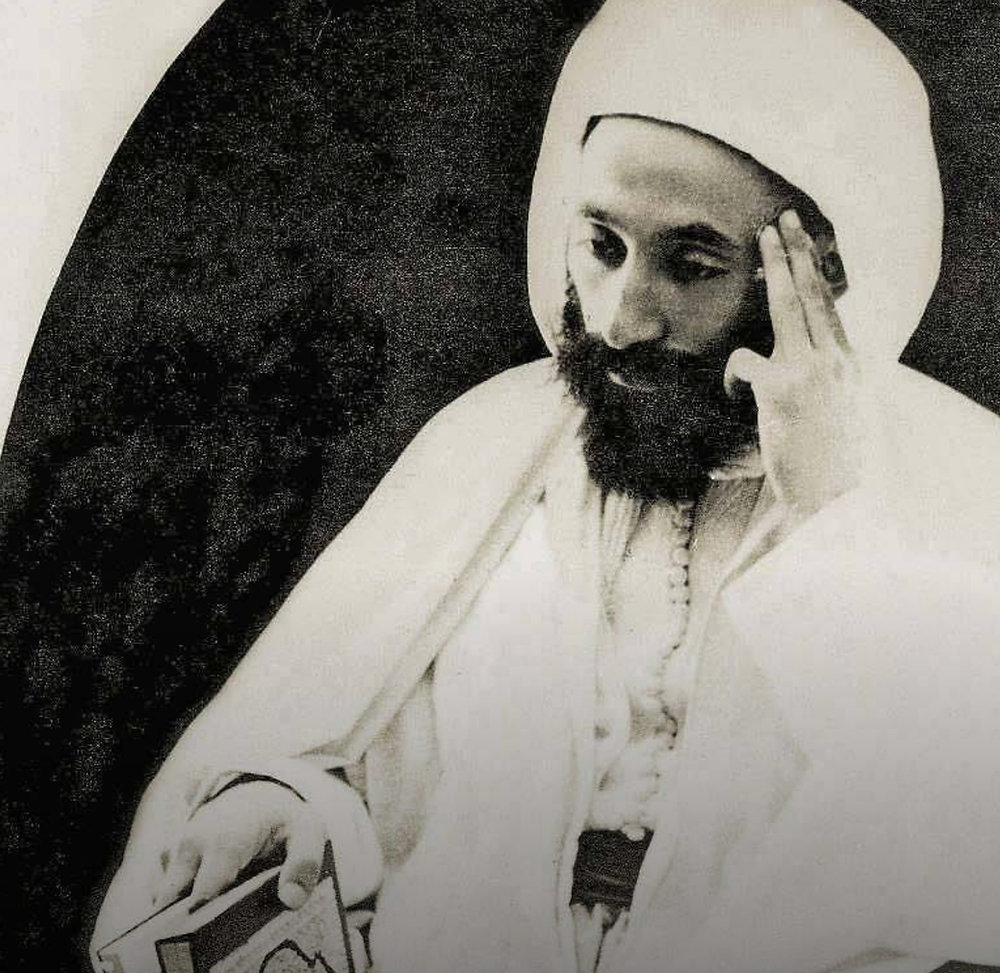
The Giant of Algeria- Ameer Abdul-Qadir al-Jazairi, From The Heroes of Islam

The Giant of Algeria- Ameer Abdul-Qadir al-Jazairi

[Taken from the book ‘Mi’atu min ‘uzamā’i ummati al-Islām ghayyarū majra at-tārīkh’ by At-Turbani. Pages 67-71]

“Indeed, the roar of bullets and the neighing of horses are more beloved for our ears than the soft, melodious voice.”- Ameer Abdul-Qadir al-Jazairi

Initially, I must confess that the ancient and modern history of Algeria was personally somewhat obscure to me. Indeed, the history of Morocco, with its connections to Al-Andalus, and the history of Tunisia, with the tales and accounts preserved by the Zaytūnah University, were clearer to me than Algeria’s own history. Perhaps my ignorance even led me, at one point, to doubt the Arab identity of this nation and its belonging to Islam. The truth is, however, that when I turned the pages of history to uncover the story of this immense country, I discovered that Algeria possesses a history that can, at the very least, be described as one written in liquid gold! And because discussing Algeria’s history in supporting the religion of Allah is a matter whose explanation would be lengthy, I will focus in the following few lines on the story of a hero among the heroes of Algeria, one who embodied within his very being all the meanings of chivalry, heroism, and magnanimity.

Some historians attribute the beginning of the French campaign against Algeria to the year 1927 CE. However, I believe that the actual war against Algeria began much earlier, specifically in 1538 CE. This was the date of the immortal Battle of Preveza, which we discussed previously when mentioning the Ottoman victory, led by the heroic commander Khayr ad-Dīn Barbarossa, over the allied Crusader fleets. Following this monumental victory, Commander Barbarossa (may Allah have mercy on him) established a formidable Islamic fleet based in Algeria. Algeria thus transformed into the most powerful naval force in the entire world, leading the immense Ottoman Islamic fleet, and became known by a new designation: “Dār al-Islām (Abode of Islam) and Dār al-Jihād (Abode of Striving).” From that date onward, the Crusaders’ attention shifted specifically to Algeria.

To grasp the extent of power Algeria attained under the aegis of the Ottoman Islamic Caliphate, it suffices for us to recall that George Washington, the first President of the United States of America, paid a tribute (jizyah) to the Muslims amounting to 642,000 gold dollars and 1,200 Ottoman liras to the Ottoman fleet at the end of the eighteenth century. This was so that the Ottomans would agree to sign a non-aggression treaty with America! It is noteworthy that this agreement is the only one in the archives of the United States of America that was not written in English, but rather in Ottoman Turkish with Arabic script, at the personal request of the Ottoman Caliph. As for Britain, it paid 600 pounds annually to the Algerian treasury. Denmark provided the Muslims in Algeria with military equipment and machinery valued at 4,000 riyals Shenko each year, accompanied by precious gifts. Holland, meanwhile, paid 600 pounds to the Ottoman Caliphate’s fleet in Algeria, the Kingdom of Sicily paid 4,000 riyals, and the Kingdom of Sardinia paid 6,000 pounds. The United States of America offered military equipment and supplies valued at 4,000 riyals, plus another 10,000 riyals in cash, accompanied by valuable gifts. France sent valuable gifts when changing its consuls, Portugal offered gifts of the finest varieties, and Sweden and Norway supplied military naval equipment and ammunition worth large sums annually. The cities of Hanover and Bern in Germany paid 600 English pounds, and Spain presented the most exquisite gifts annually. Over three centuries of the Algerian-Ottoman fleet’s dominance over the Mediterranean Sea, the Crusaders awaited an opportune moment to exact revenge upon the Muslims. This led European nations to present the “Algerian Question” at their conferences. After being alluded to at the Congress of Vienna, it was formally presented at the Congress of Aix-la-Chapelle in 1818 CE. The question that circulated there became: when would the opportunity arise to pounce on Algeria? The truth is that this opportunity came in 1927 CE, the year the Algerian-Ottoman fleet was destroyed in the naval “Battle of Navarino.” Strangely, the French did not wait long, advancing to occupy Algeria in that very same year!

This explains why Algeria was specifically targeted. As for why France, in particular, was chosen to act on behalf of the other Crusader invasion forces, this is due to numerous reasons that will be detailed later in this book when discussing the Crusades and France’s role in them, ever since Pope Urbān II initiated the call for those Crusades in the French city of Clermont. And for anyone who might assume that France did not enter Algeria except only to eradicate ignorance and poverty, then they should know that the literacy rate in Algeria during that period was higher than in France. This is attested by the German traveler Wilhelm Schimper, who wrote upon visiting Algeria in December 1831 CE: “I deliberately sought a single Arab in Algeria who was illiterate, yet I found none, whereas I encountered such illiteracy frequently in the countries of Southern Europe, where one rarely finds anyone among those European populations who can read.”

Even more astonishing, France was at that time unable to settle its substantial debts to Algeria! As for those who believed that France had become secular in its inclinations after the French Revolution and had abandoned its Crusader animosities, they are profoundly mistaken in this assumption. Perhaps the words of the French themselves confirm this assertion, for France, after its revolution, felt itself to be the protector of Catholicism, and that achieving victory at Algeria’s expense was tantamount to a triumph of Christianity over the Islamic religion. This is what we infer from the statement of the French commander Klīrmūn dī Ṭūnīr (Clermont-Tonnerre) when he imposed a blockade on the Algerian coasts, declaring: “Perhaps luck will aid us on this occasion to spread civilization among the indigenous inhabitants, thereby bringing them into Christianity.” Similarly, the description provided by the commander of the French campaign, Dūbirmūn (Bourmont), at the celebration held in the “Qasbah courtyard” to mark the victory, stated: “My Lord, by this act of conquest, you have opened a door for Christianity on the shores of Africa.” As for the Jews, whom Algerian Muslims had hosted after their expulsion from Al-Andalus by the Catholics, they repaid this kindness to the Muslims by opening the gates of the capital, Algiers, to the French! It was then that France overtly displayed its Crusader animosity towards Islam. Consider that out of 112 mosques in the capital Algiers alone, the French preserved only 5, demolishing or converting the rest into warehouses or stables. Furthermore, the French completely banned the Hajj (pilgrimage), and French soldiers engaged in widespread looting and plunder in Muslim homes, even taking bracelets from wrists after severing the hands of Muslim women, without allowing them time to remove their jewelry! Indeed, some Frenchmen even took women’s earrings along with their ears, cutting them off with knives! For anyone enamored with “French etiquette,” they should read this brief story that reveals the true extent of French refinement: when 800 Algerian Muslims, accompanied by their livestock, sought refuge in one of Algeria’s caves, fleeing the soldiers’ brutality and fearing for Algerian girls from rape, these “etiquette-conscious” proponents of civilization set fire to the cave with everyone inside. The village youth, upon going the next morning to check on their families, found a horrifying sight!

They found the charred bodies of children amidst the remains of burnt livestock, for the French fire made no distinction between human and animal in its killing. Then they discovered something that caused many of them to collapse in horror from its sheer atrocity and savagery: a burnt corpse of a man, his hands still clinging to the charred horns of a bull that appeared to have been maddened by the intense smoke, charging towards the man who had fended it off with his bare hands. When the youth moved the man’s body, they found behind it the charred remains of a little girl in her mother’s embrace. This man had been her husband, who had sought to protect his daughter and wife from that enraged bull, grasping its horns to shield them before the entire family and the bull were consumed together by the fire of France!

I recount these tragedies not to reopen old wounds with France, but for two reasons. The first is France’s refusal to apologize to Algeria for the crimes it committed against Muslims in Algeria, which means the possibility of their recurrence against Muslims remains (and this is indeed what happened in Bosnia a few years ago when France lifted the siege on Catholic Croats and supplied them with weapons to kill Muslims in Bosnia!). The second reason is that mentioning this oppression and tyranny helps us appreciate the greatness of our hero, Ameer Abdul-Qadir al-Jazairi, who led the Jihād against the French Crusader occupier amidst these grim circumstances. The Algerian united the ranks of the tribes under his command and embarked on a struggle to expel the invaders. He inflicted severe hardships upon the French and caused them heavy losses in the Battle of Al-Muqaṭṭa‘ in 1835 CE. Amīr ‘Abd al-Qādir continued to deal the French various defeats before they eventually captured him, casting him into Parisian prisons, prior to exiling him to Istanbul. There, he was received and honored by the Caliph of the Muslims. The Amīr then moved to Damascus, and it was there, in the capital of the Umayyads, that it becomes clear why Ameer Abdul-Qadir al-Jazairi became one of humanity’s great figures. In 1860 CE, a bloody strife erupted between Muslims and Christians in Damascus, and astonishingly…! The Algerian Amīr protected the Christians and sheltered them in his home, despite what the French Christians had done to Muslims in his homeland!

On May 26, 1983 CE, the heroic Ameer Abdul-Qadir al-Jazairi passed away (transferred to the mercy of Allah the Almighty) in his exile in Damascus. France then seized the opportunity of his absence to transform Algeria into a French province, having abolished Islamic courts and systematically erased the Arabic language, replacing it with French. Amidst this grim situation and these dire circumstances that invited despair, and when France was confident that it had extinguished Islam in Algeria and made the people forget the language of Muḥammad ibn ‘Abd Allāh, a new Islamic luminary emerged from the wreckage of destruction and the ashes of despair. He refused to accept the bitter reality, so he carried the banner of Islam high in Algeria, transforming the land of Algeria into a mass of flames!

To be continued…

[Taken from the book ‘Mi’atu min ‘uzamā’i ummati al-Islām ghayyarū majra at-tārīkh’ by At-Turbani. Pages 67-71, -Translated by Mohammed bin Thajammul Hussain Manna]

Ameer Abdul Qadir Al-Jazairi (1808-1883): The Saint-Warrior of the Ummah

(A summarized note on his life and times by Mohammed bin Thajammul Hussain Manna)

In the tumultuous history of the 19th century, when the dark clouds of European colonialism sought to engulf the Muslim world, a beacon of light emerged from the rugged terrain of North Africa. Ameer Abdul Qadir ibn Muhieddine Al-Jazairi (Rahimahullah), born in 1808 near Mascara, Algeria, was not merely a military commander; he was a towering scholar, an ascetic worshipper, and a man whose life embodied the true essence of Islamic chivalry (Futuwwa).

When the French forces launched their brutal invasion of Algiers in 1830, toppling the Ottoman rule, the land fell into chaos. The tribes of Western Algeria, desperate for a leader to defend the honor of Islam, initially turned to the Ameer’s father, the pious Shaykh Muhieddine. However, the Shaykh declined due to his advanced age. Instead, he pointed to his son, declaring that Abdul Qadir possessed the vigor, wisdom, and spiritual strength required for the Jihad (here- the struggle against the colonial forces).

Thus, in 1832, under the Elm tree in the plain of Ghriss, the tribes pledged allegiance (Bay’ah) to the 24-year-old Abdul Qadir. He accepted the heavy burden of leadership not for power, but as a religious duty, taking the title Nasir ad-Din (The Defender of the Faith).

The Lion in the Battlefield

The Ameer proved that the Tasbih (rosary) in the hand does not weaken the sword in the grip. His 15-year war of resistance (1832-1847) was not a single campaign but a relentless struggle of resistance that baffled the French generals. It is impossible to count every engagement, as his primary strategy relied on hundreds of lightning-fast guerrilla raids, ambushes, and supply line attacks that bled the colonial army dry.

Alongside this constant harassment, he commanded his forces in over fifteen major, conventional battles against the invaders. This relentless, multi-faceted war forced France to deploy one-third of its entire army to Algeria, yet for years, they could not subdue him.

His genius was displayed in full force during the Battle of Macta (June 28, 1835). Facing the arrogant French General Camille Trézel, the Ameer utilized his knowledge of the terrain to lure the French column into a marshy trap on the banks of the Macta river. As the heavy French wagons bogged down in the mud, the Mujahideen (troops of Abdul Qadir) struck with the speed of lightning. The Ameer’s cavalry cut through the French lines, turning their orderly retreat into a chaotic slaughter. Historical records confirm the French suffered over 500 casualties. The disaster was so humiliating that General Trézel was recalled in disgrace.

However, the Ameer also faced setbacks, such as the Battle of Sikkak (July 6, 1836), where the superior artillery of General Bugeaud inflicted a heavy defeat on his forces. This defeat only strengthened his resolve, teaching him to avoid open-field battles and master the art of guerrilla warfare.

The Smala: A Moving State

Unlike European monarchs who hid in stone castles, Ameer Abdul Qadir created a unique marvel of logistics known as the Smala (or Zmalah). It was a roving capital—a mobile city of over 30,000 people, including families, artisans, livestock, and even mobile libraries. Whenever the French armies approached, the Smala would vanish into the vast desert, carrying the heart of the Islamic State with it. This allowed the Ameer to protect the women, children, and scholars while his rapid cavalry harassed the exhausted French troops. It was a strategy that baffled the European generals for years, until its eventual capture in a surprise raid (May 16, 1843) while the Ameer was on an expedition—a devastating logistical blow that marked a turning point in the war.

The “Alamo” of Algeria

Even after the loss of his Smala, the Ameer’s resolve did not break. The most legendary encounter of this later period was the Battle of Sidi Brahim in September 1845. A French column of 450 men led by Lieutenant-Colonel Montagnac was hunting him. Instead of fleeing, the Ameer’s forces encircled them. On September 23, the Mujahideen struck. The French formation collapsed, and the remaining soldiers were cornered in a Marabout (a saint’s tomb). The Result: It was a total annihilation of the enemy column. Only a handful escaped. This victory sent shockwaves through Paris and proved that the spirit of Algerian resistance was far from extinguished.

Sayings on Resistance and Freedom

Throughout this struggle, the Ameer’s understanding of his resistance was rooted in high spirituality.

  • When asked about his motivation, he famously said: “I fight the French because they are invaders, not because they are Christians.”
  • In a letter to the French General Bugeaud, he displayed his reliance on Allah and his strategy of patience: “We will fight when we deem it appropriate… we will tire you, we will harass you, and we will destroy you in detail; the climate will do the rest.”
  • Yet, he always longed for the spiritual life. He once remarked: “I was not born to be a warrior. I never stop praying to God to let me return to my vocation [of scholarship and worship].”

The Hero of Damascus

After his eventual surrender in 1847 to save his people from genocide, and subsequent exile, he settled in Damascus. It was here, in July 1860, that his character stunned the world. A sectarian mob sought to massacre the Christians of Damascus. Ameer Abdul Qadir (Rahimahullah) and his Algerian veterans rushed into the fray. He sheltered thousands of Christians in his own home, standing at the door with his sword drawn, shouting: “The Christians are my guests! You will have to kill me before you touch them!”

A Tribute from Abraham Lincoln

His defense of the innocent was so profound that it garnered global awe. Leaders from around the world sent him gifts of gratitude. Most notably, President Abraham Lincoln of the United States was so moved by the Ameer’s humanity that he sent him a pair of inlaid pistols as a tribute to the “friend of humanity.”

A Timeless Legacy Ameer Abdul Qadir passed away in 1883, leaving behind a legacy that transcends borders. He taught the Ummah that a true Mujahid is a protector of the weak, regardless of their faith. He was, as his contemporaries called him, a “Saint among the Princes, and a Prince among the Saints.”

Upon his passing in 1883, the Ameer was initially laid to rest in Damascus, beside the tomb of his Shaykh Ibn Arabi. However, his connection to his homeland remained unbroken even in death. On July 5, 1966, following Algeria’s hard-won independence, his remains were returned in a triumphant procession to Algiers. He was re-interred in the El Alia Cemetery, resting among the martyrs of the revolution—a final homecoming for the Father of the Nation.

May Allah, the Most Exalted, grant this noble defender of the faith the highest status in Jannah. Ameen.

***

Buy ‘The First English Seerah Book Only Based On Authentic Hadiths!’ compiled by Mohammed bin Thajammul Hussain Manna

Read about the other heroes of Islam in the links below, In sha Allah:

Sulaymān al-Ḥalabī -The Forgotten Muslim Hero of Anti-Colonial Resistance

Heroic Deeds For The Ummah: King Fahad’s Forgotten Stand For His Bosnian Brothers

UNVEILING THE SILENT HEROES – Indonesia’s Invisible Bravery in the Heart of Bosnia’s Struggle

Know your heroes: Imam Shamil of Chechenya

Heroes of Islam – Revisiting The Life of Ameer Al-Khattabi

Sultan Sulayman Al-Qanuni

The Giants of the Islamic Navy- The Barbarossa Brothers

Sultan Selim Al-Awwal “The Destroyer of the Safavid State”

Virtuous Stories Of The Two Sons Of Kuwait …

The Lion of the Battle of Boughafer, Ossu Obsalaam Rahimahullah

Sule Yuksel Senler- The Hijab Activist of Turkey

The Life of Shaikh İskilipli Mehmed Atıf Hoca- He chose losing his life over compromising on his religion…

A Life of Servitude to The Book of Allah, Shaikh Khaleel-ur-Rehman Al-Kashmiri.

Names of the Prophet’s Companions (A-Z) with Meanings Related to Animals| Name Your Child With Some Rare Names of The Sahabah, List 2.

(Prepared and selected from the website companions.hawramani.com)

A

  • Male Names:
    • Aabis [Lion, Grim-faced] (4 companions)
    • Aqrab [Scorpion] (1 male companion: Aqrab bin Abi Aqrab)
    • Arbad [Puff adder (type of snake)] (4 companions)
    • Asad [Lion] (16 companions)
    • Asbagh [White-tailed horse] (4 companions)
  • Female Names:
    • Aqrab [Scorpion] (2 female companions: Aqrab bint Salamah, Aqrab bint Mu`adh)
    • Arwaa [Agile. Beautiful. Ibex.] (5 companions)
    • Azzah [Female gazelle] (4 companions)

B

  • Male Names:
    • Bahdal [Striped hyena. A type of bird with green feathers] (1 companion)
    • Bakr [Young camel] (44 companions)

D

  • Male Names:
    • Dijajah [Chicken] (2 companions)

F

  • Male Names:
    • Fahd [Cheetah] (1 companion)
    • Farqad [Calf] (2 companions)
    • Firas [Lion. Insightful and perspicacious] (6 companions)

G

  • Male Names:
    • Ghazaal [Gazelle] (1 companion)

H

  • Male Names:
    • Haamah [Head (of a human or animal), Chief, Owl] (2 companions)
    • Hadeel [The cooing of a pigeon dove or similar bird] (3 companions)
    • Hafs [Lion cub] (5 companions)
    • Haitham [The young (chick) of a vulture or eagle] (10 companions)
    • Hamal [Lamb] (4 companions)
    • Hawzah [A Pigeon or dove] (10 companions)
    • Haydah [A knot (or maybe loop) in the horn of a mountain goat] (3 companions)
    • Hubairah [Hyena. A male frog.] (6 companions)
    • Husail [Baby lizard] (4 companions)
    • Huthaifah [A type of duck] (42 companions)
  • Female Names:
    • Hafsah [Female lion cub. A type of bird.] (2 companions)
    • Hamamah [Dove. Pigeon.] (1 companion)
    • Hayyah [Snake. Serpens (the name of a constellation of stars)] (1 companion)
    • Humainah [Female baby monkey] (1 companion)

I

  • Male Names:
    • Ikrimah [A female pigeon. A female turtle dove.] (6 companions)

J

  • Male Names:
    • Ja`far [River. A she-camel that produces large amounts of milk.] (8 companions)
    • Jahsh [Foal, young donkey] (6 companions)
    • Jarad [Locust (a type of insect)] (5 companions)
    • Jaththamah [Nightmare. A type of bird that is slow] (1 male companion: Jaththamah bin Qays)
    • Jawn [A very black camel or horse] (2 companions)
  • Female Names:
    • Jaththamah [Nightmare. A type of bird that is slow] (1 female companion: Jaththamah bint al-Muttalib)

K

  • Male Names:
    • Kahmas [Lion] (1 companion)
    • Khirash [A rectangular patch of color on an animal’s skin/fur] (8 companions)
    • Kilab [Dogs, plural of Kalb (“dog”)] (3 companions)
    • Kulaib [Little dog] (15 companions)
    • Kumait [A horse whose color is between black and red] (2 companions)
  • Female Names:
    • Kabshah [A two year old or four year old sheep] (12 companions)
    • Khansaa’ [Oryx (a type of animal). A snub-nosed woman.] (2 companions)

L

  • Male Names:
    • Laith [Lion. Brave. Strength.] (2 companions)

M

  • Male Names:
    • Maa`iz [Goat] (5 companions)
    • Maimun [Blessed and fortunate. In modern usage it means “monkey”] (4 companions)
    • Muawiyah [A young dog or fox that howls (or yelps)] (37 companions)
    • Mulail [A rook or crow (types of bird)] (3 companions)

N

  • Male Names:
    • Na`amah [Ostrich] (1 companion)
  • Female Names:
    • Na`aamah [Ostrich] (1 companion)
    • Naseekah [An animal ready for sacrifice at Mina during the Haj proceedings] (1 companion)
    • Nutailah [An ostrich egg filled with water] (1 companion)
    • Nuwailah [Beak] (1 companion)

Q

  • Male Names:
    • Qirdaam [A large ape, especially a gorilla] (1 companion)
  • Female Names:
    • Qailah [A she-camel milked during midday] (3 companions)

R

  • Female Names:
    • Rabdaa’ [A female ostrich, A black goat or sheep with some red patches] (1 companion)

S

  • Male Names:
    • Saqr [Falcon] (3 companions)
    • Shabramah [Female cat] (1 companion)
    • Shibl [Lion cub] (5 companions)
  • Female Names:
    • Sadeesah [A six-year-old camel. A five-year-old cow, sheep or horse.] (1 companion)

T

  • Male Names:
    • Talq [Gazelle] (8 companions)
    • Tha`labah [Female fox (she-fox, vixen)] (32 companions)

U

  • Male Names:
    • Udaim [Tanned leather. It can also be another name for horse.] (1 companion)
    • Ujail [Calf (baby cow)] (1 companion)
    • Ukab [Eagle] (1 companion)
    • Ukashah [Spider] (5 companions)
    • Usamah [Lion] (21 companions)
    • Usaid [Little lion, diminutive form of Asad] (22 companions)
    • Usaifi` [A bird belonging to the Paridae family. Oryx, a type of antelope (gazelle)] (1 companion)

W

  • Male Names:
    • Wa`lah [A female mountain goat] (1 companion)
    • Wabarah [A rock hyrax (a type of animal)] (3 companions)

Y

  • Male Names:
    • Ya`foor [A fawn (a young deer)] (2 companions)
    • Ya`mur [A fast and tall gazelle] (2 companions)
    • Yarboo` [A type of animal, a desert rodent known as jerboa] (2 companions)
    • Yareem [A pure white gazelle] (2 companions)

Z

  • Male Names:
    • Zam`ah [Dewclaw (a vestigial digit on the foot of many animals and birds)] (2 companions)
    • Zuaib [Little wolf] (9 companions)
  • Female Names:
    • Zabiah [Gazelle] (2 companions)
    • Zajjaa’ [A female ostrich] (1 companion)

A Brief Biography of Shaykh Saleh bin Fawzan Al-Fawzan

Saleh bin Fawzan bin Abdullah Al-Fawzan (September 28, 1935 CE – Rajab 1, 1354 AH) is a Saudi jurist (Faqih) and university professor. He is a member of the Council of Senior Scholars, a member of the Islamic Fiqh Academy in Makkah, affiliated with the Muslim World League, and a member of the Supervisory Committee for Preachers during Hajj. In addition, he serves as a member of the Permanent Committee for Scholarly Research and Ifta in the Kingdom of Saudi Arabia. He is also an Imam, preacher, and teacher at Prince Mutaib bin Abdulaziz Aal Saud Mosque in the Saudi capital, Riyadh. He participates in answering questions on the radio program “Noor Ala Ad-Darb” [Light on the Path], and has regular contributions to academic journals in the form of research, studies, treatises, and fatwas, some of which have been collected and published.

Upbringing and Education

He was born in 1354 AH to the Al-Wadaeen branch of the Ash-Shammas clan of the Dawasir tribe in the town of Ash-Shamasiyah, Qassim region, near the city of Buraidah. His father passed away when he was young, so he was raised by his family. He learned the Holy Quran and the basics of reading and writing from the Imam of the town’s mosque, Shaykh Hammoud bin Suleiman At-Talal, who later became a judge in the town of Dharia in the Qassim region.

He joined the government school when it opened in Ash-Shamasiyah in 1369 AH and completed his primary education at Al-Faisaliyah School in Buraidah in 1371 AH, after which he was appointed as a primary school teacher. He then enrolled in the Scientific Institute in Buraidah upon its opening in 1373 AH, graduating in 1377 AH. He then joined the College of Sharia in Riyadh, graduating in 1381 AH. He subsequently obtained a Master’s degree in Fiqh and then a Doctorate degree from the same college, also specializing in Fiqh.

Career

After graduating from the College of Sharia, he was appointed as a teacher at the Scientific Institute in Riyadh, then transferred to teach at the College of Sharia, and subsequently to teach in the postgraduate studies department at the College of Usul ad-Din. He then taught at the High Institute of Judiciary and was later appointed as its director. After his term as director ended, he returned to teaching there. He was then appointed as a member of the Permanent Committee for Ifta and Scholarly Research, a position he still holds, along with being a member of the Islamic Fiqh Academy in Makkah.

Other Activities

He is a member of the Council of Senior Scholars, a member of the Islamic Fiqh Academy in Makkah affiliated with the Muslim World League, and a member of the Supervisory Committee for Preachers during Hajj. In addition to his work as a member of the Permanent Committee for Scholarly Research and Ifta, he is an Imam, preacher, and teacher at Prince Mutaib bin Abdulaziz Aal Saud Mosque in Al-Malaz. He participates in answering questions on the radio program “Noor Ala Ad-Darb” [Light on the Path], and has regular contributions to academic journals in the form of research, studies, treatises, and fatwas, some of which have been collected and published. He also supervises many academic theses for Master’s and Doctorate degrees, and numerous students of knowledge have studied under him, frequenting his continuous academic sessions and lessons.

His Views

Slavery

Shaykh Saleh Al-Fawzan stated in a lecture: “Slavery is part of Islam. Slavery is part of jihad, and jihad will remain as long as Islam exists.” He described Muslim writers who oppose slavery as “ignorant, not scholars… and whoever says such things is an infidel.”

Human Rights Watch attributed hate speech by Saleh Al-Fawzan against Shiites and Rafidah when he described these groups, specifically followers of Shiism, as “brothers of Satan” and “unbelievers” who “lie against God and His Messenger.” Halah Ad-Dosari also claims that Al-Fawzan considers minority Muslim sects as innovators.

Bedouin Testimony

Shaykh Saleh mentioned in one of his lessons, while explaining the prophetic hadith “La tajuz shahadat badawi ala sahib qaryah” [The testimony of a Bedouin against a villager is not permissible], that the testimony of a Bedouin is not accepted against a city dweller because Bedouins are characterized by harshness and do not understand the value and responsibility of testimony due to their ignorance. He quoted, “Al-A’rab ashaddu kufran wa nifaqan wa ajdaru an la ya’lamu hududa ma anzala Allahu ala rasulih” [The Bedouins are more intense in disbelief and hypocrisy and more likely not to know the limits of what Allah has revealed to His Messenger]. As for city dwellers, they learn, listen to scholars, and attend remembrance gatherings, making them closer to truthfulness. Nasser Al-Baqmi, a member of the Islamic and Judicial Affairs Committee in the Shura Council, commented on Shaykh Al-Fawzan’s statement, saying that it follows the opinion of Imam Malik. However, Abu Hanifa An-Nu’man, Ash-Shafi’i, and the well-known opinion of Ahmad ibn Hanbal accept the testimony of a Bedouin, unless the Bedouin is unknown and his uprightness is not established, in which case his testimony is rejected.

His Teachers

The Shaykh studied under a number of prominent scholars and jurists, including:

Abdul Rahman As-Saadi

Abdul Aziz bin Baz

Abdullah bin Humaid, whose lessons he attended at Buraidah Mosque

Muhammad Al-Amin Ash-Shanqeeti

Abdul Razzaq Al-Afifi

Saleh bin Abdul Rahman As-Sukaiti

Saleh bin Ibrahim Al-Buleihi

Muhammad As-Sabeel

Abdullah bin Saleh Al-Khalifi

Ibrahim bin Obaid Al-Abd Al-Muhsin

Hammoud bin Uqla Ash-Shuaibi

Saleh Al-Ali An-Nasser.

Muhammad bin Saleh Al-Mansour.

He also studied under other Azhar scholars delegated in Hadith, Tafsir, and Arabic language.

His Students

Among Shaykh Al-Fawzan’s most famous students are:

Abdul Rahman As-Sudais

Ali Al-Qasir

Abdul Rahman Al-Mahmoud

Muhammad Al-Wushali

Yusuf Al-Houshan

Nasser Al-Abd Al-Mona’em

Naif Al-Asaker

Ali Ash-Shibl

Muhammad bin Shams ad-Din

His Works

  • At-Tahqiqat al-Mardiyah fi al-Mabahith al-Fardiyah [Satisfactory Investigations in Prescribed Matters] in inheritance, which was his Master’s thesis, one volume.
  • Ahkam al-At’imah fi ash-Shari’ah al-Islamiyah [Rulings on Foods in Islamic Law], which was his Doctoral thesis, one volume.
  • Al-Irshad ila Sahih al-I’tiqad [Guidance to Correct Belief], a small volume.
  • Sharh al-Aqeedah al-Wasitiyyah [Explanation of the Wasiti Creed], a small volume.
  • Al-Bayan fima Akhta’a fihi ba’d al-Kuttab [Clarification on What Some Writers Erred In], a large volume.
  • Majmu’ Muhadarat fi al-Aqidah wad-Da’wah [Collection of Lectures on Creed and Da’wah], two volumes.
  • Al-Khutab al-Minbariyah fi al-Munasabat al-Asriyah [Pulpit Sermons on Contemporary Occasions], in two volumes.
  • Min A’lam al-Mujaddidin fi al-Islam [Among the Revitalizing Figures in Islam].
  • Rasa’il fi Mawadi’ Mukhtalifah [Treatises on Various Topics].
  • Majmu’ Fatawa fi al-Aqidah wal-Fiqh [Collection of Fatwas on Creed and Fiqh], transcribed from “Noor Ala Ad-Darb,” of which four parts have been completed.
  • Naqd Kitab al-Halal wal-Haram fi al-Islam [Critique of the Book “The Lawful and the Unlawful in Islam”].
  • Sharh Kitab at-Tawhid – li al-Imam Muhammad bin Abdul Wahhab [Explanation of the Book of Monotheism – by Imam Muhammad bin Abdul Wahhab], a scholastic explanation.
  • At-Ta’qib ala ma dhakarahu al-Khatib fi haqq al-Imam Muhammad bin Abdul Wahhab [Commentary on what Al-Khatib mentioned regarding Imam Muhammad bin Abdul Wahhab].
  • Al-Mukhtasar al-Fiqhi [The Jurisprudential Summary], one volume.
  • Ithaf Ahl al-Iman bi Durus Shahr Ramadan [Gift to the People of Faith with Lessons of the Month of Ramadan].
  • Ad-Diya’ al-Lami’ min al-Ahadith al-Qudsiyah al-Jawami’ [The Luminous Radiance from the Comprehensive Sacred Hadiths].
  • Bayan ma yaf’aluhu al-Hajj wal-Mu’tamer [Clarification of What the Pilgrim and Umrah Performer Do].
  • Kitab at-Tawhid [The Book of Monotheism], two parts prescribed for the secondary stage by the Ministry of Education.
  • Fatawa wa Maqalat Nusherat fi Majallat ad-Da’wah [Fatwas and Articles Published in Ad-Da’wah Magazine], which was published as part of Kitab ad-Da’wah [The Book of Da’wah].
  • Al-Bida’ wal-Muhdathat wa ma la Asl lahu [Innovations, Newly Invented Matters, and What Has No Basis].
  • Majalis Shahr Ramadan al-Mubarak [Sessions of the Blessed Month of Ramadan].
  • Aqidat at-Tawhid [The Creed of Monotheism].
  • Adwa’ min Fatawa Ibn Taymiyyah [Lights from the Fatwas of Ibn Taymiyyah].
  • Buhuth Fiqhiyyah fi Qadaya Asriyyah [Jurisprudential Research on Contemporary Issues].
  • Muhadarat fi al-Aqidah wad-Da’wah [Lectures on Creed and Da’wah].
  • Sharh Kitab Kashf ash-Shubuhat [Explanation of the Book “Clarification of Doubts”].
  • Fiqh wa Fatawa al-Buyu’ [Jurisprudence and Fatwas on Sales].
  • Durus min al-Qur’an al-Karim [Lessons from the Holy Quran].
  • Zad al-Mustaqni’ [Provisions for the Contented].
  • Al-Mukhtasar fi Sharh Kitab at-Tawhid [The Summary in the Explanation of the Book of Monotheism].
  • I’anat al-Mustafid bi Sharh Kitab at-Tawhid [Assistance for the Beneficiary in Explaining the Book of Monotheism].
  • Sharh Masa’il al-Jahiliyyah [Explanation of the Issues of Pre-Islamic Ignorance].
  • Hukm al-Ihtifal bi Dhikra al-Mawlid an-Nabawi [The Ruling on Celebrating the Prophet’s Birthday].
  • Al-Muntaqa [The Chosen].
  • Lamhah an al-Firaq [A Glimpse into the Sects].
  • Al-Iman bil Mala’ikah wa Atharuhu fi Hayat al-Ummah [Belief in Angels and its Impact on the Life of the Ummah].
  • Al-I’lam bi Naqd Kitab al-Halal wal-Haram [Notification by Critique of the Book “The Lawful and the Unlawful”].
  • Mujmal Aqidat as-Salaf as-Salih [Summary of the Creed of the Pious Predecessors].
  • Al-Bayan bil Dalil lima fi Nasihat ar-Rifa’i wa Muqaddimat al-Buti min al-Kadhib al-Wadih wat-Tadlil [Clarification with Evidence of the Clear Lies and Misguidance in Al-Rifa’i’s Advice and Al-Buti’s Introduction].
  • Haqiqat at-Tasawwuf [The Reality of Sufism].
  • Min Mushkilat as-Shabab [Among the Problems of Youth].
  • Wujub at-Tahakum ila ma Anzalahu Allah [The Obligation to Judge by What Allah Has Revealed].
  • Al-Farq bayna al-Bay’ war-Riba [The Difference Between Selling and Usury].
  • Masa’il fi al-Iman [Issues in Faith].
  • At-Ta’liqat al-Mukhtasarah ala Matn al-Aqidah at-Tahawiyah [Concise Commentaries on the Text of the Tahawi Creed].
  • Taddabur al-Qur’an [Contemplating the Quran].
  • Wujub at-Tathabbut fi al-Akhbar wa Ihtiram al-Ulama [The Obligation of Verifying News and Respecting Scholars].
  • Min Usul Aqidat Ahl as-Sunnah wa al-Jama’ah [From the Foundations of the Creed of Ahl as-Sunnah wa al-Jama’ah].
  • Dawr al-Mar’ah fi Tarbiyat al-Usrah [The Role of Women in Family Upbringing].
  • Ma’na La ilaha illa Allah [The Meaning of La ilaha illa Allah].
  • Sharh Kitab Sharh as-Sunnah li al-Imam al-Barbahari [Explanation of the Book “Sharh as-Sunnah” by Imam Al-Barbahari].
  • Sharh Nawaqid al-Islam [Explanation of the Nullifiers of Islam].
  • At-Tawhid fi al-Qur’an [Monotheism in the Quran].
  • At-Tahdhir min al-Fawda wal-Fitan wal-Mudaharat [Warning Against Chaos, Sedition, and Demonstrations].
  • Kitab Manasik al-Hajj wal-Umrah [Book of Hajj and Umrah Rituals].
  • Mukhtasar Ahkam al-Jana’iz [Concise Rulings on Funerals].
  • As’ilah wa Ajwibah fi Masa’il al-Iman wal-Kufr [Questions and Answers on Issues of Faith and Disbelief].
  • Mawrid al-Afham fi Sharh Umdat al-Ahkam [Mawrid al-Afham in Explanation of Umdat al-Ahkam].

Source

Additional note: Shaykh Saleh Al-Fawzan (Hafidahullah) was appointed as the Grand Mufti of Saudi Arabia on October 22nd 2025. He succeeded Shaykh Abdul Aziz Aal-Ash-Shaykh (Rahimahullah), who passed away on September 2025.

(Translated by Mohammed bin Thajammul Hussain Manna)