Ali ibn Abi Talib (may Allah be pleased with him) said to me:
“Shall I teach you some words that I have not taught Hasan nor Husayn? If you have a need and wish for it to be fulfilled, then say: ‘There is no deity but Allah, Alone, without partner, the Most High, the Great; and there is no god but Allah, Alone, without partner, the Most Forbearing, the Most Generous.’ Then, ask for your need.”
[Source: Ibn Abi Shaybah in Al-Musannaf, 29931]
[لا إله إلا الله وحده لا شريك له العلي العظيم ،
ولا إله إلا الله وحده لا شريك له الحليم الكريم .]
Laa ilaaha illallaahu wahdahu laa shareeka lahu al-‘Aliyyul-‘Azeem, wa laa ilaaha illallaahu wahdahu laa shareeka lahu al-Haleemul-Kareem.
What is the ruling on supplicating during prayer in a language other than Arabic, especially if the individual does not know Arabic?- Shaikh Muhammad bin Saleh Al-Uthaymeen (Rahimahullah)
What is the ruling on supplicating during prayer in a language other than Arabic, especially if the individual does not know Arabic?
Questioner: May Allah reward you. The questioner asks, what is the ruling on supplicating during prayer in a language other than Arabic, especially if the individual does not know Arabic?
Shaikh: Supplicating in a non-Arabic language by someone who does not know Arabic is permissible, whether during prayer or outside of it. This is because such a person, who does not know Arabic, if required to supplicate in Arabic, would be tasked with something beyond their ability, and Allah says: “Allah does not charge a soul except with that within its capacity.” (Surah Al-Baqarah: 286)
If someone were to say: “We could teach them.” We respond: Even if you taught them the words without them understanding the meanings, what benefit is there?
In any case, it is permissible for a person to supplicate to Allah in their own language, whether it is Arabic or another language.
As for the Qur’an, it is not permissible for anyone to recite it in any language other than Arabic under any circumstances.
As for prescribed remembrances (Adhkaar), if one is unable to learn them in Arabic, there is no harm in remembering Allah in their own language. However, as you know, for example, the Lafdh-ul-Jalalah (i.e.the term “Allah”) cannot be translated into any other language. If translation is impossible, then one may supplicate in a non-Arabic language.
Thus, there are three categories:
1. What is permissible only in Arabic, which is the Qur’an.
2. What is permissible in both Arabic and other languages for those who do not know Arabic, which is supplication to Allah with non-prescribed phrases.
3. Supplication with prescribed phrases, such as remembrances and the like. We say: If one is capable of using Arabic, it should be in Arabic. If they are unable, then it may be in their language.
End of the answer.
Fatawa Al-Haram Al-Makki 1418.
‘Sharif Hussein’s Gamble: A Revolt, Betrayal, and the Tragic Legacy of Sykes-Picot’ – a page from history by Salman Ar-Roomi
“It is not necessary to be a spy (planted by the enemy) to serve your enemy… it is enough to be foolish!”
What did Sharif Hussein do when he learned about the Sykes-Picot Agreement? Something incredible!
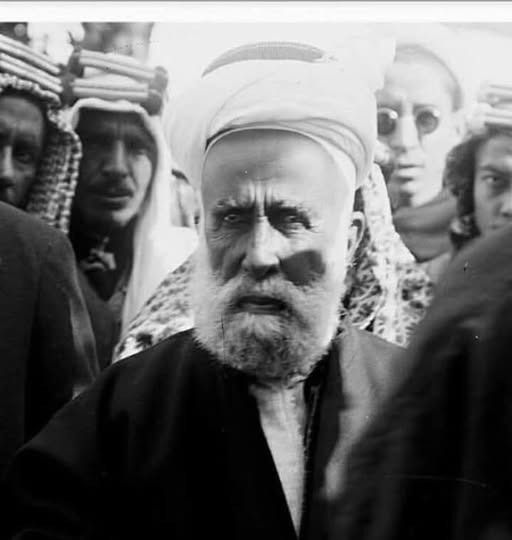
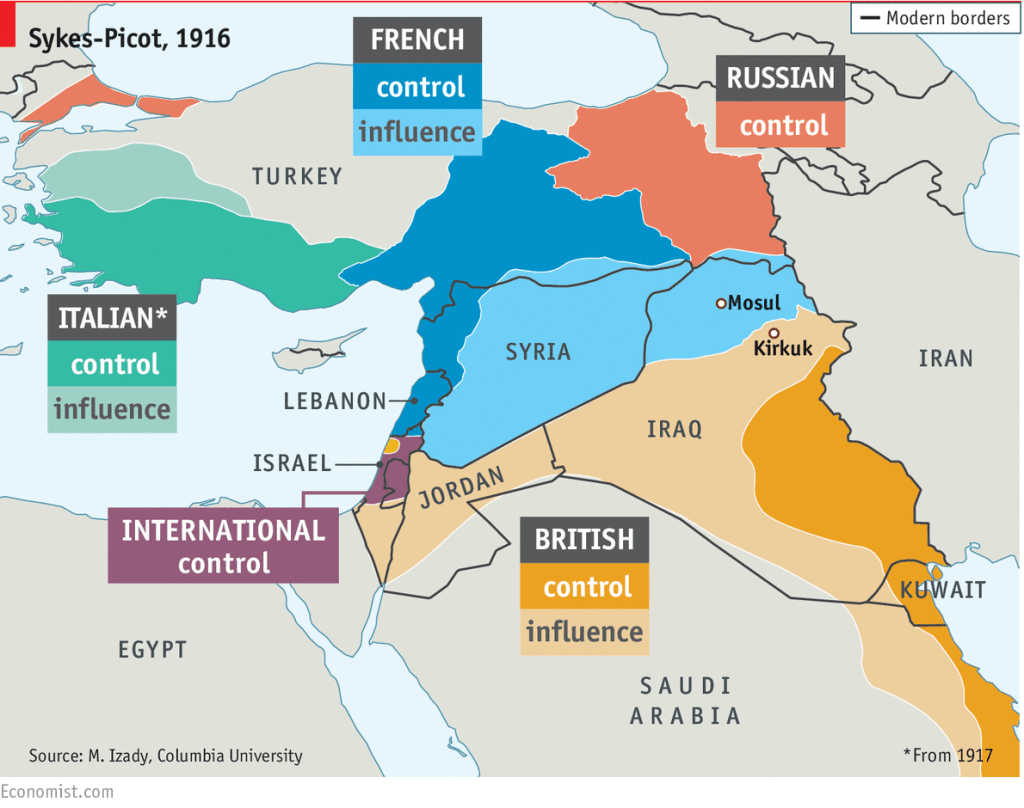
In late 1915, Britain and France began secret negotiations regarding the division of Ottoman territories in the event of an Allied victory in World War I.
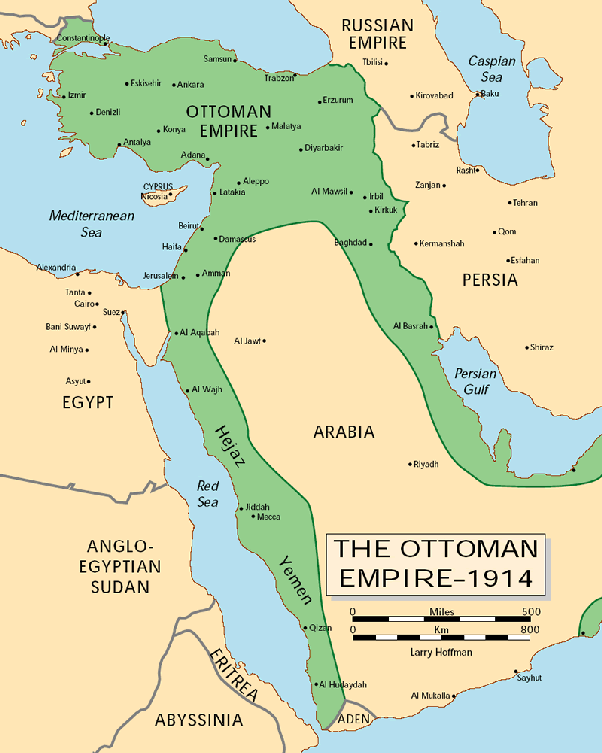
Shortly thereafter, Tsarist Russia joined the discussions, agreeing to the deal on the condition that it would gain control of Constantinople, the Bosporus Straits, and parts of Anatolia. In May 1916, the agreement was finalized, stipulating the division of the Levant and Iraq between Britain and France, with Palestine placed under international administration—a clear precursor to what would later be known as the Balfour Declaration.
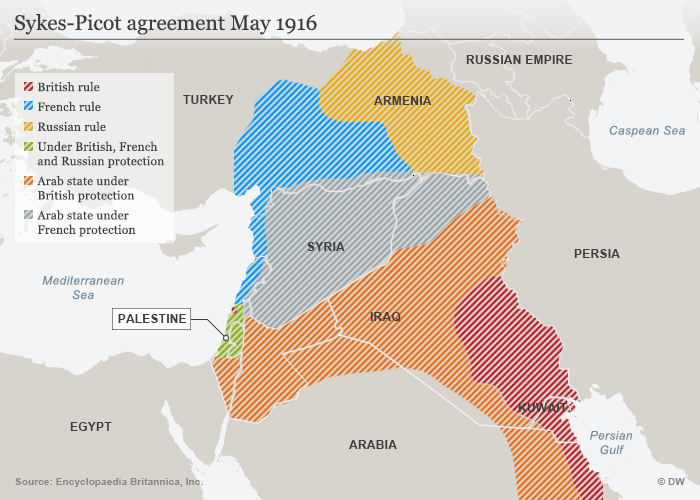
The Fall of Russia and Revelation of Secrets:
No one expected that events would take a dramatic turn. In 1917, the Bolshevik Revolution erupted, overthrowing the Russian Tsar and bringing the communists to power under the leadership of Vladimir Lenin. Upon assuming control, Soviet Foreign Minister Leon Trotsky examined the archives of the Tsarist Ministry of Foreign Affairs, where he discovered the text of the Sykes-Picot Agreement. To expose the colonial powers’ conspiracy against the colonized peoples, the Bolsheviks decided to publish the complete document.
On November 23, 1917, the Russian newspaper Pravda published the full text of the secret agreement, and it was soon picked up by European newspapers, including Britain’s Manchester Guardian. This caused severe embarrassment to the British and French governments in the eyes of their Arab allies, whom they had promised independence.
After the agreement was disclosed, its details quickly reached the Ottoman Empire through Germany and Austria-Hungary, allies of the Ottomans in the war. The Ottomans had long suspected a British-French conspiracy to divide their territories, but they lacked formal proof until the Bolsheviks exposed the secret documents.
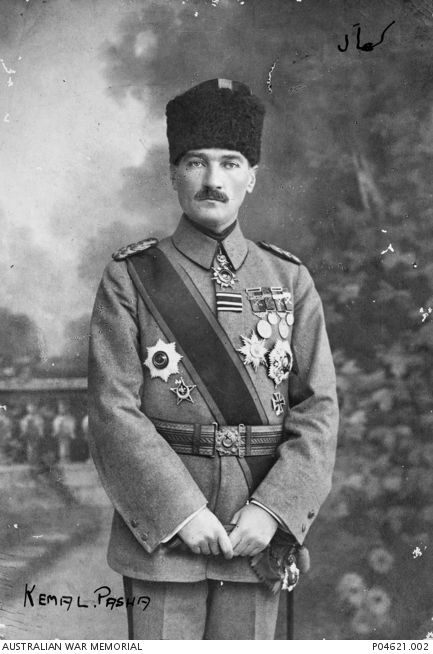
When Mustafa Kemal Pasha, commander of the Ottoman Fourth Army stationed in the Levant (Greater Syria), learned of these details, he decided to warn the Arabs one final time.
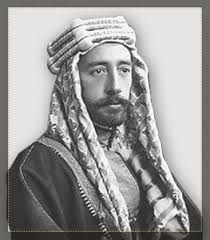
On November 26, 1917, he (Kemal Pasha) sent a message to Prince Faisal bin Al-Hussein (son of Sharif Hussein), detailing what the Russians had revealed in the global press, exposing the Sykes-Picot Agreement and everything he knew about the division of Palestine, Syria, and Iraq between Britain and France. He urged Faisal to reconsider his alliance with the British.
Among the contents of his message: “Today, we live in one of the most ambiguous and doubtful pages in the history of Islam. The Ottoman government entered the war determined to put an end to the humiliation of Islam, to live with honor and independence, or die with dignity. But what kind of independence can you envision for an Arab government that emerges after the internationalization of Palestine, the complete control of Syria by France, and the entirety of Iraq becoming part of British possessions?”
How did Sharif Hussein (of Hijaz) respond to the revelation of this conspiracy?
When news of the Sykes-Picot Agreement reached Sharif Hussein via Kemal Pasha, he initially did not believe it. He sent a message to the British High Commissioner in Egypt and Sudan, inquiring about the veracity of the information. The reply from Lord Balfour denied the existence of any such agreement, claiming it was merely Ottoman and Bolshevik propaganda designed to sow discord between the Arabs and their allies. Consequently, Sharif Hussein chose to trust the British with astonishing simplicity.
The historian Muhammad Ali Ahmad describes Sharif Hussein’s stance as follows: “Once again, as part of the recurring series of Sharif Hussein’s trust in the British, he stood believing them. These misleading justifications were convincing to him, and he continued to surrender to British policies and their deceit.”
Sharif Hussein’s official response to Kemal Pasha, conveyed through Prince Faisal, was as follows: “There is nothing between the Arabs and the Turks but the sword until the war ends, and they leave Arab lands.”
Despite British denials, subsequent events on the ground validated the Ottoman warnings. In December 1917, Jerusalem fell to the British, and after the war ended in 1918, the implementation of Sykes-Picot and the Balfour Declaration began.
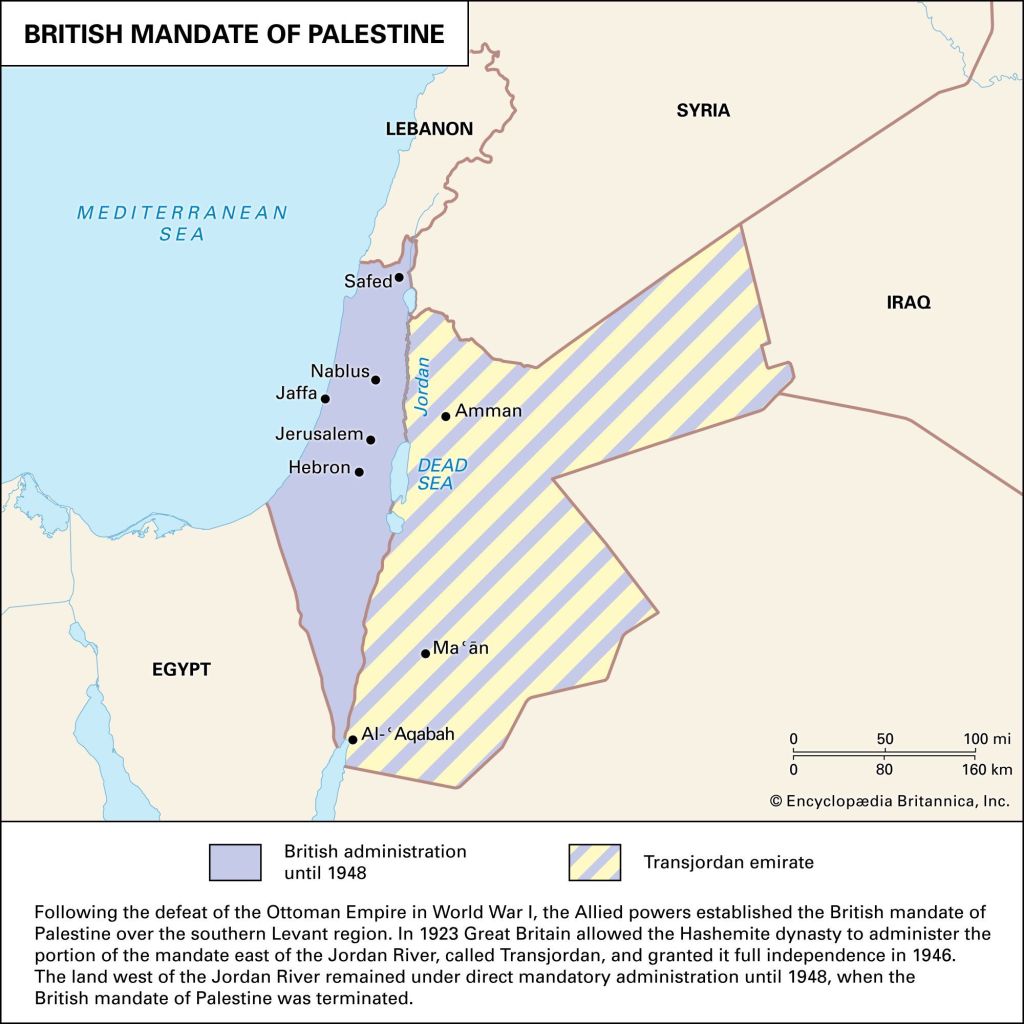
Palestine was placed under British mandate, Syria under French control, and Iraq in British hands. The Arabs realized, too late, that they had been deceived, that they were the fuel for a grand colonial conspiracy, and that the British were nothing but masterful deceivers, bound by no covenant.
As Shaikh Muhammad Al-Ghazali (Rahimahullah) aptly said: “It is not necessary to be a spy to serve your enemy… it is enough to be foolish!”
Note: This account is based on historical events but may contain some contested details among historians. The goal of presenting it is to draw attention to the lessons of history, not to ridicule or defame individuals. And Allah knows best.
(-Translated from the Arabic note on Twitter by Salman Ar-Roomi (Riyadh) @k_a_n_5 )
Translator’s note:
1- Mustafa Kemal Atatürk, rose to prominence as a military leader during the collapse of the Ottoman Empire. Initially, he invoked Islamic unity to rally support against foreign occupation, presenting himself as a defender of Muslim lands. However, after consolidating power and founding the Republic of Turkey in 1923, he abolished the Caliphate and implemented aggressive secular reforms. These included banning Islamic attire, replacing Arabic script with Latin, and suppressing religious institutions. His life after leadership became infamous for dismantling Islamic governance and traditions, and imposing a secular dictatorship that marginalized Islam in public life in modern Turkey. Mustafa Kemal Atatürk passed away on November 10, 1938, at the Dolmabahçe Palace in Istanbul.
2- Sharif Hussein bin Ali Al-Hashimi of Hijaz initially served as an Ottoman governor. He was appointed as the Ameer of Makkah in 1908, a position that made him the Ottoman-appointed ruler of the Hijaz region. Despite his role within the Ottoman administration, he later turned against the empire during World War I by leading the Arab Revolt in 1916, seeking to establish an independent Arab state with British support. An ‘Arab Caliphate’ spanning from Aleppo to Aden, free from Ottoman rule. Encouraged by British promises during World War I, he launched the Arab Revolt in 1916, with the aid of his sons, Abdullah, Faisal, and Ali. However, Hussein’s betrayal of the Ottomans for British support ultimately led to his own downfall. Britain and France reneged on their promises, dividing Arab territories under the Sykes-Picot Agreement. Abandoned by his allies, Hussein faced further devastation when the Al-Saud clan, lead by (King) Abdul Azeez bin Abdur Rahman Aal-Saud, promising strict religious revival and bolstered by British support, overran Hijaz and Najd between 1924 and 1925, finally establishing the ‘Kingdom of Saudi Arabia’ in 1932. Exiled and disillusioned, Hussein’s ambitions collapsed. His sons secured limited roles—Abdullah as King of Transjordan and Faisal as King of Iraq—but his legacy serves as a stark reminder of betrayal and the reshaping of the Arab world.
(Translated and notes added by Mohammed bin Thajammul Hussain Manna.)
The Hanafi Witr Is Correct, A Knowledge Based Discussion- by Ustadh Nabeel Nisar Shaikh (Umm-ul-Qura University, Makkah)
(Copied from the Shaikh’s Facebook page.)
Part-1 (Dated 16th March 2025)
There is much ado about the correct method of Witr these days, with some viral videos claiming that the Hanafi method of Witr is incorrect.
Take it from me – one who is greatly biased towards the Imams of Ahl al-Hadeeth, such as al-Shafi’ee Ahmed, Ishaaq, and al-Bukhari; and has an aversion for Hanafi Fiqh and its Imams:
The way Hanafis pray Witr is totally legit and valid. It is proven from the practice of several Sahabah and Tabi’een. Let me expound:
If you want to pray Witr consisting of three units, you have the following options, all of which are valid:
1. Pray 2 units and do Salam, and then pray one single unit. This is probably the best way to do it and most authentically reported from the Prophet ﷺ. Furthermore, the Prophet ﷺ instructed the Ummah to pray night prayer in units of two and then end with one single Rak’ah. [Agreed Upon]
2. Pray 3 in one go without any Tashahhud after the second Rak’ah. This is reported in a statement from ibn Abbas, and practice of several Tabi’een. There is nothing authentic that the Prophet ﷺ prayed 3 Witr like this. The Hadith cited from al-Darqutni and al-Hakim in this regard is Munkar, as graded by Imam Ahmed and others. But it can be derived from Qiyas upon the 5 Rak’ah Witr prayed by the Prophet ﷺ in one go without any Tashahhud in between [Muslim and others].
3. Pray it like Maghrib with Tashahhud after second Rak’ah. This is how Ibn Mas’ud (RadiAllahuAnhu) and some others among the Sahabah and Tabi’een prayed. It was from the disciples of ibn Mas’ud in Kufa that this method, most probably, trickled down into Hanafi Fiqh.
All these methods are legit and valid. One can debate about which is better, but to call any one of these incorrect is nothing but an outcome of shallow knowledge.
Similarly, Qunoot can be done after Rukoo’ and before. Both have been reported from the Sahabah and Tabi’een. If done before Rukoo’, one can do Takbeer at the start. This has been authentically reported from Umar (RadiAllahuAnhu) and others.
I don’t have the time to give citations and references. I will leave that for later.
وبالله التوفيق
PS: As for the Hadith, don’t pray Witr like Maghrib, then it is mistranslated, misunderstood, and partially quoted. The Hadith says, “Don’t pray Witr (only) three units, (otherwise) you’ll end up resembling Maghrib, rather pray five, or seven, or more.”
Those quoting the Hadith leave out the part “rather pray five or seven” which it makes it clear that is talking about the number of units, not how they should be prayed. The Hadith exhorts us not to limit ourselves to three units only in the night prayer, rather make it five or more. Not that it is obligatory, but strongly recommended.
This is also reported from Aisha; she said: “Don’t pray Witr as three isolated units, pray two or four units before it.” [Ibn Abi Shaybah]
There is a similar statement of Ibn Abbas, he said, “I dislike Witr to be three isolated units, rather one should pray five or seven”. [Ibn Abi Shaybah]
So no matter how you pray the three units, with or without Tashahhud, you will end up resembling Maghrib in the no. of units. So to avoid that, it is recommended that one prays at least two units (Nafl) before it, so the total night prayer becomes 5 or more. This matter doesn’t even arise in the case of Taraweeh, for you are already praying 11, 13, or 23.
Part-2 (Dated 19th March 2025)
My post about Witr ruffled some feathers, especially among the Ahl ul-Hadeeth circles in the Indo-Pak subcontinent. They had been taught that the way Hanafis pray Witr is incorrect.
It is not that I didn’t back up what I mentioned with evidence. I might not have mentioned the Hadith numbers, or quoted the texts in Arabic, but I did cite evidence, which any seeker of knowledge would have known where to find and look up.
But the problem is the laymen who think that they follow the Daleel, when the in fact just follow their scholars, and think that anything that goes against what their scholars have said must be wrong, because their scholars are “Ahl ul-Hadith”, and “Ahl ul-Hadith” are the rightly guided sect.
Yes, “Ahl ul Hadith” as a whole are the rightly guided sect, but that doesn’t mean that the Ahl ul-Hadith of a particular region are upon the truth in all matters of Fiqh. Weren’t Ibn ul Mubarak, al-Shafi’ee, Ahmed, Ishaaq, and al-Bukhari, all among the Ahl ul Hadith? Yet, they differed among themselves in many matters of Fiqh.
🌴🌴🌴
Anyways, my post was shared by a brother, who got accused by some youngsters (DIY Fuqahaa!) for forwarding something without Daleel! They most likely don’t even know what counts as Daleel, and how it works, and whether it is authentic or not, and how to properly understand it, yet they ask for Daleel – the audacity! Anyways, the brother asked me to write the evidences in detail. So here it is:
🌴🌴🌴
It is authentically proven that several Sahabah and Tabi’een would pray Witr with two Tashahhuds:
1. Ibn Mas’ud. He said:
«الوتر ثلاث كثلاث المغرب»
“Witr is three like the three of Maghrib prayer”
[Muwatta Muhammad. Hasan, no. 261, 262, and Ibn Abi Shaibah, no. 6881]
2. Anas b. Mailk:
عبد الرزاق، عن معمر، عن ثابت، عن أنس أنه: أوتر بثلاث مثل المغرب.
Anas prayed three like Maghrib.
[Abdur Razzaq, no. 4663, وإسناده كالشمس]
3. Abul ‘Aliyah (Rufay’ b. Mihran). He is one of the senior Tabi’een. He accepted Islam during the reign of Abi Bakr. He was asked about Witr, he replied:
اصنع فيه كما تصنع في المغرب
Pray it like you would pray Maghrib.
[Ibn Abi Shaibah, no. 7016; Al-Kuna by al-Doolabi 2/ 775]
In another narration, he was asked the same question by another younger Tabi’ee, to which he replied,
«عَلَّمَنَا أَصْحَابُ مُحَمَّدٍ صلى الله عليه وسلم أَوْ عَلَّمُونَا أَنَّ الْوِتْرَ مِثْلُ صَلَاةِ الْمَغْرِبِ، غَيْرَ أَنَّا نَقْرَأُ فِي الثَّالِثَةِ، فَهَذَا وِتْرُ اللَّيْلِ، وَهَذَا وِتْرُ النَّهَارِ
“They taught us” or he said “The companions of the Prophet taught us that Witr is like Maghrib prayer, except that we do Tilawah (recitation after Fatiha) in the third Rak’ah – this is the Witr of the night, and that is the Witr of the day.”
[Maʿani al-Athar 1/ 293, and the Isnad is Saheeh]
4. Khilas ibn ʿAmr – A Tabiʿee
He was asked about Witr, He replied, three units like Maghrib prayer.
[Ibn Abi Shaybah, no. 7016]
5. Disciples of Ibn Mas’ud and Ali:
عن شعبة عن أبي إسحاق قال: كان أصحاب علي وأصحاب عبد اللَّه لا يسلمون في ركعتي الوتر
Abu Ishaaq al-Sabee’ee said: The disciples of Ali and Ibn Mas’ud would not make Tasleem after the two units of Witr.
[Ibn Abi Shaybah, no. 7018]
This might not be explicit. But it implies the same, for he didn’t say, they would not sit after two units. Rather he said, they would not do Tasleem after two units, i.e. they would sit for Tashahhud but not do Tasleem.
Once it is established that that several Sahabah and Tabi’een have prayed Witr like Maghrib, this means it is a valid way of praying Witr.
And there is nothing authentic from the Messenger of Allah ﷺ forbidding from this method.
🌴🌴🌴
As for the Hadith in Mustadrak al-Hakim (1151), that the Messenger of Allah prayed three without sitting in between.
Imam Ahmed said, this Hadith is a mistake by the narrator. [Ibn Rajab, Fathul Bari, 9/ 104]. Ibn Rajab clarifies that Imam Ahmed said that because the lengthy authentic narration through this Isnad (Qatadah ʿan Zurarah, ʿan Saʿd b. Hisham ʿan Aisha), doesn’t have any mention of three Rakʿat Witr. Abān narrated it from Qatadah in a very shortened and abridged manner and made a mistake in its wording, opposing all other narrators from Qatadah. The correct wording of this Hadith is in Saheeh Muslim (and in it there is no mention of three Rakʿat Witr, only seven and nine):
https://sunnah.com/muslim:746a
(Sahih Muslim 746 a, quite a lengthy narration.)
Subhanallah, I just found out that even Shaykh al-Albani declared this narration as being Shaadh and Maʿlool, because it goes against the full narration narrated by Muslim and others [Irwa al-Ghaleel, no. 412].
🌴🌴🌴
As for the Hadith, “Don’t pray Maghrib in a way that resembles Maghrib” then there are two issues:
FIRST: There is Ikhtelaf in its Isnad concerning whether it is Mawqoof (i.e. Abu Hurairah’s own statement) or Marfooʿ (statement of the Prophet). The author of “Fadhl ar-Raheem al-Wadood Takhrij Sunan Abi Dawood” believes that these are the words of Abu Hurairah, and not the Prophet ﷺ. In such a case, it is his own opinion, and there is nothing to make it preponderant over the practice of Ibn Mas’ud, Anas, and others.
Nevertheless, we will assume it is Marfooʿ for all practical purposes.
But what does the Hadith mean? This is discussed as follows:
SECOND: This Hadith has been related with different wordings, but all have two contrasting imperative sentences, 1) “don’t pray three” and 2) “pray five or seven”.
Some narrations of this Hadith translate as “don’t pray three like Maghrib”. This, if taken alone, could be understood to mean that you can pray three but, in a manner different from Maghrib. But if you don’t read the next part, “… but rather pray five or seven”, it becomes clear that it is now about how you pray, but about the number of units being prayed.
This is corroborated by other narrations of this Hadith which are explicit in their meaning, they read:
لا توتروا بثلاث تشبَّهوا بالمغرب، ولكن أوتروا بخمس أو بسبع
This translates as, “Don’t pray Witr three units; (otherwise) you will be resembling Maghrib, but rather pray five or seven.”
Here “Tashabbahū bil Maghrib” is Majzoom, on the lines of “La Tadnu Min al-Asadi Ya’kulka” (don’t come close to the lion; otherwise he will eat you). And this construction was allowed by al-Kisaa’ee and the Kufans, and there is another example of this in al-Bukhari and Muslim:
لا تُشْرِفْ يُصِبْكَ سَهْمٌ مِنْ سِهامِ الْقَوْمِ،
“Do not raise (your head), (otherwise) an arrow from the enemy’s arrows will strike you”.
The point here is that this wording is explicit that if you pray three (no matter how) you will be resembling Maghrib, so pray more than three.
This is further corroborated by the statements of Aisha and Ibn Abbas:
Aisha says:
لا توتر بثلاثٍ بتراء صلّ قبلها ركعتين أو أربعًا
“Don’t pray Witr as three isolated units, rather pray before it two or four units.” [Ibn Abi Shaybah, no. 7005]
And ibn Abbas says:
إني لأكره أن يكون ثلاث بتر ولكن سبعًا أو خمسًا
“I dislike Witr to be three isolated units, rather one should pray five or seven”. [Ibn Abi Shaybah, no. 6997]
In short, the Hadith of Abu Hurayrah means that if you pray Witr as three isolated units, without any Qiyam al-Lail or Nawafil before it, you will end up resembling Maghrib in the total no. of units. So, to avoid that, it is recommended that one prays two or more units (Nafl) before it, so the total night prayer becomes 5 or more.
🌴🌴🌴
Since, all of what I mentioned will go over the heads of the Mutaʿassib “Ahl ul Hadeeth” of the sub-continent, and they will just say, ‘He is Hanbali!’, ‘He is influenced by Shaykh al-Shuwaiʿir!’, ‘He is not Salafi!’ blah, blah, blah, I would like to end by quoting Shaykh al-Islam Ibn Taymiyyah, whom I believe was Salafi, and not influenced by Shaykh al-Shuwaiʿir!
He (Ibn Taymiyyah Rahimahullah) says:
“There are three opinions concerning Witr:
One: That one should pray three continuous units like Maghrib. This is the opinion of the people of Iraq (e.g. Abu Hanifah).
Two: That one should pray it as a single unit, separate from the prayer before it. This is the opinion of the people of Hejaz (e.g. Malik).
Three: That both ways are permissible, as is apparent from the Madhhab of Shafi’ee and Ahmed. And this is the correct opinion.”
[Majmooʿ al-Fatawa (22/ 268)]
وصلى الله على محمد وعلى آله وصحبه وسلّم تسلميا كثيرا
والحمد لله رب العالمين

Will homosexuality be permitted in Paradise?
Fatwa from islamweb.net titled- ‘The people of Paradise are protected from committing Khabaith (vile acts).’
Question: You say that sodomy (homosexuality) is forbidden in Paradise without any established evidence from the Book of Allah (Quran) and the Pure Prophetic Sunnah. However, Paradise is the abode of bliss and eternal happiness, and Allah may bestow upon its inhabitants the gift of sodomy, since nothing has been revealed to contradict this. Allah is Almighty and Generous, so how can you attribute to Allah what you do not know?
And can it not be that some desires are not fulfilled for the people of the lowest rank in Paradise, yet are fulfilled for those above them? And do the martyrs of the Hereafter inherit the highest Paradise? Forgive me for the prolongation, but I am a person who wants to know his religion and gain knowledge. These are some questions that are on my mind. I hope you will not ignore them and will answer with precision. Thank you.
Answer: The people of knowledge have mentioned that the people of Paradise are purified from evil morals. So, what has newly appeared among people, which Satan has made appealing to them, and which is rejected by sound human nature and refined tastes, such as engaging in anal intercourse, will not exist among the people of Paradise. They will be self-sufficient with the means of pleasure that Allah has provided for them.
In Fathul-Qadeer by Kamal ibn Al-Humam (5/263): ” ‘Will sodomy occur in Paradise?’ That is, is it permissible for it to exist there? It has been said that if its prohibition is based on both reason and revelation, it will not occur. However, if its prohibition is based solely on revelation, it is permissible for it to occur. The correct opinion is that it will not occur in Paradise, for Allah, the Exalted, has negated and deemed it reprehensible, saying: ‘{There has not preceded you (the people of Lut) in this (action of homosexuality) anyone from the worlds}’ (Al-A’raf: 80). He also referred to it as ‘evil’ (Khabeethah), saying: ‘{They were performing evil deeds}’ (Al-Anbiya’: 74). Paradise is sanctified from such things.”
In Majma’ Al-Anhaar, a commentary on Multaqa Al-Abhur (1/596): “And in At-Tanwir: Sodomy will not occur in Paradise, according to the correct opinion. This is because the people of Paradise will not have an anus, as they will all be transformed beforehand. This is because there is no need in Paradise to expel waste products (from the body).“
This is in response to your first question. We welcome your other questions, so please send them to us in a separate message. As we previously mentioned, it is requested that you send only one question at a time in the designated space. Messages containing multiple questions will be answered with a response to the first question, and the remaining questions will be ignored. And Allah knows best.
End of the answer. (Islamweb.net, 290428)
(Translated by Mohammed bin Thajammul Hussain Manna.)
 Saheehus-Seerah