Explanation of The Hadith ‘I recited it (Surah Ar-Rahman) to the Jinns… and they had a better response to it than you did.’

Muhammad bin Al Munkadir narrated that: Jabir [may Allah be pleased with him] said: “The Messenger of Allah (Salallahu Alaihi Wa Sallam) came out to his Companions, and recited Surat Ar-Rahman from its beginning to its end for them, and they were silent. So he said: ‘I recited it to the Jinns on the ‘Night of the Jinns,’ and they had a better response to it than you did. Each time I came to Allah’s saying: ‘Which of your Lords favor do you deny.’ They said: “We do not deny any of Your favors our Lord! And Yours is praise.” (Jaami’ At-Tirmidhi 3291, Hasan (Al-Albani))

[Explanation from dorar.net]

The Prophet’s (peace and blessings be upon him) Dawah (invitation to Islam) and message were universal for both the jinn and the mankind. A group of the jinn believed in the Prophet (peace and blessings be upon him), and he recited the Qur’an to them, as mentioned by Allah, the Exalted.

In this Hadith, Jabir ibn Abdullah (may Allah be pleased with both of them) narrates: “The Messenger of Allah (peace and blessings be upon him) came out to his companions and recited to them,” meaning the Prophet (peace and blessings be upon him) recited to his companions, “Surah Ar-Rahman” in its entirety.

“They remained silent,” meaning the Companions (Sahabah) listened attentively and did not respond in any manner. Then, “the Messenger of Allah (peace and blessings be upon him) said” to his companions to whom he had recited the surah, “I recited it,” meaning Surah Ar-Rahman, “to the jinns” who had come to the Prophet (peace and blessings be upon him) as Muslims, “on the Night of the Jinn,” meaning the night of their meeting with the Prophet (peace and blessings be upon him).

“They were,” i.e. referring to the jinn, “better in response,” meaning they responded more appropriately, “than you,” meaning better than the Companions of the Prophet (peace and blessings be upon him).

“During that night, whenever I reached His statement,” meaning whenever I recited the words of Allah, the Almighty: {So which of the favors of your Lord would you deny?} [Ar-Rahman: 13], meaning which of Allah’s religious and worldly blessings do you deny, O assembly of jinn and humans? Do you reject His favors by failing to show gratitude, denying His messengers, and disobeying His commands? This indicates that there are deniers among both humans and jinn.

“They said,” referring to the jinn in response to the Prophet (peace and blessings be upon him) upon hearing these verses, “We do not deny any of Your blessings, our Lord,”- meaning we do not reject any of Your apparent or hidden blessings, whether we are aware of them or not, and You, our Lord, are more knowledgeable of them than we are.

Their verbal affirmation of not denying Allah’s blessings was a stronger indication of their acceptance and response to what the Messenger (peace and blessings be upon him) conveyed compared to the silence of the Companions collectively. “To You belongs all praise,” meaning You deserve gratitude for all these blessings.

The blessings of Allah upon His servants are numerous and cannot be fully counted or enumerated. The greatest of these blessings are the blessing of Islam, the blessing of faith, and the blessing of the Qur’an. Therefore, a servant should always give thanks and praise to Allah for these blessings morning and evening, as He alone is the One who bestows them upon creation.

This Hadith establishes the companionship of the jinn with the Prophet (peace and blessings be upon him) just as it is established for mankind.

Additionally, it highlights that a servant must praise and thank Allah for His blessings. End of the explanation.

(Translators note: The jinn said- Lā bi-shay’in min ni‘amika rabbanā nukadhdhibu fa-laka al-ḥamdu. “We do not deny any of Your blessings, our Lord, so to You belongs all praise.”)

(Translated by Mohammed bin Thajammul Hussain Manna.)

‘The presence of evils does not necessitate rebellion against the ruler…’- Shaikh Muqbil bin Hadi Al-Wadi’i (Rahimahullah)

Shaikh Muqbil bin Hadi Al-Wadi’i, may Allah have mercy on him, stated: 

‘The presence of evils does not necessitate rebellion against the ruler.’

Question: 
In some Islamic countries, there are well-known places for prostitution and alcohol, and the rulers have not acted to remove these evils. Is this sufficient justification for rebelling against them on the grounds that they have not eliminated these evils? 

Answer: 
As for the issue of rebelling against them, as long as they are Muslims, one must not rise against them unless you see clear disbelief for which you have proof from Allah, (as stated in the Hadith) “Unless you see clear disbelief for which you have proof from Allah.” 

As for denouncing them (for the evils), there is no harm in doing so, provided that Muslims are informed that you are not calling for a revolution or coups, but rather advocating for the rectification of this wrongdoing. Instead of focusing on the rulers, the effort should be directed toward those corrupt individuals who have spread corruption in society. This is the duty. If they see a wine seller and know that the government does not enforce justice, and they are safe from causing greater discord, then there is no harm in changing the evil. Likewise, if they see an adulterous woman or man, or a house prepared for corruption, the same applies. However, the matter requires verification. 

As for publicly exposing them, if the intention is to incite people to rebel against them, then it is not permissible. But if the intention is to encourage people to denounce the perpetrators of evil, then it is a good matter: 

(As Allah stated in The Quran:) “Cursed were those who disbelieved among the Children of Israel by the tongue of David and Jesus, son of Mary. That was because they disobeyed and habitually transgressed. They did not prevent one another from the wrongdoing they committed. How wretched was that which they were doing.” 

The Messenger of Allah ﷺ said: “Whoever among you sees an evil, let him change it with his hand; if he cannot, then with his tongue; and if he cannot, then with his heart, and that is the weakest of faith.” 

Ah, ah! There are people who, upon hearing someone denounce wrongdoing, say: “You are inciting people to rise against the government,” or “You are a Kharijite.” Do not be deceived, nor deceive others. The one who calls people to revolutions and coups is the one who invites discord, whereas the one who warns against wrongdoing and urges its removal is fulfilling his duty. If the evil is not abandoned, then one may go out with three or four individuals who can confront the perpetrator of the evil, provided that this does not lead to a greater evil. And Allah is the One whose help is sought. 

From the recording: Questions of Bani Qais in Hashid. 

A Tribute to Moulana Ghulam Mohammed Vastanvi (Rahimahullah) 

A Tribute to Moulana Ghulam Mohammed Vastanvi (Rahimahullah) 

People die, but their legacy lives. Moulana Ghulam Mohammed Vastanvi (Rahimahullah) was a distinguished Islamic scholar, visionary educationist, and a tireless servant of the Muslim community. His life was dedicated to the propagation of Islamic knowledge, the integration of modern education within religious institutions, and the upliftment of society through various educational and welfare initiatives. 

Early Life and Education 
Born on June 1, 1950, in Kosadi, Surat district, Gujarat, Moulana Vastanvi embarked on his journey of Islamic scholarship at a young age. He memorized the Holy Quran early in life and pursued further studies at renowned Islamic institutions, including Madrasa Quwat-ul-Islam in Kosadi, Madrasa Shams-ul-Uloom in Baroda, and Madrasa Falah-e-Darain in Turkesar, Gujarat. His academic excellence led him to Mazahir Uloom in Saharanpur, where he specialized in Hadith studies under eminent scholars. 

Contributions to Islamic Education and Social Welfare 
Moulana Vastanvi was the founder and rector of Jamia Islamia Ishaatul Uloom Akkalkuwa, an institution that became a beacon of Islamic and modern education in India. His contributions to education and community development were monumental, as he established: 

– Over 5000 masjids.
– 2500 makatibs, ensuring foundational Islamic education for young learners. 
– 700 madrasas, dedicated to advanced Islamic scholarship and Quranic studies. 
– 78 schools, integrating modern education with Islamic values. 
– 17 junior colleges, fostering higher education opportunities for Muslim students. 
– Multiple higher education institutions, including polytechnic and engineering colleges, teacher training institutes, and a Unani medical college. 
– India’s first minority-run medical college, the Indian Institute of Medical Science and Research (IIMS&R), near Aurangabad, Maharashtra, providing aspiring Muslim medical professionals with opportunities to serve their communities while maintaining their religious values. 

These institutions have collectively educated over 2 lakh students across 19 states, leaving an indelible mark on the landscape of Islamic and modern education in India. 

Legacy and Leadership 
Moulana Vastanvi briefly served as the Vice-Chancellor of Darul Uloom Deoband in 2011, advocating for educational modernization and broader community engagement. Despite facing challenges, his commitment to progress remained unwavering. 

His passing on May 4, 2025, marked the end of an era, but his legacy continues through his son, Huzaifa Vastanvi. Huzaifa Vastanvi has taken up the mantle of leadership, ensuring that his father’s vision for Islamic education, social welfare, and community development remains alive. He has been instrumental in expanding educational initiatives, refining curricula, and fostering intellectual discourse that aligns with both traditional Islamic teachings and contemporary advancements. 

Conclusion 
Moulana Ghulam Mohammed Vastanvi (Rahimahullah) was a pioneer in integrating Islamic scholarship with modern education, leaving an indelible mark on the Muslim community. His contributions continue to inspire generations, and through the efforts of his son, Huzaifa Vastanvi, his legacy remains a guiding light for those committed to knowledge, service, and faith.  Maulana Huzaifa Vastanvi, the son of Moulana Ghulam Mohammed Vastanvi, was invited by King Salman (Hafidhahullah) of Saudi Arabia for Hajj in 2023, acknowledging his contributions to Islamic education and leadership.

May Allah forgive Moulana Ghulam Mohammed Vastanvi and overlook his shortcomings. May Allah grant him the highest ranks in Jannah and bless his successors with the strength to carry forward his noble mission. 

(Penned by Mohammed bin Thajammul Hussain Manna.)

***

Imam Adh – Dhahabi said about Imam Ibn Hazm Adh-Dhahiri:


“I personally sympathize with Abū Muhammad (Ibn Hazm) because of his love for al-hadīth al-şahih (i. e. sound traditions) and for his knowledge of them. And if I do not agree with him on many points concerning his views on al-rijāl wa ‘l-ilal (i.e. narrators, and underlying causes behind texts), and other ugly things with respect to al-uşūl wa ‘l-furū’ (i.e. the roots an branches of the law), and while I admit that he is mistaken about more than one question, I do not consider him an unbeliever and neither misguided, but I wish him and all Muslims forgiveness and indulgence, and I humble myself before his vast intelligence and wide erudition.”

Ibn ‘Aqīl al-Dhāhirī, Ibn Hazm Khilal Alf ‘Âm 2/191. (Source of quote and translation: @ilmtest on Telegram.)

This Is Not From ‘Adl (Justice), O ‘Aadilah (Advice from Sheikh Abdul Muhsin Al-‘Abbad Al-Badr to the Daughter of King Abdullah of Saudi Arabia)

This Is Not From ‘Adl (Justice), O ‘Aadilah (An Advice from Sheikh Abdul Muhsin Al-‘Abbad Al-Badr to the Daughter of King Abdullah of Saudi Arabia)

In the Name of Allah, the Most Gracious, the Most Merciful. Praise be to Allah, the Lord of the Worlds. May peace and blessings be upon our Prophet Muhammad, his family, and his companions.


A few days ago, during the last ten nights of the previous month, a forum was held in Jeddah under the name Khadijah bint Khuwaylid Forum, planned by the Khadijah bint Khuwaylid Center, which is affiliated with the Jeddah Chamber of Commerce and Industry. This forum displayed a blatant disregard for the ethical values brought by Islam, which women in the Land of the Two Holy Mosques have long preserved. However, corrupt influences have recently gained momentum, and a fervent secularist movement has emerged in the past few years advocating for women’s abandonment of modesty and the mixing of genders, in imitation of Western women. I have previously written about the dangers posed by this forum and its implications on women’s morality in this country. I authored an article titled: It Is Not Fitting to Use the Name “Khadijah bint Khuwaylid” as a Banner for Women’s Indecency, published on 30/12/1431 AH. Additionally, I wrote another article a week prior titled: Women in the Land of the Two Holy Mosques Between True Supporters and False Claimants of Their Rights.


The newspaper Okaz published a report on 30/12/1431 AH under the headline:
“A Saudi Women’s Delegation Travels to Paris to Promote Legal and Rights-Based Culture”
The report states: “A Saudi women’s delegation has departed for the French capital, Paris, to visit a number of institutions and government ministries in France at the invitation of the French Embassy in Riyadh. The program aims to enhance Saudi women’s knowledge of legal and rights-related matters in various fields, including health, commerce, business, law, judiciary, social affairs, women’s issues, education, culture, and heritage.”!!


Furthermore, the executive director overseeing the preparation and implementation of the program explained: “The itinerary includes visits to several ministries, as well as social institutions concerned with the rights of children, families, and women. The delegation will also engage with the French Parliament, Sorbonne University, the French Supreme Court, the French Chamber of Commerce, and the Paris Bar Association.”!! The report further states: “The program enjoys the sponsorship and support of Her Royal Highness Princess ‘Aadilah bint Abdullah bin Abdul Azeez, who supervises its implementation. She has selected a group of distinguished women known for their expertise and contributions in various social, humanitarian, rights-based, health, and educational sectors. The goal is to develop their legal expertise within their respective fields, enabling them to improve their professional performance and enhance their services to society following their participation in this program, which will be held annually. The program will feature participation from Dr. Nihad Al-Jashi, Dr. Hessa Ash-Sheikh, Dr. Aisha Natto, and Dr. Ilham Hasanein in a discussion panel at the United Nations Educational, Scientific, and Cultural Organization (UNESCO).”!!


I say in response to this sorrowful and distressing news:


1- Among the cunning tactics of the secularists seeking to remove restrictions on women in the land of the Two Holy Mosques is their relentless effort and fervent activity over the past few years in all matters that lead to unveiling and intermingling of women with men, ultimately steering them toward resembling Western women, who have been stripped of virtue and immersed in depravity. At the forefront of these secularists are those responsible for the Jeddah Chamber of Commerce, who established a center aimed at corrupting the morals of women in this land. From this center emerged a forum, where Princess ‘Aadilah bint Abdullah, daughter of the Custodian of the Two Holy Mosques, was appointed as the head of its council and the patron of the forum. Following this, the news article reported the departure of a Saudi women’s delegation to Paris at the invitation of the French embassy in Riyadh, with a program supported and sponsored by Princess ‘Aadilah.

These secularists, in their eagerness to remove restrictions on women, have sought strength by leveraging Princess ‘Aadilah’s patronage to further their objectives, ultimately leading her towards disobedience to her father and making her a cause for increasing his adversaries on the Day of Judgment. The gravest form of filial disobedience is that which results in harm to religion, for every woman who departs from Islamic principles in the era of the Custodian of the Two Holy Mosques—or thereafter—due to her involvement and the secularists using her as a figurehead, she will be held accountable for it on the Day of Judgment.


The Prophet (peace and blessings be upon him) said: “No soul is killed unjustly except that a portion of the responsibility falls upon the first son of Adam, as he was the first to establish murder.” (Narrated by Al-Bukhari 3335 and Muslim 4379).


The removal of moral restrictions on women in the land of the Two Holy Mosques due to the actions of secularists constitutes a form of murder of their Akhlaq (Islamic morals).


2- The objectives outlined in the report regarding the program for Saudi women’s visit to the French capital—claiming to enhance their legal and rights-based awareness in fields such as health, commerce, business, law, judiciary, social affairs, women’s issues, education, culture, and heritage—reflect the utmost deficiency in both means and purpose. This journey constitutes a sinful excursion, wherein they choose darkness after light, deviation after guidance, and exchange what is inferior for what is superior, akin to those (from the Bani Israel) who replaced Manna and Salwa (quails) with onions and leeks. Allah says: “Those are the ones who have exchanged guidance for error. Their trade has brought no profit, and they were not guided.” (Qur’an 2:16)

It is unreasonable for Muslims to seek truth within French or other secular laws, as truth is exclusively found in what has been established by Islamic Sharia. The distinction between divine law and man-made laws is as vast as the difference between the Creator and the created. Allah, the Almighty, states: “Is it then the judgment of Jahiliyah (days of ignorance) they desire? But who is better than Allah in judgment for a people who have certainty?” (Qur’an 5:50)

Whoever seeks guidance outside the Qur’an and Sunnah will be led astray. Allah, the Almighty, has said: “And who is more astray than one who follows his desires without guidance from Allah?” (Qur’an 28:50)
“Say: Indeed, Allah’s guidance is the only guidance.” (Qur’an 6:71)
“What is there after the truth except falsehood?” (Qur’an 10:32)
“Then We have set you upon a clear way of faith; so follow it, and do not follow the desires of those who do not know. Surely, they will not benefit you against Allah in anything. Indeed, the wrongdoers are allies of one another, whereas Allah is the ally of the righteous.” (Qur’an 45:18-19)

The removal of moral restrictions on women in the Land of the Two Holy Mosques, despite its appeal to Western societies, will never suffice them. Their satisfaction lies in only one outcome—complete submission to their ideology.

As Allah, the Almighty, states: “And never will the Jews or Christians be pleased with you until you follow their religion. Say: Indeed, the guidance of Allah is the only true guidance. And if you were to follow their desires after what has come to you of knowledge, you would have against Allah no protector nor helper.” (Qur’an 2:120)


3- O daughter of the Custodian of the Two Holy Mosques! Your father named you ‘Aadilah—so be just, in order for there to be harmony between the name and its meaning. It is not from Al-‘Adl (justice) for you to become an effortless prize for secularists, who wield your name to further their agendas. Every action they have attributed to you contradicts the fundamental elements that strengthen this great and blessed nation, founded by King Abdul Azeez—may Allah have mercy on him.


I have previously authored an article titled: “We Love the Continued Honor of Our Saudi Nation and Despise the Secularists Who Seek Its Weakening Through Deception”, published on 20/8/1431 AH. Never have we heard that any of your siblings brought such joy to the secularists as you have. So be like them, and do not deviate from their path. May Allah guide and rectify your affairs. If you do not, then the best course of action for you and others is to obtain from your father a decisive word—one that leaves you with no words thereafter. Fear Allah concerning yourself, your father, his nation, and his people, O daughter of the Custodian of the Two Holy Mosques!!


4- The Saudi state, founded by King Abdul Azeez—may Allah have mercy on him—more than a hundred years ago, is a continuation of the Saudi state originally established by Imam Muhammad bin Saud—may Allah have mercy on him—in the mid-13th century Hijri, with the guidance and support of Imam Muhammad bin Abdul Wahhab—may Allah have mercy on him. This state was not founded, nor has it endured and been granted stability, except through Allah’s favor, by implementing Islamic law, supporting the religion, preserving Islamic morals, and upholding the principle of enjoining good and forbidding evil.


I previously authored a treatise titled: “Enjoining Good and Forbidding Evil: One of the Key Reasons for the Establishment and Continuation of the Saudi State,” which was published in the year 1430 AH.
Allah, the Almighty, says: “O you who have believed, if you support Allah, He will support you and make your foothold firm.” (Qur’an 47:7)
“And surely Allah will aid those who aid His cause. Indeed, Allah is All-Powerful, Almighty.” (Qur’an 22:40) The Prophet (peace and blessings be upon him) said: “Safeguard Allah’s Rights, and He will safeguard you.” (Narrated by At-Tirmidhi 2516, classified as Hasan Sahih).


5- Women in this country have long preserved modesty, maintained hijab, and refrained from intermingling with men—just as Muslim women have done throughout various historical eras—during the reign of King Abdul Azeez and the subsequent reigns of his sons: Saud, Faisal, Khalid, and then Fahd, who held authority for twenty-four years. King Fahd issued several directives prohibiting the employment of women in roles involving interaction with men. The latest directive—based on what I have learned—was issued on 5/10/1421 AH, with copies sent to every ministry, governmental entity, or public institution for enforcement. I cited its text in my article: “Women in the Land of the Two Holy Mosques Between True Supporters and False Claimants of Their Rights.”

After this, women began abandoning traditional modesty by revealing their faces and intermingling with men, driven by the efforts and activities of secularists in Jeddah and other areas. This ultimately led to the ethical disaster represented by their forum in Jeddah, which was falsely named “The Khadijah bint Khuwaylid Forum.” A more appropriate name for it would have been “The Huda Shaarawi Forum!,” after the first Muslim woman in Egypt known for publicly unveiling her face and rebelling against the hijab.


And I ask Allah, the Almighty, to grant the Custodian of the Two Holy Mosques healing and well-being, to return him from his medical journey in good health, and to enable him to express gratitude for the blessing of recovery and wellness by hastening to extinguish the tribulation of women’s moral decline that has occurred during his reign due to the schemes of the deceitful secularists and the affluent.


O Allah, whoever has plotted against this country—its government and its people—then plot against him, for You are the best of plotters. And whoever has schemed against it, turn his scheming against himself and preoccupy him with his own affairs, diverting him from corrupting the land after its righteousness.


O Allah, whoever from among them is close to the Custodian of the Two Holy Mosques yet persists in wrongdoing, does not offer him sincere advice, and obstructs the advice of those who seek to guide him—then deprive him of well-being and burden him with his own afflictions, so that he may cease harming the leader and his people. And recompense those who persist in their deception with what they deserve.


O Allah, we have nothing but supplication and counsel. We have prayed to You, so accept our supplication. We have offered sincere advice to our leader, so guide him to heed the counsel of every righteous advisor who calls him to paradise, and to beware of the deceit of every schemer who invites him to the fire. Verily, You have power over all things.


I urge every sincere individual who cares for the Saudi state, its people, and the modesty of its women—preserving their dignity and safeguarding them from unveiling, adornment, and intermingling with men—to supplicate with this prayer and others like it. Perhaps Allah will accept their supplications, grant relief to the nation, remove this affliction, and eradicate the corrupters.
May Allah’s peace, blessings, and mercy be upon our Prophet Muhammad, his family, and his companions.

Abdul Muhsin bin Hamd Al-Abbad Al-Badr 6/1/1432 AH.
Source

(Translated by Mohammed bin Thajammul Hussain Manna.)
Is it permissible to boycott Hajj and Umrah because the Two Holy Mosques are under the rule of the Aal-Saud?

Alhamdulillah was Salatu was Salamu Ala Rasoolillah Amma Ba’ad.

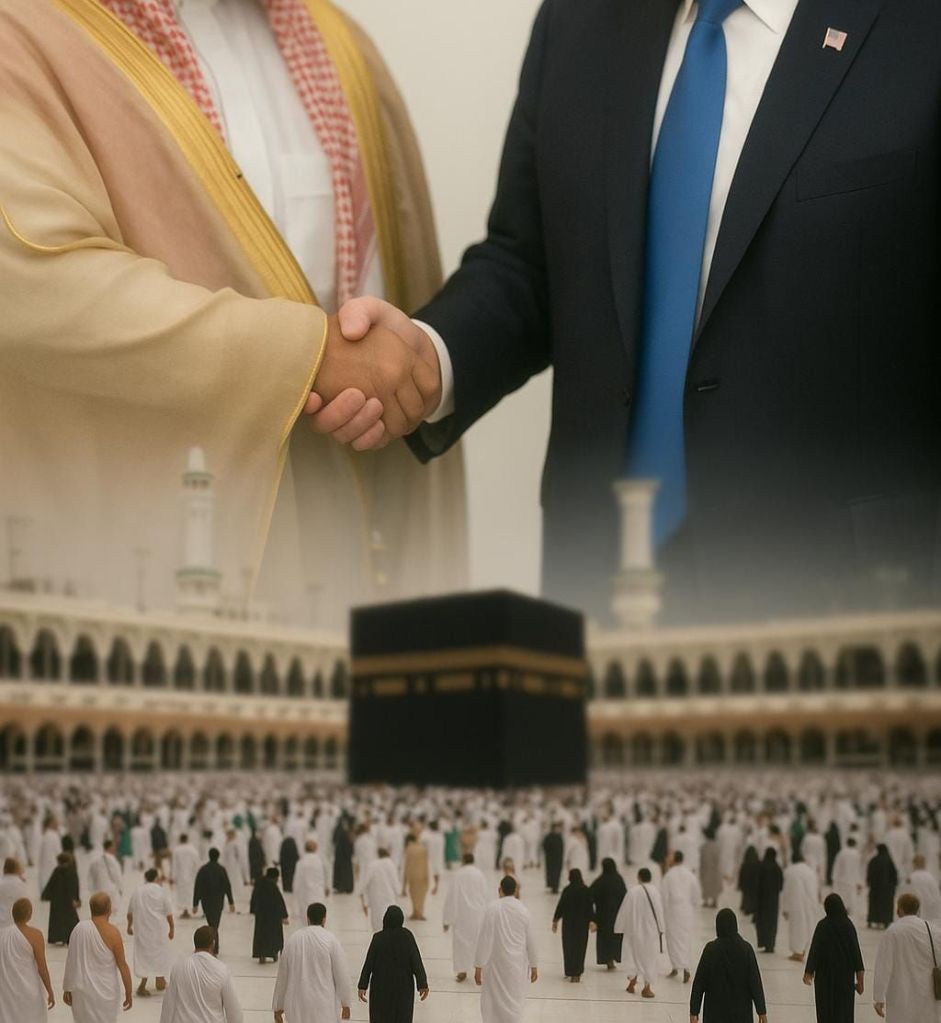
A question was raised regarding abstaining from Hajj and Umrah as long as the Two Holy Sanctuaries remain under the rule of Al Saud, given that the profits are directed to Trump. In response to this, we say:

I have heard some encouragement regarding this matter from certain brothers, but there is extensive consideration to be given from both the juridical and rational perspectives.

From a juridical perspective, Hajj and Umrah fall between obligatory and recommended acts, unlike the purchase of goods and similar transactions, which generally fall under permissible matters. The distinction is significant, as one should not abandon what has been ordained (made Wajib) or encouraged (made Mustahab) by Islamic teachings merely because an opposing entity may benefit from the consequences of performing these acts.

Hajj and Umrah remain legitimate acts of worship even if the Two Holy Sanctuaries are under the current rulership. The Prophet Muhammad (peace and blessings be upon him) and his companions performed Umrah while the Sacred Mosque was under the control of the original disbelievers. This was evident during the Treaty of Hudaybiyyah, where they were initially prevented from entering while Quraysh was in a state of war. Later, following the treaty, they performed Umrah, which serves as explicit evidence regarding this matter. There is no doubt that the disbelievers of Quraysh financially benefited from the expenditures made during Umrat al-Qadha (the compensatory Umrah performed after the treaty of Hudaybiyyah was finalized with the disbelieving Quraysh), and perhaps those resources later aided them in breaking the treaty and waging war against the Prophet (peace and blessings be upon him) and his companions.

The issue of mixed finances, whether in earnings or expenditures, is an unavoidable aspect of transactions. There is no doubt that a portion of what one purchases may ultimately benefit adversaries of Islam, and that part of one’s earnings may originate from impermissible sources. However, the determining factor is one’s direct action. If one purchases food from a grocery store that also sells tobacco or magazines, this does not constitute support for such aspects. Likewise, if one sells fabric to a woman who later uses it to create attire that leads to temptation, this does not imply that one has aided her in committing a prohibited act.

The pilgrim or the one performing Umrah does not engage in these acts to support the government in financing Trump; rather, they pay an amount that enables them to fulfill their rites. Their intention is to cover the expenses associated with the pilgrimage and compensate those who facilitate it. As for how the earnings of those providing these services are spent, there is absolutely no responsibility upon the pilgrim in that regard.

From a rational perspective, the boycott being advocated should not be one that causes harm to us in worldly matters, let alone religious ones. Otherwise, why do we not boycott cars, computers, and mobile phones on an individual level, not to mention the boycott of weapons, equipment, and technology on a broader scale? Many of these expenditures genuinely and directly benefit America, unlike the funds associated with Hajj and Umrah.

The funds associated specifically with Hajj and Umrah are not necessarily those acquired by Trump from this government. Rather, the majority of Hajj and Umrah expenses are allocated to serving the pilgrims and maintaining the Two Holy Sanctuaries, which involve extensive projects requiring vast financial resources. What Trump primarily benefits from is the revenue derived from petroleum.

There must be a clear objective behind a boycott. If the goal is to prevent these funds from reaching Trump, then this is not achieved, as the money will reach him whether we perform Hajj or not. If the aim is to reduce the amount reaching him, this too is unattainable, because the masses eagerly awaiting the opportunity to perform Hajj and Umrah will fill the gap left by those choosing to boycott. This argument will not persuade the general Muslim population, who long with fervent devotion for the Two Holy Sanctuaries, except for a small minority who may find validity in such a ruling and choose to follow it.

Therefore, we advise our brothers to refrain from impulsive enthusiasm in matters that do not benefit Islam and Muslims but rather harm them personally. We ask the Almighty to grant us the opportunity to perform Hajj and Umrah under the rule of the Islamic Caliphate. May blessings and peace be upon our Prophet Muhammad, his family, and his companions.

-Shaykh Dr. Muhammad bin Rizq bin Tarhuni.

Source

(Originally written on: 17th Dhul-Hijjah 1440 AH – 18th August 2019 CE.)

(Translated by Mohammed bin Thajammul Hussain Manna.)