The main aim of our site is to purify The Seerah of Prophet Muhammad ﷺ from weak and fabricated narrations using the works of the scholars of Islam. We may add other beneficial material as well.
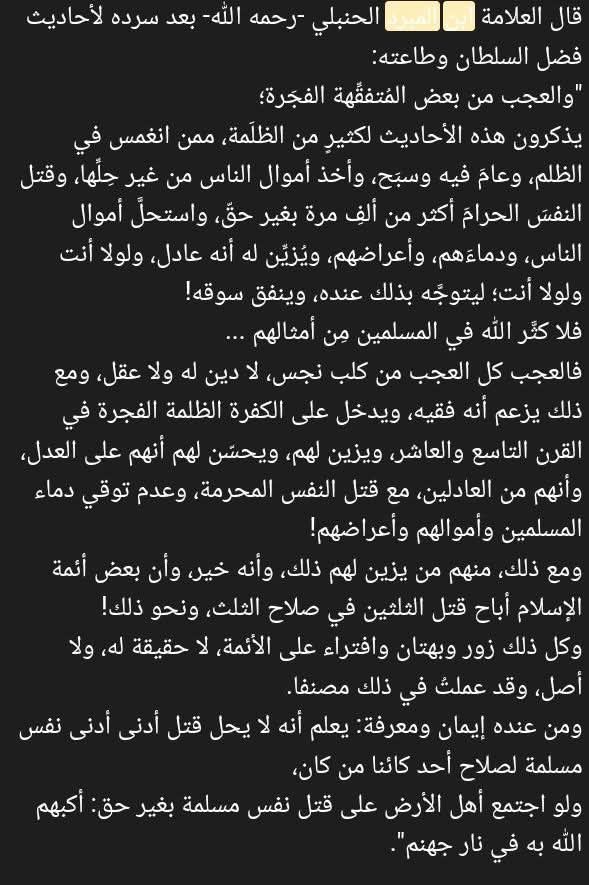
Ibn al-Mibrad al-Hanbali said after listing the hadiths regarding the virtues of the sultan and obedience to him:
“It is astonishing how some immoral so-called jurists recount these hadiths to many taghah (tyrants), those who have immersed themselves in zulm (oppression), wallowed in it, and swum in its depths.
They seize people’s wealth unlawfully, kill forbidden souls over a thousand times without justification, violate people’s wealth, lives, and honor, and yet these false jurists embellish their actions by declaring them just.
They say, ‘If not for you, if not for you,’ aiming to gain favor and elevate their status with the oppressors! May Allah not increase the likes of them among the Muslims.
How astonishing, truly astonishing, is the filthy dog devoid of religion and intellect, yet he claims to be a faqih (jurist). He enters upon the kafir, oppressing, wicked tyrants in the ninth and tenth centuries and adorns their actions, portraying them as just and fair, even as they spill the blood of the innocent, disregard the sanctity of Muslims lives, wealth, and honor!
Even more appalling is how some among them justify such tyranny, claiming it to be good, arguing falsely that some Imams of Islam permitted killing two-thirds of the population for the sake of the one-third, or other such fabrications.
All of this is falsehood, slander, and lies against the Imams. It has no basis or foundation in truth. I have written a treatise addressing this matter.
Anyone possessing Iman (faith) and understanding knows that it is impermissible to kill even the least significant Muslim soul unjustly, for the so-called benefit of anyone, no matter who they are. If all the people on earth were to conspire to kill a single Muslim soul without right, Allah would throw them all into the depths of Hell because of it.”
Imam Yusuf ibn Abd al-Hadi al-Hanbali (Ibn al-Mibrad) died in the year 909 Hijri] Īḍāḥ Ṭuruq al-Istiqāmah, 123-124.
(authenticseerah.com doesn’t own this translation. Taken from the ‘Ibn Al-Qayyim’ account on Facebook.)
Al-Bazzar narrated from Jabir (may Allah be pleased with him) that the Messenger of Allah (Salallahu Alaihi Wa Sallam) said:
“The Hujjaj (pilgrims of Hajj) and Ummaar (those performing Umrah) are the delegation (Wafd, representatives or emissaries) of Allah; He invited them, and they responded; they asked of Him, and He granted them.”
(Al-Sahihah: 1820) (Sahih Al-Jami’: 3173).
Al-Bukhari and Muslim narrated from Abu Hurairah (may Allah be pleased with him) that the Messenger of Allah (Salallahu Alaihi Wa Sallam) said:
“An Umrah to another Umrah is an expiation for what occurs between them.”
We have also come across the narration recorded by Imam Ahmad and At-Tirmidhi from Abdullah ibn Mas’ud (may Allah be pleased with him), in which the Messenger of Allah (Salallahu Alaihi Wa Sallam) said:
“Perform Hajj and Umrah consecutively, for they remove poverty and sins just as the bellows remove impurities from iron, gold, and silver. And there is no reward for an accepted Hajj except Paradise.”
(Sahih Al-Targhib wa Al-Tarhib: 1105) (Sahih Al-Jami’: 2901).
In another narration recorded by At-Tabarani in Al-Awsat, Jabir (may Allah be pleased with him) reported that the Messenger of Allah (Salallahu Alaihi Wa Sallam) said:
“Continue performing Hajj and Umrah, for they remove poverty and sins just as the bellows remove impurities from iron.”
(Al-Sahihah: 1085) (Sahih Al-Jami’: 253).
The reward for Umrah and Hajj is proportional to the effort and expenditure
Al-Hakim narrated in Al-Mustadrak from Aisha (may Allah be pleased with her) that the Messenger of Allah (peace and blessings be upon him) said to her regarding her Umrah:
“Indeed, your reward is according to your hardship and expenditure.”
(Sahih Al-Jami’: 2160).
In another narration: “Your reward for your Umrah is only according to your expenditure.”
(Sahih Al-Targhib wa Al-Tarhib: 1116).
Performing An Umrah In Ramadan Is Equivalent In Reward To Hajj
Abu Dawud also narrated from Umm Ma’qil (may Allah be pleased with her) that she said: “When the Messenger of Allah (Salallahu Alaihi Wa Sallam) performed the Farewell Pilgrimage, we had a camel, and Abu Ma’qil dedicated it in the path of Allah. Then, we were afflicted with illness, and Abu Ma’qil passed away. When the Messenger of Allah completed his pilgrimage, he asked, ‘O Umm Ma’qil, what prevented you from joining us?’
She replied, ‘O Messenger of Allah, we had prepared for it (the Hajj), but Abu Ma’qil passed away, and we had a camel that we could use for Hajj, but he had dedicated in the path of Allah.’
The Prophet (peace and blessings be upon him) said, ‘Why did you not go forth with it? Indeed, Hajj is in ‘the path of Allah’. However, if you have missed this Hajj, then perform Umrah in Ramadan, for it is equivalent to Hajj.‘”
(Sunan Abi Dawud 1989, Sahih (Al-Albani))
(There are many narrations that mention that Umrah in Ramadan is equivalent in rewards to Hajj. Buy we will suffice with this one for now InshaAllah.)
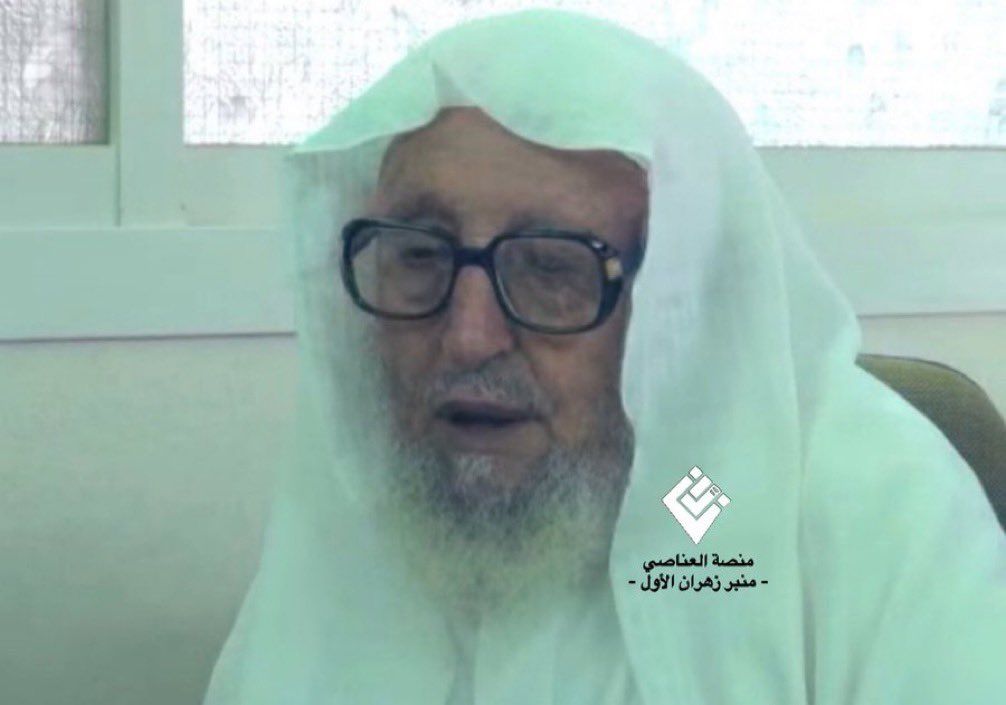
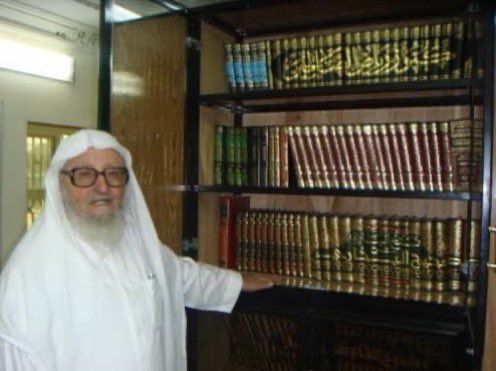
📌 Who is Shaikh Abdul Aziz Az-Zahrani who passed away tonight—Friday night (25th April 2025)?
The distinguished scholar and hadith narrator: Shaikh Abdul Aziz bin Abdullah Al-Zahrani.
– One of the narrators of hadith with an unbroken chain of transmission to the Messenger of Allah (Salallahu Alaihi Wa Sallam). – The first to advocate for an official site for sacrificial slaughter during Hajj, the first to prohibit slaughtering within the pilgrims’ camps, the first to ban livestock from entering Mina during the days of Tashreeq, and the first to establish water faucets along pedestrian pathways.
Though relatively unknown among the general public, he is widely recognized among hadith scholars, jurists, and academic researchers.
Birth and Early Education: Shaikh Abdul Aziz was born in 1353 AH in the province of Al-Mandaq, north of the Al-Baha region. He joined the Kuttab (traditional school) at the age of five, being the youngest among his peers due to his intelligence and sharpness. He studied under Shaikh Abdullah bin Saadi Al-Ghamdi, learning the fundamentals of Tawheed and reading from Surah Al-Ankabut to Surah An-Nas. When he turned ten, his father passed away in approximately 1362 AH, followed by the death of his mother two years and six months later. From that point onward, he dedicated himself to the responsibilities of life.
Life in Makkah and Career: As the orphaned youth grew older, he married a woman older than himself, intending that she would help raise his younger brother and sister. He later decided to move to Makkah Al-Mukarramah seeking sustenance and briefly worked in the military before transferring to the Municipal Secretariat of Makkah, where he served for 25 years.
Due to his diligence and integrity, Shaikh Abdul Aziz was appointed by Abdullah Areef, the then Secretary of Makkah, as President of the Municipality of Mina, a position he held for about 11 years. He introduced numerous developmental regulations, including measures to curb unauthorized expansion, established water taps for pilgrims along footpaths, designated an official slaughter site for Hajj, prohibited slaughter within tents, and prevented animals from entering Mina during Tashreeq except in designated areas near slaughter zones before Eid day. He pioneered a system to monitor compliance with these regulations and created seasonal posts stationed at roads and valleys leading to Mina to enforce these measures, laying the groundwork for the organizational structure of Mina that exists today.
Scholarly Pursuits and Hadith Transmission: While working in Makkah, Shaikh Abdul Aziz actively attended scholarly circles in Al-Masjid Al-Haram, which functioned as a modern-day academic institution. He participated in lessons after Fajr, Asr, Maghrib, and Isha, particularly under Shaikh Abdul Haq Al-Hashemi and Shaikh Suleiman Al-Hamdan, while also benefiting from scholars such as Shaikh Abdullah Al-Bassam, Shaikh Hasan Mashat, Shaikh Muhammad As-Somali, and Shaikh Yahya Abadi.
Upon deepening his scholarly expertise, Shaikh Abdul Aziz resigned from his municipal duties to dedicate himself entirely to Islamic sciences. He became a beacon for hadith scholars and obtained an Ijazah to narrate hadith with an unbroken chain of transmission to the Prophet ﷺ. Prominent scholars from across the Arab world visited his home in Al-Mandaq to seek hadith transmission authorization (Ijazah), with over 130 scholars receiving ijazah from him, including: – Dr. Saleh bin Hamid (former President of the Supreme Judicial Council) – Dr. Saad bin Nasser Al-Shathri (Royal Court Advisor) – Dr. Aid Al-Qarni (Islamic preacher) – Dr. Abdul Rahman Al-Ashmawi (renowned poet)
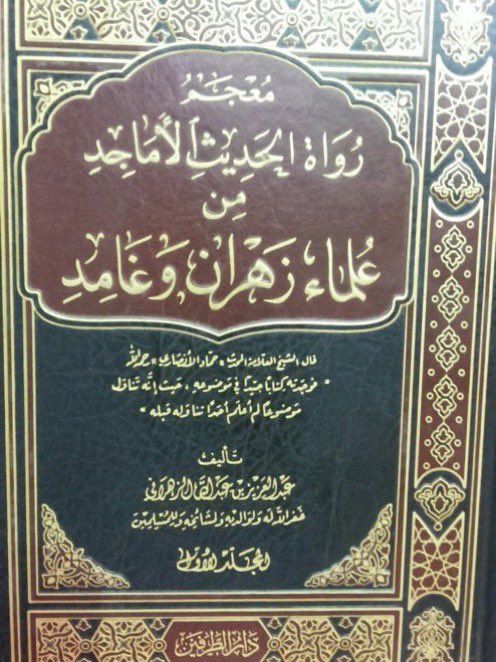
Notable Works and Contributions: Shaikh Abdul Aziz authored the comprehensive “Dictionary of Distinguished Hadith Narrators from the Scholars of Zahran and Ghamid,” [Ruwaath-ul-Hadith Al-Amajid Min Ulama Zahran Wa Ghamid] published in 15 volumes spanning 7500 pages. This monumental work includes rare biographies of hadith transmitters, assessing their reliability and weakness, with 12,500 hadiths cited within. The Senior Scholar Abdullah Al-Mani’ initially objected to the book’s title but later approved it after reviewing its contents.
Additionally, Shaikh Abdul Aziz authored several other works, including: – “Islamic Reflections” – “Portraits from the Lives of Early Muslim Youth” – “Defense of the Noble Companion Abu Huraira (Radi Allahu Anhu)”
His Scholarly Training and Hadith Ijazah: Shaikh Abdul Aziz spent more than ten years studying under Shaikh Abu Muhammad Abdul Haq bin Abdul Wahid bin Muhammad bin Hashem, a teacher at Al-Masjid Al-Haram, covering major works such as: – Sahih Al-Bukhari & Sahih Muslim – Kitab Al-Tawheed by Ibn Khuzaymah – Kitab Al-Asma’ wal-Sifat by Al-Bayhaqi – Tafsir Ibn Kathir
He received formal Ijazah in several core Islamic texts, including: – The Holy Quran – Muwatta Malik – The Six Canonical Hadith Collections (Sahih Bukhari, Sahih Muslim, Sunan Abu Dawood, Sunan At-Tirmidhi, Sunan An-Nasa’i, Sunan Ibn Majah) – Sunan Ad-Darimi, Sunan Ad-Daraqutni, Sunan Al-Bayhaqi – Musnad Ahmad, Sahih Ibn Khuzaymah, Sahih Ibn Hibban, Sahih Al-Hakim – Tafsir Jalalain, Tafsir Ibn Kathir, Tafsir Al-Tabari
Additionally, Shaikh Abdul Aziz studied Kitab At-Tawheed more than eight times under Shaikh Suleiman bin Abdul Rahman Al-Hamdan, receiving high sanad authorization in the books of Shaikh Muhammad bin Abdul Wahhab and other classical texts. He was also granted Ijazah by Shaikh Hamad bin Muhammad Al-Ansari and Shaikh Abdullah bin Abdul Rahman As-Sa’d, recognizing his scholarly transmission.
Legacy and Recognition: According to records in the Modern Shamela Library, Shaikh Hamad bin Muhammad Al-Ansari Al-Khazraji Al-Sa’di (born in 1344 AH in Tadmekka, Mali) was renowned for memorizing numerous classical Arabic texts. When a student from Al-Baha once visited Shaikh Hamad, he asked, “Do you know Shaikh Abdul Aziz Al-Zahrani?” The student replied, “No.” Shaikh Hamad then responded, “Then whom do you know? He is the only serious student of knowledge in Al-Baha.”
Question: What is the ruling on wearing trousers for women and men?
Answer: I do not see any objection if it is in a form that does not describe the Awrah (parts that have to be covered and hidden in the Islamic Shariah), but rather covers them and does not involve imitation (of the opposite gender). Pants specifically designed for men should not be worn by women, and those designed for women should not be worn by men. If the style is specific to non-Muslims, it should not be worn by Muslims either.
In summary – both men and women should ensure that their clothing does not resemble that of the opposite gender, whether in pants or other garments. Additionally, it should not resemble clothing specific to non-Muslims. However, shared styles that are not exclusive to non-Muslims are permissible. Similarly, items that are not exclusive to either gender, such as silver rings, are permissible as they are not specific to anyone (male or female).
Presenter: The reality of pants, esteemed Shaikh, is that they outline the body parts?
Shaikh: If they outline the private parts and body features, causing temptation, women should avoid wearing them except in the presence of their husbands.
Presenter: Thank you. What about in front of her close male relatives?
Answer: It is also advisable to avoid it.
Presenter: To avoid it (i.e wearing pants).
Shaikh: To prevent Fithnah (referring to exposing of the Awrah or shape of the Awrah). Yes.
Question: What is the significance of reciting the Adhan (call to prayer) and the Iqamah (second call to prayer) in the ear of a child upon reaching seven days of age? What is the benefit of this practice?
Answer: It has been mentioned in some Hadiths that the Adhan is to be recited in the right ear and the Iqamah in the left ear. However, the chain of narration for these Hadiths contains some weakness. Despite this, it is a practice among Muslims. Therefore, for anyone who observes this practice, there is no harm, and similarly, for anyone who does not observe it, there is no harm. The recitation of the Adhan in the right ear and the Iqamah in the left ear on the seventh day, along with naming the child, is considered preferable by a group of scholars.
In a Hadith narrated by At-Tirmidhi and deemed authentic, it is mentioned that the Prophet ﷺ would recite the Adhan in the right ear of a child. Another Hadith indicates that he would recite the Iqama in the left ear. Umar ibn Abdul Aziz and a group of scholars have stated that this practice benefits the child. It has been observed by a number of Muslims. Nevertheless, for anyone who omits this practice, there is no harm.
There is also a narration that the Prophet ﷺ named his son Ibrahim upon his birth, and it is not mentioned that he recited the Adhan in his right ear or the Iqamah in his left ear. This indicates flexibility in the matter. Therefore, for anyone who performs this practice, there is no harm, and it is a good action. Conversely, for anyone who does not perform it, there is no harm.
-by Shaikh Abdul Azeez bin Abdullah bin Baaz (Rahimahullah).

 Saheehus-Seerah