The crying of separation…

I desired to abandon you and then forget,
close to sever with you,and I see some regret…

Your alleys, your breeze, your steep turns,
are trying to convince me to try and return…

You hugged me when I was a no one nomad,
you became my home when I no home had…

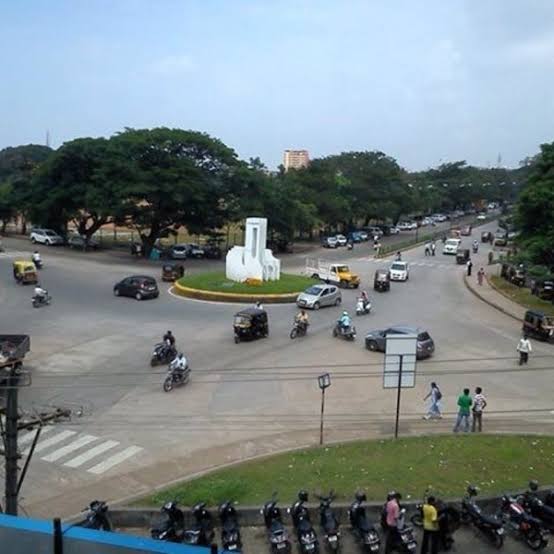
The roads, the beaches, the tasty food,
the people here smiling as much as they could…

Are calling me with every honk of the traffic,
telling, “How could you forget this handsome city’s graphic!?”

I will miss the crows, the pythons, the tortoises of this city..
Oh how much my heart is upon myself doing pity!

I wish I could convince myself otherwise,
to stay here safe and sound, by being surmise…

But the people of my land have hurt us much,
they have shown me the reality of living here as such…

Killing me, molesting me, abusing my faith,
threatening to kill us, and giving us a blood bathe…

What else could I do than leaving you now,
I wish to stay longer, but want to escape right now…

To another land where I would be allowed and welcome,
and no harm would befall us, except at times seldom…

Where my self, my children and faith would be safe,
even if I have to live there like a small waif…

I would try to love her as much as I can,
to the land for my safety where I have ran…

Will serve her honour her and give her tributes,
of her favor upon me that she distributes…
Can a layman give Fatwa regarding an issue whose evidence he knows?

Can a layman give Fatwa regarding an issue whose evidence he knows?

(Ibn Qayyim in إعلام الموقعين عن رب العالمين 4/152 )

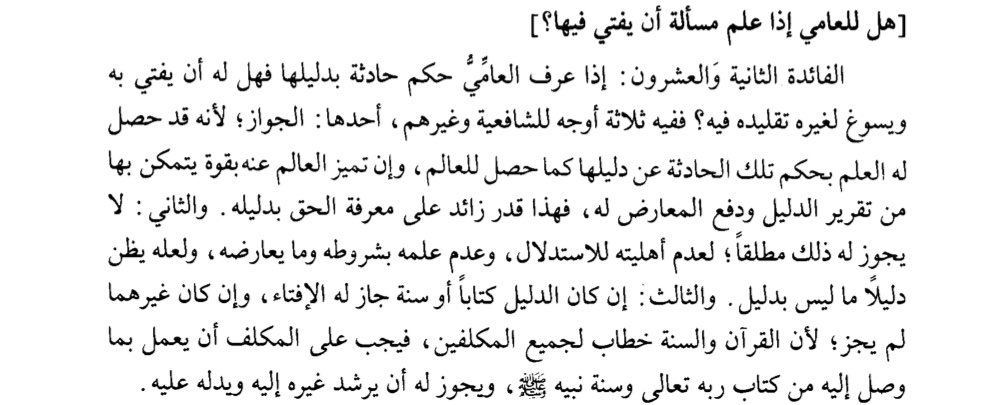
1. It is permissible If the laymen has knowledge of the ruling as it happened with its evidence like that of a scholar. And the scholar is better than the laymen because of ability to prove it’s evidence and defend it, that is an extra in knowing the truth with its evidence.

2. It is impermissible for the laymen in all cases due to inability to extract the ruling, no knowledge of its conditions and what goes against it, and perhaps the laymen thinks something is an evidence when it isn’t an evidence.

3. It is permissible for the laymen to give a fatwa if the evidence for the ruling is from the Quran and Sunnah but if it is other than them then it isn’t permissible, because the Quran and Sunnah is speaking to all people, and it is obligatory on all to act upon what has reached them from the Quran and Sunnah, and it is permissible for them to guide others towards it.

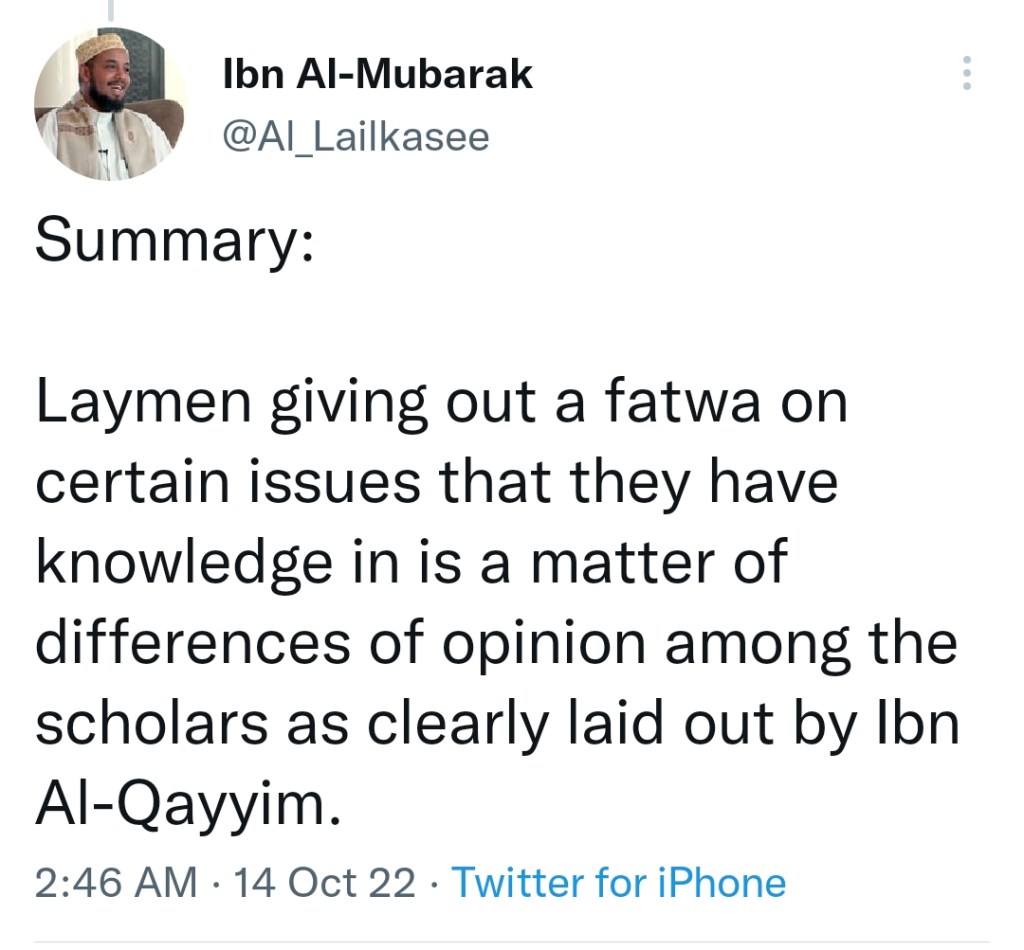
Summary: Laymen giving out a fatwa on certain issues that they have knowledge in is a matter of differences of opinion among the scholars as clearly laid out by Ibn Al-Qayyim.

Source: Twitter account of Brother Ibn Al-Mubarak.

تقييم كتب أبي الأعلى المودودي وأبي الحسن الندوي وسيد قطب


السؤال:رسالة وصلت إلى البرنامج من المستمعة (أ. أ. الزاوي) من طرابلس في ليبيا، أختنا لها عدد من الأسئلة، من بينها سؤال تقول فيه: أرجو من سماحتكم أن تتفضلوا بإبداء رأيكم حول مؤلفات أبي الأعلى المودودي، وأبي الحسن الندوي، وسيد قطب. 

الجواب:

كلها كتب مفيدة، كتب، هؤلاء الثلاثة -رحمهم الله- كلها كتب مفيدة، فيها خير كثير، ولا تخلو من بعض الأغلاط، كل إنسان يؤخذ من قوله ويترك، ليسوا معصومين، فطالب العلم إذا تأملها عرف ما فيها من الأخطاء، وما فيها من الحق، وهم -رحمهم الله- قد اجتهدوا إلى الخير، ودعوا إلى الخير، وصبروا على المشقة في ذلك، وأبو الحسن موجود -بحمد الله- وفيه الخير الكثير، ولكن ليس معصومًا، ولا غيره من العلماء، العصمة للرسل -عليهم الصلاة والسلام- فيما يبلغون عن الله، الرسل عصمهم الله في كل ما يبلغون عن الله، وهكذا الأنبياء، أما العلماء كل عالم يخطئ ويصيب، ولكن -بحمد الله- صوابهم أكثر، وقد أفادوا وأجادوا ونفعوا الناس.

يقول مالك -رحمه الله- ابن أنس، إمام دار الهجرة في زمانه: ما منا إلا راد ومردود عليه إلا صاحب هذا القبر، يعني: الرسول، عليه الصلاة والسلام.

فالمؤمن يطلب العلم، وهكذا المؤمنة تطلب العلم، وكل واحد يتفقه في الدين، ويتبصر، ويسأل عما أشكل عليه، يقرأ القرآن، يقرأ السنة، يعتني حتى يعرف الحق بأدلته، وحتى يعرف الغلط إذا غلط العالم، ولا يجوز أن يقال: هذا فلان العالم الجليل يؤخذ قوله كله من دون نظر! لا، بل لابد من النظر والعناية، وعرضها على الأدلة الشرعية، فما وافقها قبل، وما خالف الأدلة الشرعية ترك، وإن كان عظيمًا، وإن كان له أجر عظيم، وإن كان مجتهدًا في الخير، وإن كان مشهورًا. نعم.

Books To Study The Biography of The Prophet Muhammad ﷺ- A Brief List

⭐ To study the biography with references to both Sahih and Daeef narrations.

The Biography Of The Prophet of Islam In The Light Of The Original Sources by Dr.Mahdi Rizqullah Ahmad, 2 volumes (Darussalam, Riyadh).

⭐ To study the biography using only authentic Ahadith.

The Biography Of The Prophet Muhammad ﷺ From Reliable And Credibly Established Narrations (3 Volumes, published in Mangalore, Karnataka).

🌟 To study the atributes of the Prophet ﷺ and his features.

A Commentary on the depiction of Prophet Muhammad Ash-Shamaa’il ul Muhammadiyyah – Dar ul Arqam Publishers.

🌟 Al-Adab Al-Mufrad by Imam Al Bukhari with (the checking of Ahadith), by Dakwah Corner Publications

🌟 To study how the Prophet ﷺ nurtured the Sahaba and taught them.
Riyad-us-Saaliheen published by Darussalam (Riyadh) in 2 volumes

🌟 To follow the places mention in the biography of the Prophet ﷺ.

Atlas of the Qur’aan- compiled by Dr Shauqi Abu Khalil Darussalam (Riyadh).

Virtues Of The Muslims Who Aren’t From The Sahaba (Companions Of Prophet Muhammad ﷺ)

1. All of this Ummah (Nation) is virtuous:

Anas reported: The Messenger of Allah, peace and blessings be upon him, said, “The parable of my nation is like the rain. One does not know if the first part is the best or the last.”

(Sunan al-Tirmidhī 2869, Sahih li ghayrihi (authentic due to external evidence) according to Al-Albani.)

2. The Prophet ﷺ called the Non-Sahaba his brothers:

Anas ibn Malik reported: The Messenger of Allah, peace and blessings be upon him, said, “I wish I could meet my brothers.” The Prophet’s companions said, “Are we not your brothers?” The Prophet said, “You are my companions, but my brothers are those who have faith in me although they never saw me.”

(Musnad Aḥmad 12169, Hasan (fair) according to Al-Albani.)

3. The Prophet ﷺ called the Non-Sahaba those of an ‘astonishing faith’:

Anas reported: The Prophet, peace and blessings be upon him, said, “Who in creation has the most astonishing faith?” They said, “The angels.” The Prophet said, “But how could the angels not believe?” They said, “The prophets.” The Prophet said, “But the prophets were given divine revelation, so how could they not believe?” They said, “Their companions.” The Prophet said, “The companions were with their prophets, so how could they not believe? Rather, the people with the most astonishing faith are those who come after you and they find a book of divine revelation, thus they believe in it and follow it. They are the people with the most astonishing faith.”

(Musnad al-Bazzār 7294, Hasan (fair) according to Al-Albani.)

4. Virtues of worshipping Allah during the later days:

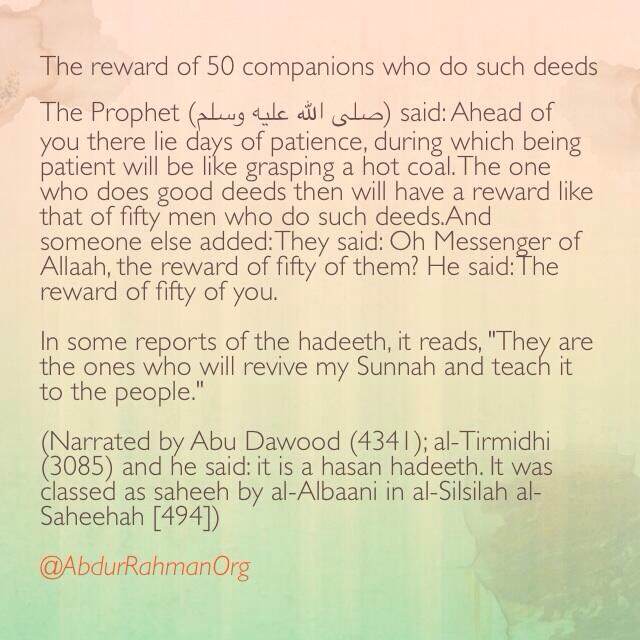
Abu Tha’labah reported: The Messenger of Allah, peace and blessings be upon him, said, “Rather, you must enjoin good and forbid evil until you see greed being obeyed, desires being followed, worldly life being preferred, and everyone is impressed by their own opinion. Then you must take care of yourself and leave the common people. Verily, ahead of you are days of patience in which patience will be like grasping a hot coal. The one who does good deeds in that time will have the reward of fifty men who do likewise.”

(Sunan al-Tirmidhī 3058, Hasan (fair) according to Al-Tirmidhi.)

[Also read: https://islamqa.info/en/answers/3374/the-contrast-between-the-deeds-of-the-sahaabah-and-the-deeds-of-the-people-at-the-end-of-time ]

Sources of Ahadith: abuaminaelias . com.

Compiled: Abu Muaaz Mohammed Manna.