The main aim of our site is to purify The Seerah of Prophet Muhammad ﷺ from weak and fabricated narrations using the works of the scholars of Islam. We may add other beneficial material as well.
Education and their examinations are the new ‘ false gods‘ the Muslims are being obedient to. It is sad that we give it so much importance that we can sacrifice anything for it.
The Sahaba sacrificed everything for the sake of Islam, and today we can’t sacrifice a degree or a school certificate for the sake of following Allah’s Religion.
Allah said in The Qur’an: And [yet], among the people are those who take other than Allah as equals [to Him]. They love them as they [should] love Allah . But those who believe are stronger in love for Allah .
And if only they who have wronged would consider [that] when they see the punishment, [they will be certain] that all power belongs to Allah and that Allah is severe in punishment. (Qur’an 2:165)
There are people today who claim to love Allah, but in reality they show more love to the worldly education.
So much so that they are ready to sacrifice Imaan & Fard acts of worship, commit major sins, just for the sake of their love for the Dunya and the worldly education.
If any Muslim (and I have seen hundreds of Muslim parents like this) believes that till the child completes his/her desired education, he/she can do- prayers of Shirk, miss any Fard Namaz, miss Jumuah, not wear the proper Hijab (not just headscarf), etc from obligatory things, then they’re not Muslims, they should learn Islam again.
Then comes the question: But moderm education (in Un-Islamic Institutes) also has some benefits right?
Education is important, but that is not connected to seeking knowledge in places where there is the garbage of modernism, liberalism and humanism. Education can be sought from other permissible means. If you wish to, you will find those means.
“Whoever fears Allah, Allah will find a way out for him (from every difficulty)…” (Quran 65:2)
Seeking ‘education’ in a liberal Un-Islamic setup is like seeking benefits from drinking wine and gambling, because Allah said that alcohol and gambling also have some benefits.
“They ask you about wine and gambling. Say, “In them is great sin and [yet, some] benefit for people. But their sin is greater than their benefit.” (Quran 2:219)
Similarly the harms and dangers in the modern universities is far far greater.
May Allah guide the Muslims.
Especially the religious ones who sport a beard and their wives wear the full Hijab, yet their sons and daughters are going to such institutions, abandoning obligations and doing Haram.
May Allah guide this Ummah to love Allah more than these degrees which may make them loose their Deen.
To be honest, I don’t like to write such things online. But almost every other day I get to speak to college students who have left Islam conciously by becoming atheists or subconsciously (indirectly) by becoming liberal, LGBT supporters and/or agnostic. The situation has reached epidemic levels and is more dangerous to the Ummah than any anti-Islamic right wing group or Corona Virus or any plague.
These liberal Muslims are going to be parents in the future and our leaders as well. And their hearts are filled with ideologies of Kufr! May Allah guide all of us.
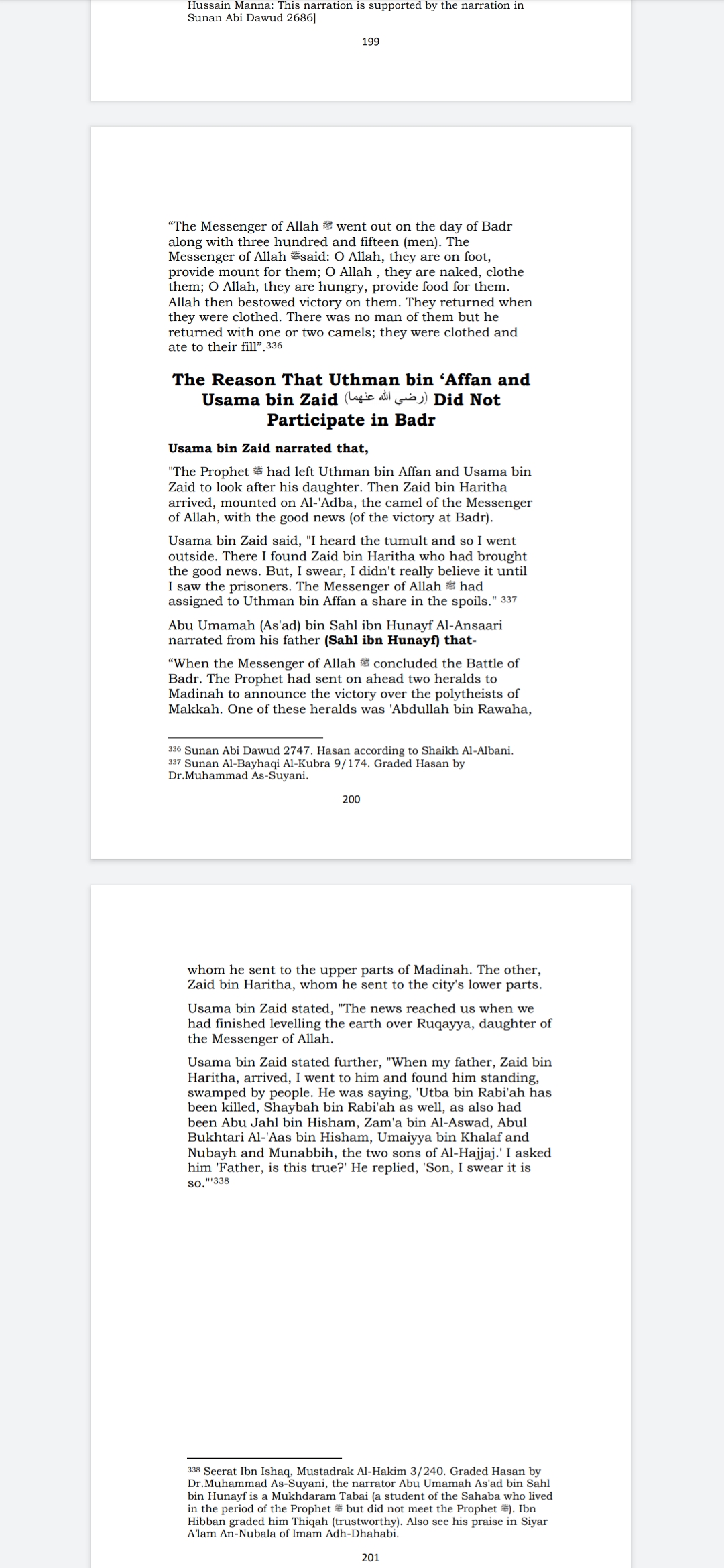
How much did The Prophet Muhammad ﷺ love his Ummah? So much so that, when his daughter Ruqayya (عليها السلام) was in her final illness, he ﷺ leads the Muslims into battle to fight the enemies of Allah.
And on the eve of the battle he supplicates for the nascent army and the Ummah, and by the time he ﷺ returns victorious, his daughter was already buried.
Prophet Muhammad ﷺ preferred his Ummah over and above his personal self and his own family. Imagine the level of sincerity towards Allah’s Cause that it takes, to leave your daughter in that state and lead the Muslims to a raid and then a battle (Badr).
When he ﷺ was away,Ruqayya was being looked after by her noble husband Uthman bin Affan(رضي الله عنه). Nevertheless, a father (& a Prophet!) being close to a daughter,would be more demanding personally for anyone,considering the strong human emotions at the end of one’s life or the end of one’s beloved.
May Allah’s enormous blessings and rewards be upon the Prophet ﷺ and his household and his companions.
When (The oppressive Mongol Muslim ruler), Sultan Qazaan asked Ibn Taymiyyah to supplicate for him then he (Ibn Taymiyyah) said:
“O Allah if this slave of yours is praiseworthy and fights to make your word supreme and that you should be followed by everyone then help him and give him strength and make him a leader of the countries and people.
But If he is doing this to show off his reputation, and taking from this world so that he can be famous, and to humiliate Islam and its people then take him, destroy him, and cut his roots.”
Sultan Qazaan said ameen to his prayers and raised his hands.
The atheistic liberal ‘West’ desires to teach Muslims and Muslim Nations- ‘human and animal rights’- by fooling us into the notion of, how backward we as Muslims are, and how superior they have become! Alhamdulillah, Allah continuously exposes the dark side of their ‘superior lives’. The example I’m going to give, isn’t just one example, rather just a sample of the pathetic lives they’re leading…
A 70 year old Italian woman, Marinella Beretta, who was living all alone (like more than 50% of the Italian women above 75), was found dead some days ago, on her dining table. What is sadder is that she was almost decomposed (in the very same sitting position), as she actually died more than two years ago.
Alhamdulillah for Islam! We try our best to look after our parents, we stay connected to our near and dear ones.
Islam also teaches us to care about the well-being of our Muslim and Non-Muslim neighbours.
Muslim men visit the Masajid and check on each other, and as much as possible, we make it a point to not leave women isolated, rather they live and travel accompanied by a male relative.
Even after being a community who aren’t following The Qur’an and Sunnah perfectly as we ought to, we’re still better off than all the nations of the world. Imagine, what’d be the case if we did follow our religion par excellence! Subhan Allah! May Allah guide all of us.
الحمد لله والصلاة والسلام على رسول الله وعلى اله واصحابه اجمعين ومن تبعهم باحسان الى يوم الدين
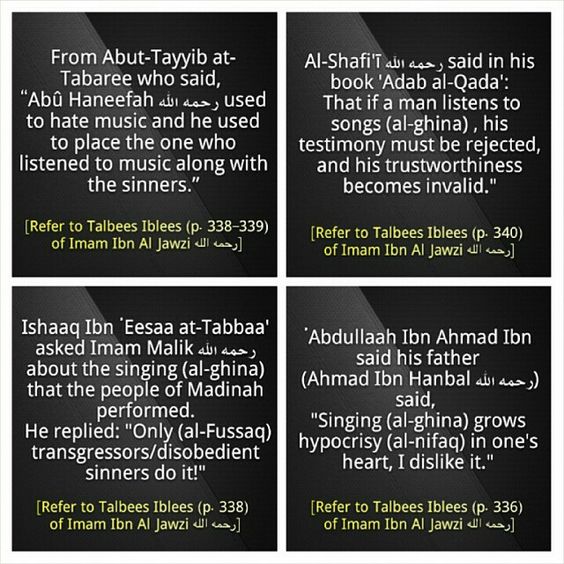
Allah says in Surah Luqman: “And of mankind is he who purchases idle talks to mislead (men) from the path of Allah…” [Luqman 31:6]
Abu Maalik al-Ash‘ari ,heard the Prophet (blessings and peace of Allah be upon him) say: “There will surely be among my ummah people who will regard as permissible adultery, silk, alcohol and musical instruments.”
(Narrated by al-Bukhaari in a mu‘allaq report (5590); it was narrated in a mawsool report by at-Tabaraani and al-Bayhaqi. See: as-Silsilah as-Saheehah by al-Albaani (91).)
It was narrated that Anas ibn Maalik (may Allah be pleased with him) said: The Messenger of Allah (blessings and peace of Allah be upon him) said: “There are two sounds that are cursed in this world and the hereafter: musical instruments at the time of blessing and screaming at the time of calamity.”
(Al-Mundhiri said: It was narrated by al-Bazzaar and its narrators are thiqaat. It was classed as hasan by al-Albaani in Saheeh at-Targheeb wa’t-Tarheeb no. 3527)
Abu Maalik al-Ash‘ari ,heard the Prophet (blessings and peace of Allah be upon him) say: “There will surely be among my ummah people who will regard as permissible adultery, silk, alcohol and musical instruments.”
(Narrated by al-Bukhaari in a mu‘allaq report (5590); it was narrated in a mawsool report by at-Tabaraani and al-Bayhaqi. See: as-Silsilah as-Saheehah by al-Albaani (91).)
Abu Dawood (3685) narrated from ‘Abdullah ibn ‘Amr that the Prophet of Allah (blessings and peace of Allah be upon him) forbade alcohol, gambling, drums and intoxicating drinks made from corn, and he said: “Every intoxicant is haraam.” (Sahih, (Al-Albani))
It was narrated that Nafi’ (may Allah have mercy on him) said: Ibn ‘Umar heard a woodwind instrument (Mizmaar), and he put his fingers in his ears and kept away from that path. He said to me, O Nafi’, can you hear anything? I said, No. So he took his fingers away from his ears and said: I was with the Prophet (peace and blessings of Allah be upon him) and he heard something like this, and he did the same thing.
(Sunan Abu Dawud 4924, Sahih (Al-Albani)).
An Exception: The Duff- One Sided Drum.
The exception to the prohibition on musical instruments is the daff (or Duff) – without any rings (i.e., a hand-drum which looks like a tambourine, but without any rattles) – when used by women on ‘Eids and at weddings. This is indicated by Sahih reports (which are too many). (Quoted from Islamqa.info)
(See for example Sahih al-Bukhaari, 944; Sahih Muslim, 892)
Can Imam Al-Ghazzali’s and Imam Ibn Hazm’s View On The Permissibility Of Music Be Used?
All the imams agreed on the soundness of the ahadith which forbid singing and musical instruments, apart from Abu Hamid al-Ghazzali, but al-Ghazzali did not have knowledge of hadith; and Ibn Hazam, but al-Albani (may Allah have mercy on him) explained where Ibn Hazam went wrong, and Ibn Hazam himself said that if any of (these ahadith) were sahih, he would follow that. But now they have proof that these reports are sahih because there are so many books by the scholars which state that these ahadith are sahih, but they turn their backs on that. (islamqa.info)
Imam Al-Albani (may Allah have mercy on him) said: The four madhhabs agree that all musical instruments are haram. (al-Sahihah, 1/145). (islamqa.info)
Are Flutes Also Allowed As A Hadith Mentions Flutes Being Played In The Presence Of The Prophet ﷺ?
al-Bukhaari (3931) and Muslim (892) narrated from ‘Aa’ishah that Abu Bakr entered upon her when the Prophet (peace and blessings of Allaah be upon him) was with her on the day of (Eid) al-Fitr or Adha, and there were two young girls singing lines of poetry that were said by the Ansaar on the day of Bu’aath. Abu Bakr said: Flutes of the Shaytaan! The Prophet (peace and blessings of Allaah be upon him) said: “Let them be, O Abu Bakr, for every people has its Eid and our Eid is this day.”
(Added query- Does this Mizmaar/flute mean that flutes are Halal on Eid?)
Abu Burda narrated on the authority of Abu Musa that the Messenger of Allah (ﷺ) had said to Abu Musa: If you were to see me, as I was listening to your recitation (of the Qur’an) yesterday-night (you would have felt delighted). You are in fact endowed with a sweet voice (Mizmaar) like that of David himself. ( مِزْمَارًا مِنْ مَزَامِيرِ آلِ دَاوُدَ) (Sahih Muslim 793e, Sahih al-Bukhari 5048)
Al-‘Iraaqi said in Tarh al-Tathreeb (3/104): What it meant by mizmaar here (in the Hadith about Prophet Dawud) is a beautiful voice. The original meaning is the instrument that is blown into (wind instrument, or flute). The beauty and sweetness of his voice is likened to the sound of the flute. … He had an extremely beautiful voice in recitation. End quote.
Similarly with respect to the above Hadith:
Al-Haafiz Ibn Hajar said in Fath al-Baari: What is meant by mizmaar is a beautiful voice. The basic meaning is the instrument and the word is used of the voice as a simile. End quote. (islamqa.info)
Also:
Anas bin Malik related from The Prophet ﷺ that- “The two cursed sounds are that of Mizmaar (the wind instrument) played on the occasion of joy and grace and woeful wailing on the occurrence of adversity.”
(Narrated by Abu Bakr Ash-Shafi’ee by a Hasan chain). (The Islamic Ruling On Music And Singing, p.25)
Some Additional Ahadith On The Prohibition Of Music:
Abu Hurairah (May Allah be pleased with him) said:The Prophet (ﷺ) said, “The bell (Al-Jaras, as is used to hang on the necks of cattle) is one of the musical instruments of Satan.”
[Sahih Muslim, Riyadhus-Saliheen 1691].
Narrated Abu ‘Amir or Abu Malik Al-Ash’ari: that he heard the Prophet (ﷺ) saying, “From among my followers there will be some people who will consider illegal sexual intercourse, the wearing of silk, the drinking of alcoholic drinks and the use of musical instruments, as lawful. And there will be some people who will stay near the side of a mountain and in the evening their shepherd will come to them with their sheep and ask them for something, but they will say to him, ‘Return to us tomorrow.’ Allah will destroy them during the night and will let the mountain fall on them, and He will transform the rest of them into monkeys and pigs and they will remain so till the Day of Resurrection.”
(Sahih Al-Bukhari 5590. For a discussion on its authenticity see ‘The Islamic Ruling On Music And Singing by Abu Bilal Al-Kanadi page 14.)
It was narrated from Abu Malik Ash’ari that the Messenger of Allah (ﷺ) said:“People among my nation will drink wine, calling it by another name, and musical instruments will be played for them and singing girls (will sing for them). Allah will cause the earth to swallow them up, and will turn them into monkeys and pigs.”
(Sunan Ibn Majah 4020, Sahih ((Al-Albani))
Abdullah bin ‘Amr told that the Prophet forbade wine, maisir (gambling), the kuba (drum) and ghubaira (a type of intoxicant), saying, “Every intoxicant is prohibited.” (Mishkaat Al-Masabeeh 3652, Hasan (Al-Albani))
(For the additional Ahadith we benefitted from – The Islamic Ruling On Music And Singing by Abu Bilal Al-Kanadi, English.)
Courtesy: Islamqa.info | Sunnah.com |The Islamic Ruling On Music And Singing by Abu Bilal Mustafa Al-Kanadi.
Some Important Issues With Regards To Differences Of Opinions Between Scholars
Some people say that with regard to matters concerning which the scholars differed, the person who follows one of the scholarly views is not to be denounced, and they mention the principle that “there is no denunciation with regard to matters concerning which the scholars differed.” Is this principle correct?.
Shaykh Ibn Al-‘Uthaymeen (may Allaah have mercy on him) said, refuting those who said that there is no denunciation with regard to matters concerning which the scholars differed: If we were to say that there is no denunciation at all with regard to matters concerning which the scholars differed, then the entire religion would be lost because of people seeking easy options, because you can hardly find any issue in which there is no difference of opinion among people. Matters concerning which the scholars differed fall into two categories. (The first category is) matters of ijtihaad in which differences of opinion are valid, in the sense that that is a good reason for these differences of opinion. In this case the mujtahid is not to be denounced, and the ordinary Muslims are obliged to follow what the scholars of their country say, so that the masses will not be left in confusion, because if we were to say to the ordinary Muslim: Follow whichever opinion you like, then the community would be disunited.
Hence our Shaykh ‘Abd al-Rahmaan ibn Sa’di (may Allaah have mercy on him) said: The common folk should follow the madhhab of their scholars. The second category is matters concerning which differences of opinion are not valid and there is no room for ijtihaad. In this case the one who holds a different view is to be denounced because he has no excuse.
End quote from Liqa’ al-baab il-Maftooh (49/192-193).
Shaikh Muhammad Salih Al-Munajjid said: There are issues for which the ruling has been clearly stated in the Holy Qur’aan or the saheeh Sunnah with no opposing text, or it is narrated that there was scholarly consensus, although some later scholars held odd views and went against that consensus, or the ruling was derived by means of clear and unambiguous analogy. In these cases, the one who goes against the evidence is to be denounced. … (For example:) Saying that it is permissible to listen to musical instruments. This is a reprehensible view, and there is a great deal of evidence from the Qur’aan, Sunnah and opinions of the salaf (early generation) which indicates that it is false. Hence the four imams were unanimously agreed that it is haraam. End quote. (Summarized from Islamqa)
In his lecture, ‘al-Fatwa bayna mutabiqati ash-Shar’ wa-Masaairati al- Ahwa’, Shaikh Saleh Aal-Shaikh said:
… There is Khilaaf (a difference of opinion) but it is Da’eef (a weak opinion), like listening to musical instruments. There are those – from the Taba’een and those who followed them – who said it is permissible, and some well-known people have held this opinion, and Ibn Hazm and a group. And some people of knowledge have written in support of this opinion.
But this opinion, although it is an issue of disagreement, this is a disagreement which is in opposition to the Daleel (proofs). The proofs are clear concerning listening to musical instruments being Haraam. So, thus, we say the Khilaaf in this issue is not Qawi (strong), rather it is Khilaaf Da’eef (a weak difference of opinion). … (See the compilation ‘What is Salafiyyah?’ compiled and translated by Shawana A. Aziz.)
…وما علينا الا البلاغ، واخر دعوانا ان الحمد لله رب العالمين

 Saheehus-Seerah