Sexual Health: Some points to note about HIV transmission in the context of marriage.
I was updating my note for a virology class for my 500 level students and I felt prompted to put out these points about HIV:
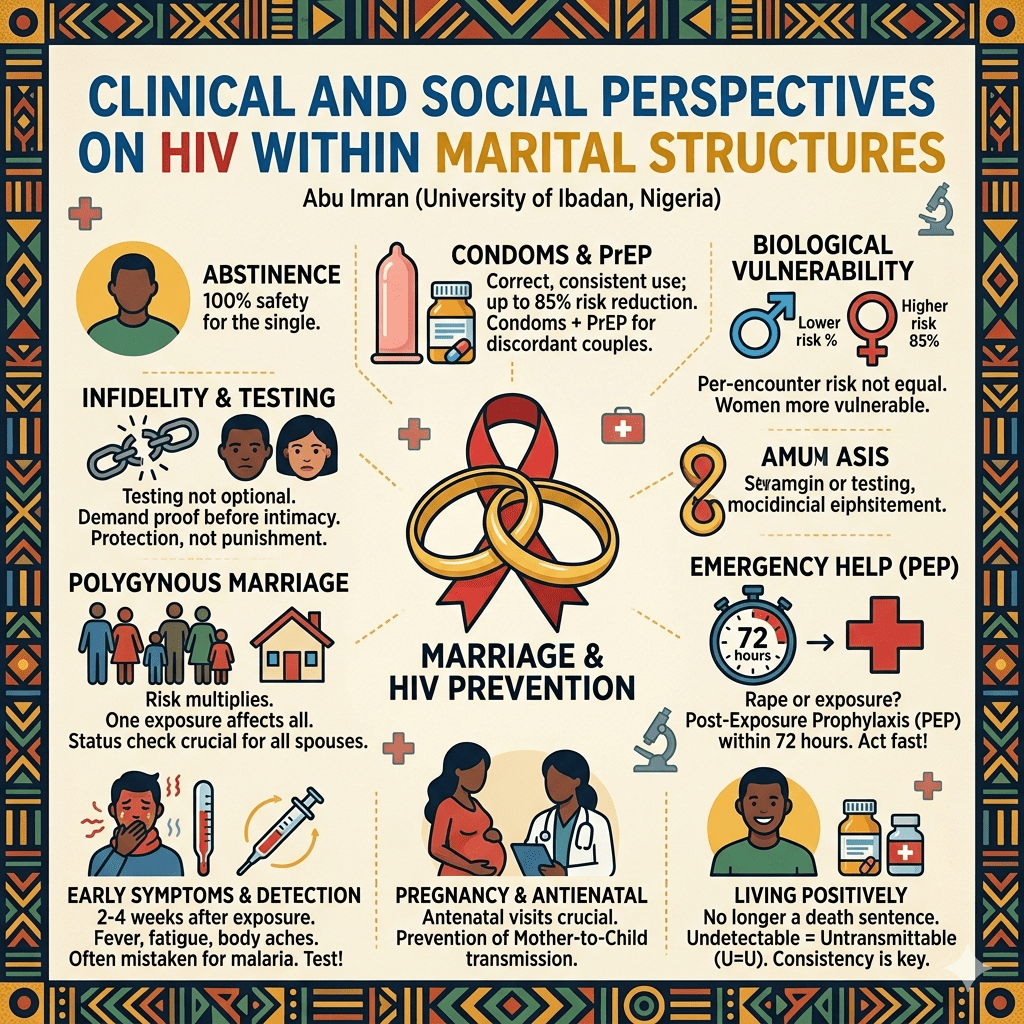
●Abstinence remains the only 100% certain way to avoid HIV transmission. If you’re single, this is the safest choice for your health.
● Condoms can reduce the risk of transmission by up to 85%. However this depends on correct and consistent use. Despite its safety, it is prone to slippage or breakage during use, especially during rough intercourse. Condoms can come in handy for instances where one couple is HIV positive while the other is negative. In this case, the negative partner should consider condom use combined with PrEP (Pre-exposure Prophylaxis). This PrEP is a medication for people working in high-risk environments like doctors and other health workers who treat HIV patients.
● HIV is real and it’s in our communities. In Nigeria and across Africa, sexual transmission remains the primary way people acquire HIV. Like they say “e no dey show for face”. HIV positive persons can look beautiful, handsome and ravishing too. Don’t poisonous plants have attractive flowers too?
●The risk of transmission is not equal for men and women (you can say biology is not a feminist). When a man with HIV has unprotected s*x with a woman, the transmission risk per encounter is roughly 0.08–0.19%. When a woman with HIV has unprotected sx with a man, the risk of transmission is lower at 0.05–0.1%. This means women are biologically more vulnerable to acquiring HIV through heterosexual contact. This is why women cannot afford to be passive about their sexual health. However, this is just for emphasis. A risk is a risk nevertheless, irrespective of your gender! Act responsibly.
● When infidelity happens, testing is not optional, it’s survival. If your spouse has had sexual relations outside your marriage, the choice to forgive him/her is all yours to make; but understand that proof of health is important. Demand that he (or she) get tested for HIV and other STIs before any further intimate contact. This is not punishment, it’s protection of your own life. I say this often because I know it is an often ignored recommendation, and the guilty parties are often reluctant to go for a test. No apology, no promise, no explanation is worth your health.
●In polygynous marriages, the risk multiplies. If one partner in the household contracts HIV or an STI, it can spread to multiple spouses and their children. Men should be mindful of who they marry into their existing marriage. You know a lady is wayward, living a reckless life, yet you have your eyes set on her to marry as your second wife (as some claim they want to do Jihād on her). The problem is that you are not only putting yourself at risk, but your entire family as well! If HIV and other STI status is required in monogamy, it is even more important in polygyny.
●If you’ve been r*ped or fear you’ve been exposed to HIV, there is help. Post-exposure prophylaxis (PEP) is a combination of HIV medications you can take within 72 hours (3 days) of exposure. It works best when started as soon as possible. If this has happened to you, go to a hospital or health clinic immediately, do not waste time. I will extend this to spouses that have had intercourse with their spouse only to discover they have recently been unfaithful. If the duration is within 72 hours, you can consider PEP as a precautionary measure alongside getting tested.
●Two to four weeks after exposure to HIV, some people develop flu-like symptoms: fever, fatigue, body aches, sore throat, or rash. Many mistake this for malaria or flu. If you’ve had unprotected s*x and develop these symptoms, get tested. Early detection changes everything.
●If you are pregnant, go for your antenatal visits. Part of what is done is checking your HIV status and ensuring prevention of mother-to-child transmission of the infection.
●HIV is no longer a death sentence. If you test positive, modern medications can reduce the virus to undetectable levels, allowing you to live a normal lifespan and preventing transmission to your partner. But you must start treatment and stay consistent.
●Protect yourself. Know your status. Infidelity is more than just breakage of trust. It is deliberately putting your spouse’s life at risk!
Abu Imrān
(Originally posted by Abu Imran on Facebook, University of Ibadan, Nigeria. Only the title was given by me. The rest remains as it was posted on Facebook.)
 Saheehus-Seerah