Did Imam Ash-Shafi’i seek blessings from the grave of Imam Abu Hanifah?

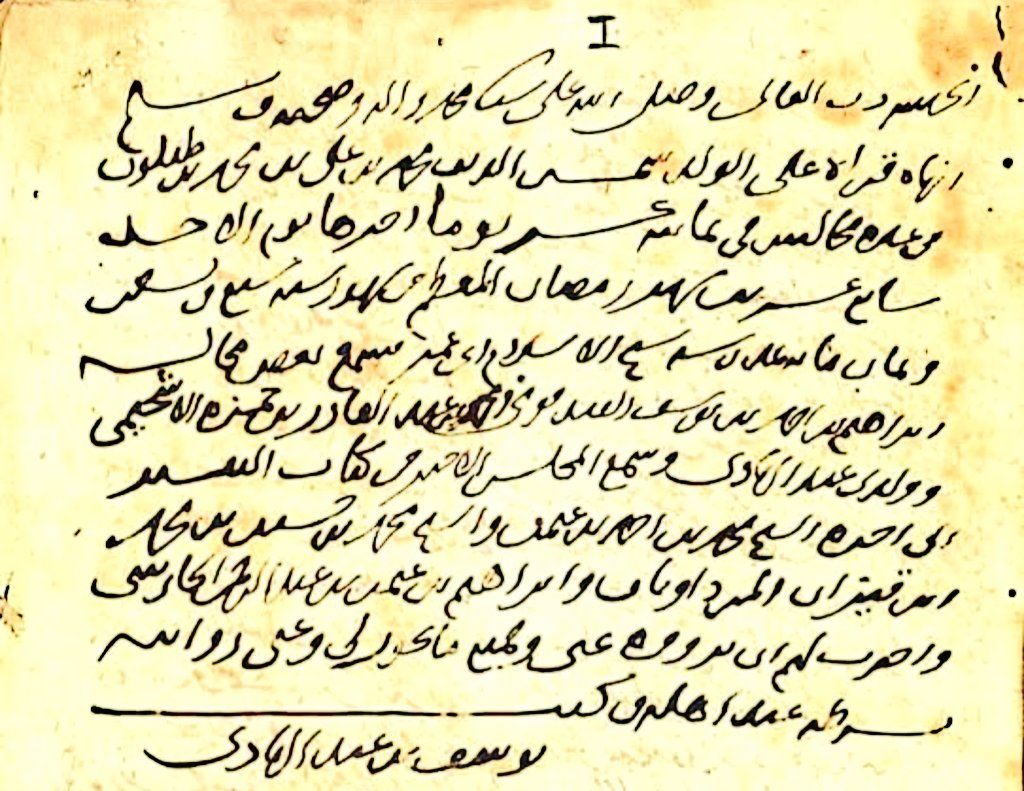
It is said that Imam (Muhammad bin Idrees) Ash-Shafi’i said: “I do Tabarruk (seek blessings) with Abu Hanifah, and I go to his grave every day -meaning for visit- and when I have a need I pray two Rak’ah and I go to his grave and ask my need to Allah Ta’ala and I do not leave it until it is fulfilled” [Tareekh Al-Baghdad Volume 1 Page 123]

Shaikh Muhammad Nasiruddeen Al-Albani (Rahimahullah) said in his Silsilatul-Ahadith Ad-Daeefah wal-Mawdooah (Volume 1, page 78-79):

As for Al-Kawthari’s (Shaikh Muhammad Zahid Al-Kawthari, died Dhu al-Qi’dah 1371 AH / August 11, 1952) statement in his “Maqalaat” (p. 381) that Imam Ash-Shafi’i sought blessings through Abu Hanifa, which is mentioned in the beginning of Al-Khateeb’s “Tareekh” with a sound chain of transmission, it is one of his exaggerations, rather his mistakes.

For he refers to what Al-Khateeb reported (1/123) through the route of ‘Umar ibn Ishaq ibn Ibrahim, who said: ‘Ali ibn Maimun informed us, saying: I heard Ash-Shafi’i say: “I seek blessings through Abu Hanifa, and I visit his grave every day – meaning, as a visitor. If a need arises for me, I perform two rak’ahs, then come to his grave and ask Allah, The Exalted, for my need through him. My need is not delayed from being fulfilled.”‘

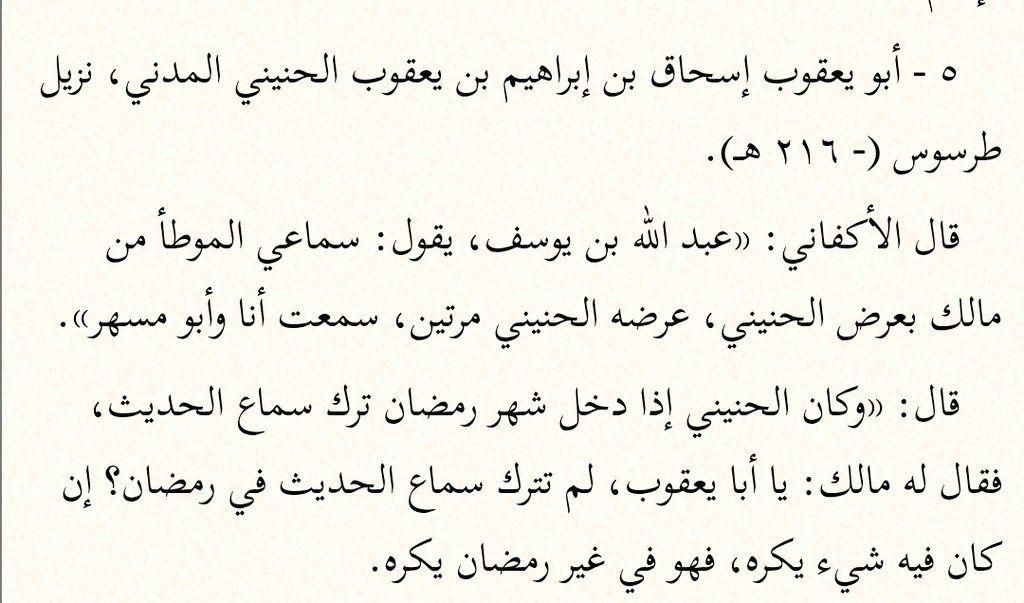
This narration is weak, rather, it is false. For ‘Umar ibn Ishaq ibn Ibrahim is unknown, and he is not mentioned in any of the books of Rijal (biographical evaluations of narrators). It is possible that he is ‘Amr – with a fatha on the ‘Ain – ibn Ishaq ibn Ibrahim ibn Hamid ibn As-Sakan Abu Muhammad At-Tunisi. Al-Khateeb (12/226) mentioned him, stating that he was a Bukhari (from the land of Bukhara) who came to Baghdad as a pilgrim in the year 341 AH, and he did not mention any criticism or praise of him. He is unknown in terms of his reliability, and it is unlikely that he is the one being referred to, as there is a gap of approximately one hundred years between their deaths. In any case, it is a weak narration that does not provide any evidence for its authenticity.

Sheikh Al-Islam (Ibn Taymiyyah) mentioned the meaning of this narration in “Iqtida’ As-Sirat Al-Mustaqeem”, then established its falsehood, saying (p. 165): “This is a known lie, which is false according to anyone who has knowledge of Hadith transmission. For when Ash-Shafa’i came to Baghdad, there was no grave in Baghdad that was visited for the purpose of supplication. Rather, this was not known during Ash-Shafi’i’s time. Ash-Shafi’i had seen in the Hijaz, Yemen, Sham, Iraq, and Egypt the graves of Prophets, the Sahabah, and the Tabain, whose occupants were more virtuous in his eyes and in the eyes of Muslims, than Abu Hanifa and his likes among the scholars. So why would he seek blessings only through him? Furthermore, Abu Hanifa’s companions, who knew him, such as Abu Yusuf, Muhammad, Zafar, Al-Hasan ibn Ziyad, and their likes, did not seek blessings through him, nor through anyone else. It has been established that Ash-Shafi’i disliked the veneration of the graves of created beings, fearing that it may lead to temptation. Only someone who lacks knowledge and religion would fabricate such stories, or perhaps what is reported from such stories is from an unknown narrator who is not recognized.” End quote.

(Translated by Mohammed bin Thajammul Hussain Manna.)

Invoking the Dead Between Shirk (Polytheism) and Innovation (in Religion)

[From islamweb.net, question number 187225]

Question: Our esteemed scholars, we know that it is not permissible under any circumstances to ask for anything from a person who has died, even if it is the Messenger of Allah, peace be upon him. However, some brothers disagreed with me regarding the ruling of this action, which is when a person says, ‘O Messenger of Allah, seek forgiveness for me or intercede for me,’ after the death of the Messenger of Allah, peace be upon him. I told them that this is shirk (polytheism) because it is invoking someone other than Allah. As for invoking Allah and saying, ‘By the status of so-and-so’ or ‘By the right of so-and-so,’ the scholars have said that this is Bid’ah (innovation) because the supplication is directed to Allah but is tied to the status or right of someone else. However, some brothers tell me that this action—requesting intercession and seeking forgiveness from the Messenger of Allah, peace be upon him, such as saying, ‘O Messenger of Allah, intercede for me,’ after his death—is Bid’ah and not Shirk. They even say that there is a difference of opinion among the four Imams regarding this matter. Therefore, I kindly ask your Eminence to guide me to something I can read about this issue. I also hope that you will favour us with an answer now by quoting the statements of the four imams on this matter and direct me to the fatwa numbers on your website that discuss this issue so that I can understand it in detail. May Allah reward you with all good for your efforts on our behalf.”

Answer: Praise be to Allah, and may peace and blessings be upon the Messenger of Allah, his family, and his companions.

As for what follows; Whoever comes to the grave of the Prophet, peace be upon him, and says, ‘O Messenger of Allah, seek forgiveness for me,’ or something similar, such as asking the Prophet, peace be upon him, for supplication after his death—this is not permissible. It is among the innovations (Bid’ah) and pathways to Shirk (polytheism). Regarding this, Shaykh Al-Islam Ibn Taymiyyah said, ‘No scholar would doubt that this is impermissible and that it is among the innovations that none of the predecessors of this Ummah ever practiced.’ End quote. In another instance, he described it as, ‘A pathway to shirk.’ End quote. We have previously explained this in Fatwa No. 177455.

Shaykh Al-Islam (Ibn Taymiyyah) also said: ‘As for a person coming to the Messenger of Allah, peace be upon him, at his grave and saying, “Seek forgiveness for me,” or “Ask your Lord for me,” or “Pray for me,” or saying in his absence, “O Messenger of Allah, peace be upon him, pray for me, or seek forgiveness for me, or ask your Lord for such-and-such for me”—this has no basis. Allah has not commanded it, nor has any of the known Salaf (pious predecessors) of this Ummah during the first three generations done it. This was not known among them. If this were something recommended, the Salaf (predecessors) would have done it, and it would have been known and widespread among them and transmitted from them. Indeed, if such an act were a means to the forgiveness of sins or the fulfilment of needs, it would have been something that people would have been eager to do and transmit, especially since they were the most eager for good deeds. Therefore, if it is not known that they did this, and no one has transmitted it from them, it is clear that this is not something recommended or commanded.’ End quote.”

He (Shaykh al-Islam Ibn Taymiyyah) also said in another place: “Some of the later generations have introduced innovations in this matter that none of the four Imams ever recommended, such as asking for forgiveness (from the Prophet). Some ignorant common people have gone even further, doing things that are prohibited or constitute disbelief according to the consensus of Muslims, such as prostrating to the chamber (of the Prophet) or circumambulating it, and similar actions—though this is not the place to discuss such matters.’ End quote.”

Dr. Shamsuddin Al-Afghani said in his doctoral thesis, ‘The Efforts of Hanafi Scholars in Refuting Grave-Worshipping Beliefs’ (Juhood Ulama Al-Hanafiyyah Fee Ibtal Aqaid Al-Qubooriyyah): “Imam Al-Alusi Mahmud, the exegete and Mufti of the Hanafis in Baghdad, stated—and he was followed by his son Nu’man Al-Alusi and the scholar Al-Khujandi, with the wording being from the former—”The precise statement on this matter is that seeking help from a created being and making him a means by asking him for supplication is undoubtedly permissible if the one being asked is alive… However, if the one being asked is dead or absent, no scholar would doubt that this is impermissible, and that it is among the innovations that none of the predecessors (Salaf) ever practiced…” End quote.

Shaykh Abdul Latif bin Abdul Rahman Al Ash-Sheikh said in ‘Kashf Shubuhat Ibn Jurjees’: ‘Then it is said to this polytheist: If you call upon this (being), and you believe that he is more knowledgeable about your condition, more capable of answering your request, or more merciful to you than your Lord, then this is ignorance, misguidance, and disbelief. If you know that Allah is more knowledgeable, more capable, and more merciful, then why have you turned away from asking Him to asking others?… If you say, “If he (the created being) supplicates to Allah, his supplication is answered more greatly than if I were to supplicate myself,” then this falls under the second category: not asking him to act or invoking him directly, but rather asking him to supplicate for you, just as one might say to a living person, “Pray for me,” or as the Companions would ask the Prophet, peace be upon him, to supplicate for them. This is permissible when dealing with the living—as previously mentioned—but as for the dead, whether they are prophets, righteous people, or others, it has not been legislated for us to say, “Pray for us,” or “Ask your Lord for us,” or anything similar. None of the Companions or the Tabi’in (successors) did this, none of the imams commanded it, and no hadith has been reported regarding it… Rather, it is an innovation for which Allah has sent down no authority.’ End quote.”

Shaykh Ibn Uthaymeen said in a commentary on the book Iqtida’ As-Sirat Al-Mustaqeem:

‘There is a difference between asking a deceased person to ask Allah (for something) and asking them to fulfill a need directly. If you ask them to fulfill a need, this is major Shirk (polytheism). If you ask them to ask Allah (for something), this is an innovation (Bid’ah) and misguidance, because when a person dies, their deeds come to an end, and supplication is part of their deeds. So how can you ask them for something they cannot do? If you go to a deceased person and say, “Ask Allah for me,” they will not ask Allah for you. Similarly, if you say at the grave of the Prophet, peace be upon him, “Intercede for me,” this is forbidden and a reprehensible innovation. However, if you say, “O Messenger of Allah, save me from the Fire,” this constitutes major shirk.’ End quote.

As for the statements of the imams on this matter and references to this issue, we have previously mentioned some of this in Fatwa No. 128815. For further benefit, you may refer to Fatwa No. 14616.

[End of answer from islamweb.net. #187225]

(Translated by Mohammed bin Thajammul Hussain Manna.)

Praising Rulers On The Pulpits

Shaikh Abdullah Aba Butain was asked about making supplications in the sermon for specific individuals…etc.?

He answered: Some people justify this by citing certain scholars’ opinions that making supplications for specific individuals in the sermon is permissible, though they did not say it is recommended; furthermore:

Making supplication is good, praying that Allah reform and guide them, and through them bring about reform and grant them victory over disbelievers and corrupt people, unlike what appears in some sermons of false praise and commendation;

The ruler should be supplicated for, not praised, especially with qualities they do not possess, and those (rulers) who are praised in sermons (these days) are those who have caused the death of the religion (have harmed the religion), so those who praise them are mistaken, none among today’s rulers deserve praise or commendation, rather they should be supplicated for with guidance and success.

What is obligatory upon the ruler first is to begin with their subjects by requiring them to follow Islamic laws; removing wrongdoing, enjoining good and forbidding evil, and establishing legal punishments,

This is more important and obligatory than fighting the disbelieving enemy, and this helps in fighting disbelievers, as it is narrated: “Indeed, you fight those whom you fight through your deeds.”

Ad-Durar As-Saniyyah Fee Ajwibatin Najdiyyah (Volume 5, page 41).

Note: Shaikh Abdullah bin Abdulrahman Aba Butain was one of the prominent scholars of Najd in the 13th century Hijri. He served as a judge in Riyadh and was a member of the Council of Senior Scholars of Saudi Arabia at that time. He was known for his vast knowledge and jurisprudential investigations, especially in the Hanbali school. He authored numerous works in creed and jurisprudence, and was among the defenders of the methodology of the predecessors (Manhaj-us-Salaf). He died in 1282 Hijri, leaving behind a significant scholarly legacy.

(Translated by Mohammed bin Thajammul Hussain Manna on 22nd Jan 2025)

Statement on the Crime of Westernizers On the Salmani Era (Era of King Salman bin Abdul Azeez) and the Era Before It -Shaikh Abdul Muhsin Al-Abbaad (Hafidhahullah)

In the name of Allah, the Most Gracious, the Most Merciful.

Praise be to Allah alone, and may Allah’s peace, blessings, and salutations be upon the one after whom there is no prophet, our Prophet Muhammad, and upon his family and companions.

Amma Ba’ad (To proceed)- The period of King Abdullah bin Abdul Azeez’s reign, may Allah have mercy upon him, which lasted approximately ten years, was a turning point in the history of the Saudi state, during which there was leniency regarding women’s unveiling and their mixing with men in the Shura Council, various media outlets, and elsewhere. This was caused by the empowerment and dominance of the Westernizers during his era, which gave them authority and influence through which they strove diligently to spread corruption in the land of the Two Holy Sanctuaries after its reformation (when the third Saudi state was established in Hijaz and Najd).

Similarly, they pursued the deviation of (modern) education and the establishment of law colleges and other such things that were foreign to this country. The country had generally been safe from this type of dissolution before King Abdullah’s era, may Allah have mercy upon him, especially during the era of King Fahd, may Allah have mercy upon him, which lasted approximately a quarter of a century. I have mentioned in a previous statement that among the reasons for this safety was the presence of the Shaikh of Islam of his time, our Shaikh Abdul Azeez bin Abdullah bin Baz, may Allah have mercy upon him, and I described his presence as being like the continuation of the barrier of Yajuj and Majuj.

Among what he (Shaikh Ibn Baaz) said, as stated in his Majmua Fatawa (5/224): “It is well known that calling for women to unveil their faces is a false call that is rejected by both Islamic law and reason, and is contrary and hostile to the Islamic religion,” until he said: “And those who call for and promote unveiling do so either out of ignorance, heedlessness, and lack of knowledge of its dire consequences, or out of malicious intent and ill will, showing no concern for virtuous morals nor giving them any weight.”

During King Abdullah’s reign, may Allah have mercy upon him, the Westernizers planned to introduce women into the Shura Council and municipal councils, both as candidates and voters. The implementation of their entry into the Shura Council was carried out during his reign with the selection of thirty women, who were endorsed by the British Ambassador to the Kingdom, who said: “They all have high international expertise in all fields,” as reported in Al-Riyadh newspaper on 5/3/1434 AH. As for their entry into municipal councils, the Westernizers worked to defer it to the era of the Custodian of the Two Holy Mosques, King Salman bin Abdul Azeez, may Allah preserve him and strengthen His religion through him, and it was implemented in the new cycle of municipal councils.

The cunning Westernizers wronged the Saudi nation, both government and people, by targeting the Salmani era with efforts to bring about three things: issuing regulations for the Committee for the Promotion of Virtue and Prevention of Vice that resulted in weakening it and diminishing its authority, about which I wrote a statement titled: “The Westernizers Who Follow Their Desires Want the Land of the Two Holy Sanctuaries to Deviate Greatly,” published on 14/7/1437 AH, and their endeavor to establish a General Entertainment Authority, which raises concerns about exceeding what is permissible to what is religiously forbidden, from which this country had previously been safe, such as opening movie theaters that anger Allah and destroy morals, about which I previously wrote a statement titled: “Statement on the Danger of Opening Movie Theatres in the Land of the Two Holy Sanctuaries,” published on 1/1/1430 AH.

And their effort to appoint a female deputy head of the General Sports Authority for the women’s section, which was reported by Al-Arabiya on 5/11/1437 AH. They mentioned that less than a week after her appointment, she attended games in Brazil, and that Saudi Arabia participated in these games with eleven athletes, including four female athletes whose names were mentioned. This news – if true – does not bode well for this country, and how great is the calamity in this event which shows the extent of dissolution and decline that some Saudi girls have reached. We seek refuge in Allah from failure. I had previously written a statement titled: “The Danger of Sports Clubs for Girls” published on 5/7/1430 AH, and another titled: “Relying on Scholars, Not the Shura Council, Regarding the Ruling on Physical Education for Girls” published on 20/7/1435 AH.

Allah, the Mighty and Sublime, said: {Then remind with the Quran whoever fears My threat}. And the best reminder in these painful occasions for both the rulers and the ruled, to warn and protect them from the trials of Westerners, Westernizers and their like, are the words of Allah, the Mighty and Sublime: {O you who have believed, if you support Allah, He will support you and plant firmly your feet}, and His words: {And Allah will surely support those who support Him. Indeed, Allah is Powerful and Exalted in Might (40) [And they are] those who, if We give them authority in the land, establish prayer and give zakah and enjoin what is right and forbid what is wrong. And to Allah belongs the outcome [of all] matters}, and His words: {Then We put you, [O Muhammad], on an ordained way concerning the matter [of religion]; so follow it and do not follow the desires of those who do not know (18) Indeed, they will never avail you against Allah at all. And indeed, the wrongdoers are allies of one another; but Allah is the protector of the righteous}, and His words: {And judge between them by what Allah has revealed and do not follow their inclinations and beware of them, lest they tempt you away from some of what Allah has revealed to you}, and His words: {Then is it the judgment of [the time of] ignorance they desire? But who is better than Allah in judgment for a people who are certain [in faith]}, and His words: {And whoever exchanges the favor of Allah after it has come to him – then indeed, Allah is severe in penalty}, and His words: {That is because Allah would not change a favor which He had bestowed upon a people until they change what is within themselves}, and His words: {Then, did the people of the cities feel secure from Our punishment coming to them at night while they were asleep? (97) Or did the people of the cities feel secure from Our punishment coming to them in the morning while they were at play? (98) Then did they feel secure from the plan of Allah? But no one feels secure from the plan of Allah except the losing people}, and His words: {And when We intend to destroy a city, We command its affluent but they defiantly disobey therein; so the word [i.e., deserved decree] comes into effect upon it, and We destroy it with [complete] destruction}, and His words: {But if you are patient and fear Allah, their plot will not harm you at all. Indeed, Allah is encompassing of what they do}, and His words: {And never will the Jews and the Christians approve of you until you follow their religion. Say, “Indeed, the guidance of Allah is the [only] guidance.” If you were to follow their desires after what has come to you of knowledge, you would have against Allah no protector or helper}, and His words about some of the People of the Book: {And do not believe except in those who follow your religion.” Say, “Indeed, the [true] guidance is the guidance of Allah”}, and in these two verses, guidance is restricted to Allah’s guidance, and whatever else is blindness and misguidance, and Allah, the Mighty and Sublime, has said: {And what can be beyond truth except error?}

I ask Allah, the Mighty and Sublime, to protect this country, both government and people, from all evil, and to guide its rulers to all that brings them and their subjects righteousness, success, and happiness in this world and the Hereafter. Indeed, He is All-Hearing, All-Responding.

And may Allah’s peace, blessings, and benedictions be upon our Prophet Muhammad and upon his family and companions.

[Dated: 10/10/2016 CE, 9th Muharram 1438 AH]

Source

Shaikh Abdul Muhsin Al-Abbad on the permissibility of publicly criticizing Muslim rulers in some cases. English translation below.

Shaikh Abdul Muhsin Al-Abbad on the permissibility of publicly criticizing Muslim rulers in some cases. English translation below.

https://www.youtube.com/watch?v=Q-nLn1rdKfc&t=33s

(0:01) Presenter: The question that is repeatedly asked is regarding the permissibility of openly doing Inkaar (criticism) of the Imams (Muslim leaders) in front of the general public or openly?

(0:12) Shaikh Abdul Muhsin Al-Abbad Al-Badr: “If no harm results from it, there is no objection. That is, if one witnesses something objectionable, they should clarify it (0:20). They should clarify this objectionable matter because when the wrong becomes apparent, denouncing it also becomes apparent as a consequence of the wrong’s manifestation (0:41).”

Presenter: There are those who say that there is a distinction between giving advice to rulers (Naseehah) and denouncing what is wrong (Inkar-ul-Munkar), say that it is Naseehah (advice) that should be given privately (0:49). As for the first matter, it is known that if something wrong is done publicly, then it should be criticized publicly (0:55), using Abu Sa’eed Al-Khudri’s action as an evidence (0:58).

Shaikh Abdul Muhsin Al-Abbad Al-Badr: Undoubtedly, giving advice in private and writing to them or contacting them (1:04) is without doubt beneficial, and its benefit will be achieved by Allah’s permission (1:11). However, if something wrong occurs and people witness it, remaining silent about the wrong essentially means accepting it [the evil] (1:23) and failing to denounce it. Thus, denouncing it and explaining that it is impermissible is similar to what occurred with Abu Sa’eed Al-Khudri.

[End of the video.]