The main aim of our site is to purify The Seerah of Prophet Muhammad ﷺ from weak and fabricated narrations using the works of the scholars of Islam. We may add other beneficial material as well.
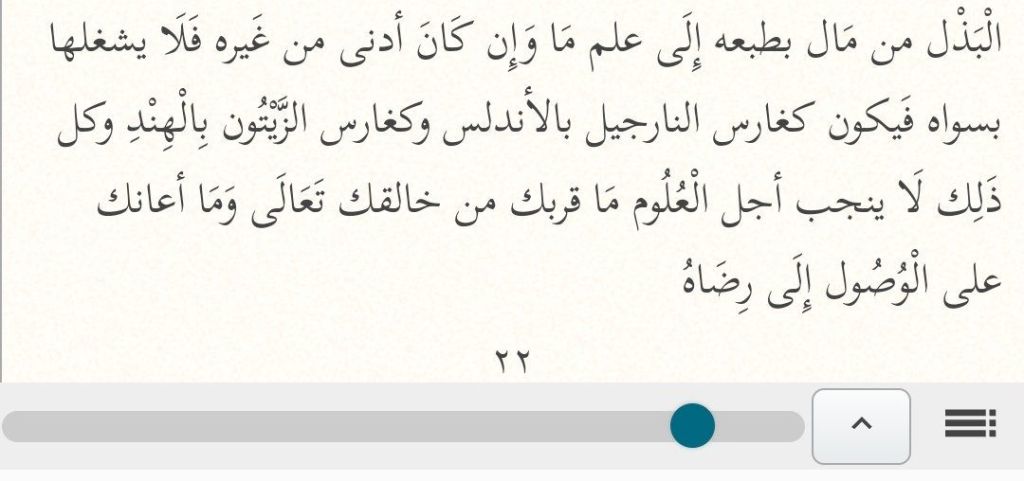
“If you find that you have a natural inclination towards a particular science – even if that science is inferior to others – don’t preoccupy yourself with other than it, lest you become like the one who tries to grow coconut trees in Andalus (Spain) or olive trees in India; these futile efforts will not bear any fruits.”*
(Al-Akhlaq was-Siyar 1/22, quote translated by Shah Idris @Shahidris9 on Twitter.)
The lessons that we can take from the quote above are:
Follow Your True Calling
Pursue knowledge that resonates with your heart, for therein lies your true potential and fulfillment. Choose a field of study or a sport based on your genuine interest, not due to external pressures.
Avoid Futile Pursuits
Do not waste time on endeavors that do not suit your nature. Success stems from aligning effort with aptitude. Engaging in work that you dislike is less likely to make you an expert, leading instead to dissatisfaction and a lackluster performance.
Respect the Nature of Each Field
Every science and skill has its own place and value. Understand where you excel and focus your energies there. No art, science, or skill is of lesser value as long as it is permissible and beneficial according to the Qur’an and Sunnah. This principle is crucial when pursuing your interests and respecting others’ choices, even if they seem ‘lowly’ but are permissible and beneficial.
Maximize Your Strengths
Concentrate on your natural strengths, as it is through them that you can achieve excellence and contribute meaningfully to society.
Parenting Insight
Parents should recognize that each child is unique. Forcing a child into a pursuit they do not desire, despite it being Islamically permissible, is less beneficial than supporting them in their natural interests and talents. This approach fosters genuine growth and satisfaction.
–Benefits added by Mohammed bin Thajammul Hussain Manna.
Why did Umar ibn Al-Khattab dismiss Khalid ibn Al-Waleed (May Allah be pleased with the both)?
Author: Ibrahim bin Muhammad Al-Huqail from ‘Min Zaakiratit-Tareekh (From The Memoirs of History)’. Translated by: Mohammed bin Thajammul Hussain Manna (slightly adapted). [Taken from Islamweb.net Qatar]
The status of the Sahabah (the companions of Prophet Muhammad), may Allah be pleased with them all, is exalted in the sight of Allah Almighty. Allah chose them from among the world to accompany the best of messengers and the seal of the prophets, Prophet Muhammad (Peace and blessings be upon him). Allah established the true religion (of Islam) through their hands across the earth. They hold a status with Allah that none can attain, except the Prophets and Messengers (who are higher than the Sahabah). Allah is pleased with them, and they are pleased with Him, as Allah says: “And the foremost to embrace Islâm of the Muhâjirûn (those who migrated from Makkah to Al-Madinah) and the Ansâr (the citizens of Al-Madinah who helped and gave aid to the Muhâjirûn ) and also those who followed them exactly (in Faith). Allâh is well-pleased with them as they are well-pleased with Him. He has prepared for them Gardens under which rivers flow (Paradise), to dwell therein forever. That is the supreme success.” [Quran, Surah At-Tawbah 9:100].
They hold a special place among the Muwahhidoon (the pure monotheists) amongst the Muslims that is not shared by others. Muslims recognize their virtues and the high status that Allah Almighty has granted them. Therefore, they love and ally with them, and they hate those who hate them, and they oppose those who oppose them.
The love of the believers for the Sahabah (May Allah be pleased with them) is part of their love for the Prophet (Peace and blessings be upon him). Similarly, the hatred of the misguided, such as disbelievers, hypocrites, and innovators, towards the Sahabah, is part of their hatred towards the Prophet (Sal-Allahu ‘Alaihi Wa-Sallam) whether they intend it or not, and whether they are aware of it or not.
Abdullah Ibn Mas’ud (May Allah be pleased with him) said: “Evaluate people by their companions.” Imam Malik (May Allah have mercy on him) said: “These people wanted to slander the Prophet (Peace and blessings be upon him) but they could not do so; therefore, they slandered his companions so that it would be said: ‘He was a bad man, for if he had been righteous, his companions would have been righteous.'”
Hatred and belittling of the Companions, may Allah be pleased with them, is in reality of the matter, hatred and belittling of the religion from two aspects:
They follow the religion of the Prophet (Sal-Allahu ‘Alaihi Wa-Sallam); they are his companions and close friends. The Prophet, peace and blessings be upon him, said: “A person is on the religion of his close friend, so let one of you look at whom he befriends.” Their religion is the religion of the Prophet, peace and blessings be upon him, and belittling them is belittling their religion.
They are the carriers and transmitters of the religion to us. Abu Zur’ah Ar-Razi (may Allah have mercy on him) said: “If you see a man belittling any of the Companions of the Messenger of Allah, peace and blessings be upon him, know that he is a heretic. That is because the Messenger, peace and blessings be upon him, is true, the Quran is true, and what was conveyed to us through the Companions of the Messenger of Allah, peace and blessings be upon him, is also true. They only want to criticize our witnesses (i.e. the Sahabah) to nullify the Quran and the Sunnah, and the criticism applies more to them. And they are the heretics (in reality).”
Among the greatest ways to make people lose interest in Allah’s Shariah is to criticize its transmitters. We have seen how the enemies of Islam, from malicious ‘Orientalists’ to infiltrating hypocrites, do not dare to directly criticize the Shariah, so as not to provoke people or repel them from their heretical opinions. Instead, they aim their criticism at the Sahabah highlighting unreliable and fabricated narrations and summarizing Islamic history through them. They then present this distorted view to people as the essence of Islamic history and the reality of the early Muslims, including the Sahabah, the Taba’een (Followers and students of the Sahabah), the guided Imams, and the leaders of the Mujahidoon, often in the form of stories, novels, historical studies, or similar formats.
These writings, which criticize the Sahabah, may Allah be pleased with them, are often presented under the guise of neutrality and historical objectivity. The authors claim to approach their writings about the Sahabah free from any pre-existing biases that might affect their judgment of the transmitted narrations, either positively or negatively. The purpose of these introductions in their critical writings about the best of people after the prophets is to gain the reader’s trust and acceptance of what they write.
There is no good in someone who writes about the virtuous figures of the Ummah while openly declaring his non-allegiance to this Ummah. Instead, he has chosen the enemies of Islam, from Orientalists and innovators, as his preferred associates, aligning with them in thought and writing. He then claims objectivity and neutrality in his writings, as if saying: “Take (from) me!”
Over the past few years, I have encountered several writings, including articles, studies, and stories that highlight the issue of Umar ibn Al-Khattab’s dismissal of Khalid ibn Al-Waleed from leading the Muslim armies (Radi Allahu ‘Anhuma). These writings focus on narrations and accounts that do not befit the esteemed status of the Sahabah and neglect the widely known reports that demonstrate their faith, piety, and sincerity in their words and deeds. Many have woven a web of illusions and absurdities based on unreliable and false narrations, adding a thousand lies from their sick minds and deep-seated malice, like soothsayers. I have also heard of some who spread these views through television discussions and seminars.
The reality is not as those misguided in their religion and cursed for their criticism of the Sahabah portray. It was simply an Ijtihad (a personal judgment based on sound and proper reasoning) where Umar saw a benefit for the Muslims. This Ijtihad was a result of actions taken by Khalid, who also acted based on his own Ijtihad, getting some right and some wrong. Both of them, may Allah be pleased with them, are between one reward and two rewards.
[Added by translator: The author is alluding to the Hadith- Amr ibn Al-‘As reported: The Messenger of Allah, peace and blessings be upon him, said, “If a judge makes a ruling, striving to apply his reasoning and he is correct, he will have two rewards. If a judge makes a ruling, striving to apply his reasoning and he is mistaken, he will have one reward.” (Ṣaḥīḥ al-Bukhārī 7352, Ṣaḥīḥ Muslim 1716) Hadith translated by Abu Amina Elias.]
Reasons for Umar’s Dismissal of Khalid (Radi Allahu ‘Anhuma, May Allah be Pleased with Them Both):
Scholars of history and Maghazi (battles) have differed on the reason that led Umar to dismiss Khalid from leading the Muslim armies (as a commander-in-chief). They have summarized the reasons into three main ones:
Due to Khalid’s severity (in dealing with issues): Umar was known for his severity (meaning strictness in matters) and did not want both the Caliph and the army commander to be equally severe. Abu Bakr was lenient, so it was appropriate for his army commander to be severe. When Umar became Caliph, he dismissed Khalid and appointed Abu Ubaidah, who was lenient, which suited Umar’s severity. Ibn Kathir (may Allah have mercy on him) said: “When the Khilafah (Caliphate) passed on to Umar (after the death of Abu Bakr), he dismissed Khalid and appointed Abu Ubaidah ibn Al-Jarrah, ordering him to consult Khalid; thus, he combined the trustworthiness of Abu Ubaidah with the bravery of Khalid.”
Sheikh Al-Islam Ibn Taymiyyah (may Allah have mercy on him) said: “Likewise, Abu Bakr, the successor of the Messenger of Allah (peace and blessings be upon him), continued to employ Khalid in the wars against the apostates, even though he was told that Khalid had a certain inclination (towards severity), but he did not dismiss him (i.e. Khalid) because the benefit of keeping him outweighed the harm. Moreover, there was no one else to take his place. The main ruler (Caliph) should balance his severity with the leniency of his deputy. If the ruler is lenient, the deputy should be severe, and if the ruler is severe, the deputy should be lenient, to strike a balance. Therefore, Abu Bakr preferred to appoint Khalid, while Umar preferred to dismiss him and appoint Abu Ubaidah because Khalid was as severe as Umar, while Abu Ubaidah was as lenient as Abu Bakr. Each appointed the one who would best balance their own character.” Supporting what Ibn Taymiyyah mentioned is that Umar sought to dismiss Khalid during Abu Bakr’s time, saying: “Dismiss him, for there is recklessness in his sword.” Abu Bakr replied: “I will not sheathe a sword Allah has unsheathed against the disbelievers.”
Ibn Kathir (may Allah have mercy on him) said: “The point is that Umar continued to urge Abu Bakr to dismiss Khalid, saying that there was recklessness in his sword, until Abu Bakr summoned Khalid to Madinah. He arrived wearing his armour, stained with blood…”
Khalid’s severity (harshness in dealing with issues) is also evidenced by his killing of captives when the Prophet (peace and blessings be upon him) sent him to the Banu Jadhimah tribe. They said: “Sabana-Sabana (which may mean ‘We have left our religion, we have left our religion’),” but Khalid did not understand that they meant they had embraced Islam (by leaving their former religion of idol worship). The Prophet (peace and blessings be upon him) paid blood money for them and said: “O Allah, I disassociate myself from what Khalid has done.”
Al-Khattabi (may Allah have mercy on him) said: “The wisdom behind the Prophet’s disassociation from Khalid’s actions, despite not punishing him because he (Khalid) was making an Ijtihad, was to make it known that he (the Prophet) had not permitted it, lest anyone think it was done with his approval, and to deter others from similar actions in the future.”
Ibn Battal (may Allah have mercy on him) said: “The sin is waived for the one making Ijtihad in judgment if it turns out to be contrary to the consensus of scholars, but the liability (to recompense the loss because of the Ijtihad) remains (to be fulfilled) according to the majority, with a difference of opinion on whether it is borne by the ruler’s treasury or the state treasury.”
Al-Hafiz Ibn Hajar (may Allah have mercy on him) commented: “It appears that disassociation from the action does not imply sin for the doer or require compensation, as the sin is lifted for the one making Ijtihad, even if the action is not praiseworthy.”
Similarly, his (may Allah be pleased with him) killing of Malik bin Nuwayrah Al-Yarbu’ee, and the summary of his story is: Malik had allied with Sajah At-Tamimiyyah who had claimed prophethood. Later, Malik regretted his actions (of joining Sajah). Khalid headed to Al-Bitaah where Malik was stationed. Khalid sent detachments (of his army) to Al-Bitaah to call people (to Islam and obedience to the Caliph). The leaders of Banu Tameem met him with obedience and paid their Zakath, except for Malik bin Nuwayrah, who was confused about the matter, and withdrawn away from the people. The detachments captured Malik bin Nuwayrah and his companions. There was a disagreement among the detachments (regarding Malik’s Islam); Abu Qatadah Al-Harith bin Rab’i Al-Ansari – testified that they performed the prayer, while others said they neither called to prayer (i.e. did not give the Adhan) nor prayed. It is said that the captives spent the night in chains during a cold and harsh night. And a caller from Khalid’s camp announced to ‘keep their captives warm’, which was misunderstood as a command to kill them, leading to their execution (the execution of Malik bin Nuwayrah and his companions). When this news reached Khalid, he said: “If Allah wills something, it happens.” [End of Part-1.]
[Continuing from the previous article, Professor Ibrahim Al-Huqail mentions the reasons for Umar’s dismissal of Khalid (may Allah be pleased with them both). After mentioning the first reason in the previous article, he continues with the remaining reasons as follows:] [The following is Part-2]
The Second Reason: Umar dismissed Khalid because he spent (distributed) the spoils of war without consulting the Caliph. Az-Zubayr bin Bakkar (May Allah be pleased with him) narrated: “When Khalid received money, he distributed it among the Ahlul-Ghanaim (people who ought to receive the spoils of war) and did not report it to Abu Bakr. He acted ahead of Abu Bakr, doing things Abu Bakr did not agree with.” Al-Zubayr bin Bakkar also reported Malik bin Anas’s statement: “Umar said to Abu Bakr: ‘Write to Khalid that he should not give anything without your order.’ Abu Bakr wrote to him accordingly, but Khalid replied: ‘Either let me do my work, or you can take over.’ Umar suggested his dismissal, to which Abu Bakr responded: ‘Who can do what Khalid does?’ Umar replied: ‘I can.’ Abu Bakr said: ‘Then you will.’ Umar prepared to depart, but the Companions of the Prophet (peace be upon him) came to Abu Bakr and said: ‘Why is Umar leaving when you need him? And why have you dismissed Khalid when he suffices you?’ Abu Bakr said: ‘What should I do?’ They said: ‘Command Umar to stay and write to Khalid to continue his work.’ Abu Bakr did so. When Umar became Caliph, he wrote to Khalid: ‘Do not give away a sheep or a camel without my order.’ Khalid responded similarly as he had to Abu Bakr. Umar said: ‘I have not been honest with Allah if I advised Abu Bakr on something and did not implement it.’ He then dismissed him. Umar would call Khalid to work, but Khalid refused unless he was free to do as he wished.” This is supported by what Umar said: “I only blamed Khalid for his forwardness and what he did with the money.” Al-Hafiz Ibn Kathir mentioned: “It is said that he dismissed him because he granted ten thousand to (the poet) Al-Ash’ath bin Qays. When Khalid was dismissed and entered upon Umar, Umar asked him: ‘Where did you get this wealth from which you grant ten thousand?’ Khalid replied: ‘From the spoils and shares.'” Imam Ahmad narrated with a good chain that Umar apologized to the people in Al-Jabiya, saying: “I apologize to you for Khalid bin Al-Walid. I commanded him to withhold this money for the weak among the emigrants, but he gave it to the strong, the noble, and the eloquent. Therefore, I dismissed him and appointed Abu Ubaidah.” The Third Reason: Umar dismissed Khalid out of fear that people might be tempted by him. Khalid had never been defeated in battle, neither in the pre-Islamic period nor in Islam. Allah had combined in him courage, strength, wisdom, and skill in warfare, qualities rarely found in one person. This is indicated by:
Umar’s letter to the Governors of the provinces: “I did not dismiss Khalid out of dissatisfaction or betrayal, but because people were tempted by him. I wanted them to know that it is Allah who is the doer of deeds.”
What Saif bin Umar narrated that Umar said when he dismissed Khalid from Syria and Al-Muthanna bin Haritha from Iraq: “I only dismissed them so people would know that Allah grants victory to the religion, not by their help, and that all strength belongs to Allah.”
Ibn Awn’s statement: “When Umar took office, he said: ‘I will remove Khalid so people know that Allah grants victory to His religion, not by Khalid.'”
Umar might have dismissed Khalid for one of these reasons or a combination of them, seeing the benefit in his dismissal.
Regarding Khalid’s forwardness with the Caliph and his distribution of wealth without consulting him, it was his Ijtihad (independent reasoning). He might have seen it as winning the hearts of those he gave to, especially since he was experienced in war and knowledgeable about his enemy’s tactics. One would not think he would give except to those whose aid benefited Islam or to ward off their harm. Similarly, his severity was for Islam and its victory. He intended to instill fear in the enemies of Allah, both the polytheists and apostates. He made mistakes in some of his Ijtihad, but he is excused and rewarded, even though he was not confirmed in his mistakes nor deemed sinful in his reasoning. This is exactly what the Prophet (peace be upon him) did; he did not confirm Khalid’s actions with Banu Jadhima, nor did he deem him sinful or punish him. Likewise, Abu Bakr (may Allah be pleased with him) reproached him for his mistakes in Ijtihad but did not dismiss or deem him sinful, unlike Umar (may Allah be pleased with him), whose Ijtihad led him to dismiss Khalid and appoint Abu Ubaidah (may Allah be pleased with them all).
Doubts and Refutations: Some historians have narrated accounts suggesting Umar’s dismissal of Khalid was driven by personal feelings or dislike, mentioning an old wrestling match where Khalid overpowered Umar and broke his leg, which Umar held against him and dismissed him when he became Caliph.
These accounts are false for several reasons:
The fundamental principle regarding the Sahabah (may Allah be pleased with them) is the purity of their hearts towards one another, as described by Allah in His depiction of the people of Hudaybiyyah: “Harsh against the disbelievers, merciful among themselves” [Quran, Surah Al-Fath 48:29]. Umar was one of the people of Hudaybiyyah, so how could he bear ill feelings towards a believing warrior like Khalid? Allah also described the followers of the Companions with excellence: “And those who came after them say, ‘Our Lord, forgive us and our brothers who preceded us in faith, and do not place in our hearts any resentment towards those who have believed'” [Quran, Surah Al-Hashr 59:10]. If this description applies to the followers, it is even more fitting for the Companions themselves, especially those from the early emigrants like Umar and the Mujahideen leaders like Khalid. This strong principle should not be abandoned for mere historical narratives passed down by storytellers and chroniclers without any proper chain of transmission.
Ibn Hazm (may Allah have mercy on him) said: “For those whom Allah the Almighty informed us that He knew what was in their hearts and was pleased with them, and He sent down tranquillity upon them; it is not permissible for anyone to hesitate in their matter or to doubt them at all.”
It is well known and widely accepted that Umar (may Allah be pleased with him) was one of the most sincere people to the Ummah, known for his asceticism, justice, and his life full of numerous examples and evidence of this. It is inconceivable that he would deceive the Ummah and dismiss a needed leader unless he saw a greater benefit in doing so, without any personal interest.
Umar was one of the senior Sahabah and one of the rightly guided Caliphs whose Sunnah the entire Ummah was commanded to follow. The Prophet (peace be upon him) said: “You must follow my Sunnah and the Sunnah of the rightly guided Caliphs after me; cling to it with your molar teeth” (narrated by Ahmad and Abu Dawud). If Umar was a person who followed his own whims over the interest of the Ummah, would the Prophet (peace be upon him) praise him and command the Ummah to follow his Sunnah? Would Allah affirm this praise? This clearly shows the falsehood of these historical narratives that tarnish the image of the Companions of the Messenger of Allah (peace be upon him).
Any Muslim who reads a story or comes across a report that discredits the Companions should not accept it immediately. Instead, they should refer to the established texts in the Qur’an and Sunnah and judge these reports accordingly. Most of these narratives come from people of innovations and misguidance or contain unknown narrators or unaccepted reports, or lack chains of transmission altogether. Anyone who follows this approach will have the correct methodology, prioritizing the established over the unestablished.
This does not mean that the Sahabah are infallible; they are human and make mistakes, but they are closer to being right, especially those who were the earlier ones to enter into Islam. The accusation that Umar acted out of personal desire implies betraying the Ummah, prioritizing personal whims over public interest, and depriving Muslims of a leader who never lost a battle. This accusation is unacceptable against the rightly guided Caliph, the Commander of the Faithful, Umar ibn Al-Khattab (may Allah be pleased with him).
Numerous historical narratives indicate that Khalid’s actions, which neither Abu Bakr nor Umar approved of, were based on his Ijtihad. They also indicate Umar’s Ijtihad in dismissing him for a greater benefit than his remaining in command. These narratives show the continued love between them even after the dismissal, disproving any accusations against Umar of acting on personal whims.
And among those narrations, in addition to what I have mentioned earlier, are the following:
1. That Umar (may Allah be pleased with him) was determined to appoint Khalid (may Allah be pleased with him) as the caliph after him. It is well-known that the position of Caliph is greater than merely leading the armies in Shaam (Greater Syria); however, Khalid passed away before Umar. The evidence for this is what Al-Shaasi narrated in his Musnad from Abu Al-Ajfa’ As-Salami, who said: “It was said to Umar: If only you would appoint a successor, O Commander of the Faithful! He said: If I had met Abu Ubaidah and appointed him, and then I went to my Lord and (if) He asked me: Why did you appoint him? I would have said: I heard Your servant and Your friend (Prophet Muhammad) say: ‘Every nation has a trustworthy (Ameen) one, and the trustworthy one of this nation is Abu Ubaidah.’ And if I had met Khalid bin Al-Walid and appointed him, and then I went to my Lord, I would have said: I heard Your servant and Your friend (Prophet Muhammad) say: ‘Khalid is one of the swords of Allah, He unsheathed him against the disbelievers.'”
2. Saif bin Umar mentioned that when Umar (may Allah be pleased with him) saw that the fear he had of people being tempted (being carried away by the victories of Khalid on the battlefield) by Khalid had subsided, he decided to appoint him (Khalid) again (to the post of the commander-in-chief) after he returned from Hajj. However, fate intervened, and Khalid (may Allah be pleased with him) passed away before that could happen.
3. That Umar ordered Abu Ubaidah to consult Khalid (may Allah be pleased with them all) in matters of war even after dismissing him. If Umar had any resentment towards Khalid, he would not have made him a consultant to Abu Ubaidah.
4. That when Khalid was on his deathbed, he entrusted Umar (may Allah be pleased with them), and Umar carried out his will. This indicates the love between them because a person only entrusts someone they love, trust in their integrity, decisiveness, and piety. Likewise, the executor of the will only accepts it out of love because fulfilling it involves effort and difficulty.
5. Khalid’s praise of Umar to Abu Darda (may Allah be pleased with them), and informing him that Umar is a closed door against tribulations and evils. Khalid said to Abu Darda: “By Allah, O Abu Darda! If Umar dies, you will see things you disapprove of.”
In the Musnad, it is mentioned that a man said to Khalid, may Allah be pleased with him: “O Abu Sulaiman! Fear Allah; tribulations have appeared.” He replied: “While Ibn Al-Khattab is alive? They will only occur after him.” If Khalid knew that Umar dismissed him out of personal desire and not for a perceived benefit, would he have praised him so highly?
6. Umar (may Allah be pleased with him) was deeply affected by Khalid’s (may Allah be pleased with him) death, mourning him and praising him as he deserved.
Thalabah bin Abi Malik narrated that when Khalid died, Umar repeatedly uttered words of mourning, lowered his head, and frequently prayed for mercy upon him, saying: “By Allah, he was a shield against the enemy and blessed in his undertakings.” Ali then asked, “Why did you remove him?” Umar replied, “I removed him because he was generous with money to the nobles and eloquent people.” Ali responded, “You should have removed him from managing money and kept him with the army!” Umar said, “He would not have accepted that!” Ali then said, “Why did you not test him first?”
The Hafidh (scholar) reported that when Khalid was prepared for burial, the women mourned him, and it was said to Umar: “Will you not prevent them?” He replied: “What harm is it for the women of Quraish to weep over Abu Sulaiman as long as it is not accompanied by loud wailing or clamour?”
These numerous narrations demonstrate the extent of the love the companions had for one another, may Allah be pleased with them, and also show that Umar’s dismissal of Khalid, may Allah be pleased with them, was a judgment in which Umar saw the benefit of the Ummah. This dismissal did not affect the enduring love and harmony between them until Khalid’s death, after which Umar carried out his will.
Subhas Chandra Bose, popularly called ‘Netaji’, a name etched in the annals of history, was a luminary whose indomitable spirit and unwavering patriotism galvanized the Indian independence movement. Born on January 23, 1897, in Cuttack, Odisha, Bose was a prodigious student, securing top ranks and eventually moving to England to prepare for the Indian Civil Services (ICS). Despite his success, his heart was never in bureaucracy; he yearned for India’s freedom from British rule.
Bose’s political journey began in earnest when he joined the Indian National Congress, inspired by the ideals of leaders like Mahatma Gandhi. However, his methods soon diverged from Gandhi’s non-violent approach. Bose believed in complete and immediate independence, which led him to part ways with the Congress and form the Forward Bloc in 1939.
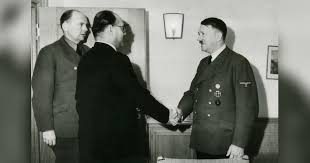
Anecdotes from Bose’s life illustrate his fearless nature and strategic acumen. One such instance is his daring escape from house arrest in 1941. Disguised as a Pathan, Bose traveled across India to Afghanistan, then to Germany, seeking support for India’s liberation. His journey was fraught with peril, but his determination was unshakeable. This bold move exemplified his belief in taking calculated risks for the greater good.
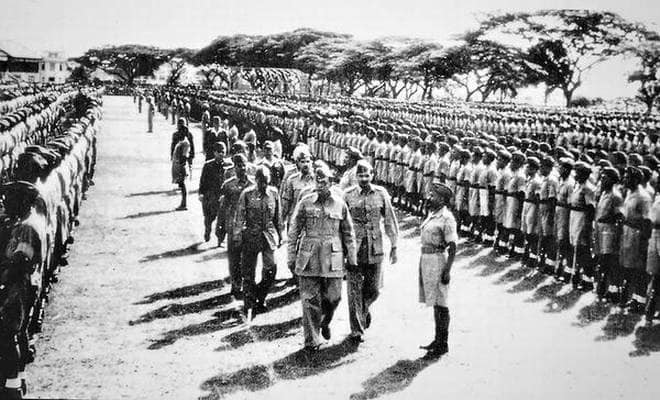
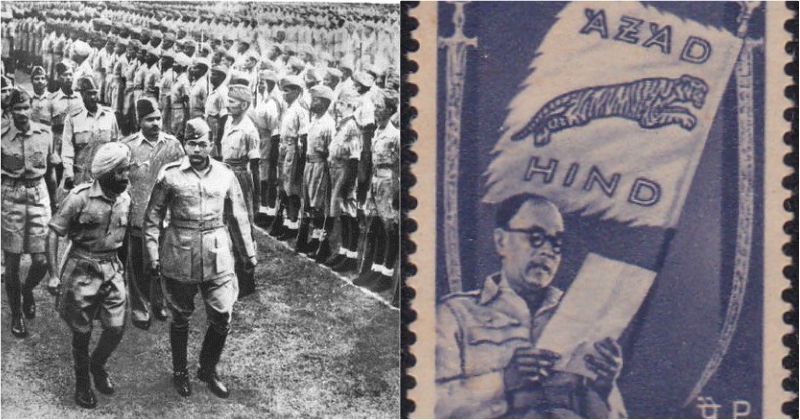
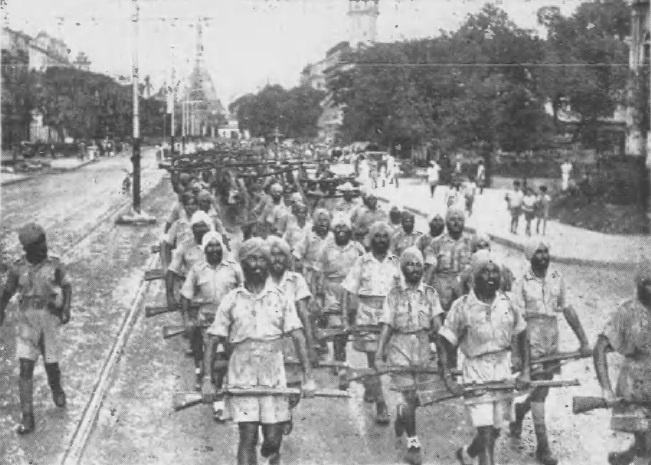
In Germany, Bose sought Axis powers’ assistance, leveraging global political dynamics to further India’s cause. His efforts bore fruit when he met Japanese leaders, resulting in the formation of the Indian National Army (INA) in 1943. The INA, composed of Indian soldiers from British Indian Army prisoners of war, aimed to overthrow British rule through armed struggle.
Bose’s clarion call, “Give me blood, and I will give you freedom,” resonated deeply with his compatriots, sparking a renewed fervor for independence.
Bose’s leadership was marked by his exceptional ability to inspire and mobilize. Under his command, the INA advanced to the northeastern frontiers of India, instilling fear in the British regime. His brave officers, including General Shahnawaz Khan, Colonel Habib ur Rahman, Captain Abbas Ali, Colonel Prem Kumar Sahgal, Major General M. Z. Kiani, Captain Lakshmi Sahgal, Captain Ram Singh Thakuri, and Captain Janaky Athi Nahappan, were pivotal in leading the INA’s campaigns. These men and women, representing diverse communities, displayed extraordinary courage and commitment, embodying the spirit of Bose’s vision for an independent India.
The military gains of the INA under Bose were notable. The INA fought in several crucial battles, such as the Battle of Imphal and the Battle of Kohima, which were part of the U-Go Offensive led by Japanese forces. Although these battles ultimately ended in Allied victories, the INA’s participation demonstrated their valor and commitment. The INA also launched the Arakan offensive in 1944, advancing into British-held Burma. Despite facing logistical challenges and superior Allied forces, the INA’s efforts were instrumental in keeping the spirit of resistance alive among Indians and pressuring the British administration.
Despite facing overwhelming odds and eventual defeat, the INA’s campaigns significantly contributed to the momentum of the freedom movement, compelling the British to reconsider their hold on India.
The mysterious circumstances surrounding Bose’s death in 1945 added to his legendary status. It is widely believed that he perished in a plane crash in Taiwan, but conspiracy theories persist, fueled by the absence of definitive evidence and the enigmatic nature of his life.
Bose’s legacy is one of courage, sacrifice, and an unyielding quest for justice. His life serves as a poignant reminder that true leadership demands not only vision and strategy but also the audacity to challenge the status quo and inspire others to follow suit.
Subhas Chandra Bose is an inspiration for every freedom fighter because his life embodies the sacrifices necessary to achieve the lofty goal of national liberation. His willingness to leave behind a promising career, face immense personal danger, and mobilize an army underlines the extent of sacrifice required to free one’s country from oppression.
Bose demonstrated that the fight for freedom often demands personal sacrifice, relentless determination, and the ability to inspire others toward a common cause. His story remains a beacon of hope and a powerful motivator for all who continue to struggle for justice and independence around the world.
-Notes by Mohammed bin Thajammul Hussain Manna. 29th June 2024.
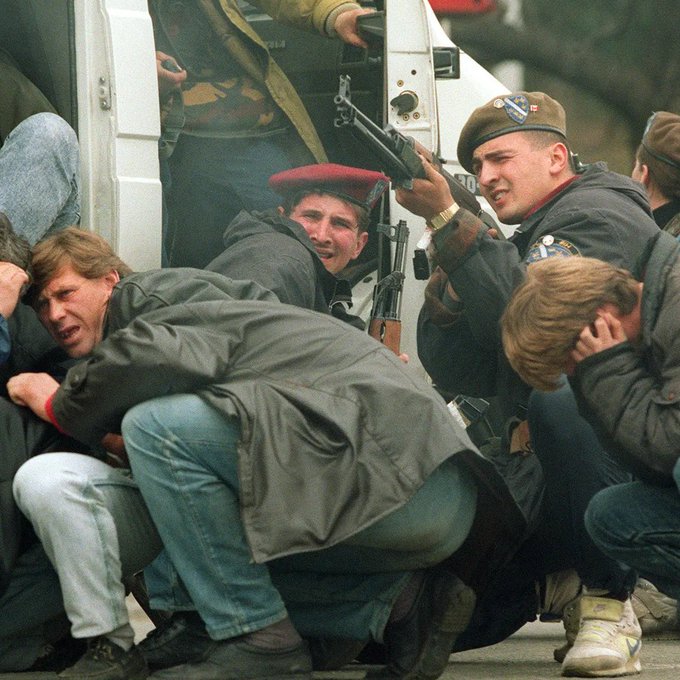
The Bosnian genocide, occurring between 1992 and 1995, was a horrific campaign of ethnic cleansing primarily targeting Bosnian Muslims (Bosniaks) by Bosnian Serb forces. This tragedy was rooted in the disintegration of Yugoslavia, a multi-ethnic federation. After the death of President Tito in 1980, nationalist tensions resurfaced. Yugoslavia began to fracture along ethnic and religious lines, with Slovenia and Croatia declaring independence in 1991, followed by Bosnia and Herzegovina in 1992.
Bosnia’s population was a mix of Bosniaks (Muslims), Serbs (Orthodox Christians), and Croats (Catholics). This diversity led to violent conflicts as Bosnian Serbs (Orthodox Christians), supported by the Yugoslav People’s Army, aimed to create a Greater Serbia, free of non-Serbs. The conflict saw widespread atrocities, including mass killings, forced displacement, and systematic rape of the Bosniak Muslims. The most infamous massacre occurred in Srebrenica in July 1995, where over 8,000 Bosniak Muslim men and boys were killed. The conflict also saw some ‘Heroes of Islam’ rise to help their oppressed Bosniak brothers. In-sha-Allah in the coming paragraphs you will read a gut wrenching tale of the heroes from Indonesia. [Except for this introduction the entire compilation was taken from Sam [@dynaresam] on X.Com [Twitter].]
UNVEILING THE SILENT HEROES – Indonesia’s Invisible Bravery in the Heart of Bosnia’s Struggle.
How did Indonesians carry out an under-the-radar mission to help Bosnia during the most difficult period of the war amidst an internationally imposed embargo? During the breakup of Yugoslavia in the early 1990s, Bosnia, upon declaring independence, confronted brutal aggression from all directions, making its defense nearly unimaginable. Bosniaks faced an existential threat as a result of widespread ethnic cleansing across the country. The United Nations Security Council considered the conflict as a civil war and imposed an arms embargo on the entire territory of ex-Yugoslavia. However, the Bosnian side, which possessed the fewest weapons at that moment, suffered the most from the embargo. While significantly better-equipped enemies from the Serb and later the Croat side began to destroy our villages & cities, the newly formed Bosnian Army strove to arm itself as best it could—through secret channels & routes, by smuggling or by seizing weapons from enemy barracks.
As enemy forces quickly besieged the capital Sarajevo and Bosnia faced threats of falling from the beginning, our brothers from Muslim countries worldwide stepped forward, offering various forms of assistance.
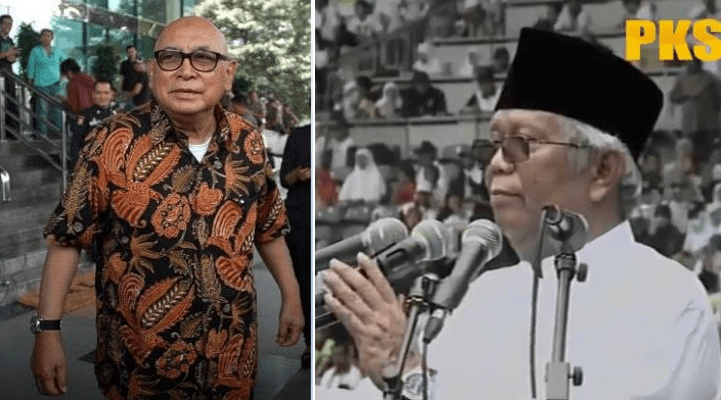
Among the first were the Indonesian brothers, who initiated a secret mission, masterminded by the famous Soeripto and Ustadz Hilmi Aminuddin, may Allah reward them on behalf of the Ummah of Muhammad (Salallahu Alaihi Wa Sallam).
“We would receive help in the form of food, but when we were full, the Serbs would continue massacring us.” was the sentence that intrigued Soeripto and motivated him to consider fulfilling the special mission. Soeripto’s journey to supply Bosnian forces with weapons began with his introduction to the late Probosutedjo, the younger brother of the late President Soeharto.
After a long discussion about the misery that hit the Muslims there, including the crucial need for weapons, Probosutejo, as per Soeripto, immediately looked him in the eye and asked, “Are you capable?”, not having any excuse to refuse, “I can only say, ‘I am!'” replied Soeripto. President Soeharto was informed about this by Prabowo and Sri Edi Swasono, he navigated the mission, but he avoided a direct involvement for obvious reasons.
Together with Hilmi, Soeripto took a flight to Zagreb, the capital of Croatia. At the Intercontinental Hotel, they met Adi Sasono, who had also come there to carry out a diplomatic mission between 2 countries. On December 14, 1992, Adi’s team met with Bosnian government envoys. Bosnian representees were Dr. Ismet Grbo and Senahid Bristrić. At the meeting, Adi Sasono handed over food, medicine, clothing, checks worth $200,000 and $100,000 in cash to the Bosnian government envoys.
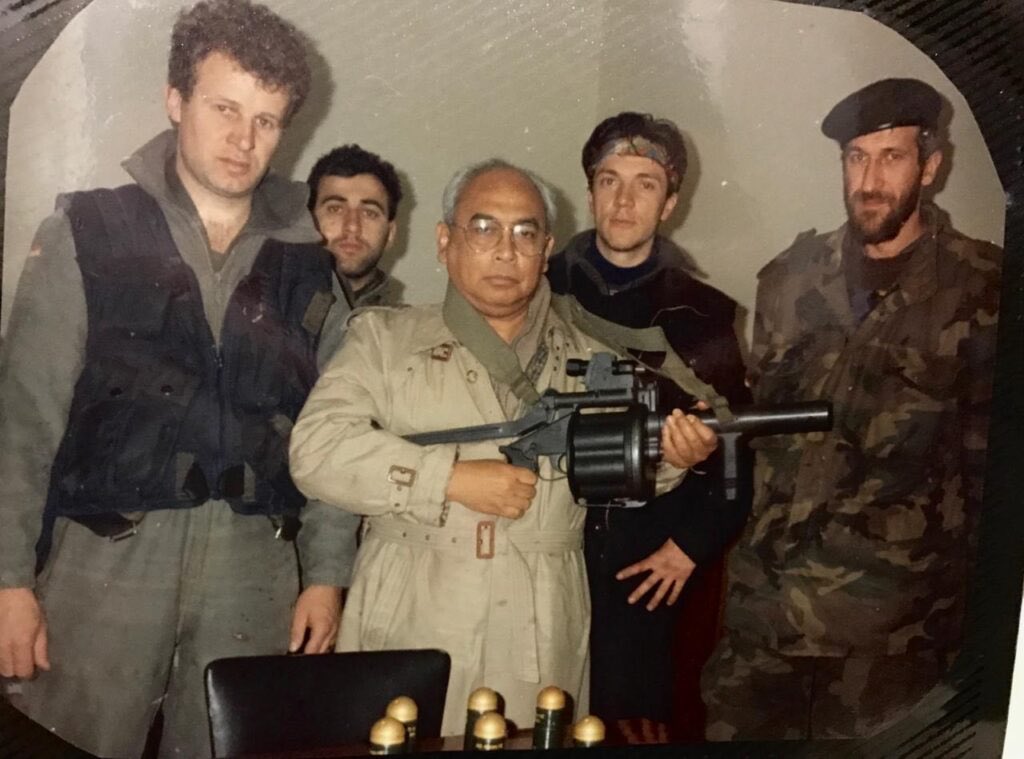
However, Ripto now had to contemplate how to provide weapons for Bosnian forces. Before proceeding he needed to develop a detailed plan, considering where the funding would come from, the location for purchasing the weapons and deciding who would be responsible for the operation. Purchasing weapons on behalf of the state was too risky at that time, as it would violate international law and the decision of the UN Security Council. Hence, he opted to take personal responsibility for the mission, with the trust of Hilmi and Prabowo, who secured the funding. Another question was, where would the weapons come from? Luckily, Hilmi was able to connect Soeripto with the mujahideen network, remnants of the Afghan war with whom he was familiar. Through this network, Soeripto managed to establish the contact with an arms broker in Zagreb. He secured weapons from Croat deserters who had formerly been part of the disintegrating Yugoslav army. After viewing a substantial amount of weapons at a former Yugoslav Army military airport to which the dealer had access, Soeripto negotiated a deal. The agreement stipulated that he would take weapons and ammo worth 2,5 million German marks, with the condition that they should be delivered first to the Bosnian army on Mount Igman, then paid afterwards. He would then bring cash secretly from the Indonesian embassy in Budapest.
Now, the crucial question for Soeripto was: ‘How can I deliver it?’ As we know, at that time, the Bosnian free territory was entirely besieged by the Serb and Croat armies in several circles, making it unimaginable for someone to supply Bosnia. Once again, it was mastermind Ust. Hilmi who had a plan. The weapons were transported under the guise of a cover mission – an aid distribution operation carried out by the humanitarian agency, the Egyptian Red Crescent. The shipment included various types of humanitarian aid. However, in a concealed layer, there was a significant load of weapons that they successfully disguised taking a great risk. What followed was the most stressful 9-hour journey in Soeripto’s life. Passing through 12-13 checkpoints, uncertain about which army would be in control.
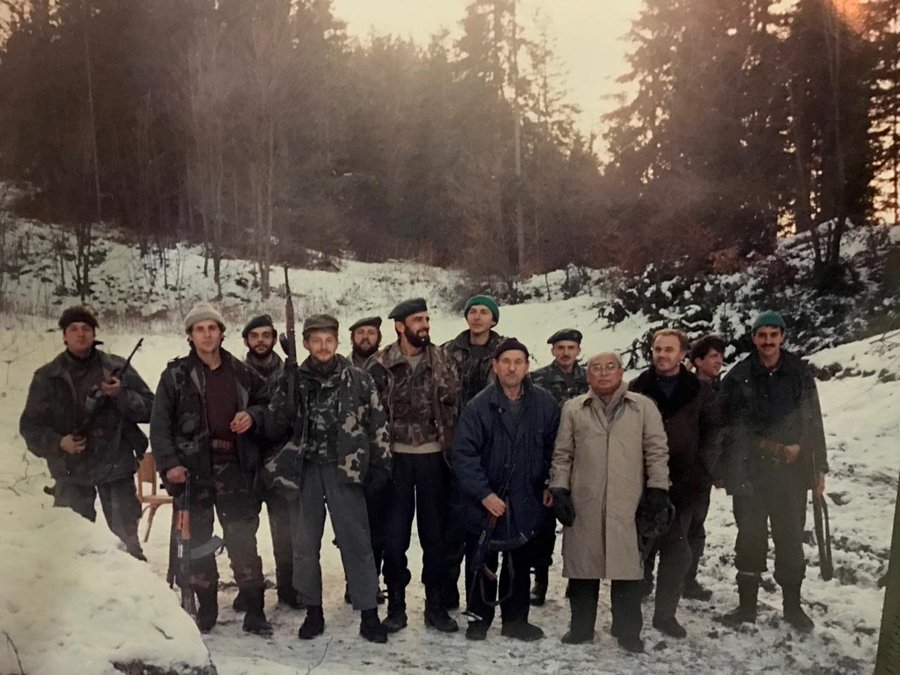
Soeripto was once asked how he avoided suspicion despite having an Asian appearance. He explained that the driver was familiar with the area and took backroads to avoid attention. The most thrilling moment occurred when the truck was halted by a squad of guards at a checkpoint. Out of the three possibilities – the post could belong to Bosnian army, a Serb separatist militia, or a UN Force post. Soeripto would only be safe if it was a Bosnian post, even if exposed. If it was a Serb checkpoint, his fate would be clear, and yet he risked his life. If it was a UN Troops post, he could be arrested as a war criminal for supplying weapons during an arms embargo. Fortunately, they managed to pass safely and miraculously deliver the weapons to Mount Igman near the besieged Sarajevo, all while enduring freezing cold weather. While the cargo was being unloaded, Soeripto found himself surrounded by Muslim mujahideen from various countries who had come to Bosnia to support the Bosnian cause. They mostly volunteered from Pakistan, Saudi Arabia, and various parts of the Middle East.
The next morning, after the Fajr prayer, the weapons were tested and they functioned perfectly. After this success, Soeripto was invited to participate in an ambush operation by Bosnians, which he was not fit for, so they laughed and had fun with him on the mountain that day.
Indonesian Pak Soeripto’s Return From Mount Igman
What transpired in the aftermath of the heroic Indonesian Intelligence mission to deliver weapons to the Bosnian army during the most difficult period of the war?
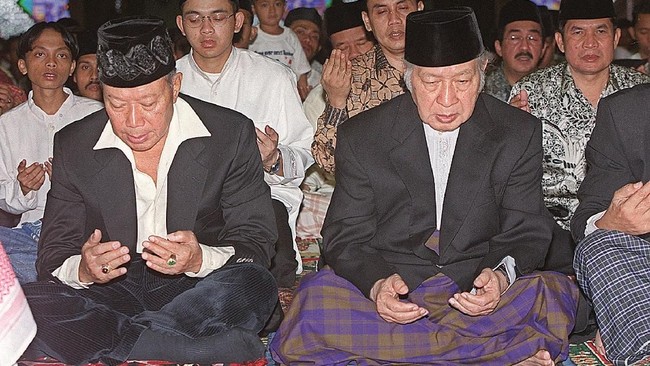
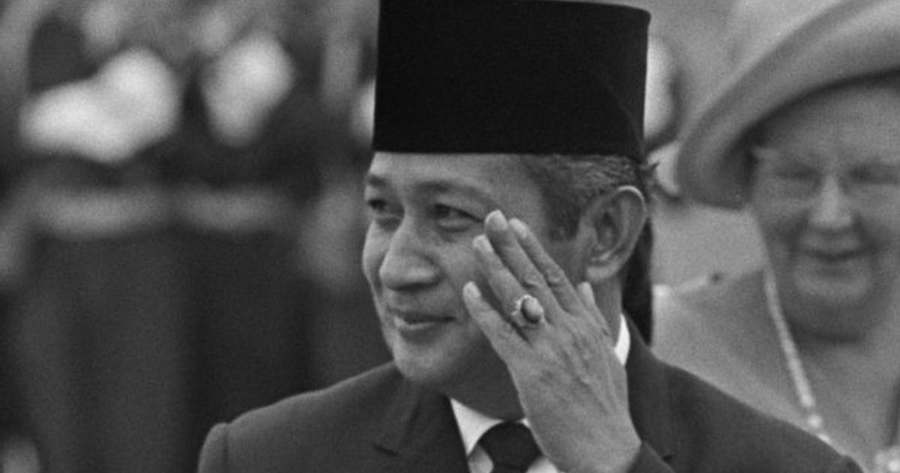
After successfully completing the mission and delivering weapons to the Bosnian Army on Mount Igman, Soeripto’s next challenge was to go to Budapest and take the money to pay the dealer for the weapons. He had to take 2,5 million Deutschemarks from the then-Indonesian Ambassador. It was a very dangerous task because it had to be kept secret, even from the Indonesian Embassy itself, which was accredited to Bosnia. Despite the risk, they managed to complete the transaction in secret, and Ambassador Soelaeman Pringgodigdo dropped him off at the Hilton hotel. Carrying a bag full of money, he took a taxi from Budapest to Zagreb. Right before entering Croatia, the taxi driver, fearing potential snipers there, became very nervous. After some negotiating, as per Soeripto, the driver only agreed to take him to a safe hotel instead. However, within 5 minutes of Soeripto’s entering his room, some woman kept persistently knocking on his door. Annoyed, he asked the hotel manager to remove her, but the manager stated that “after nightfall the Russian mafia was in control there” (the location was never revealed). Despite feeling anxious, Ripto saw it as a test, yet nothing happened. In the morning he took a bus to Zagreb where he delivered the money to the dealer, thus successfully completing his mission – which had been a secret for many years and for which the Indonesians must be proud. Interestingly, as we know is that Soeharto himself also visited Bosnia when the country was still in conflict. Pak. Harto planned his visit to Bosnia even though it was on March 11, 1995, two days before the plane carrying UN Special Envoy Yasushi Akashi was shot at while flying. Before the plane took off, the Indonesian group of officials, including the President Soeharto, was asked to fill out a risk statement form. The form stated that the UN would not be responsible for any incidents that would happen to Suharto and his entourage during the visit.
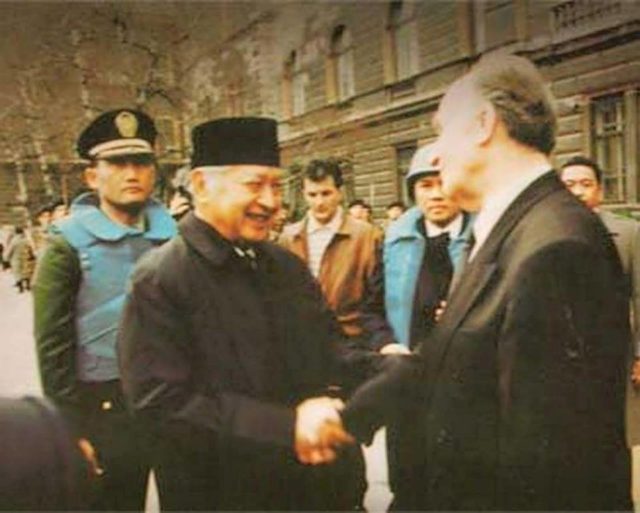
Soeharto’s bodyguards at that time were only two people, namely Colonel Inf. Sjafrie Sjamsoeddin and the Commander of the Presidential Personal Guard Detachment, Major CPM Unggul K. Yudoyono. About half an hour before landing, there were instructions saying: “We will enter an area that requires security, passengers are asked to wear helmets and vests”, all the plane passengers took vests and helmets except Soeharto himself who refused. Without a bulletproof vest and helmet, The President, along with the delegation, arrived in Bosnia. In fact, when the group arrived in Sarajevo, at one point Colonel Inf. Sjafrie Sjamsoeddin, who was a commander of the Presidential Security Forces (Paspampres Group A) saw a 12.7 mm weapon which was usually used to bring down airplanes. It was rotating continuously following the direction of the plane of Soeharto. To protect the president, Sjafrie ultimately decided to borrow a journalist’s helmet and hide his vest under the overcoat he was wearing. This was done to make him look like Suharto to trick snipers. Colonel Inf. Sjafrie Sjamsoeddin was an experienced military officer who had great relations with Prabowo, who had a great influence in Indonesia, both then & now, and who according to Soeripto helped secure finances for the mission. Sjafrie was the main bodyguard of Soeharto.
After passing through the Sniper Alley – which during the Siege of Sarajevo was exposed to Serb sniper fire, and as such became infamous as a dangerous place for the movement – Soeharto eventually arrived to the Bosnian Presidential Palace, where President Alija welcomed him.
Sjafrie described the situation there as very worrying. They didn’t even have a clean water supply in the palace. He also asked Soeharto why he could dare to risk his life by visiting a country that was at war directly on which he answered that if they can’t help much with money, at least they can boost the moral of the people who are fighting for their freedom. “Seeing Pak. Harto so calm, our morals and self-confidence as his bodyguards also became strong, calm and steady. The president is brave, why should we be nervous”, regardless of nearby shelling. “The sentences he uttered contained a valuable example for anyone who wants to lead” wrote Sjafrie in his book ‘Pak Harto The Untold Stories’ published by PT Gramedia Pustaka Utama in 2011. Another story is that upon their arrival President Izetbegović thanked Soeharto by saying: “That kind of assistance is what we need, Your Majesty”, “Weapons, not just clothes, food and medicine.” Immediately, State Secretary Moerdiono got shocked and asked President Soeharto, ‘Mr. President, when did we send weapons to Bosnia?’ Soeharto replied to Moerdiono in Javanese, saying, “Wis. Wis, meneng bae!” (Quiet, quiet, just calm down!). This mission had been a top-secret operation, and even many of Soeharto’s ministers were unaware of it, but Pak Soeripto said that he is sure that Soeharto was aware of it. Soeharto’s visit to Bosnia may not have succeeded in bringing a solution to end the war as planned. However, the visit inspired the President to give a notable gift (beautiful Istiklal Mosque in Sarajevo) to the Muslims of Bosnia right after the war. However, regarding Soeripto, during the interview he was asked about any missions that had a lasting impact on him after Bosnia and his today’s intelligence activism. To this, Soeripto replied, “I can’t answer that. It’s confidential—top secret. Currently, I’m engaged in organizing aid for Palestine (as per interview from March 2023), this mission continues. It goes beyond mere charity; it’s a special task for me even at the age of 87.”
When the interviewer pressed him about the source of these special tasks, Soeripto replied, “I receive them from the Indonesian and Palestinian fighters”. However, he chose not to disclose their specific identities. All in all, at the end of this wonderful story, let’s make dua for Ust. Hilmi Aminuddin rahimahullah, the teacher of Soeripto, and ask Allah swt to have mercy upon his soul and reward him, as Hilmi was the improviser of this idea which could not have been possible without him.
THE END: I would especially like to thank and give credits to my brothers and sisters from Indonesia who directly or indirectly helped me in researching this story, may Allah reward them all. Ameen. @AnIndonesianGuy @nuggetpedaz @discernia @breadunderscore @afathngantuk
-Compiled by Sam [@dynaresam] on X.Com [Twitter], images have been taken from the same Twitter post.
[Put together by Mohammed bin Thajammul Hussain Manna, someone who needs your sincere supplications. 29/June/2024]
The Miqat (station of entering the state of Ihram) for the residents of Makkah who wish to perform Umrah. (From: The recordings of Shaikh Abdul Azeez bin Abdullah bin Baaz on Noor Ala Ad-Darb)
The host: Ahsan Allahu Ilaykum. This questioner, Umm Salam from Makkahtul-Mukarramah, asks about performing Umrah: (She asks) From where should she enter Ihram, from her home or from the Masjid At-Tan’eem, with respect to the residents of Makkah, honourable Sheikh?
Answer: If a resident of Makkah wishes to perform Umrah, he should go to Al-Hil (the land outside the boundary of the Haram area) to places like At-Tan’eem, ‘Arafat, Al-Ja’ranah, or others.
When the Prophet Muhammad (peace and blessings be upon him) wished to perform Umrah while he was at the outskirts of Makkah, he entered Ihram from Al-Ja’ranah and performed Umrah in the year of the Conquest of Makkah. Similarly, when Aisha wanted to perform Umrah while in Makkah, he instructed her to go outside the sanctuary.
He (peace and blessings be upon him) commanded her brother Abdur-Rahman (bin Abu Bakr) to take her out to the area beyond the sanctuary (outside the boundary of Al-Haram), so she entered Ihram from At-Tan’eem. This is the Sunnah for the residents of Makkah: if they want to perform Umrah, they should go outside the Al-Haram to places like Arafat, Al-Ja’ranah, At-Tan’eem, meaning outside the sanctuary, enter Ihram for Umrah, and then enter (Makkah).










 Saheehus-Seerah