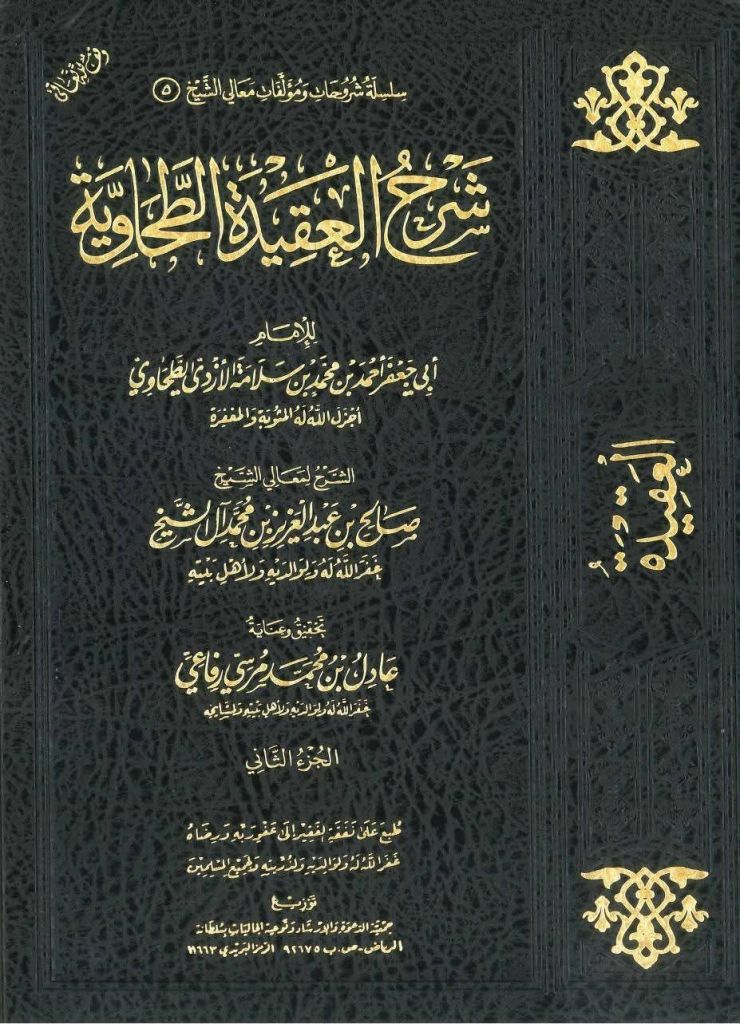
Nusuk Free Umrah Keys

Alhamdulillah, great news.

The Saudi Nusuk App have started their 30 free Umrahs for every day of Ramadan.

1.You need to have an active passport for that.

2. Update/Download your Nusuk app with the necessary details.

3. Everyday you get to answer one Quiz question and enter the lucky draw.

4. You can add ‘Keys’ in the key option and answer upto 10 questions in total everyday.

5. I have upto 60-70 keys that you can use.

6. For any doubts you have, be smart and check YouTube.

7. Don’t forget to make a lot of Dua for yourself and all of us.

The Keys:

*NG-9maGsfV6

*NG-BLuI9ptH

*NG-zllwwH70

* NG-wxYaVaew
* NG-EiUe8bZ0
* NG-27M1dbz4
* NG-cf4644Cu
* NG-0WnMKPZH
* NG-MwdUDCsv
* NG-htJIVHin
* NG-i91U2Ygq
* NG-UfIGBnf7
* NG-cSACx301
* NG-dkKfeFbV
* NG-9er736oA
* NG-P7co1dpD
* NG-S5YrnMBT
* NG-odsK2w5v
* NG-gMLXjnRH
* NG-cFLUHGKO
* NG-gIhYykwt
* NG-ccoCuDvO
* NG-WkJPwue6
* NG-epcFAmAF
* NG-Q187UNXs
* NG-3btwALTu
* NG-cVVhqD5J
* NG-1uIt56Kq
* NG-waev1YTq
* NG-oUINTHQ9
* NG-JijmL4HL
* NG-as5sMQDx
* NG-ooIfMh79
* NG-N3FjpMjR
* NG-jrZyBuIv
* NG-OUkFf2Ma
* NG-dpLR8Wn6
* NG-ry9ZL1X8
* NG-cdcdbds8
* NG-YibpVoK4
* NG-rjqArkaV
* NG-vpabh4cU
* NG-U7szWr1e
* NG-fW98C2YH
* NG-LPL0wsEb
* NG-wDjJKVos
* NG-deeR2KEZ

NG-dXRFpfed
NG-Mg5MYg86
NG-a5BlHr6B
NG-Q8pX9zHr
NG-zxZLLpHU
NG-FX4BM62G
NG-XyNtdRVr
NG-hobJUbcl
NG-mKG3YLFW
NG-CeWz5NG7
NG-RVCPJcjY
NG-SsNbi3Dh
NG-xW4uajEQ
NG-6pqMBXYm
NG-xllfSbpv
NG-ElwEKhNS
NG-poa2wMYO
NG-dyheLtu2
NG-o2PUU5Aw
NG-WllyTk3y
NG-7aQYFtiL
NG-5CKjC6pv
NG-CSxBkJWp
NG-nV01PE1i
NG-5Wt7SfYe

This is the first book of Seerah in the English language that uses only authentic Ahadith for the Prophet’s Biography. It is in three volumes, and every story is referenced back to the Hadith source with authentication. Click here to know more and add it to your library. Delivered all over the world InshaAllah.

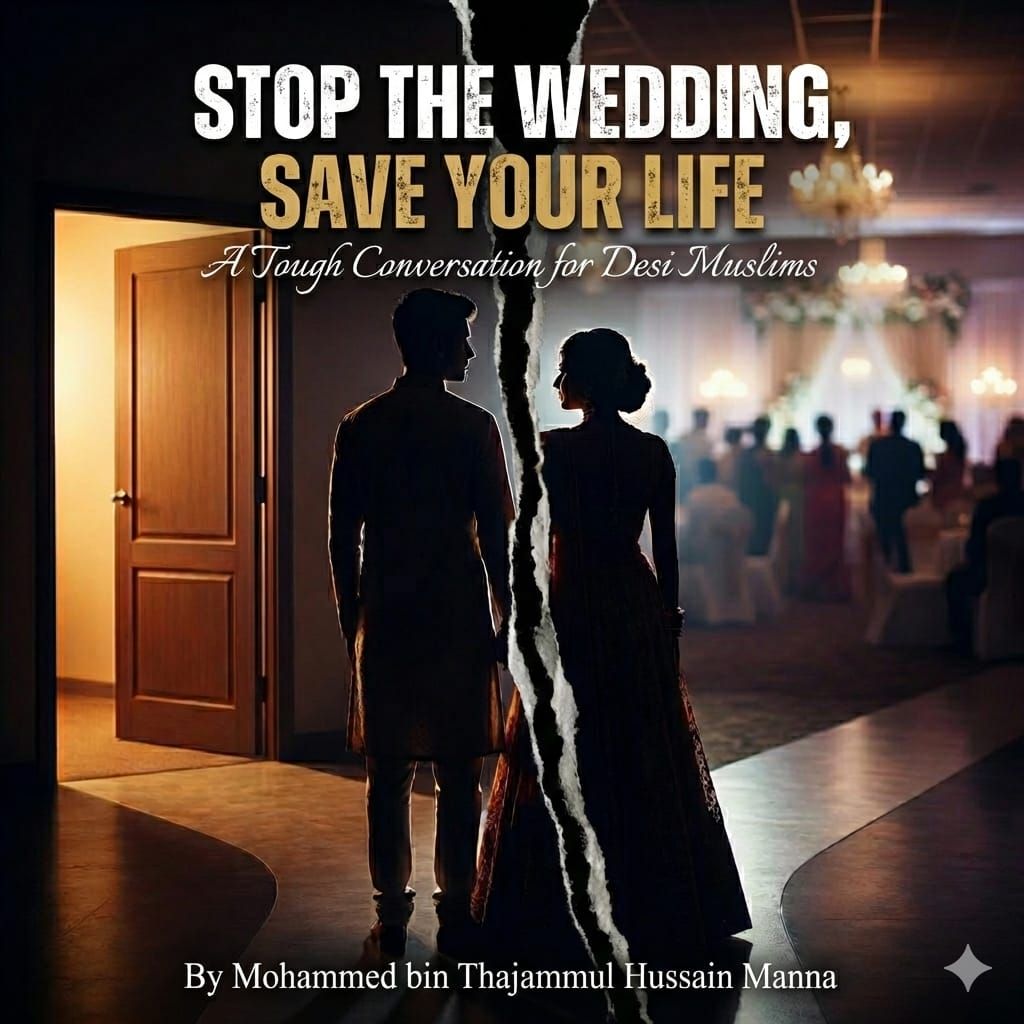
Stop the Wedding, Save Your Life: A Tough Conversation for Desi Muslims


The Clock is Ticking, But It’s Not Too Late.

So, the engagement (or the Nikah date) is set. The hall is booked, the outfits are tailored, and the sweets are ordered. You’ve spent lakhs (or maybe crores!) on the preparations. Your parents are glowing with pride. The entire community is waiting for the invitation cards and calls.

And you? You’re sitting with a heavy heart, because you’ve started seeing the red flags in your future spouse. Maybe it’s the anger. The disrespect. The unreasonable demands. The way they isolate you or dismiss your feelings. Or perhaps their social media presence and past life! Or the realization that this individual is not the ‘pious’ one that you imagined and dreamt of…

You tell yourself: “The Nikah is in two months.” “It’s been 8 months (or whatever) since we fixed it.” “What will people say?” “We’ve already spent so much money.” “I can’t do this to my parents.” “Dad and mom will be humiliated if I break the relationship at this point.” etc etc.

Stop. Right. There.

Let’s speak the hard truth today, even if it makes us uncomfortable.

1. The Money is Gone. Your Future Doesn’t Have to Be.


Yes, you spent money. Yes, it hurts to see that go down the drain. But let’s compare that loss to the cost of a lifetime of misery. Is 5 or 10 lakhs or 1 crore worth more than your mental health, your safety, and your peace? That money is a sunk cost. Don’t throw your life into the sunken ship just because you paid for the ticket.

2. The Shame is Temporary. The Abuse is Permanent.


“Log kya kahenge?” (What will people say?) They will talk for a few weeks. There will be whispers. But here is the reality: Those same people will be silent when you are suffering in your marriage. They won’t be there at 2 a.m. when you are crying. They won’t feel the bruises on your soul or body. They move on to the next gossip. You are the one who has to live the reality.

3. The “Parents’ Happiness” Trap.


This is the most dangerous one in our culture. We are raised to be “good” children who don’t cause trouble. We tell ourselves, “If I break this off, my father will have a heart attack,” or “My mother will be so humiliated, she’ll never recover.”

Let me be clear: Your parents’ love for you is not a license for them to hand you over to a ‘red flag’ (regardless of you being a guy or girl). Yes, they will be sad. Yes, they will be embarrassed. They might even be angry at first. But a parent’s ultimate duty is the safety of their child. If they are good parents, they will eventually thank you for having the courage to step back from a cliff.

If they force you into a marriage knowing it will destroy you, then you need to ask yourself why you are protecting that dynamic at the cost of your own life.

4. The Nikah is a Line in the Sand.


In Islam, the Nikah is a sacred, serious contract. It is not “just a party event” to please the society. Once you cross that line, your rights and responsibilities change.

-Before Nikah: It is difficult to break a fixed and committed engagement. It is painful indeed. It involves tough conversations and returning gifts. But legally and Islamically, you are two separate entities. You can walk away.

-After Nikah: Things get messy. You now need a Khula or a Talaq or a Fasq-e-Nikah. There are legal battles. And if Allah forbid, a child enters the picture? Now you are not just leaving a spouse; you are tying yourself to them for the next 18+ years through co-parenting.

The Reality Check


You are worried about “hurting” your parents today? Imagine their hurt when they see their child broken, depressed, or hiding bruises.
You are worried about “8 or 12 months of engagement” going to waste? Imagine the waste of 2 or 10 years of marriage trying to fix someone who showed you who they were from the start.

A Warning from the Heart


The Shaitan loves to make us fear the creation (people, society, parents) and forget the Creator. We fear people’s ridicule more than we fear entering a marriage that might be built on oppression.

If you see the red flags, listen to that instinct that Allah gave you. It is easier to cancel a wedding than to file for divorce. It is easier to face the community’s gossip now than to face a lifetime of abuse. It is easier to let your parents cry for a few months than to let them watch you die inside for years.

Save yourself. Even if it’s the night before the Nikah. Even if the food is cooked. Even if the guests have arrived.

A broken engagement is a wound that heals. A broken marriage can also heal, but usually after it destroys your soul and mental health. Choose your hard – this one or that one.

(Penned by Mohammed bin Thajammul Hussain Manna)

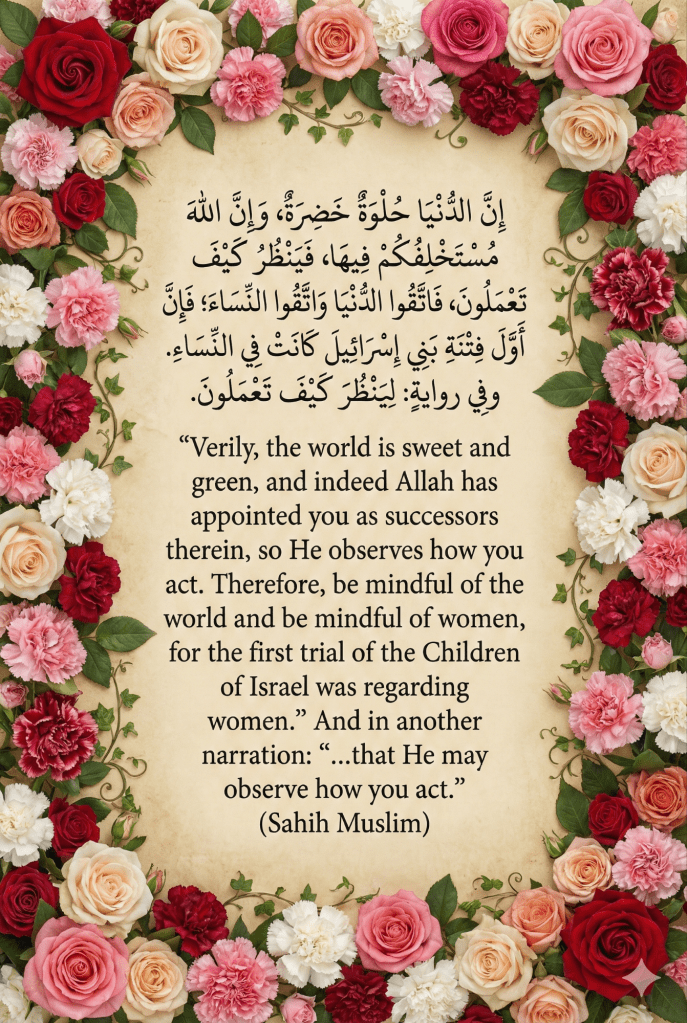
Explanation of the Hadith, ‘Verily, the world is sweet and green,… be mindful of women…’

Translation of the Commentary of the Hadith From dorar.net


Allah the Almighty has established the worldly life (ad-Dunya) as an abode of testing and tribulation. The wise individual is he who garners provisions from it for his Hereafter.

The Prophet (peace and blessings of Allah be upon him) counseled the performance of righteous deeds therein, the maintenance of God-consciousness (Taqwa) within it, and wariness of its adornments and temptations.

In this Hadith, the Prophet (peace and blessings of Allah be upon him) states: “Indeed, the world is sweet and green.” It is sweet in taste and lush in appearance. When an object is verdant and sweet, the eye desires it first, followed by the self (an-nafs). This alludes to its allure, which causes souls to yearn for and seek it; consequently, man becomes beguiled by it and engrossed within it.


The Prophet (peace and blessings of Allah be upon him) elucidated that Allah, the Glorious and Exalted, has appointed us as successors (mustakhlifuna) in this worldly life to observe how we act. The meaning of this succession (Istikhlaf) is that Allah (Mighty and Majestic) has made us successors to the generations that have passed before us, or that we succeed one another. This is to observe our conduct regarding what He has made obligatory upon us: do we execute His obedience, or do we disobey Him? For this reason, he said: “So be wary of the world.” That is: Beware lest the enjoyment and adornment of the world deceive you, thereby inducing you to abandon what Allah has commanded and to fall into that which He has forbidden, as the Almighty stated: {So let not the worldly life deceive you and let not the Deceiver deceive you about Allah} [Luqman: 33].


Then, he (peace and blessings of Allah be upon him) commanded caution regarding women, stating: “And be wary of women.” That is, beware of women. The nature of this caution is that a woman, if she is a wife, may at times burden a man with expenditures he cannot bear, thereby distracting him from seeking matters of religion and compelling him to recklessly pursue the world.

Furthermore, their trial (fitnah) may manifest through the allure of men and inclining them away from the truth if they go out and intermix with them, particularly if they are unveiled (safirat) and displaying their beauty (mutabarrijat).

This may lead to falling into Zina (illicit sexual relations) in its various degrees. Thus, it behooves the believer to hold fast to Allah and to turn fervently to Him for salvation from their temptation and safety from their harm.
He (peace and blessings of Allah be upon him) informed that the first trial of the Children of Israel concerned women; they were tempted by the trial of women, so they went astray and led others astray.

He (peace and blessings of Allah be upon him) mentioned what befell the nations before us solely for the sake of lessons and admonition, and so that we may be wary of what they fell into and its causes. The Prophet’s (peace and blessings of Allah be upon him) mention of the trial of women after the trial of the world falls under the category of mentioning the specific after the general (dhikr al-khas ba’d al-‘am) to heighten the warning, signaling that the trial caused by them is among the greatest of worldly trials.


The Hadith contains an exhortation to adhere strictly to God-consciousness (Taqwa) and to refrain from being preoccupied with the superficial aspects of the world and its adornments.

(End of the explanation. Translated by Mohammed bin Thajammul Hussain Manna.)

Companions and Scholars Attributed to Their Mothers, Most Notably the Prophet’s Muezzin and Ibn Taymiyyah

Genealogy and kinship are conventionally established through the paternal line, whereby a man declares his ancestry accordingly. Nevertheless, there are numerous prominent Muslim figures who were attributed to their mothers. Their attitudes toward this matrilineal attribution were not uniform; some accepted being ascribed to their mothers and took pride in it, such as Ibn adh-Dhiʾbah, who composed poetry regarding this matter, stating:

“I am, to he who denies me, the son of adh-Dhiʾbah…
[She is] noble, chaste, and of high lineage.”

Similarly, Ibn Māwiyah took pride in his attribution to his mother, saying:
“I am the son of Māwiyah when the struggle intensifies…
And the horses arrive in swarms.”

Conversely, there were those whose attribution to their mother was intended as defamation and satire; they detested being addressed by such names. An example is Marwān ibn al-Ḥakam, who was addressed as “Ibn az-Zarqāʾ.” This referred to his grandmother and was intended as an insult, as she was among those who possessed the flags indicating brothels in the Pre-Islamic era (Jāhiliyyah).

Similarly, Ziyād ibn Abīh was referred to as “Ibn Sumayyah” [as a form of denigration], just as ʿUbayd Allāh ibn Ziyād was known as “Ibn Marjānah,” a title used to shame him because she was a Magian.

In his Dictionary of Those Attributed to Their Mothers, Fuʾād as-Sayyid compiles biographies of Muslim notables and Arabs falling into this category. Perhaps the most prominent figures and influential personalities in history among them are the following:


Ibn Umm Maktūm


The practice of designating several Companions (may Allah be pleased with them) by their mothers’ names indicates that matrilineal attribution was not meant for shaming regarding the woman; rather, it served as a mark of honor and glorification. Among the most famous of these is the Companion ʿAbdullāh ibn Umm Maktūm. His mother was ʿĀtikah bint ʿAbd Allāh ibn ʿAnkathah ibn ʿĀmir ibn Makhzūm bin Yaqaẓah al-Makhzūmiyyah. Being among the earliest emigrants (Muhājirūn), he was attributed to her, and called Ibn Umm Maktūm or Ibn ʿĀtikah. He served as the Messenger of Allah’s (peace be upon him) muezzin alongside Bilāl (may Allah be pleased with them both), and he was blind. He is the individual concerning whom Sūrah ʿAbasa was revealed. The Prophet (peace be upon him) was meeting with men from the Quraysh, among them ʿUtbah ibn Rabīʿah, when Ibn Umm Maktūm approached to ask him about something. The Prophet turned away from him, and thus [the verses] “He frowned and turned away, because there came to him the blind man” were revealed.

Ibn Ḥabtah


He is an esteemed Companion named Saʿd ibn Buḥayr. The Messenger of Allah (peace be upon him) observed him fighting fiercely on the Day of the Trench (al-Khandaq). Being young in age, the Prophet asked him, “Who are you, O young man?” He replied, “Saʿd ibn Ḥabtah.” The Messenger of Allah (peace be upon him) said: “Your grandfather is fortunate (Saʿd); come close to me.” He approached, and the Prophet (peace be upon him) wiped his head. He became known and famous by his mother’s name, that is, Ibn Ḥabtah. He was attributed to her, Ḥabtah the daughter of Mālik ibn ʿAmr al-Anṣāriyyah.

Ibn Taymiyyah


He is Aḥmad ibn ʿAbdul-Ḥalīm ibn ʿAbdus-Salām ibn ʿAbdullāh ibn Abī al-Qāsim al-Khiḍr ibn Muḥammad an-Namayrī al-Ḥarrānī ad-Dimashqī. He was born (T.N: Not in Damascus, but Harran) and died in Damascus, adhered to the Ḥanbalī school of jurisprudence, and was known as Taqī ad-Dīn, Abū al-ʿAbbās, and Ibn Taymiyyah; his grandfather and father were also known by this title. He is considered one of the most prominent advocates of religious reform from his era to the present day. He lived in Egypt for a period and authored numerous works, including as-Siyāsah al-Ilāhiyyah wa al-Āyāt an-Nabawiyyah (Divine Politics and Prophetic Signs), al-Fatāwā (The Fatwas) in five volumes, Taʿāruḍ al-ʿAql wa-an-Naql (The Conflict between Reason and Revelation), al-Masāʾil al-Iskandariyyah (The Alexandrian Issues) in refutation of the Ittiḥādiyyah (Monists) and Ḥulūliyyah (Incarnationists), and al-Jawāb as-Ṣaḥīḥ li-man Baddala Dīn al-Masīḥ (The Correct Answer to Those Who Altered the Religion of Christ).

Regarding the reason for his being known as Ibn Taymiyyah, she was one of his distant grandmothers. As for the origin of this appellation, accounts differ.

It is said that his father or grandfather performed the Hajj while his wife was pregnant; while in Taymāʾ, he saw a young girl emerging from a tent. Upon returning to Ḥarrān, he found that his wife had given birth to a daughter; when he saw her, he named her Taymiyyah because she resembled the young girl he had seen in Taymāʾ.

Another view holds that his eldest grandmother was named Taymiyyah and was a preacher (wāʿiẓah), so he was attributed to her and became known by her name; thus, his progeny continued to be identified by it.


Muḥammad ibn al-Ḥanafiyyah

He is Muḥammad ibn ʿAlī ibn Abī Ṭālib (may Allah be pleased with him). He played a significant role in Islamic history alongside his brothers al-Ḥasan and al-Ḥusayn (may Allah be pleased with them). However, his mother was Khawlah bint Jaʿfar al-Ḥanafiyyah, and thus he was attributed to her. Ibn al-Ḥanafiyyah was one of the heroes of early Islam and possessed vast knowledge. He is among those whose title prevailed over their name to the extent that they were not known except by it.

(Originally in Arabic by Aamaal Saami, posted on 10th Sept 2021, on masrawy.com. Translated into English by Mohammed bin Thajammul Hussain Manna.)

Source
The Deceased Benefiting from the Reward of Acts of Worship.

Shaykh Ṣāliḥ Āl al-Shaykh stated:

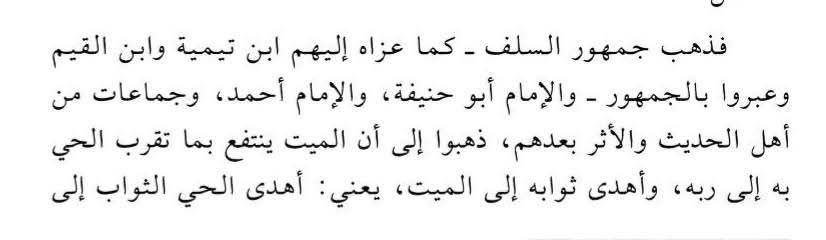
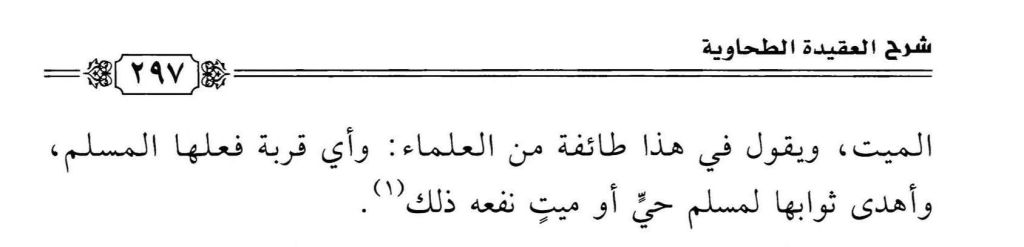
“The majority of the Salaf, as Ibn Taymiyyah and Ibn al-Qayyim attributed it to them, and they explicitly described them as “the majority”, along with al-Imām Abū Ḥanīfah, al-Imām Aḥmad, and groups from the Ahl al-Ḥadīth and Athar after them, held the view that the deceased benefits from what the living person draws near to his Lord with and then gifts its reward to the deceased; meaning that the living person gifts the reward to the deceased. A group of scholars say in this regard, whatever act of devotion a Muslim performs and gifts its reward to a Muslim, whether living or dead, it benefits him.”

Source: 📖 Sharḥ al-ʿAqīdah al-Ṭaḥāwiyyah | 2/296-297.